
1. Background
Cancer incidence is a major public health issue and one of the leading causes of premature death worldwide (1). In 2020, World Health Organization (WHO) estimates showed that cancer is the first or second leading cause of death at the age younger than 70 years in 112 out of 183 countries (2). In 2017, there were 24.5 million cancer cases and 9.6 million cancer-related deaths worldwide, also cancer caused 233.5 million disability-adjusted life years (DALY), of which 97% were years of life lost (YLL) and 3% were years of life lost due to disability (YLD) (3). Furthermore, the age-standardized mortality rate (ASMR) due to cancer decreased by 4.4% from 2007 to 2017, while YLL increased by 19.6% (4).
In Iran, cancer is the second group of non-communicable diseases and the third leading cause of death after heart disease and accidents (5). Based on the data of the Global Cancer Observatory (GLOBOCAN) project, 131,191 newly diagnosed and 79,136 cancer-related deaths were reported in Iran in 2020 (6).
Global reports indicated that the number of new patients with diagnosed cancer will increase to 27.5 million and mortality to 16.3 million by 2040 (7). In 2017, the most common cancers in men were skin, trachea, bronchial, and lung (TBL) cancer and prostate cancer (54% of all cancers), and the most common cancers in women were non-melanoma skin cancer (NMSC), breast cancer, and colorectal cancer (54% of all cancers) (3).
The reasons for rising cancer incidence and mortality are complex but reflect population growth and aging, as well as changes in the prevalence and distribution of cancer risk factors such as unhealthy diet, smoking, and physical inactivity, several of which are related to social and economic development (4).
The number of deaths alone doesn't mirror the overall burden of cancer. The YLL depends on the age at death and the frequency of deaths at every age and may resolve a number of the inconsistencies in illness impact that result from the number of deaths alone (1). It can also reflect both the number of deaths and the loss of life, which could better indicate the burden of disease and may be more useful for allocating resources and designing prevention programs.
2. Objectives
No study in Iran has examined the death rate and years of life lost to cancer at the national level. Therefore, this study was conducted to determine the death rate and YLL due to cancer in Iran.
3. Methods
3.1. Data Source
In this cross-sectional study, the information on cancer-related deaths (53,521 deaths) in Iran was obtained from the death registration system (DRS), which is under the Ministry of Health and Education of Iran. In Iran, the DRS is the best source for calculating the cause of death. Mortality data are collected from various sources including civil registration, hospital records, cemeteries, and forensic data. They cover the entire country and also record all causes of death using the International Classification of Diseases, the 10th edition (ICD-10) coding system (8). The main variables recorded in the DRS are name, age, sex, nationality, province, month and year of death, and underlying cause of death (cancer).
In this study, we used the Global Health Estimates (GHE-2016) cause categories and ICD-10 codes (C00-C97 and D00-D48) for deaths due to cancer (9). Twenty-nine duplicate cases with the variables name, father's name, and cancer sites (based on ICD-10 codes) were excluded from the analysis. There were also 11 impossible age groups where these numbers were changed to missing and redistributed to different age categories proportional to their size.
3.2. Statistical Analysis
After cleaning the data, mortality rates were calculated for 53,492 deaths by age and sex groups, cancer sites, and regional centers. The population for each age and sex group was provided by the National Statistics Center of Iran and was based on the 2016 national censuses in Iran (10). Then, the crude and age-standardized mortality rates (ASMR) were measured using the world standard population (11).
The years of life lost (YLL) was calculated as follows: ΣNx×Lx (x is the age and sex category)
(1) The number of deaths (N): Data from DR were used to estimate cancer-related deaths by age and sex.
(2) Life expectancy (L): Standard life expectancy was used from the Global Burden of Disease 2016 (GBD-2016) studies for each age and age group. In addition, life expectancy is considered the same for men and women according to GBD (12). All analyzes were performed using Stata software (version 14).
4. Results
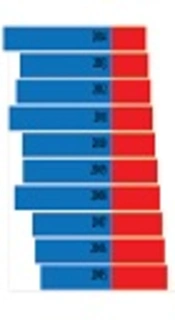
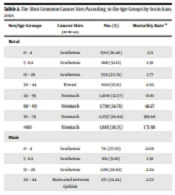
In 2016, the DRS recorded 53,492 deaths due to cancer (58.82% males and 41.18% females; sex ratio: 1.43 men/women). The mean age was 66.03 ± 17.49 years for males, 62.55 ± 18.19 years for females, and 64.59 ± 17.86 years for both sexes. The highest age group was 70 - 79 (24.65%) years old in males, 45 - 59 (23.15%) years old in females and 70 - 79 (23.11%) years old in both sexes (Figure 1). In total the most common cause of cancer death was stomach (14.14%) (in males: Stomach cancer (15.89%) and in females: Breast cancer (14.47%)) (Table 1). The most common causes of cancer deaths in different age groups were leukemia, brain and nervous system, stomach and prostate in males; leukemia, breast and stomach in females and both sexes (Table 2).

Figure 1.
Frequency of death due to cancer according to the age groups by sex in Iran, 2016
Table 1.
Frequency of Death Due to Cancer According to the Cancer Sites by Sex in Iran, 2016 a
| Rank | Cancer Sites (ICD-10) | Total | Male | Female |
|---|---|---|---|---|
| 1 | Stomach (C16) | 7,566 (14.14) | 5,001 (15.89) | 2,565 (11.64) |
| 2 | Tracheal, bronchus and lung (C33-C34) | 5,685 (10.63) | 3,930 (12.49) | 1,755 (7.97) |
| 3 | Colon and rectal (C18-C21) | 3,843 (7.18) | 2,194 (6.97) | 1,649 (7.49) |
| 4 | Leukemia (C91-C95) | 3,749 (7.01) | 2,298 (7.3) | 1,451 (6.59) |
| 5 | Liver, gallbladder and biliary tract (C22-C24) | 3,559 (6.65) | 1,983 (6.3) | 1,576 (7.15) |
| 6 | Brain and nervous system (C70-C72) | 3,302 (6.17) | 1,838 (5.84) | 1,464 (6.65) |
| 7 | Breast (C50) | 3,205 (5.99) | 18 (0.06) | 3,187 (14.47) |
| 8 | Other neoplasms (D00-D48) | 3,049 (5.07) | 1,730 (5.5) | 1,319 (5.99) |
| 9 | Prostate (C61) | 2,912 (5.44) | 2,912 (9.26) | 0 (0) |
| 10 | Other malignant neoplasms (C46-C49, C69, C76-C80, C97) | 2,372 (4.43) | 1,439 (4.57) | 933 (4.24) |
| 11 | Pancreas (C25) | 2,029 (3.79) | 1,278 (4.06) | 751 (3.41) |
| 12 | Esophageal (C15) | 1,833 (3.43) | 1,081 (3.44) | 752 (3.41) |
| 13 | Bladder (C67) | 1,159 (2.17) | 922 (2.93) | 237 (1.08) |
| 14 | Larynx (C32) | 1,027 (1.92) | 806 (2.56) | 221 (1) |
| 15 | Non-Hodgkin lymphoma (C82-C86, C96) | 859 (1.61) | 537 (1.71) | 322 (1.46) |
| 16 | Other digestive organs (C26) | 855 (1.6) | 491 (1.56) | 364 (1.65) |
| 17 | Ovary (C56) | 721 (1.35) | 0 (0) | 721 (3.27) |
| 18 | Multiple myeloma (C88, C90) | 655 (1.22) | 386 (1.23) | 269 (1.22) |
| 19 | Other respiratory organs (C30-31, C37-39) | 642 (1.2) | 378 (1.2) | 264 (1.2) |
| 20 | Kidney, renal pelvis, ureter, and other (C64-C68) | 611 (1.14) | 391 (1.24) | 220 (1) |
| 21 | Bones, joints and articular cartilage (C40-C41) | 606 (1.13) | 348 (1.11) | 258 (1.17) |
| 22 | Corpus uteri (C54-C55) | 561 (1.05) | 0 (0) | 561 (2.55) |
| 23 | Small intestine (C17) | 523 (0.98) | 308 (0.98) | 215 (0.98) |
| 24 | Malignant skin melanoma and non-melanoma skin (C43-C44) | 507 (0.95) | 326 (1.04) | 181 (0.82) |
| 25 | Mouth and oropharynx (C00-C14) | 462 (0.86) | 248 (0.79) | 214 (0.97) |
| 26 | Hodgkin lymphoma (C81) | 420 (0.79) | 287 (0.91) | 133 (0.6) |
| 27 | Thyroid (C73) | 267 (0.5) | 111 (0.35) | 156 (0.71) |
| 28 | Cervix uteri (C53) | 199 (0.37) | 0 (0) | 199 (0.9) |
| 29 | Adrenal gland (C74) | 100 (0.19) | 61 (0.19) | 39 (0.18) |
| 30 | Other endocrine glands (C75) | 94 (0.18) | 58 (0.18) | 36 (0.16) |
| 31 | Testicular (C62) | 85 (0.16) | 85 (0.27) | 0 (0) |
| 32 | Other male genital organs (C60-C63) | 19 (0.04) | 19 (0.06) | 0 (0) |
| 33 | Other female genital organs (C51-52, C56-58) | 16 (0.03) | 0 (0) | 16 (0.07) |
| - | Total | 53,492 (100) | 31,463 (100) | 22,029 (100) |
a Values are expressed as No. (%).
Table 2.
The Most Common Cancer Sites According to the Age Groups by Sex in Iran, 2016
| Sex/Age Groups | Cancer Sites (ICD-10) | No. (%) | Mortality Rate a |
|---|---|---|---|
| Total | |||
| 0 - 4 | Leukemia | 150 (28.46) | 2.11 |
| 5 - 14 | Leukemia | 168 (32.12) | 1.38 |
| 15 - 29 | Leukemia | 355 (25.78) | 1.77 |
| 30 - 44 | Breast | 620 (15.11) | 2.93 |
| 45 - 59 | Stomach | 1,406 (12.57) | 11.61 |
| 60 - 69 | Stomach | 1,756 (14.78) | 41.27 |
| 70 - 79 | Stomach | 2,057 (16.64) | 99.66 |
| +80 | Stomach | 1,885 (16.35) | 171.98 |
| Male | |||
| 0 - 4 | Leukemia | 76 (27.05) | 2.08 |
| 5 - 14 | Leukemia | 86 (31.16) | 1.38 |
| 15 - 29 | Leukemia | 228 (28.82) | 2.24 |
| 30 - 44 | Brain and nervous system | 271 (14.44) | 2.52 |
| 45 - 59 | Stomach | 969 (15.92) | 15.88 |
| 60 - 69 | Stomach | 1,149 (16.61) | 55.73 |
| 70 - 79 | Stomach | 1,416 (18.27) | 138.47 |
| +80 | Prostate | 1,452 (19.41) | 252.82 |
| Female | |||
| 0 - 4 | Leukemia | 74 (30.08) | 2.14 |
| 5 - 14 | Leukemia | 82 (33.2) | 1.38 |
| 15 - 29 | Leukemia | 127 (21.67) | 1.28 |
| 30 - 44 | Breast | 619 (27.8) | 5.93 |
| 45 - 59 | Breast | 1,247 (24.45) | 20.74 |
| 60 - 69 | Breast | 642 (12.94) | 29.28 |
| 70 - 79 | Stomach | 641 (13.9) | 61.54 |
| +80 | Stomach | 664 (16.4) | 127.26 |
a Per 100,000 population
4.1. The Cancer Mortality Rate
The cancer mortality rate in Iran was 66.92 per 100,000 population (77.7 and 55.87 per 100,000 population in men and women, respectively) and the ASMR was 96.4 per 100,000 population (115.7 and 77 per 100,000 population in men and women, respectively). The highest mortality rates were for stomach, lung, trachea, and bronchus cancers, leukemia, cancer of the brain and nervous system, and breast cancer, and for persons aged ≥ 80 years (Table 3).
Table 3.
The Mortality Rate Per 100,000 Population, Years of Life Lost (YLL) Count and Rate Per 1,000 Persons by Sex, Iran, 2016
| Age Groups | Mortality Rate (Per 100,000 Pop) | YLLs (y) | YLL Rate (Per 1,000 Persons) | ||||||
|---|---|---|---|---|---|---|---|---|---|
| Total | Male | Female | Total | Male | Female | Total | Male | Female | |
| 0 - 4 | 7.42 | 7.69 | 7.14 | 44,902 | 23,942 | 20,960 | 6.3 | 6.53 | 6.09 |
| 5 - 14 | 4.32 | 4.45 | 4.18 | 40,161 | 21,199 | 18,962 | 3.3 | 3.42 | 3.21 |
| 15 - 29 | 6.86 | 7.78 | 5.92 | 86,836 | 49,975 | 36,861 | 4.3 | 4.92 | 3.73 |
| 30 - 44 | 19.39 | 17.49 | 21.35 | 200,293 | 91,932 | 108,361 | 9.5 | 8.57 | 10.39 |
| 45 - 59 | 92.38 | 99.78 | 84.86 | 381,745 | 206,706 | 175,038 | 31.5 | 33.89 | 29.13 |
| 60 - 69 | 279.28 | 336.61 | 226.32 | 281,549 | 163,688 | 117,861 | 66.2 | 79.4 | 53.76 |
| 70 - 79 | 599.02 | 758.11 | 442.82 | 188,663 | 118,105 | 70,558 | 91.4 | 115.5 | 67.75 |
| +80 | 1051.88 | 1302.45 | 776.06 | 92,669 | 61,016 | 31,653 | 84.5 | 106.24 | 60.67 |
| Total | 66.92 | 77.7 | 55.87 | 1,316,818 | 736,564 | 580,254 | 16.5 | 18.19 | 14.72 |
| ASMR | 96.4 | 115.7 | 77 | - | - | - | - | - | - |
a Abbreviation: ASMR, age-standardized mortality rate.
4.2. YLL Due to Cancer
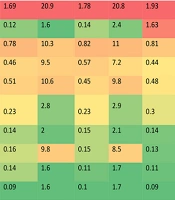
The total number of years of life lost in 2016 was 736,564 (18.9 per 1,000 persons) for men, 580,254 (14.72 per 1,000 persons) for women, and 1,316,818 (16.5 per 1,000 persons) for both sexes. In all age groups, cancer had the highest number of YLLs and the highest YLL rate (per 1,000 persons) in persons aged 45 - 59 and 70 - 79 years, respectively (Table 3). Deaths due to stomach cancer (159,537 and 2 per 1,000), tracheal, bronchus, and lung cancer (126,514 and 1.58 per 1,000), leukemia (125,031 and 1.58 per 1,000), cancer of the brain and nervous system (106,880 and 1.34 per 1,000), and breast cancer (99,437 and 1.24 per 1,000) constituted the largest YLL category among the different cancer sites. In addition, among men: Stomach cancer (104,339 and 2.58 per 1,000), tracheal, bronchus and lung cancer (87,245 and 2.15 per 1,000), leukemia (74,150 and 1.83 per 1,000), cancer of the brain and nervous system (59,429 and 1.47 per 1,000), and colon and rectal cancer (50,844 and 1.26 per 1.000), and among women: Breast cancer (99,062 and 2.51 per 1,000), stomach cancer (55,198 and 1.4 per 1,000), leukemia (50,882 and 1.29 per 1,000), brain and nervous system cancer (47,451 and 1.2 per 1,000), and tracheal, bronchus, and lung cancer (39,268 and 1 per 1,000) had the largest YLL (Table 4).
Table 4.
The Years of Life Lost (YLL) Count, Rate Per 1,000 Persons and Percentage YLL to Total YLL by Cancer Sites and Sex, Iran, 2016
| Rank | Cancer Sites (ICD-10) | YLLs (y) | YLLs (%) | YLL Rate (Per 1,000 Persons) | ||||||
|---|---|---|---|---|---|---|---|---|---|---|
| Total | Male | Female | Total | Male | Female | Total | Male | Female | ||
| 1 | Stomach (C16) | 159,537 | 104,339 | 55,198 | 12.11 | 14.16 | 9.51 | 2 | 2.58 | 1.4 |
| 2 | Tracheal, bronchus and lung (C33-C34) | 126,514 | 87,245 | 39,268 | 9.61 | 11.84 | 6.77 | 1.58 | 2.15 | 1 |
| 3 | Leukemia (C91-C95) | 125,031 | 74,150 | 50,882 | 9.49 | 10.07 | 8.77 | 1.56 | 1.83 | 1.29 |
| 4 | Brain and nervous system (C70-C72) | 106,880 | 59,429 | 47,451 | 8.12 | 8.07 | 8.18 | 1.34 | 1.47 | 1.2 |
| 5 | Breast (C50) | 99,437 | 374 | 99,062 | 7.55 | 0.05 | 17.07 | 1.24 | 0.01 | 2.51 |
| 6 | Colon and rectal (C18-C21) | 89,924 | 50,844 | 39,080 | 6.83 | 6.90 | 6.74 | 1.13 | 1.26 | 0.99 |
| 7 | Other neoplasms (D00-D48) | 82,103 | 45,431 | 36,672 | 6.23 | 6.17 | 6.32 | 1.03 | 1.12 | 0.93 |
| 8 | Liver, gallbladder and biliary tract (C22-C24) | 78,836 | 43,846 | 34,990 | 5.99 | 5.95 | 6.03 | 0.99 | 1.08 | 0.89 |
| 9 | Other malignant neoplasms (C46-C49, C69, C76-C80, C97) | 61,970 | 36,559 | 25,410 | 4.71 | 4.96 | 4.38 | 0.78 | 0.9 | 0.64 |
| 10 | Pancreas (C25) | 44,263 | 28,201 | 16,062 | 3.36 | 3.83 | 2.77 | 0.55 | 0.7 | 0.41 |
| 11 | Prostate (C61) | 39,867 | 39,867 | 0 | 3.03 | 5.41 | 0.00 | 0.98 | 0.98 | 0 |
| 12 | Esophageal (C15) | 36,721 | 21,485 | 15,236 | 2.79 | 2.92 | 2.63 | 0.46 | 0.53 | 0.39 |
| 13 | Non-Hodgkin lymphoma (C82-C86, C96) | 27,495 | 17,339 | 10,156 | 2.09 | 2.35 | 1.75 | 0.34 | 0.43 | 0.26 |
| 14 | Larynx (C32) | 22,679 | 17,939 | 4,740 | 1.72 | 2.44 | 0.82 | 0.28 | 0.44 | 0.12 |
| 15 | Bones, joints and articular cartilage (C40-C41) | 21,563 | 12,404 | 9,159 | 1.64 | 1.68 | 1.58 | 0.27 | 0.31 | 0.23 |
| 16 | Bladder (C67) | 20,726 | 16,771 | 3,955 | 1.57 | 2.28 | 0.68 | 0.26 | 0.41 | 0.1 |
| 17 | Ovary (C56) | 20,122 | 0 | 20,122 | 1.53 | 0.00 | 3.47 | 0.51 | 0 | 0.51 |
| 18 | Other digestive organs (C26) | 18,598 | 10,696 | 7,902 | 1.41 | 1.45 | 1.36 | 0.23 | 0.26 | 0.2 |
| 19 | Other respiratory organs (C30-31, C37-39) | 18,140 | 10,895 | 7,245 | 1.38 | 1.48 | 1.25 | 0.23 | 0.27 | 0.18 |
| 20 | Multiple myeloma (C88, C90) | 15,773 | 9,180 | 6,592 | 1.20 | 1.25 | 1.14 | 0.2 | 0.23 | 0.17 |
| 21 | Kidney, renal pelvis, ureter and other (C64-C68) | 14,838 | 9,280 | 5,558 | 1.13 | 1.26 | 0.96 | 0.19 | 0.23 | 0.14 |
| 22 | Hodgkin lymphoma (C81) | 14,744 | 9,880 | 4,864 | 1.12 | 1.34 | 0.84 | 0.18 | 0.24 | 0.12 |
| 23 | Corpus uteri (C54-C55) | 14,422 | 0 | 14,422 | 1.10 | 0.00 | 2.49 | 0.37 | 0 | 0.37 |
| 24 | Small intestine (C17) | 12,091 | 7,418 | 4,673 | 0.92 | 1.01 | 0.81 | 0.15 | 0.18 | 0.12 |
| 25 | Mouth and oropharynx (C00-C14) | 11,012 | 6,124 | 4,888 | 0.84 | 0.83 | 0.84 | 0.14 | 0.15 | 0.12 |
| 26 | Malignant skin melanoma and non-melanoma skin (C43-C44) | 10,606 | 6,424 | 4,181 | 0.81 | 0.87 | 0.72 | 0.13 | 0.16 | 0.11 |
| 27 | Thyroid (C73) | 6,192 | 2,622 | 3,569 | 0.47 | 0.36 | 0.62 | 0.08 | 0.06 | 0.09 |
| 28 | Cervix uteri (C53) | 5,452 | 0 | 5,452 | 0.41 | 0.00 | 0.94 | 0.14 | 0 | 0.14 |
| 29 | Adrenal gland (C74) | 4,561 | 2,601 | 1,960 | 0.35 | 0.35 | 0.34 | 0.06 | 0.06 | 0.05 |
| 30 | Testicular (C62) | 3,592 | 3,592 | 0 | 0.27 | 0.49 | 0.00 | 0.09 | 0.09 | 0 |
| 31 | Other endocrine glands (C75) | 2,387 | 1,407 | 980 | 0.18 | 0.19 | 0.17 | 0.03 | 0.03 | 0.02 |
| 32 | Other female genital organs (C51-52, C56-58) | 519 | 0 | 519 | 0.04 | 0.00 | 0.09 | 0.01 | 0 | 0.01 |
| 33 | Other male genital organs (C60-C63) | 280 | 280 | 0 | 0.02 | 0.04 | 0.00 | 0.01 | 0.01 | 0 |
5. Discussion
In this study, the number of deaths due to cancer was 53,492, of which 55.52% were male and 41.18% were female. The age-standardized mortality rate was 96.4/100,000 population and 115.7 and 77/100,000 population for males and females, respectively.
In 2018, the number of deaths due to cancer in Europe was 1.93 million, of which 1.08 million were men and 850,000 were women (13). In 2016, there were 8.9 million cancer-related deaths worldwide, of which 5.172 million were men and 3.375 million were women (3). In 2014, about 2,296,000 deaths from cancer were reported in China, of which 1,452,000 were in men and 844,000 in women, and the ASMR by world standard population was 106.09 per 100,000 population (14). In 2012, the total number of cancer deaths in Iran was 53,350, of which 56.44% were men and 43.55% were women. The crude and standardized mortality rates were 70.6 and 81.9 per 100,000 population, respectively (15).
Studies have shown that the mortality rate was lower in females than males. Women are more receptive than men to health care, so they are more likely to go for screening, diagnosis, and treatment at the first symptoms of disease, so they are more likely than men to be diagnosed and treated at the early stages of the disease. This could also be due to the fact that the proportion of unhealthy lifestyles is higher in men than in women, such as smoking, alcohol consumption, and an unhealthy dietary pattern (15, 16).
Most of the age groups were 70 - 79 (24.65%) years in males, 45 - 59 (23.15%) years in females, and 70 - 79 (23.11%) years in both sexes, and the mortality rate was mainly concentrated in the middle-aged and older population. The most common cause of cancer death in males in the age group 0-29 years was leukemia, 30 - 44 years was the brain and nervous system, 45 - 79 years was stomach and 80 years and older was prostate, in females 0 - 29 years was leukemia, 69 - 69 years was breast and 70 years and older was stomach cancer.
In the study by Mattiuzzi and Lippi, the most common malignancies at the age of 14 years or younger were leukemia (37%), followed by cancers of the brain and nervous system (16%) and lymphoma (13%), at the age of 15 - 49 years were breast cancer (13%), followed by liver (12%) and lung cancer (9%), aged 50 - 59 years were lung cancer (18%), followed by liver (11%) and breast cancer (9%), while the most common malignancies among individuals aged 60 years or older were lung (21%), colorectal (9%), stomach (9%) and liver cancer (9%) (17).
Our study found that the top 5 cancers with the highest mortality in the general population in 2016 were stomach, lung, colorectal, leukemia, and liver. The top 5 cancers in men were stomach, lung, prostate, leukemia, and colorectal.
and in women were breast, stomach, lung, colorectal, and liver. The total number of years of life lost to premature death in 2016 was 736,564 (18.9 per 1,000 persons) for men, 580,254 for women (14.72 per 1,000 persons), and 1,316,818 (16.5 per 1,000 persons) for both sexes. Deaths from stomach cancer (159,537 and 2 per 1,000), tracheal, bronchial, and lung cancer (126,514 and 1.58 per 1,000), leukemia (125,031 and 1.58 per 1,000), cancers of the brain and nervous system (106,880 and 1.34 per 1,000), and breast cancer (99,437 and 1.24 per 1,000) make up YLL largest category among various cancers.
In 2017, lung, liver, and stomach cancers in China had the largest ASMR in both urban and rural areas, and the YLL in urban and rural areas for men and women were 13.27 and 8.41 million and 11.39 and 6.77 million, respectively (16). The leading causes of cancer deaths worldwide in 2016 were lung, stomach, colorectal, liver, and breast cancers, causing 213.2 million DALYs, of which 98% were YLLs and 2% were YLDs. In 2016, the leading causes of DALYs due to cancer were tracheal, bronchus, lung, liver, and stomach cancers. A total of 1.7 million TBL deaths causing 36.4 million DALYs, 829,000 liver cancer deaths causing 21.1 million DALYs, and 834,000 stomach cancer deaths worldwide causing 18.3 million DALYs. More than 98% of these cancers were associated with YLLs and less than 2% with YLDs, suggesting that these cancers cause far more premature deaths than disability (3).
The most common cause of death due to cancer in Europe in 2018 was lung cancer with 388,000 deaths, followed by colorectal cancer (12.6%), female breast cancer (7.1%), and pancreatic cancer (6.6%). Lung cancer remained the most common cause of cancer death in men, followed by colon and prostate cancer. In women, breast cancer was the leading cause of death, followed by lung and colon cancer (13). In Korea, the most common causes of cancer death were lung, followed by liver, colon, rectum, stomach, and pancreas. The most common causes of cancer mortality in men were lung, liver, colorectal, stomach, and pancreas cancer, and in women were lung, colorectal, pancreas, liver, and breast cancer (18).
In our study, stomach cancer was the most common cause of cancer death, the first in men and the second in women. According to the data of GLOBOCAN 2018, stomach cancer is the third leading cause of cancer death (19). The mortality rate of gastric cancer is high in East and Central Asia and Latin America. Afghanistan, Oman, Sudan, and Yemen have the highest rates of deaths from stomach cancer despite declining mortality from 1990 to 2017 (20, 21).
Helicobacter pylori is the most important risk factor for gastric cancer, about 75% of all stomach cancers are due to H. pylori infection. Diet and lifestyle (smoking, coffee, and alcohol) are responsible for 33 to 50% of stomach cancers. The rate of stomach cancers was significantly lower in women than in men. Possible explanations for this could be that differences in diet, the protective effect of estrogen in women, and occupational exposure in men (21, 22). The prevalence of H. pylori in the Iranian population was estimated to be 54% (23). In the Iranian adult population, the current prevalence of tobacco smoking was 25.2% in men and 4.0% in women in 2016 (24). The findings of a study by Shakeri et al. showed that opium consumption is associated with stomach cancer, and opium is widely used in Iran (25). Studies have shown that people living in the north and northwest of Iran have a higher risk of stomach cancer than in other areas (26).
Tracheal, bronchial, and lung cancers are the most common causes of cancer-related death worldwide (27), which were the second most common in this study. The causes of the increasing incidence and mortality of lung cancer are complex but are related to increasing age and population growth, and changes in the prevalence and distribution of major risk factors, together with industrialization, urbanization, and global pollution (28). Smoking is the single largest risk factor for lung cancer, accounting for more than 90% of lung cancer cases. According to the report by WHO, about 80% of worldwide smokers live in low- and middle-income countries (28, 29).
Consistent with the world, colorectal cancer (CRC) in this study as well as the third leading cause of cancer-related death (30). Colorectal cancer is the deadliest cancer in men in three countries, Saudi Arabia, Oman, and the United Arab Emirates, and the deadliest cancer in women in five countries: Algeria, Belarus, Japan, Spain, and Portugal (31).
For females, breast cancer is the leading cause of cancer death in this study and worldwide. In 2016, breast cancer caused 15.1 million DALYs, which was 95% of YLLs and 5% of YLDs (32). In 2014, a study in China, India, and Russia found that breast cancer was the second leading cause of death among females after lung cancer (33). In the Eastern Mediterranean Region (EMR), including Iran, breast cancer has the highest incidence and mortality rate among females compared to other cancers (32, 34). Breast cancer risk factors include reproductive, hormonal, and lifestyle risk factors (2, 32, 34).
Limitations of the present study included the lack of further variables and the lack of study of the geographical distribution of cancers and the strength of this study was that we conducted a comprehensive nationwide analysis of mortality and YLL rates for all sites of cancer.
5.1. Conclusions
With more than 1,300,000 YLL attributable to cancer, cancer is one of the most important non-communicable diseases and the leading cause of death in Iran. In addition, the top 5 cancers with the highest mortality in the general population were stomach, lung, colorectal, leukemia, and liver.
Therefore, promoting the prevention and control programs and policies are necessary to improve health indicators and also, to reduce the death and burden of cancers. Since some cancers are preventable, the burden can be reduced through tobacco control, a healthy lifestyle, dietary measures, promotion of physical activity, control of indoor and outdoor air pollution, and expansion of access to the screening program.