
1. Background
Cancer remains a major global health burden, with substantial incidence and mortality worldwide (1). Bleomycin remains an important antineoplastic agent for the treatment of several malignancies, particularly Hodgkin lymphoma and germ cell tumors. In Hodgkin lymphoma, bleomycin has historically been included in the doxorubicin, bleomycin, vinblastine, and dacarbazine (ABVD) regimen, which remains one of the most widely used first-line regimens (2). In germ cell tumors, bleomycin is commonly administered as part of the bleomycin, etoposide, and cisplatin (BEP) regimen, which remains an important curative treatment for many patients with advanced disease (3, 4). Bleomycin may also be used in other malignancies and as a sclerosing agent for malignant pleural effusions. However, its role varies by disease type, stage, treatment intent, and institutional practice.
Bleomycin’s clinical value is limited by its distinctive toxicity profile. Unlike many cytotoxic agents, bleomycin is associated with relatively limited myelosuppression when used alone; however, it can cause clinically important nonhematologic toxicities. The most concerning of these is bleomycin-associated pulmonary toxicity, which may range from asymptomatic radiologic abnormalities to pneumonitis, impaired pulmonary function, respiratory failure, and irreversible pulmonary fibrosis (5, 6). Pulmonary toxicity is considered the principal dose-limiting toxicity of bleomycin and remains a major concern because it may lead to treatment interruption, omission of bleomycin from subsequent cycles, hospitalization, long-term respiratory impairment, or death (5, 6).
The pathogenesis of bleomycin lung injury is multifactorial and incompletely understood. Bleomycin causes DNA strand breaks through free radical formation, and pulmonary tissue appears particularly vulnerable because of relatively low bleomycin hydrolase activity (7, 8). This may allow the active drug to accumulate in lung tissue and contribute to oxidative injury, endothelial and epithelial damage, inflammatory cell recruitment, cytokine release, and eventual fibroblast activation (5, 7, 8). Clinically, diagnosis is often challenging because respiratory symptoms such as cough, dyspnea, chest discomfort, and reduced exercise tolerance are nonspecific. These manifestations may overlap with infection, pulmonary embolism, heart failure, disease progression, radiation pneumonitis, or other treatment-related complications. The diagnosis of drug-induced lung injury generally requires integration of the exposure history, clinical presentation, imaging and physiological findings, and careful assessment of competing causes (9, 10). Imaging findings may include ground-glass opacities, reticulonodular changes, interstitial abnormalities, or fibrotic features; however, these findings are not always specific for bleomycin toxicity. No single symptom, imaging pattern, or pulmonary function abnormality is independently diagnostic of bleomycin-associated pulmonary toxicity (5, 6, 9, 10).
Reported rates of bleomycin-associated pulmonary toxicity vary widely across studies. This variation reflects differences in patient populations, underlying malignancies, cumulative bleomycin exposure, age distribution, renal function, smoking status, prior thoracic radiotherapy, oxygen exposure, diagnostic definitions, follow-up duration, and monitoring practices (5, 6, 11-13). In germ cell tumors, O’Sullivan et al. evaluated factors associated with bleomycin-associated pulmonary toxicity and highlighted the importance of clinical risk stratification when using bleomycin-containing therapy (11). In Hodgkin lymphoma, Martin et al. reported that bleomycin-associated pulmonary toxicity may adversely affect patient outcomes and may influence subsequent treatment decisions (12). More recent work in Hodgkin lymphoma has continued to emphasize the need to identify patients at higher risk and improve early recognition of bleomycin-associated pulmonary toxicity (13).
Several risk factors have been proposed, including older age, renal impairment, higher cumulative bleomycin dose, pre-existing lung disease, smoking history, prior or concurrent thoracic radiation, and exposure to supplemental oxygen (4, 5, 11-14). However, these associations are not consistent across all studies, and risk prediction remains imperfect. In routine practice, pulmonary monitoring also varies. Pulmonary function testing, including diffusing capacity of the lungs for carbon monoxide (DLCO), may support baseline respiratory assessment and the evaluation of suspected toxicity, although the optimal role of routine serial testing remains unclear (4, 5). Computed tomography may support the diagnosis when clinical suspicion exists, but imaging is often obtained selectively rather than as part of a uniform surveillance strategy (9, 10). Drug-induced lung injury is an important concern in respiratory medicine because it can mimic infection, malignancy progression, pulmonary embolism, and other cardiopulmonary conditions (9, 10). Bleomycin-associated pulmonary toxicity is a classic example of anticancer therapy-related lung injury, and its recognition often depends on a combination of symptoms, imaging, pulmonary function testing, and clinical judgment. Therefore, real-world evaluation of bleomycin-associated pulmonary toxicity is relevant not only to oncology practice but also to respiratory medicine, particularly with respect to pulmonary monitoring, early diagnosis, oxygen exposure, and long-term fibrotic outcomes (5, 6, 9, 10). Real-world evidence describing bleomycin-associated pulmonary toxicity in Middle Eastern oncology populations is limited. Local data are important because patient characteristics, malignancy distribution, treatment patterns, supportive care practices, documentation quality, and monitoring approaches may differ from those reported in Western cohorts. In addition, the clinical impact of pulmonary toxicity in routine practice extends beyond its documented frequency and includes oxygen requirement, hospitalization, mechanical ventilation, treatment modification or discontinuation, recovery, and the development of pulmonary fibrosis.
2. Objectives
This study aimed to evaluate the frequency, clinical characteristics, and outcomes of bleomycin-associated pulmonary toxicity among adult patients with cancer treated at a tertiary care center in Saudi Arabia. Secondary objectives included describing the frequency of pulmonary fibrosis, the severity of pulmonary toxicity, pulmonary monitoring patterns, respiratory symptoms, imaging findings, oxygen requirements, mechanical ventilation, hospitalization, recovery, and treatment modification or discontinuation.
3. Methods
3.1. Study Design and Setting
This single-center retrospective cohort study was conducted at King Abdullah Medical City, a tertiary care referral center in Makkah, Saudi Arabia. Adult patients with cancer who received bleomycin-containing therapy between January 2019 and June 2026 were identified using the hospital electronic health record system, pharmacy dispensing records, and oncology treatment records.
3.2. Study Population
Patients were eligible for inclusion if they were aged 18 years or older, had a documented diagnosis of malignancy, received at least 1 dose of bleomycin as part of systemic anticancer therapy or as a sclerosing agent, and had electronic medical records documenting bleomycin exposure and follow-up assessment. Patients were excluded if they were younger than 18 years, had no follow-up data after bleomycin administration, lacked documentation of bleomycin exposure, or had insufficient records to assess pulmonary outcomes. Both systemic and local bleomycin exposures were included because the study aimed to describe documented pulmonary toxicity following any clinically administered bleomycin exposure at the institution during the study period. However, because systemic anticancer therapy and pleurodesis or sclerosing-agent administration differ in route, dose, indication, baseline pulmonary condition, and treatment intent, outcomes were also examined separately by bleomycin indication.
Follow-up was defined as the period from the first documented bleomycin administration to the last available clinical documentation, death, loss to follow-up, or the study data cutoff, whichever occurred first. The study data cutoff was June 30, 2026. Because follow-up duration was not consistently captured as a structured variable in the retrospective dataset, follow-up duration could not be reliably summarized across the cohort. Outcome ascertainment was therefore based on all available clinical documentation during the defined follow-up period.
The study size was determined by the number of eligible patients during the predefined study period. All patients identified as having received bleomycin between January 2019 and June 2026 were screened for eligibility, and all patients meeting the inclusion criteria were included. No formal a priori sample-size calculation was performed because this retrospective study used all eligible records available during the study period.
3.3. Data Collection
Data were collected retrospectively using a standardized data collection form. Extracted variables included age, sex, weight, height, Body Mass Index (BMI), body surface area, smoking status, comorbidities, pre-existing lung disease, history of radiotherapy, baseline and post-treatment renal function, cancer diagnosis, histopathology, cancer stage, indication for bleomycin, chemotherapy regimen, duration of bleomycin treatment, and cumulative bleomycin dose. Pulmonary assessment variables included respiratory symptoms, chest X-ray findings, computed tomography (CT) findings, pulmonary function testing, DLCO, forced vital capacity (FVC), pulmonary toxicity grade according to the Common Terminology Criteria for Adverse Events (CTCAE), version 5.0, and a diagnosis of pulmonary fibrosis. Clinical outcomes included oxygen requirement, mechanical ventilation, hospitalization, recovery, bleomycin interruption, discontinuation, dose modification, and switching to an alternative regimen.
Oxygen-related information was extracted from clinical notes, medication and respiratory-care documentation, and hospitalization records. “Recorded oxygen exposure” referred to any oxygen exposure identified in the available medical record, whereas “oxygen requirement” referred to oxygen documented as a clinical outcome during treatment or follow-up. Exact dates relative to pulmonary toxicity onset were not consistently available; therefore, oxygen exposure could not be reliably categorized as occurring before, during, or after the onset of pulmonary toxicity in all patients.
When available, dates of bleomycin administration, first documented respiratory symptoms, pulmonary imaging, pulmonary toxicity diagnosis, oxygen initiation, hospitalization, and treatment modification were extracted from the electronic record. However, complete temporal sequencing was unavailable for many patients; therefore, hospitalization, oxygen requirement, mechanical ventilation, and treatment modification were analyzed primarily as clinical outcomes or severity markers rather than as predictors of pulmonary toxicity.
3.4. Outcome Definitions
The primary outcome was the proportion of patients with documented bleomycin-associated pulmonary toxicity among those with available follow-up data. Bleomycin-associated pulmonary toxicity was defined as a new pulmonary abnormality occurring after bleomycin exposure and supported by at least 1 of the following: physician-documented bleomycin-induced pulmonary toxicity or pneumonitis; compatible radiologic abnormalities attributed to drug-induced lung injury; or new respiratory symptoms accompanied by compatible imaging or abnormal pulmonary function testing. Treatment modification attributed to suspected pulmonary toxicity was considered supportive clinical information but was not sufficient, either alone or in combination with nonspecific respiratory symptoms, to establish the diagnosis. Respiratory symptoms without physician attribution, compatible imaging, or abnormal pulmonary function testing were not considered sufficient for classification.
Potential cases of bleomycin-associated pulmonary toxicity were identified through review of clinical notes, pulmonary consultations, radiology reports, pulmonary function testing, and oncology treatment records. Case classification was performed retrospectively by 2 investigators using the prespecified criteria described above. When documented in the medical record, alternative causes of respiratory abnormalities, including infection, pulmonary embolism, heart failure, malignant progression, pleural disease, and radiation-related lung injury, were reviewed before assigning pulmonary toxicity. Because diagnostic investigations were performed according to routine clinical care rather than a standardized study protocol, competing diagnoses could not be definitively excluded in every patient.
Imaging, respiratory symptoms, pulmonary function testing, and physician attribution were not collected according to a prospective, uniform monitoring schedule. These variables were available only when assessed and documented during routine clinical care. Interrater agreement for bleomycin-associated pulmonary toxicity classification was assessed using Cohen’s kappa coefficient and percentage agreement.
3.5. Ethical Approval
The study was approved by the Institutional Review Board of King Abdullah Medical City, Makkah, Saudi Arabia [25 - 1375]. Because of the retrospective observational design, the requirement for informed consent was waived.
3.6. Statistical Analysis
Continuous variables were assessed for distribution and reported as the mean and standard deviation or median and interquartile range (IQR), as appropriate. Categorical variables were summarized as frequencies and percentages. The proportions of patients with documented pulmonary toxicity and pulmonary fibrosis were calculated using the total cohort as the denominator. Categorical variables were compared using the chi-square test or Fisher’s exact test, as appropriate. Fisher’s exact test was used when expected cell counts were small. Baseline variables evaluated in relation to pulmonary toxicity included age category, smoking status, cumulative bleomycin dose, chemotherapy regimen, pre-existing lung disease, prior radiotherapy, and renal function changes. Clinical outcomes, including oxygen requirement, hospitalization, mechanical ventilation, recovery, and treatment modification, were interpreted as consequences of pulmonary toxicity rather than baseline predictors.
Exploratory unadjusted univariable logistic regression was used to assess selected factors associated with documented bleomycin-associated pulmonary toxicity. Multivariable regression was not presented because only 27 pulmonary toxicity events were observed and several predictors had sparse data, resulting in unstable estimates. No regression analysis was performed for pulmonary fibrosis because only 4 events were observed.
Missing data were reported descriptively as “not available” and were not imputed. Percentages were calculated using the total cohort as the denominator unless otherwise specified. For comparative analyses, “not available” categories were excluded from P value calculations. Exact binomial 95% confidence interval (CI) estimates were calculated for the proportions of patients with bleomycin-associated pulmonary toxicity and pulmonary fibrosis. A two-sided P value of less than 0.05 was considered statistically significant. All comparative analyses were considered exploratory because of the retrospective design and the small number of pulmonary toxicity and pulmonary fibrosis events.
This study was reported in accordance with the Strengthening the Reporting of Observational Studies in Epidemiology (STROBE) guideline. A completed STROBE checklist is provided as Table S1 in the Supplementary File. Because multiple candidate factors were evaluated in exploratory univariable analyses, no adjustment for multiple comparisons was performed; therefore, nominal P values should be interpreted cautiously, and the findings should be considered hypothesis-generating.
4. Results
A total of 137 patients were screened; 20 were excluded because they were younger than 18 years, leaving 117 adult patients for the final analysis. The patient selection process is shown in Figure 1. No adult patients were excluded because of absent follow-up, missing documentation of bleomycin exposure, or insufficient pulmonary outcome records. Baseline demographic characteristics are summarized in Table 1. The median age was 30 years (IQR, 24 - 42), and 63 patients (53.8%) were male. The median BMI was 24.54 kg/m2, and most patients were nonsmokers. Clinical characteristics and comorbidities are shown in Table 2. The most frequently documented comorbidities were diabetes mellitus, hypertension, liver disease, and thromboembolic disease.
Table 1.
Baseline Demographic Characteristics of the Study Cohort a
| Characteristic | Overall Cohort (n = 117) |
|---|---|
| Age, y | |
| Median (IQR) | 30 (24 - 42) |
| Range | 18 - 81 |
| Gender | |
| Male | 63 (53.8) |
| Female | 54 (46.2) |
| Weight, kg | |
| Mean ± SD | 70.2 ± 17.8 |
| Range | 26 - 120 |
| Height, cm | |
| Median (IQR) | 165 (154 - 171) |
| Range | 141 - 188 |
| BMI, kg/m2 | |
| Median (IQR) | 24.54 (21.30 - 29.48) |
| Range | 12.89 - 47.78 |
| Obesity, BMI ≥ 30 kg/m2 | |
| No | 89 (76.1) |
| Yes | 28 (23.9) |
| Body surface area, m2 | |
| Mean ± SD | 1.77 ± 0.25 |
| Range | 1.01 - 2.42 |
| Smoking status | |
| Nonsmoker | 107 (91.5) |
| Smoker | 10 (8.5) |
a Values are expressed as No. (%) unless otherwise indicated. Abbreviations: BMI, Body Mass Index; IQR, interquartile range; SD, standard deviation.
Table 2.
Clinical Characteristics and Comorbidities of the Study Cohort a
| Characteristic | Overall Cohort (n = 117) |
|---|---|
| Hematological disease | |
| No | 113 (96.6) |
| Yes | 4 (3.4) |
| Thromboembolic disease | |
| None | 105 (89.7) |
| Deep vein thrombosis | 6 (5.1) |
| Pulmonary embolism | 6 (5.1) |
| Cardiac disease | |
| No | 113 (96.6) |
| Yes | 4 (3.4) |
| Hypertension | |
| No | 109 (93.2) |
| Yes | 8 (6.8) |
| Dyslipidemia | |
| No | 115 (98.3) |
| Yes | 2 (1.7) |
| Endocrine disease | |
| No | 114 (97.4) |
| Yes | 3 (2.6) |
| Diabetes mellitus | |
| No | 104 (88.9) |
| Yes | 13 (11.1) |
| Kidney disease | |
| No | 114 (97.4) |
| Yes | 3 (2.6) |
| Liver disease | |
| No | 112 (95.7) |
| Yes | 5 (4.3) |
| Nervous system disorder | |
| No | 115 (98.3) |
| Yes | 2 (1.7) |
| Pregnancy | |
| No | 116 (99.1) |
| Yes | 1 (0.9) |
| Breastfeeding | |
| No | 117 (100.0) |
| Yes | 0 (0.0) |
| Other documented conditions | |
| Behçet’s disease | 1 (0.9) |
| Chronic dyspnea | 1 (0.9) |
| Crohn’s disease | 1 (0.9) |
| Gastroesophageal reflux disease | 1 (0.9) |
| Hyperaldosteronism | 1 (0.9) |
| Inferior vena cava thrombus | 1 (0.9) |
| Osteoporosis | 1 (0.9) |
| Rheumatoid arthritis/herpes zoster | 1 (0.9) |
| Tuberculosis | 4 (3.4) |
| Von Willebrand disease | 1 (0.9) |
a Values are expressed as No. (%).
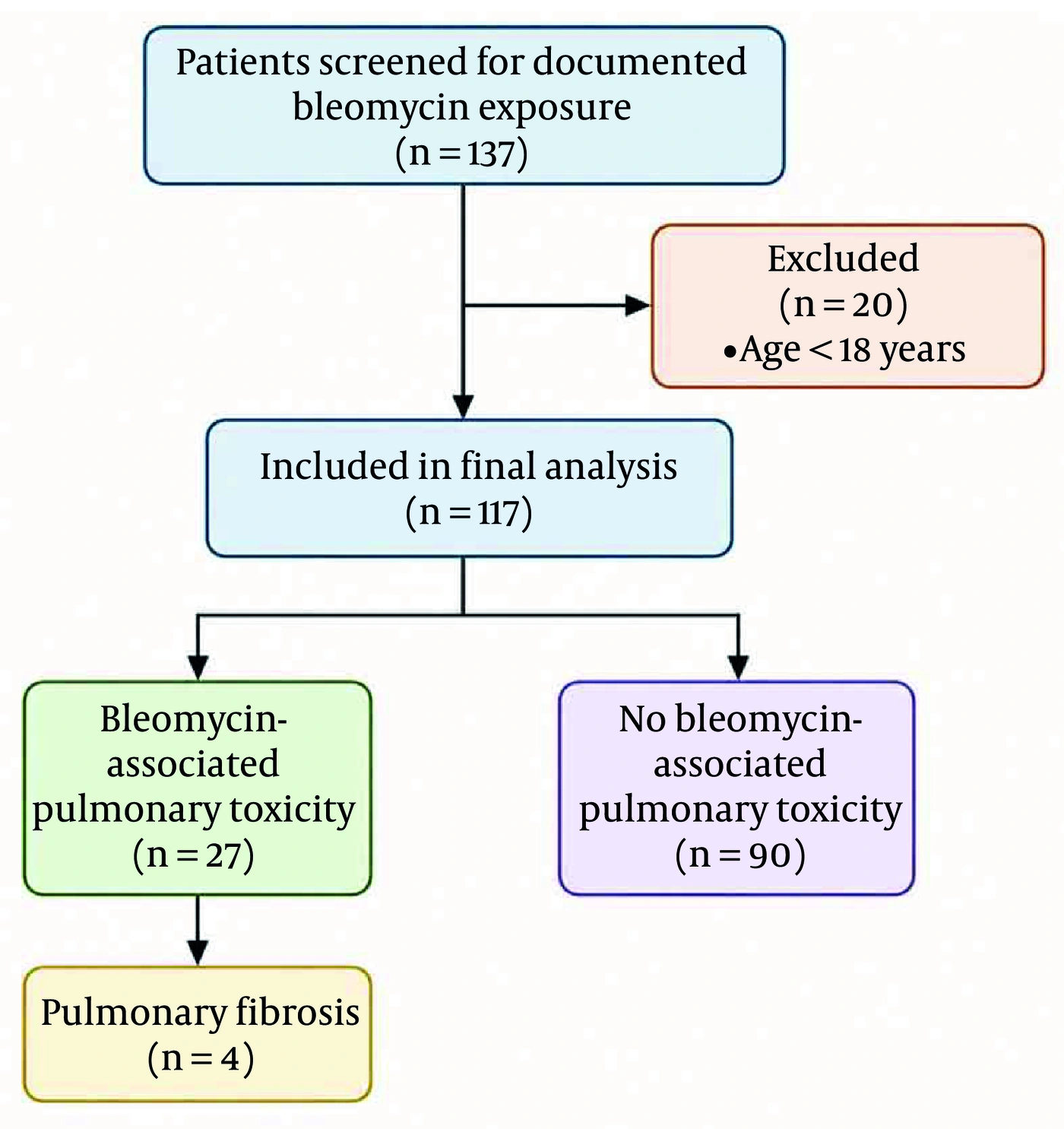
Figure 1.
Flow diagram of patient screening and inclusion in the study cohort. A total of 137 patients with documented bleomycin exposure were screened. Twenty patients were excluded because they were younger than 18 years. The final study cohort included 117 adult patients, of whom 27 were classified as having bleomycin-associated pulmonary toxicity, and 90 had no documented pulmonary toxicity. Pulmonary fibrosis was documented in 4 patients.
Cancer diagnoses and bleomycin treatment characteristics are presented in Table 3. Hodgkin lymphoma was the most common diagnosis, followed by germ cell tumors. Most patients received bleomycin as part of systemic anticancer therapy, whereas approximately one-fifth received bleomycin for pleurodesis or as a sclerosing agent. ABVD and BEP were the most frequently used regimens.
Table 3.
Cancer Diagnosis and Bleomycin Treatment Characteristics a
| Characteristic | Overall Cohort (n = 117) |
|---|---|
| Primary cancer diagnosis | |
| Hodgkin lymphoma | 54 (46.2) |
| Germ cell tumors b | 29 (24.8) |
| Breast cancer | 14 (12.0) |
| Ovarian cancer | 10 (8.5) |
| Other solid tumors c | 8 (6.8) |
| Other hematologic malignancies d | 2 (1.7) |
| Indication for bleomycin | |
| Systemic anticancer therapy | 93 (79.5) |
| Pleurodesis/sclerosing agent | 24 (20.5) |
| Histopathological diagnosis | |
| Classical Hodgkin lymphoma | 53 (45.3) |
| Germ cell tumor-related histology e | 23 (19.7) |
| Breast carcinoma-related histology | 10 (8.5) |
| Other histopathological diagnoses | 10 (8.5) |
| Not available | 21 (17.9) |
| Duration of bleomycin treatment, d | |
| Median (IQR) | 49 (14 - 98) |
| Range | 0 - 638 |
| Cumulative bleomycin dose, mg | |
| Median (IQR) | 90 (60 - 140) |
| Range | 15.8 - 452 |
| Cancer stage | |
| Stage I | 10 (8.5) |
| Stage II | 23 (19.7) |
| Stage III | 29 (24.8) |
| Stage IV | 40 (34.2) |
| Not available | 15 (12.8) |
| Chemotherapy regimen | |
| ABVD | 53 (45.3) |
| BEP | 39 (33.3) |
| Other | 20 (17.1) |
| Not available | 5 (4.3) |
a Values are expressed as No. (%) otherwise indicated. Abbreviations: ABVD, doxorubicin, bleomycin, vinblastine, dacarbazine; BEP, bleomycin, etoposide, cisplatin; IQR, interquartile range.
b Germ cell tumors included germ cell tumor, mixed germ cell tumor, seminoma, teratoma, testicular cancer, immature teratoma, mediastinal extragonadal yolk sac tumor, mediastinal seminoma, and related germ cell tumor diagnoses.
c Other solid tumors included colon cancer, endometrial serous carcinoma, Ewing sarcoma, gastric adenocarcinoma, hemangiolipoma, metastatic malignant pleural mesothelioma, non-small cell lung cancer, and other rare solid tumors.
d Other hematologic malignancies included multiple myeloma and T-cell leukemia.
e Germ cell tumor-related histology included mixed germ cell tumor, dysgerminoma, embryonal carcinoma, immature ovarian teratoma, juvenile granulosa cell tumor, extragonadal seminoma, non-gestational choriocarcinoma, non-seminomatous germ cell tumor, seminoma, and immature teratoma.
Pulmonary assessment and toxicity findings are summarized in Table 4. Bleomycin-associated pulmonary toxicity was identified in 27 of 117 patients, corresponding to 23.1% of the combined cohort (95% CI, 15.8% - 31.8%). The 2 investigators agreed completely on pulmonary toxicity classification for all 117 patients, corresponding to 100% observed agreement and Cohen’s κ of 1.00. Pulmonary fibrosis was documented in 4 of 117 patients (3.4%; 95% CI, 0.9% - 8.5%). Among patients receiving systemic anticancer therapy, pulmonary toxicity was documented in 23 of 93 patients (24.7%; 95% CI, 16.4% - 34.8%), compared with 4 of 24 patients (16.7%; 95% CI, 4.7% - 37.4%) receiving bleomycin for pleurodesis or as a sclerosing agent. This subgroup comparison was exploratory and was not designed to establish equivalence or differences between routes of administration. The interval between bleomycin exposure and documented pulmonary changes was available for only 2 patients and was unavailable for 115 patients, precluding reliable characterization of pulmonary toxicity onset. Among the 27 patients with documented bleomycin-associated pulmonary toxicity, CTCAE severity was grade 1 in 2 patients (7.4%), grade 2 in 14 (51.9%), grade 3 in 10 (37.0%), and grade 4 in 1 (3.7%); no grade 5 toxicity was documented.
Table 4.
Pulmonary Assessment and Bleomycin-Associated Pulmonary Toxicity Findings a
| Characteristic | Overall cohort (n = 117) |
|---|---|
| Pre-existing lung disease | |
| No | 113 (96.6) |
| Yes | 4 (3.4) |
| Type of pre-existing lung disease among affected patients | |
| Lung cancer | 1 (25.0) |
| Tuberculosis | 3 (75.0) |
| History of radiation therapy | |
| No | 95 (81.2) |
| Yes | 22 (18.8) |
| Recorded oxygen exposure, timing relative to toxicity onset uncertain | |
| No | 108 (92.3) |
| Yes | 9 (7.7) |
| Use of respiratory medication | |
| No | 107 (91.5) |
| Yes | 10 (8.5) |
| Respiratory medication among users | |
| Salbutamol | 8 (80.0) |
| Budesonide/formoterol fumarate | 1 (10.0) |
| Fluticasone furoate | 1 (10.0) |
| Baseline serum creatinine, mg/dL | |
| Median (IQR) | 0.76 (0.61 - 0.85) |
| Range | 0.28 - 1.69 |
| Post-bleomycin serum creatinine, mg/dL | |
| Median (IQR) | 0.76 (0.63 - 0.88) |
| Range | 0.25 - 5.25 |
| Baseline creatinine clearance, mL/min | |
| Median (IQR) | 117.46 (93.88 - 145.12) |
| Range | 23.16 - 393.10 |
| Post-bleomycin creatinine clearance, mL/min | |
| Median (IQR) | 114.58 (91.67 - 146.89) |
| Range | 7.45 - 326.92 |
| Increase in serum creatinine > 0.3 mg/dL | |
| No | 108 (92.3) |
| Yes | 9 (7.7) |
| Concomitant use of nephrotoxic drugs | |
| No | 107 (91.5) |
| Yes | 10 (8.5) |
| Nephrotoxic drug among users with documented drug name, n = 10 | |
| Vancomycin | 5 (50.0) |
| Cisplatin | 2 (20.0) |
| Cyclophosphamide | 1 (10.0) |
| Vinblastine | 1 (10.0) |
| Not available | 1 (10.0) |
| Baseline pulmonary function test performed | |
| No | 62 (53.0) |
| Yes | 55 (47.0) |
| Pre-bleomycin pulmonary function test | |
| DLCO | 53 (45.3) |
| FVC | 2 (1.7) |
| Not done | 62 (53.0) |
| Post-bleomycin pulmonary function test | |
| DLCO | 2 (1.7) |
| FVC | 1 (0.9) |
| Not performed or not documented | 114 (97.4) |
| Documented pulmonary function change | |
| Yes | 1 (0.9) |
| Chest X-ray findings | |
| Normal | 48 (41.0) |
| Abnormal | 13 (11.1) |
| Not performed or not documented | 56 (47.9) |
| Computed tomography assessment | |
| CT not performed or result not documented | 76 (65.0) |
| CT performed | 41 (35.0) |
| Computed tomography findings among patients with CT performed | |
| Normal | 26 (63.4) |
| Ground-glass opacities | 13 (31.7) |
| Reticulonodular infiltrates | 1 (2.4) |
| Inflammatory changes | 1 (2.4) |
| Time of pulmonary changes after bleomycin | |
| 4 weeks | 1 (0.9) |
| 12 weeks | 1 (0.9) |
| Not available | 115 (98.3) |
| CTCAE grade of lung toxicity | |
| Grade 0 | 90 (76.9) |
| Grade 1 | 2 (1.7) |
| Grade 2 | 14 (12.0) |
| Grade 3 | 10 (8.5) |
| Grade 4 | 1 (0.9) |
| Diagnosis of bleomycin-associated pulmonary toxicity | |
| No | 90 (76.9) |
| Yes | 27 (23.1) |
| Pulmonary fibrosis | |
| No | 113 (96.6) |
| Yes | 4 (3.4) |
| Respiratory symptoms | |
| No | 92 (78.6) |
| Yes | 25 (21.4) |
| Type of respiratory symptoms among symptomatic patients | |
| Shortness of breath and other symptoms | 14 (56.0) |
| Cough | 5 (20.0) |
| Cough with painful breathing | 1 (4.0) |
| Dyspnea and cough | 1 (4.0) |
| Dyspnea, cough, and chest discomfort | 1 (4.0) |
| Dyspnea | 1 (4.0) |
| Exertional dyspnea and mild cough | 1 (4.0) |
| Productive yellowish cough | 1 (4.0) |
| Symptom severity among symptomatic patients | |
| Mild | 13 (52.0) |
| Moderate | 7 (28.0) |
| Severe | 4 (16.0) |
| Not available | 1 (4.0) |
a Values are expressed as No. (%) unless otherwise indicated. Abbreviations: CT, computed tomography; CTCAE, Common Terminology Criteria for Adverse Events; DLCO, diffusing capacity of the lungs for carbon monoxide; FVC, forced vital capacity; IQR, interquartile range. Percentages are calculated using the overall cohort as the denominator unless otherwise specified. Percentages for respiratory medication, type of pre-existing lung disease, CT findings among patients with CT performed, respiratory symptoms type, and symptom severity are calculated using the relevant subgroup denominator. Retrospective documentation did not permit reliable separation of assessments that were not performed from assessments for which no result was documented. Therefore, combined “not performed or not documented” categories were retained.
Clinical outcomes following bleomycin exposure are summarized in Table 5. Oxygen therapy was required in 10 patients (8.5%), and mechanical ventilation was required in 1 patient (0.9%). Hospitalization during treatment or follow-up was documented in 32 patients (27.4%). Bleomycin was omitted in 34 patients (29.1%), held in 1 patient (0.9%), and changed to an alternative regimen or agent in 6 patients (5.1%). Recovery status was available for 36 of 117 patients and unavailable for 81 patients. Data on oxygen requirement were unavailable for 8 patients, mechanical ventilation for 5 patients, and hospitalization for 5 patients. Recovery findings should therefore be interpreted cautiously.
Table 5.
Clinical Outcomes Following Bleomycin Exposure a
| Clinical Outcome | Overall Cohort (n = 117) |
|---|---|
| Requirement for oxygen therapy | |
| No | 99 (84.6) |
| Yes | 10 (8.5) |
| Not available | 8 (6.8) |
| Requirement for mechanical ventilation | |
| No | 111 (94.9) |
| Yes | 1 (0.9) |
| Not available | 5 (4.3) |
| Hospitalization during treatment or follow-up | |
| No | 80 (68.4) |
| Yes | 32 (27.4) |
| Not available | 5 (4.3) |
| Recovery status | |
| No | 5 (4.3) |
| Yes | 31 (26.5) |
| Not available | 81 (69.2) |
| Skin toxicity | |
| No | 112 (95.7) |
| Yes | 5 (4.3) |
| Grade of skin toxicity among affected patients | |
| Grade 1 | 4 (80.0) |
| Grade 2 | 1 (20.0) |
| Neutropenia severity | |
| Grade ≤ 2 | 113 (96.6) |
| Grade ≥ 3 | 4 (3.4) |
| Therapy outcome | |
| Alternative regimen or agent | 6 (5.1) |
| Bleomycin held | 1 (0.9) |
| Bleomycin omitted | 34 (29.1) |
| No treatment modification documented | 76 (65.0) |
a Values are expressed as No. (%) unless otherwise indicated. Percentages for skin toxicity grade are calculated among the 5 patients with skin toxicity.
Clinical outcomes according to bleomycin indication are summarized in Table 6. Bleomycin-associated pulmonary toxicity was numerically more frequent among patients who received systemic anticancer therapy than among those who received bleomycin for pleurodesis or as a sclerosing agent, although this difference was not statistically significant. Pulmonary fibrosis was uncommon in both groups. When the analysis was descriptively restricted to patients receiving systemic anticancer therapy, the proportion with documented pulmonary toxicity remained clinically substantial at 24.7%. The overall estimate of 23.1% was therefore not driven solely by patients receiving bleomycin for pleurodesis or sclerotherapy. Nevertheless, differences in route, dose, clinical indication, and baseline pulmonary status preclude direct comparability between the two exposure groups.
Table 6.
Clinical Outcomes According to Bleomycin Indication a
| Outcome | Systemic Anticancer Therapy (n = 93) | Pleurodesis/Sclerosing Agent (n = 24) | P Value |
|---|---|---|---|
| Bleomycin-associated pulmonary toxicity | 23 (24.7) | 4 (16.7) | 0.588 |
| Pulmonary fibrosis | 3 (3.2) | 1 (4.2) | > 0.999 |
| Oxygen therapy required | 6 (6.5) | 4 (16.7) | 0.070 |
| Mechanical ventilation required | 1 (1.1) | 0 (0.0) | > 0.999 |
| Hospitalization during treatment/follow-up | 28 (30.1) | 4 (16.7) | 0.304 |
| Treatment modification/discontinuation | 37 (39.8) | 4 (16.7) | 0.053 |
a Values are expressed as No. (%). This subgroup analysis is exploratory. Percentages were calculated using the column denominator. P values were calculated using Fisher’s exact test. “Not available” values were excluded from P value calculations where applicable.
Characteristics and clinical outcomes according to pulmonary fibrosis status are shown in Table 7. Pulmonary fibrosis was uncommon, and no clear association was observed between pulmonary fibrosis and age category, smoking status, cumulative bleomycin dose, or chemotherapy regimen. All 4 patients with pulmonary fibrosis required oxygen therapy and hospitalization, and 1 required mechanical ventilation. These findings describe the clinical severity of fibrosis cases and should not be interpreted as risk-factor associations because only 4 fibrosis events occurred.
Table 7.
Characteristics and Clinical Outcomes According to Pulmonary Fibrosis Status a
| Characteristic | No Pulmonary Fibrosis (n = 113) | Pulmonary Fibrosis (n = 4) | P Value |
|---|---|---|---|
| Age category, y | 0.552 | ||
| < 50 | 93 (82.3) | 3 (75.0) | |
| ≥ 50 | 20 (17.7) | 1 (25.0) | |
| Smoking status | 0.999 | ||
| No | 103 (91.2) | 4 (100.0) | |
| Yes | 10 (8.8) | 0 (0.0) | |
| Cumulative bleomycin dose, mg | 0.355 | ||
| < 200 | 102 (90.3) | 3 (75.0) | |
| ≥ 200 | 11 (9.7) | 1 (25.0) | |
| Requirement for oxygen therapy | < 0.001 | ||
| No | 99 (94.3) | 0 (0.0) | |
| Yes | 6 (5.7) | 4 (100.0) | |
| Not available | 8 | 0 | |
| Requirement for mechanical ventilation | 0.043 | ||
| No | 108 (100.0) | 3 (75.0) | |
| Yes | 0 (0.0) | 1 (25.0) | |
| Not available | 5 | 0 | |
| Hospitalization during treatment/follow-up | 0.006 | ||
| No | 80 (70.8) | 0 (0.0) | |
| Yes | 28 (24.8) | 4 (100.0) | |
| Not available | 5 | 0 | |
| Treatment modification/discontinuation | 0.014 | ||
| No documented change | 76 (67.3) | 0 (0.0) | |
| Yes | 37 (32.7) | 4 (100.0) | |
| Chemotherapy regimen | > 0.999 | ||
| ABVD | 51 (47.2) | 2 (50.0) | |
| BEP | 38 (35.2) | 1 (25.0) | |
| Other | 19 (17.6) | 1 (25.0) | |
| Not available | 5 | 0 |
a Values are expressed as No. (%). Because pulmonary fibrosis occurred in only four patients, all comparisons are descriptive and exploratory. P values should not be interpreted as evidence of independent associations. Oxygen therapy, mechanical ventilation, hospitalization, and treatment modification represent clinical consequences or severity markers rather than baseline risk factors.In the no-pulmonary-fibrosis column, oxygen therapy percentages use the 105 patients with available data; mechanical ventilation and chemotherapy regimen percentages use the 108 patients with available data. Other percentages, including hospitalization percentages, use the full column denominator of 113. Percentages in the pulmonary-fibrosis column use all 4 patients. Abbreviations: ABVD, doxorubicin, bleomycin, vinblastine, and dacarbazine; BEP, bleomycin, etoposide, and cisplatin.
Characteristics and clinical outcomes according to bleomycin-associated pulmonary toxicity status are presented in Table 8. No statistically significant association was observed between pulmonary toxicity and age category, smoking status, cumulative bleomycin dose, or chemotherapy regimen. Cumulative bleomycin dose distribution was similar between groups: 24 of 27 patients (88.9%) with pulmonary toxicity and 81 of 90 patients (90.0%) without pulmonary toxicity received < 200 mg, whereas 3 of 27 (11.1%) and 9 of 90 (10.0%), respectively, received ≥ 200 mg (P = 1.000). When cumulative dose was analyzed as a continuous variable in exploratory univariable logistic regression, no significant association with pulmonary toxicity was observed: the odds ratio (OR) was 1.00 per mg (95% CI, 0.996 - 1.007; P = 0.575). Oxygen therapy, hospitalization, and treatment modification or discontinuation were more frequently documented among patients with pulmonary toxicity. These variables were considered clinical consequences or markers of toxicity severity rather than baseline predictors. Recovery was not statistically compared because recovery status was unavailable for most patients without pulmonary toxicity.
Table 8.
Characteristics and Clinical Outcomes According to Bleomycin-Associated Pulmonary Toxicity Status a
| Characteristic | No Pulmonary Toxicity (n = 90) | Pulmonary Toxicity (n = 27) | P Value |
|---|---|---|---|
| Age category, y | 0.397 | ||
| < 50 | 72 (80.0) | 24 (88.9) | |
| ≥ 50 | 18 (20.0) | 3 (11.1) | |
| Smoking status | 0.695 | ||
| No | 83 (92.2) | 24 (88.9) | |
| Yes | 7 (7.8) | 3 (11.1) | |
| Cumulative bleomycin dose, mg | 1.000 | ||
| < 200 | 81 (90.0) | 24 (88.9) | |
| ≥ 200 | 9 (10.0) | 3 (11.1) | |
| Chemotherapy regimen | 0.803 | ||
| ABVD | 39 (43.3) | 14 (51.9) | |
| BEP | 31 (34.4) | 8 (29.6) | |
| Other | 15 (16.7) | 5 (18.5) | |
| Not available | 5 (5.6) | 0 (0.0) | |
| Requirement for oxygen therapy | < 0.001 | ||
| No | 82 (91.1) | 17 (63.0) | |
| Yes | 0 (0.0) | 10 (37.0) | |
| Not available | 8 (8.9) | 0 (0.0) | |
| Requirement for mechanical ventilation | 0.241 | ||
| No | 85 (94.4) | 26 (96.3) | |
| Yes | 0 (0.0) | 1 (3.7) | |
| Not available | 5 (5.6) | 0 (0.0) | |
| Hospitalization during treatment/follow-up | < 0.001 | ||
| No | 78 (86.7) | 2 (7.4) | |
| Yes | 7 (7.8) | 25 (92.6) | |
| Not available | 5 (5.6) | 0 (0.0) | |
| Recovery status | Not tested | ||
| Yes | 8 (8.9) | 23 (85.2) | |
| No | 1 (1.1) | 4 (14.8) | |
| Not available | 81 (90.0) | 0 (0.0) | |
| Treatment modification/discontinuation | < 0.001 | ||
| No documented change | 75 (83.3) | 1 (3.7) | |
| Yes | 15 (16.7) | 26 (96.3) |
a Values are expressed as No. (%). P values were calculated using Fisher’s exact test for 2 × 2 comparisons and chi-square test for chemotherapy regimen. Not available categories were excluded from P value calculations. Oxygen therapy, hospitalization, mechanical ventilation and treatment modification/discontinuation should be interpreted as clinical outcomes rather than independent baseline predictors. Recovery status was not statistically compared because recovery documentation was unavailable for 81 of 90 patients without pulmonary toxicity, making the comparison highly susceptible to documentation bias. Abbreviations: ABVD, doxorubicin, bleomycin, vinblastine, and dacarbazine; BEP, bleomycin, etoposide, and cisplatin.
Detailed clinical characteristics of the 27 patients classified as having bleomycin-associated pulmonary toxicity are provided in Table S2 in the Supplementary File. Exploratory unadjusted univariable logistic regression findings are summarized in Table 9. Recorded oxygen exposure was associated with higher odds of documented pulmonary toxicity in the exploratory unadjusted analysis. Because the timing of oxygen exposure relative to pulmonary toxicity onset was not consistently available, this association may reflect reverse causation, underlying respiratory illness, or oxygen initiated in response to the pulmonary event itself and should therefore be considered hypothesis-generating. Given the limited number of pulmonary toxicity events, the 4 pulmonary fibrosis events, sparse subgroup cells, and wide confidence intervals, nonsignificant findings do not exclude clinically important associations. Other baseline factors, including age, BMI, cumulative bleomycin dose, smoking status, chemotherapy regimen, history of radiation therapy, diabetes mellitus, liver disease, and pre-existing lung disease, were not statistically significant. Because only 27 pulmonary toxicity events were observed and several predictors had sparse data, these results should be considered hypothesis-generating.
Table 9.
Exploratory Unadjusted Univariable Logistic Regression Analysis of Selected Factors Associated with Documented Bleomycin-Associated Pulmonary Toxicity a
| Predictor | Odds Ratio (OR) | 95% CI | P Value |
|---|---|---|---|
| Age | 0.98 | 0.96 - 1.01 | 0.305 |
| BMI | 1.01 | 0.95 - 1.08 | 0.719 |
| Cumulative bleomycin dose, mg | 1.00 | 0.996 - 1.007 | 0.575 |
| Smoking status, yes vs no | 1.15 | 0.28 - 4.76 | 0.844 |
| Chemotherapy regimen: BEP vs ABVD | 0.73 | 0.29 - 1.84 | 0.504 |
| Chemotherapy regimen: Other vs ABVD | 0.71 | 0.22 - 2.26 | 0.558 |
| History of radiation therapy, yes vs no | 0.36 | 0.10 - 1.31 | 0.121 |
| Recorded oxygen exposure, timing relative to toxicity onset uncertain: yes, versus no | 6.31 | 1.47 - 27.01 | 0.013 |
| Diabetes mellitus, yes vs no | 0.45 | 0.09 - 2.15 | 0.315 |
| Liver disease, yes vs no | 0.65 | 0.07 - 6.08 | 0.708 |
| Pre-existing lung disease, yes vs no | 0.88 | 0.09 - 8.80 | 0.915 |
a This analysis was exploratory, unadjusted, and hypothesis-generating. Odds ratios should not be interpreted as independent effects because multivariable modeling was not performed owing to the limited number of pulmonary toxicity events and sparse data. The temporal relationship between recorded oxygen exposure and pulmonary toxicity onset was uncertain. Abbreviations: ABVD, doxorubicin, bleomycin, vinblastine, and dacarbazine; BEP, bleomycin, etoposide, and cisplatin; BMI, body mass index; CI, confidence interval; OR, odds ratio.
5. Discussion
In this single-center retrospective cohort study, bleomycin-associated pulmonary toxicity was documented in 27 of 117 adult patients with cancer, corresponding to 23.1% of the cohort. Pulmonary fibrosis was less frequent and was documented in 4 patients, corresponding to 3.4% of the cohort. These findings indicate that bleomycin-associated pulmonary toxicity remains clinically relevant in routine oncology practice, even in a relatively young cohort with a median age of 30 years and a low prevalence of documented smoking.
The pulmonary toxicity rate observed in this study falls within the broad range reported in the literature. Prior studies have reported variable rates of bleomycin-associated pulmonary toxicity, largely because of differences in case definitions, cancer populations, treatment regimens, follow-up duration, and monitoring strategies (5, 6, 11-13). Some studies define toxicity based mainly on symptoms or physician documentation, whereas others incorporate pulmonary function testing, imaging, or composite definitions. In the present study, pulmonary toxicity was classified using a pragmatic real-world definition requiring physician attribution, compatible radiologic findings, or respiratory symptoms accompanied by compatible imaging or pulmonary function abnormalities. Treatment modification was considered supportive information but was not sufficient to establish the diagnosis. This approach is consistent with the broader assessment of drug-induced lung injury, which relies on compatible exposure and clinical findings together with evaluation of competing diagnoses (9, 10).
Pulmonary fibrosis was uncommon in this cohort. Although only 4 patients had documented fibrosis, this outcome remains important because fibrosis may be irreversible and may lead to long-term respiratory morbidity. The small number of fibrosis events limited statistical analysis, and the associations observed between fibrosis and clinical outcomes such as oxygen therapy, mechanical ventilation, hospitalization, and treatment modification should not be interpreted as baseline predictors. Rather, these variables likely reflect the severity and clinical consequences of pulmonary injury once it occurs. This distinction is important because post-toxicity outcomes may be mistaken for risk factors if the timing of events is not carefully considered.
The primary pulmonary toxicity estimate was derived from a heterogeneous cohort that included both systemic anticancer therapy and pleurodesis or sclerosing-agent exposure. The documented toxicity proportion was 24.7% among patients receiving systemic therapy and 16.7% among those receiving local bleomycin exposure. These estimates should not be interpreted as direct evidence of route-specific risk because the groups differed in indication, administered dose, treatment intent, underlying disease, and likely baseline pulmonary status. This heterogeneity also limits direct comparison with previous studies restricted to ABVD or BEP chemotherapy.
No statistically significant associations were detected between pulmonary toxicity and age category, smoking status, cumulative bleomycin dose, or chemotherapy regimen. However, given the small sample size, sparse exposure categories, and imprecise estimates, these findings do not exclude clinically meaningful associations. The cohort was relatively small; only 27 pulmonary toxicity events were observed, and some clinically relevant risk factors were uncommon. For example, only 10 patients were smokers, and only 4 patients had pre-existing lung disease. Therefore, the study may not have had sufficient power to detect modest associations. Previous studies have suggested that older age, renal impairment, cumulative dose, smoking, prior thoracic radiation, and oxygen exposure may contribute to bleomycin-associated pulmonary toxicity, but these associations have not been uniformly demonstrated across all cohorts (4, 5, 11-14).
Recorded oxygen exposure was associated with higher odds of documented bleomycin-associated pulmonary toxicity in an exploratory unadjusted analysis. This finding is biologically plausible because bleomycin-related lung injury is mediated in part by oxidative damage, and supplemental oxygen has historically been considered a potential contributor to worsening pulmonary injury in patients exposed to bleomycin (5, 14). However, this result should be considered exploratory rather than confirmatory. Patients with recorded oxygen exposure may have had poorer baseline pulmonary reserve, more advanced disease, acute respiratory illness, pleural disease, or oxygen initiated in response to the pulmonary event itself. Given the limited number of events and sparse data, multivariable regression was not sufficiently reliable to establish oxygen therapy as an independent predictor. Clinically, this finding supports careful documentation of oxygen exposure and close respiratory monitoring, but it should not be overinterpreted as proof of causality.
A key finding of this study was the limited documentation of post-bleomycin pulmonary function testing. Published bleomycin guidance similarly emphasizes baseline clinical assessment and symptom-directed investigation while acknowledging uncertainty regarding the optimal use of serial pulmonary function testing (4). Although pulmonary function testing was performed in nearly half of the cohort overall, post-bleomycin testing was rarely documented, with only a few patients having post-treatment DLCO or FVC assessment. This limitation restricts objective evaluation of pulmonary function changes after bleomycin exposure. In routine practice, respiratory symptoms may be subtle, nonspecific, or attributed to other causes such as infection, anemia, pulmonary embolism, pleural effusion, malignancy progression, or heart failure. More consistent pulmonary assessment before and after bleomycin therapy may help clinicians identify early pulmonary changes, particularly among patients with respiratory symptoms or additional risk factors.
The clinical impact of pulmonary toxicity was reflected in the observed outcomes. Oxygen therapy was required in 10 patients, mechanical ventilation in 1 patient, and hospitalization during treatment or follow-up occurred in 32 patients. Treatment modification or discontinuation was also documented in several patients. These outcomes highlight that pulmonary toxicity is not merely a radiologic or laboratory finding; it can affect treatment delivery, supportive care needs, and healthcare utilization. For patients receiving bleomycin as part of curative-intent therapy, the decision to omit or discontinue bleomycin must balance toxicity risk against the potential contribution of bleomycin to disease control. This decision is particularly relevant in Hodgkin lymphoma and germ cell tumors, where long-term cure can be achieved and treatment-related morbidity has lasting consequences. Long-term survivors of testicular cancer may also experience persistent pulmonary and cardiovascular effects related to prior treatment exposure (15).
From a respiratory medicine perspective, these findings emphasize the need for structured surveillance for anticancer therapy-related lung injury. In this cohort, post-bleomycin pulmonary function testing was rarely documented despite clinically recognized pulmonary toxicity and pulmonary fibrosis. A standardized approach that includes baseline respiratory assessment, symptom-triggered imaging, and pulmonary function evaluation in selected patients may improve recognition of early lung injury and support safer treatment decisions (4, 9, 10).
This study has several strengths. It provides real-world data from a tertiary oncology center in Saudi Arabia, where published data on bleomycin-associated pulmonary toxicity remain limited. It included adult patients with different malignancies and captured a range of clinically relevant outcomes, including pulmonary toxicity, pulmonary fibrosis, oxygen requirement, mechanical ventilation, hospitalization, recovery, and treatment modification. The study also highlights gaps in pulmonary monitoring that are directly relevant to clinical practice.
5.1. Study Limitations
Several limitations should be acknowledged. First, the retrospective, single-center design limits causal inference and generalizability. Second, pulmonary toxicity was identified from routinely documented clinical notes, imaging reports, pulmonary function testing when available, and physician documentation; therefore, misclassification is possible. The absence of standardized adjudication by an independent pulmonary or multidisciplinary committee may have increased the risk of classification bias. Third, post-bleomycin pulmonary function testing and follow-up imaging were not consistently performed, which limited objective confirmation of toxicity and recovery. In addition, follow-up duration was not consistently captured as a structured variable, preventing a reliable summary of the distribution of follow-up time across the cohort. Fourth, the number of pulmonary fibrosis events was very small, precluding meaningful regression analysis for fibrosis. Fifth, some clinical outcomes, particularly recovery status and reasons for treatment modification, had incomplete documentation. Sixth, competing causes of respiratory symptoms, including infection, pulmonary embolism, heart failure, pleural disease, cancer progression, and radiation-related lung injury, could not be fully excluded in all cases. This is an important limitation because exclusion of alternative diagnoses is central to the assessment of drug-induced lung injury (9, 10).
The inclusion of patients who received bleomycin for pleurodesis or as a sclerosing agent may have introduced clinical heterogeneity, as the route of administration, dose exposure, baseline pulmonary status, and treatment intent may differ from those in patients receiving systemic bleomycin-containing chemotherapy. The timing of oxygen exposure, hospitalization, treatment modification, and pulmonary toxicity onset was incompletely documented, limiting assessment of temporal relationships and raising the possibility of reverse causation. In addition, pulmonary investigations were performed according to routine clinical care rather than a standardized surveillance schedule. Consequently, an absent investigation result could reflect either non-performance or incomplete documentation. Accordingly, this study estimates the proportion of documented pulmonary toxicity rather than the true incidence of all clinical and subclinical bleomycin-related lung injury.
The extended study period from 2019 through 2026 also spanned the COVID-19 pandemic, during which patterns of healthcare utilization, respiratory evaluation, imaging, and clinical documentation may have changed. Temporal heterogeneity in documentation and diagnostic practices may therefore have influenced the ascertainment of pulmonary abnormalities across the study period. In addition, multiple baseline factors were examined individually in exploratory univariable analyses without adjustment for multiple comparisons, increasing the possibility of chance findings; this is particularly relevant to the observed association with recorded oxygen exposure. Finally, the limited number of pulmonary toxicity events and sparse data for several predictors restricted the ability to perform robust multivariable modeling.
5.2. Conclusions
In this single-center retrospective cohort, bleomycin-associated pulmonary toxicity was documented in 27 of 117 adult patients with cancer, while pulmonary fibrosis was documented in 4 patients. Documented bleomycin-associated pulmonary toxicity was accompanied by substantial clinical consequences, including oxygen requirement, hospitalization, and treatment modification or discontinuation. However, objective post-bleomycin pulmonary function assessment was rarely documented, and recovery information was incomplete for much of the cohort. These findings support the need for more standardized pulmonary monitoring, clearer diagnostic documentation, and prospective evaluation of bleomycin-related lung injury.