
1. Background
Breast cancer is the most prevalent cancer in women and the second most common malignancy worldwide (1). Breast-conserving surgery (BCS) with radiotherapy is the standard approach for breast cancer (2). Compared with radical mastectomy, BCS may improve quality of care, patient satisfaction, and quality of life (3).
A meta-analysis showed that radiotherapy to the conserved breast reduces the breast cancer recurrence rate by half and cancer-related mortality by approximately one-sixth (4). Surgery may stimulate cytokine release and activate myeloid cells, thereby leading to tumor regrowth (5). In contrast, radiotherapy breaks DNA strands, creates free radicals, alters the tumor microenvironment, reduces cytokine production, affects angiogenic factors, and induces tumor regression even in nonirradiated areas through the abscopal effect (6-10).
Whole-breast external beam radiotherapy (EBRT) delivers 45 - 50 Gy over 5 - 6 weeks, followed in some cases by a 10 Gy boost. Because radiotherapy is prolonged, some patients may forgo BCS and prefer radical mastectomy, even when EBRT is readily accessible (11, 12). In addition, high-dose radiation may cause acute or chronic damage to other organs, including the skin, lungs, and heart (13). Intraoperative radiotherapy (IORT) is a form of accelerated partial breast irradiation (APBI) delivered to the tumor bed during surgery before wound closure (14). This approach eliminates the interval between surgery and radiotherapy, shortens treatment duration, and delivers a safe radiation dose; it may reduce radiation-related complications (12-14).
2. Objectives
We aimed to investigate whether IORT was noninferior to EBRT during long-term follow-up of patients previously observed for 2 - 5 years at our research center (15-20). IORT was delivered using X-rays or electrons according to the Iranian intraoperative radiotherapy (IRIORT) consensus, and the 10-year breast cancer recurrence rate after IORT was compared with that after conventional EBRT.
3. Methods
3.1. Ethical Considerations
Following the Declaration of Helsinki and the STROBE guideline, we conducted this study at the Cancer Research Center of Shahid Beheshti University of Medical Sciences with approval from the institutional Research Ethics Committee (IR.SBMU.CRC.REC.1398.027). All participants provided informed consent voluntarily before participation.
3.2. Patients and Study Design
In this prospective longitudinal study conducted from 2013 to 2025, we enrolled all consecutive patients who underwent BCS and radiotherapy for breast cancer at two university-affiliated tertiary care hospitals in Tehran, Iran. Participants were subsequently followed for up to 10 years to assess disease recurrence. The exclusion criteria were unwillingness to participate, age younger than 18 years, withdrawal, treatment discontinuation, or loss to follow-up.
To calculate the largest sample size, we assumed a breast cancer recurrence rate (p) of 50%, a margin of error (δ) of 2.5%, a type I error (α) of 5%, and an expected dropout rate of 30%; the approximate sample size (N) was 2,196 participants, calculated using the following formula:
A multidisciplinary team of breast surgeons, radiotherapists, and physicists managed the patients. After wide local tumor excision, frozen-section examination was used to confirm negative margins around the tumor cavity (21). In patients with clinically negative axillae, axillary lymph nodes were assessed and removed by sentinel lymph node biopsy (SLNB) or axillary lymph node dissection (ALND), as indicated. Patients with hormone receptor-positive tumors received adjuvant endocrine therapy. The chemotherapy regimen comprised doxorubicin and cyclophosphamide followed by paclitaxel. Participants with human epidermal growth factor receptor 2 (HER2)-positive tumors received trastuzumab and a taxane. Patients could also receive other medications as indicated.
3.3. Baseline Data
During enrollment from 2013 to 2020, we interviewed participants, reviewed medical records and histopathologic and radiologic documents, and collected baseline data on age, pathologic diagnosis (ductal or lobular carcinoma), radiotherapy approach, tumor size, and progesterone receptor (PR), estrogen receptor (ER), and HER2 expression.
3.4. Radiotherapy
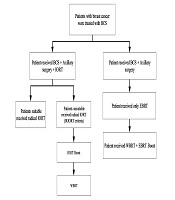
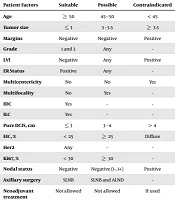
Conventional EBRT was delivered to 8,812 patients in the control group. They initially received 45 - 50 Gy in 25 fractions over 5 - 6 weeks, followed by a 10 Gy EBRT boost in five fractions, administered four weeks after surgery in patients treated with chemotherapy. Patients receiving IORT were assigned to radical or boost radiotherapy according to their demographic, clinical, pathologic, and biological characteristics and the IRIORT consensus criteria (Table 1). Some patients in the "possible" group with a favorable tumor profile, including those with comorbidities or limited access to radiotherapy facilities, received the radical dose. A total of 541 patients received a 12 Gy boost of intraoperative electron radiotherapy (IOeRT), with tissue flaps formed around the tumor cavity to a maximum thickness of 2 cm. Under anesthesia, the healthy margins were irradiated with electrons using LIAC linear accelerators (Sordina IOeRT Technologies S.p.A., Italy). These patients also received supplemental EBRT. Another 305 patients received a 21 Gy radical dose of IOeRT using the LIAC device, followed by adjuvant chemotherapy and hormone therapy. A 20 Gy boost of intraoperative 50 kV X-ray radiotherapy (IOxRT) was delivered to 66 patients with negative margins using the INTRABEAM device (Carl Zeiss Meditec, Oberkochen, Germany). These patients also received supplemental EBRT. According to the IRIORT criteria, another 25 patients received 20 Gy radical IOxRT.
Table 1.
Iranian Intraoperative Radiotherapy (IRIORT) Consensus Criteria for Radical Intraoperative Radiotherapy a
| Characteristic | Suitable | Possible | Contraindicated |
|---|---|---|---|
| Age (y) | ≥ 45 | 40 - 45 | < 40 |
| Tumor size (cm) | ≤ 3 | 3 - 3.5 | ≥ 3.5 |
| Margin | Negative | Negative | Positive |
| Grade | 1 or 2 | Any | – |
| LVI | Negative | Any | Positive |
| Multicentricity | No | No | Yes |
| Multifocality | No | Yes | – |
| IDC | Yes | Yes | – |
| ILC | Yes | Yes | – |
| Pure DCIS (cm) | ≤ 3 | 3 - 4 | > 4 |
| LCIS-associated | Any | Any | Any |
| EIC | < 25% | ≥ 25% | Diffuse |
| ER, PR | Positive | Any | – |
| HER2 | Any | – | – |
| Ki-67 | < 30% | ≥ 30% | – |
| Lymph node involvement | Negative | Negative (i-, i+) | Positive |
| Axillary surgery | SLNB | SLNB or ALND | – |
| Neoadjuvant therapy | Not allowed | Not allowed | If used |
a Abbreviations: ALND, axillary lymph node dissection; DCIS, ductal carcinoma in-situ; EIC, extensive in-situ component; ER, estrogen receptor; HER2, human epidermal growth factor receptor 2; IDC, invasive ductal carcinoma; ILC, invasive lobular carcinoma; Ki-67, antigen Kiel 67; LCIS, lobular carcinoma in-situ; LVI, lympho-vascular invasion; PR, progesterone receptor; SLNB, sentinel lymph node biopsy.
3.5. Outcome of Interest
The outcome of interest was breast cancer recurrence, defined as the occurrence of a tumor with the same pathology in the tumor bed, axilla, or distant tissues that necessitated a change in the therapeutic approach. We also investigated factors that predicted recurrence.
3.6. Follow-Up Data
We regularly assessed and actively followed participants for up to 10 years, asking about cancer recurrence or cause-specific death and the corresponding dates. Clinical examinations were performed every six months for the first two years and annually thereafter. Annual mammography and ultrasonography were used as indicated. Magnetic resonance imaging was not routinely performed.
If a participant missed a clinical visit, we asked about their current condition by telephone. In the event of death, we asked family members, caregivers, or disease registries to report the cause of death and any cancer recurrence and to provide available medical documents, such as death certificates or autopsy reports.
3.7. Endpoints
The study endpoints were death, withdrawal, and loss to follow-up. Participants who did not answer three consecutive calls within a week and two consecutive annual calls were considered lost to follow-up and were excluded.
3.8. Statistical Analysis
Participants were classified by radiotherapy approach into EBRT, IOeRT (boost and radical), and IOxRT (boost and radical) groups. Categorical variables were summarized as frequency distributions, and continuous variables as means and standard deviations (SDs). Independent-samples t-tests and analysis of variance were used to compare continuous variables, whereas chi-square and Fisher's exact tests were used to compare categorical variables between groups. Predictors of breast cancer recurrence were investigated using univariate and multivariate logistic regression. Significant univariate predictors were entered into age-adjusted multivariate models using backward selection. Models were summarized as odds ratios (ORs) with 95% confidence intervals (CIs).
We used the Kaplan-Meier method to plot breast cancer recurrence-free survival probabilities over time according to radiotherapy approach and pathologic diagnosis. Groups were compared using the Mantel-Cox log-rank test. Potential confounding factors, including socioeconomic status, comorbidities, and medications, were not investigated. The noninferiority margin was 2.5%; that is, the recurrence risk with IORT minus that with conventional EBRT should not exceed 0.025 (2.5%). The significance level was 0.05. Data were analyzed using IBM SPSS version 25 (IBM Corp., Chicago, IL, USA).
4. Results
We enrolled 9,813 patients. Fifteen discontinued EBRT, and 49 participants were lost to follow-up and could not be recontacted. Finally, 9,749 participants were followed for a mean duration (± SD) of 116.8 ± 16.3 months. Of this cohort, 90.0% had ductal carcinoma (invasive and/or in situ), 7.9% had lobular carcinoma (invasive and/or in situ), and 2.0% had both ductal and lobular carcinomas. External beam radiotherapy and IORT were delivered to 8,812 and 937 patients, respectively. Table 2 presents baseline characteristics and recurrence rates by radiotherapy approach. The IORT group comprised 541, 305, 66, and 25 patients who received boost IOeRT, radical IOeRT, boost IOxRT, and radical IOxRT, respectively. During follow-up of up to 10 years, breast cancer recurred in 353 patients (the “recurrence group”; 3.6%; 95% CI, 3.3 - 4.0%). Among these patients, the mean time to recurrence was 40.5 ± 33.4 months (95% CI, 37.0 - 44.0). Cumulative breast cancer recurrence-free survival rates in the first, second, fifth, and tenth years of follow-up were 98.9%, 98.4%, 97.7%, and 96.4%, respectively.
Table 2.
Comparison of Baseline Characteristics and Recurrence Rate in Different Radiotherapy Approaches a
| Characteristic | Total | EBRT | IORT (Total) | IOeRT Boost | IOeRT Radical | IOxRT Boost | IOxRT Radical | P-Value b, c | P-Value d, e |
|---|---|---|---|---|---|---|---|---|---|
| Recurrence | 353 (3.6) | 324 (3.7) | 29 (3.1) | 25 (4.6) | 4 (1.3) | 0 (0.0) | 0 (0.0) | 0.408 | 0.043 |
| Pathology | < 0.001 | < 0.001 | |||||||
| Ductal carcinoma | 1411 (90.0) | 590 (93.7) | 821 (87.6) | 504 (93.2) | 228 (74.8) | 66 (100) | 23 (92.0) | ||
| Lobular carcinoma | 124 (7.9) | 31 (4.9) | 93 (9.9) | 31 (5.7) | 62 (20.3) | 0 (0.0) | 0 (0.0) | ||
| Both | 32 (2.0) | 9 (1.4) | 23 (2.5) | 6 (1.1) | 15 (4.9) | 0 (0.0) | 2 (8.0) | ||
| LN involvement | < 0.001 | < 0.001 | |||||||
| 0 | 594 (54.8) | 217 (45.4) | 377 (62.3) | 212 (60.9) | 128 (65.6) | 28 (60.9) | 9 (56.3) | ||
| 1 - 3 | 293 (27.1) | 141 (29.5) | 152 (25.1) | 101 (29.0) | 41 (21.0) | 7 (15.2) | 3 (18.8) | ||
| > 3 | 196 (18.1) | 120 (25.1) | 76 (12.6) | 35 (10.1) | 26 (13.3) | 11 (23.9) | 4 (25.0) | ||
| ER+ | 1984 (85.6) | 1340 (86.7) | 644 (83.3) | 370 (82.0) | 230 (87.1) | 31 (77.5) | 13 (72.2) | 0.033 | 0.021 |
| PR+ | 1889 (81.5) | 1256 (81.2) | 633 (81.9) | 368 (81.6) | 221 (83.7) | 31 (77.5) | 13 (72.2) | 0.734 | 0.612 |
| HER2+ | 1685 (72.7) | 1037 (67.1) | 648 (83.8) | 384 (85.1) | 226 (85.6) | 27 (67.5) | 11 (61.1) | < 0.001 | < 0.001 |
| Age (y) | 57.7 ± 11.9 | 58.3 ± 11.8 | 52.9 ± 11.5 | 54.7 ± 11.8 | 51.6 ± 10.3 | 45.6 ± 9.6 | 49.4 ± 11.2 | < 0.001 | < 0.001 |
| Tumor size (cm) | 2.4 ± 1.2 | 3.7 ± 1.5 | 2.4 ± 1.2 | 2.5 ± 1.2 | 2.1 ± 1.1 | 2.7 ± 1.1 | 2.1 ± 1.3 | 0.004 | < 0.001 |
a Values are No. (%) or mean ± SD. Abbreviations: EBRT, whole-breast external beam radiotherapy; ER, estrogen receptor; HER2, human epidermal growth factor receptor 2; IOeRT, intraoperative electron radiotherapy; IORT, intraoperative radiotherapy; IOxRT, intraoperative X-ray radiotherapy; LN, lymph node; PR, progesterone receptor; SD, standard deviation.
b Comparison between EBRT and IORT; Fisher’s exact test; level of significance < 0.05.
c Comparison between EBRT and IORT; independent samples t-test; level of significance < 0.05.
d Comparison among EBRT, boost IOeRT, radical IOeRT, boost IOxRT, and radical IOxRT; Fisher’s exact test; level of significance < 0.05.
e Comparison among EBRT, boost IOeRT, radical IOeRT, boost IOxRT, and radical IOxRT; one-way analysis of variance; level of significance < 0.05.
Recurrence occurred in 324 patients treated with EBRT (3.67%; 95% CI, 3.3 - 4.1%) and 29 patients treated with IORT (3.09%; 95% CI, 2.1 - 4.4%). The observed difference in recurrence rates between IORT and EBRT (IORT minus EBRT, -0.58%; 95% CI, -1.7 - 0.5%) was not statistically significant (P = 0.408) and was smaller than the prespecified 2.5% noninferiority margin. Of the 29 patients with recurrence after IORT, 25 had received boost IOeRT (4.6%; 95% CI, 3.1 - 6.6%) and four had received radical IOeRT (1.3%; 95% CI, 0.4 - 3.1%). No recurrence occurred after IOxRT. Recurrence rates differed significantly among the EBRT, radical IOeRT, boost IOeRT, radical IOxRT, and boost IOxRT approaches (P = 0.043). In a subanalysis that excluded the IOxRT groups, which were 100% recurrence-free, recurrence rates also differed significantly among the EBRT, boost IOeRT, and radical IOeRT groups; recurrence was significantly lower after radical IOeRT (Fisher's exact test, P = 0.031).
As shown in Table 3, the mean age of the cohort was 57.7 ± 11.9 years, with no significant difference between patients with and without recurrence (P = 0.421). Tumor size did not differ significantly (P = 0.469) between patients with recurrence (2.2 ± 1.2 cm) and recurrence-free patients (2.4 ± 1.2 cm). The distributions of pathologic diagnosis and lymph node involvement did not differ significantly between the groups (both P = 0.056). Expression of ER (P = 0.598), PR (P = 0.469), and HER2 (P = 0.835) also did not differ between the groups.
Table 3.
Comparison of Characteristics of Patients with Breast Cancer Recurrence and Recurrence-Free Patients; and Univariate and Multivariate Predictors of 10-Year Breast Cancer Recurrence After Breast Conserving Surgery and Radiotherapy a
| Characteristic | Total | Recurrence-free | Recurrence | P-value b, c | Univariate odds ratio (95% CI) d | Multivariate odds ratio (95% CI) d, e |
|---|---|---|---|---|---|---|
| Age (y) | 57.7 ± 11.9 | 57.7 ± 11.9 | 58.2 ± 12.0 | 0.421 | 1.00 (0.99 - 1.01) | 0.94 (0.90 - 0.99) |
| Tumor size (cm) | 2.4 ± 1.2 | 2.4 ± 1.2 | 2.2 ± 1.2 | 0.469 | 0.88 (0.64 - 1.22) | |
| Pathology | 0.056 | |||||
| Ductal carcinoma | 1411 (90.0) | 1388 (90.2) | 23 (79.3) | 1.57 (0.75 - 3.27) | ||
| Lobular carcinoma | 124 (7.9) | 118 (7.7) | 6 (20.7) | |||
| Both | 32 (2.0) | 32 (2.1) | 0 (0.0) | |||
| Radiotherapy | 0.043 | |||||
| EBRT | 8812 (90.4) | 8488 (90.3) | 324 (91.8) | 0.75 (0.57 - 0.98) | 0.33 (0.14 - 0.76) | |
| IOeRT-boost | 541 (5.5) | 516 (5.5) | 25 (7.1) | |||
| IOeRT-radical | 305 (3.1) | 301 (3.2) | 4 (1.1) | |||
| IOxRT-boost | 66 (0.7) | 66 (0.7) | 0 (0.0) | |||
| IOxRT-radical | 25 (0.3) | 25 (0.3) | 0 (0.0) | |||
| LN involvement | 0.056 | |||||
| 0 | 594 (54.8) | 577 (55.3) | 17 (43.6) | 1.52 (1.03 - 2.24) | ||
| 1 - 3 | 293 (27.1) | 284 (27.2) | 9 (23.1) | |||
| > 3 | 196 (18.1) | 183 (17.5) | 13 (33.3) | |||
| ER+ | 1984 (85.6) | 1960 (85.6) | 24 (82.8) | 0.598 | 0.80 (0.30 - 2.13) | 13.38 (1.61 - 110.94) |
| PR+ | 1889 (81.5) | 1867 (81.5) | 22 (75.9) | 0.469 | 0.71 (0.30 - 1.67) | 0.03 (0.005 - 0.22) |
| HER2+ | 1685 (72.7) | 1663 (72.6) | 22 (75.9) | 0.835 | 1.18 (0.50 - 2.78) |
a Values are No. (%) or mean ± SD. Abbreviations: CI, confidence interval; EBRT, whole-breast external beam radiotherapy; ER, estrogen receptor; HER2, human epidermal growth factor receptor 2; IOeRT, intraoperative electron radiotherapy; IORT, intraoperative radiotherapy; IOxRT, intraoperative X-ray radiotherapy; LN, lymph node; PR, progesterone receptor; SD, standard deviation
b independent samples t-test; level of significance < 0.05.
c Fisher’s exact test; level of significance < 0.05.
d logistic regression modeling.
e backward conditional selection method.
In univariate logistic regression models, radiotherapy approach (categorized into five groups) and lymph node involvement significantly predicted 10-year breast cancer recurrence. However, radiotherapy approach as a dichotomous variable (EBRT/IORT) did not predict recurrence. In multivariate models adjusted for age and radiotherapy approach, PR (OR = 0.03; 95% CI, 0.005 - 0.22) and ER (OR = 13.38; 95% CI, 1.61 - 110.94) were the only biomarkers independently associated with 10-year recurrence (Table 3).
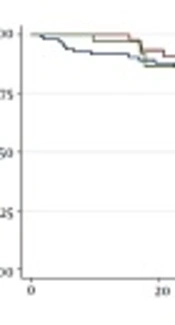
The figures show Kaplan-Meier plots of disease-free survival (DFS) by radiotherapy approach and pathologic diagnosis. Disease-free survival did not differ significantly between the EBRT and IORT groups (Figure 1; Mantel-Cox log-rank test, P = 0.377). However, DFS differed significantly among the boost IOeRT, radical IOeRT, IOxRT (boost and radical), and EBRT approaches (Figure 2; Mantel-Cox log-rank test, P = 0.023). Disease-free survival was significantly higher after IOxRT (boost and radical) and radical IOeRT. In subanalyses, DFS did not differ significantly between IOxRT and radical IOeRT (Mantel-Cox log-rank test, P = 0.273) or between EBRT and boost IOeRT (Mantel-Cox log-rank test, P = 0.256). Comparing the two IOeRT approaches, DFS was significantly higher after radical IOeRT than after boost IOeRT (Mantel-Cox log-rank test, P = 0.011).
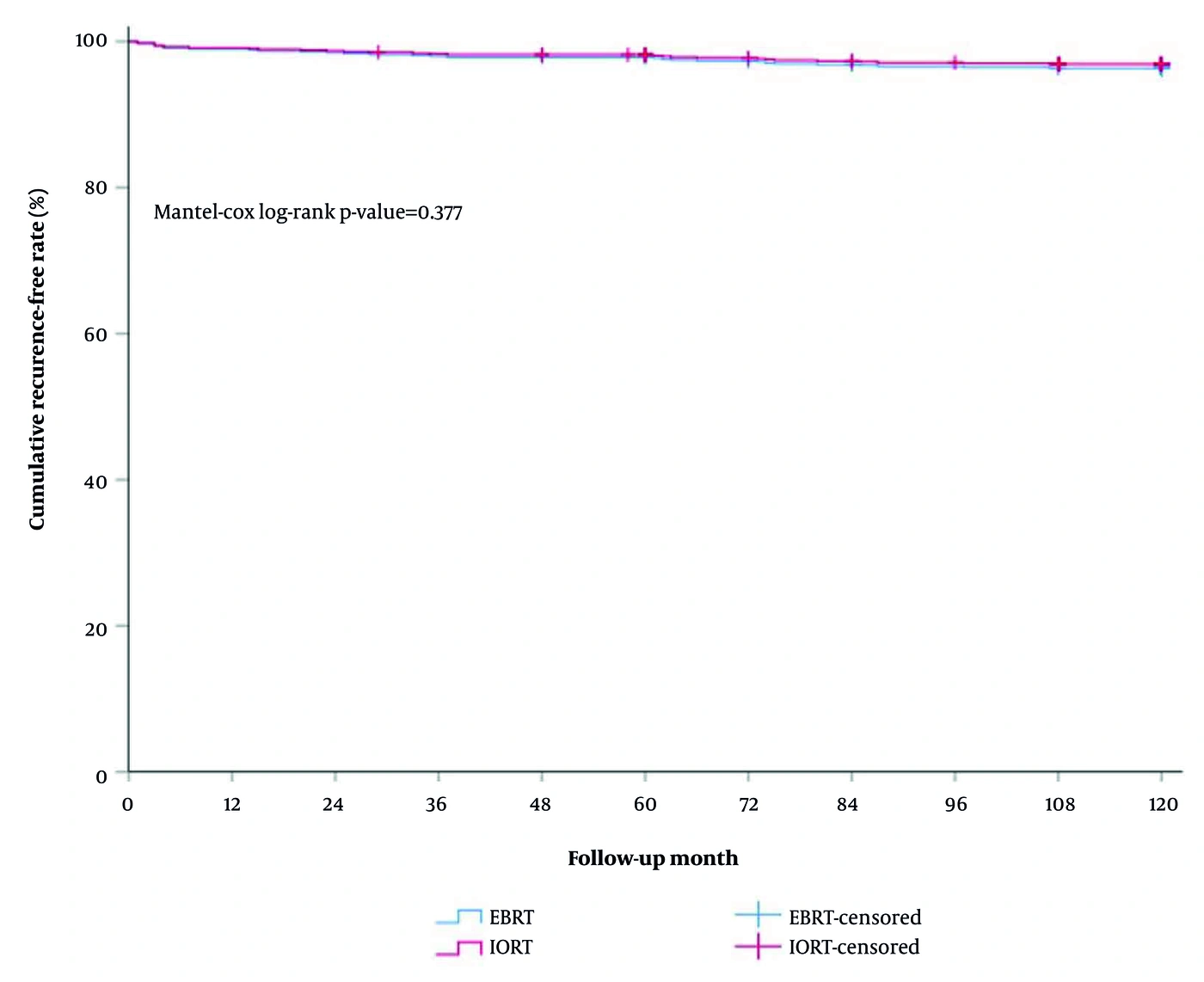
Figure 1.
Kaplan-Meier curves for cumulative breast cancer recurrence-free rates after breast conserving surgery and radiotherapy, based on radiotherapy approach (EBRT: whole breast external beam radiotherapy, IORT: intraoperative radiotherapy)
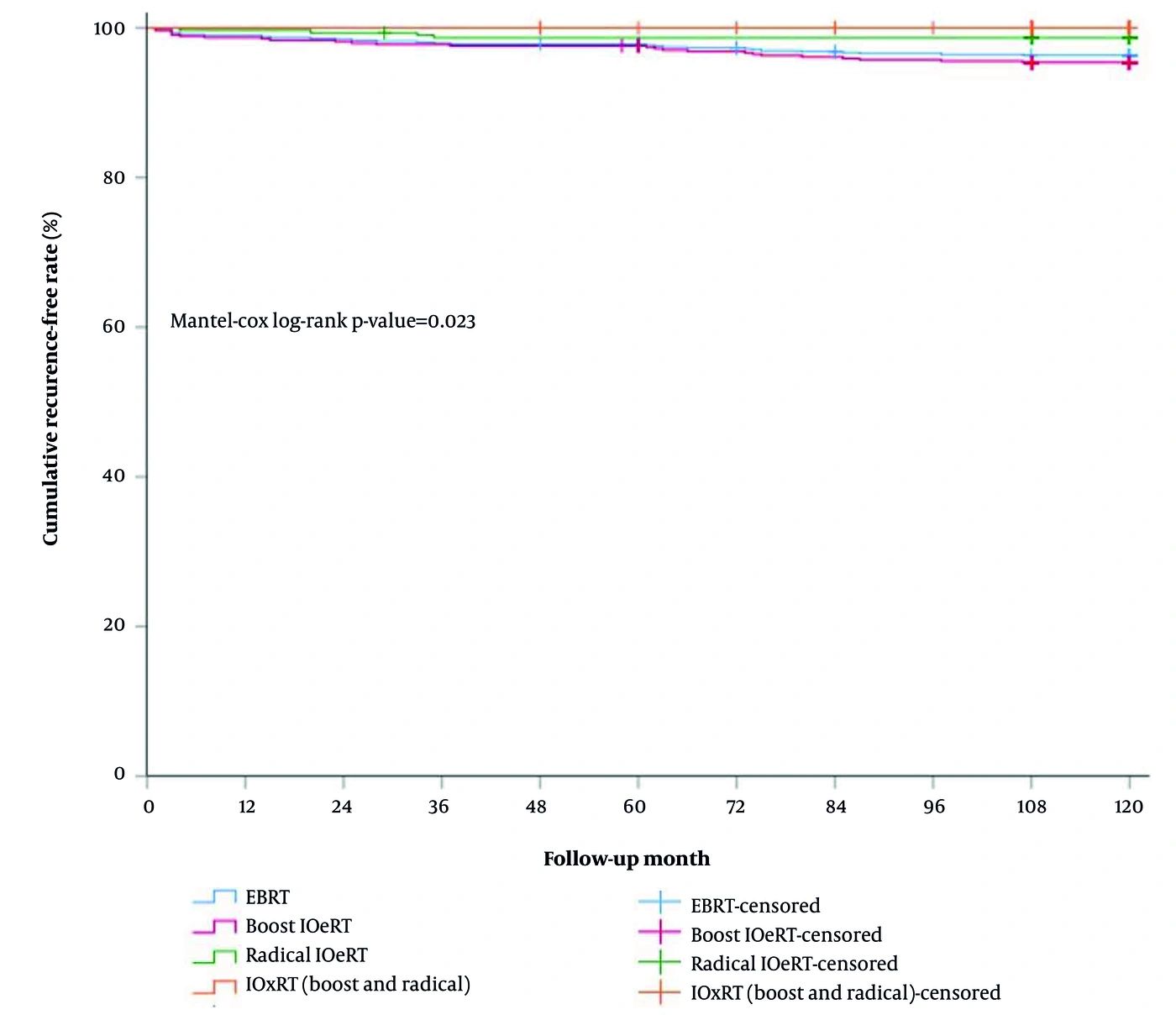
Figure 2.
Kaplan-Meier curves for cumulative breast cancer recurrence-free rates after breast-conserving surgery and radiotherapy, in conventional radiotherapy and intraoperative radiotherapy approaches (EBRT: whole breast external beam radiotherapy, IOeRT: intraoperative electron radiotherapy, IOxRT: intraoperative X-ray radiotherapy)
None of the patients with recurrence had mixed pathology comprising both ductal and lobular carcinomas. Disease-free survival differed significantly among pathologic categories (Figure 3; Mantel-Cox log-rank test, P = 0.028). In subanalyses, DFS was significantly higher in patients with ductal carcinoma than in those with lobular carcinoma (Mantel-Cox log-rank test, P = 0.012).
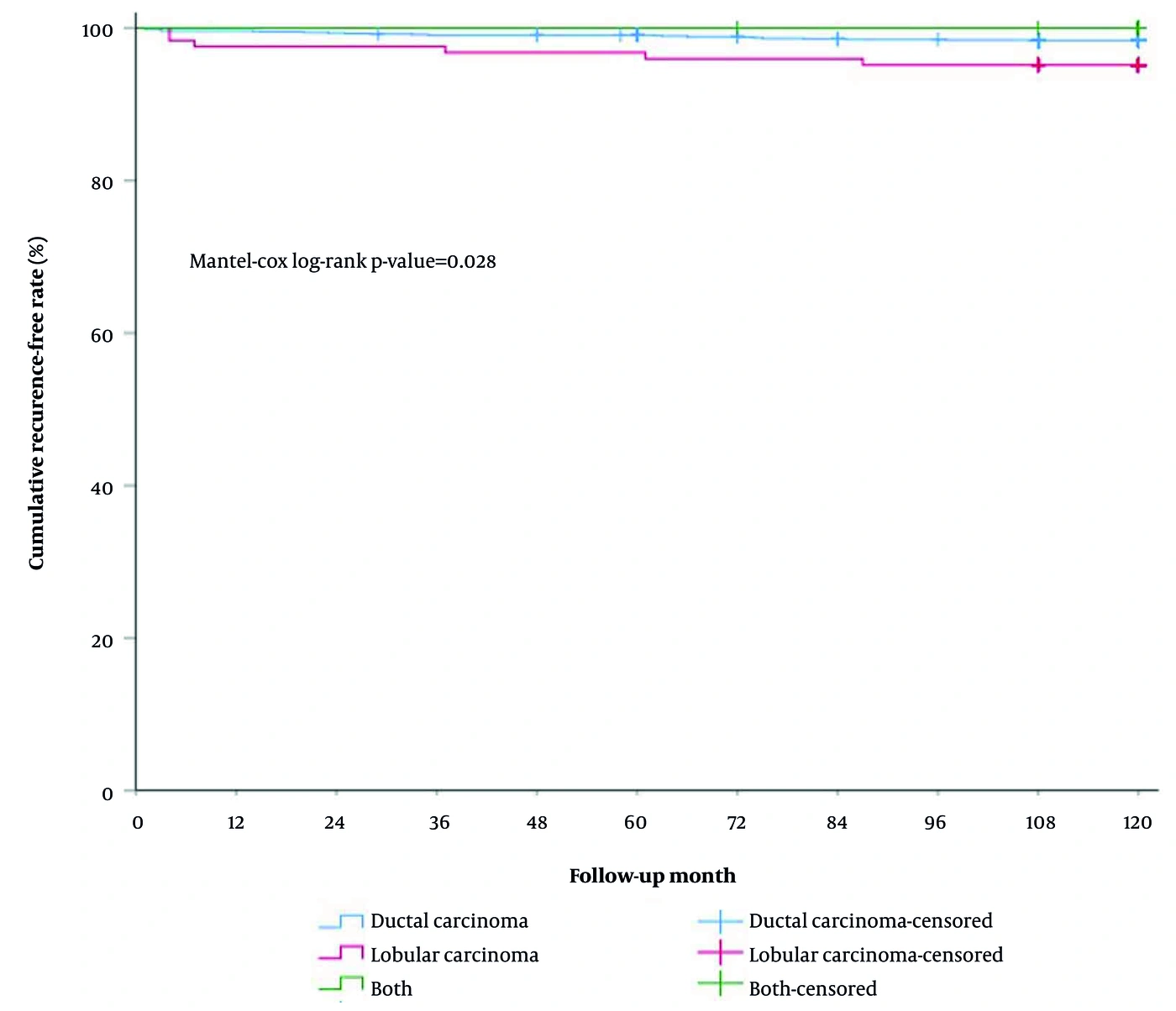
Figure 3.
Kaplan-Meier curves for cumulative breast cancer recurrence-free rates after breast-conserving surgery and radiotherapy, based on pathologic diagnosis of tumor
5. Discussion
This study provides long-term follow-up data for patients with ductal and/or lobular carcinoma (invasive and/or in situ) who were previously studied at our center (15-20). Intraoperative radiotherapy was noninferior to EBRT: the observed difference in recurrence rates was not statistically significant and was smaller than the prespecified noninferiority margin. Previous short-term studies at our research center reported the noninferiority of IORT and suggested its use in patients with ductal carcinoma in situ (DCIS) or lobular carcinoma (15-20). In the present study, boost IOeRT was not inferior to conventional EBRT over the long term. In addition, IOxRT and radical IOeRT were associated with lower recurrence rates in our cohort. All patients receiving IOxRT (boost or radical) remained disease-free during follow-up of up to 10 years. Radical IOeRT was associated with a higher DFS rate than boost IOeRT. This observation may reflect the fact that patients receiving radical doses generally have a better prognosis (22-24).
Our findings corroborate previous observations. Vaidya et al. compared IORT and EBRT in a randomized clinical trial involving patients with invasive ductal carcinoma (IDC) and reported the noninferiority of IORT (25). A previous study at our center involving patients with IDC or invasive lobular carcinoma (ILC) also showed the noninferiority of boost IOeRT compared with EBRT (17). Direct visualization of the radiation device during boost IORT has been suggested to reduce "geographical miss" (20, 26). In a comparison of IORT and EBRT, Veronesi et al. found a higher local recurrence rate among patients treated with IORT but similar survival outcomes (27). In a previous study at our center, Hashemi et al. found no difference in recurrence rates among EBRT, boost IORT, and radical IORT in patients with DCIS (19). However, they found a significant difference in DFS between boost and radical IORT. Consistent with our findings, they reported no correlations between recurrence rate and age or tumor size (19).
We found a higher recurrence rate among patients with lobular carcinoma (4.8%) than among those with ductal carcinoma (1.6%). However, tumor pathology was not correlated with recurrence in our cohort. This finding corroborates previous studies conducted at our research center with shorter follow-up and smaller samples. Salati et al. compared 2-year recurrence rates between lobular and ductal carcinoma in 191 patients treated with BCS and radical IOeRT and reported no significant difference between the two pathologies (15). Moayeri et al. followed 968 patients with lobular and ductal carcinoma for four years, compared 4-year recurrence rates between EBRT and boost IOeRT, and suggested boost IOeRT for the management of ILC as well as IDC (17). Invasive lobular carcinoma differs from IDC genomically, pathologically, and clinically (28). Given the multifocality of ILC, APBI should be used cautiously in selected patients with this pathology (15, 17, 28).
Another study reported the noninferiority of radical IOeRT compared with EBRT in terms of cosmetic outcomes. Boost IOeRT was associated with higher rates of fat necrosis and fibrosis; therefore, the authors suggested radical IOeRT as a better option for selected patients (29).
Compared with EBRT, IORT delivers a relatively low radiation dose to adjacent organs over a shorter period and is associated with fewer radiation-related complications and greater patient adherence and satisfaction (12-14, 18). Given the increasing burden of breast cancer (1), IORT may have socioeconomic benefits for patients and the health system (30). It may save patients time and money and overcome access barriers, such as the need for regular travel over long distances to radiotherapy centers, thereby potentially reducing treatment discontinuation (12, 17, 27, 31).
5.1. Study Limitations
In addition to methodological limitations such as information bias, this study lacked data on deaths and potential confounding factors, including socioeconomic status and comorbidities such as diabetes mellitus and autoimmune disorders. We followed recommended IORT standards for device calibration, radiation dose, and patient selection to reduce technical bias (32).
5.2. Conclusions
The 10-year breast cancer recurrence rate was 3.1% after IORT and 3.7% after EBRT. Compared with EBRT, recurrence rates did not differ after boost IOeRT and were lower after IOxRT and radical IOeRT. Intraoperative radiotherapy was noninferior to EBRT and may be a convenient alternative for treating breast carcinoma. Further studies with larger samples may corroborate these findings and are needed to investigate factors affecting long-term breast cancer recurrence.