
1. Context
Adjuvant radiotherapy is mandatory after breast conserving surgery. The addition boost dose to tumor bed in conjunction with the whole breast irradiation will decrease the risk of local recurrence. This process requires more than 30 days of daily attendance to radiotherapy, 4 to 6 months after surgery.
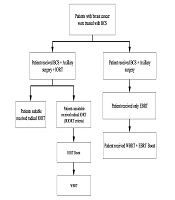
Intraoperative radiotherapy (IORT) for partial breast irradiation is a new innovative tool to deliver optimal dose of radiotherapy immediately after excision of cancer to well-vascularized tissue and to the margins of resection at the same operation to destroy all cancer cells that may remain around the tumor without any delay as radical irradiation for specific cases or as boost dose for others.
The first experience in IORT was established by Comas and Prio in 1905 for a case of endometrial cancer (1).
Other modalities using low energy X-ray were set upped in abdominal, thoracic, and head and neck malignancies between the 1930s and 1950s (2, 3). The modern approach to IORT started in 1960s at the University of Kyoto with studies of Abe, who used a high single fraction of radiation dose from a cobalt unit and electrons from a Betatron for gastric cancer. In this technique, large single doses of radiation are administered to the patient during surgery, and most patients received no follow-up external radiation treatment (4).
About 30 years ago, Calvo (HGUGM Programme) prepared an operating room (OR) in radiation oncology department of Madrid University, where surgical procedures were performed on IORT candidates. The distance from the OR to the accelerator room was 50 meters (5).
Then, in 1970 in-room, conventional linear accelerators were used in dedicated operating rooms at the Howard University Hospital and the Massachusetts General Hospital. They prepared one of their conventional therapy rooms for intraoperative electron radiotherapy (IOERT); after surgery in the OR they transported the patient to the radiation device that was fixed on the wall (6, 7). The employed electron beam, improved IORT dose distributions, limited penetration beyond the tumor, delivered the required dose much more rapidly, and the normal tissues were effectively spared due to the limited range of electron beyond the tumor, but the risk and complexity of transferring the anesthesia patient was problematic.
In the early 1990, mobile dedicated electron accelerators and miniaturized low-energy X-ray machines were introduced into clinical practice worldwide to solve these problem.
Two comprehensive clinical trials including TARGIT-A and ELIOT trial were developed in Europe after 2000s, which employed these machine for partial breast irradiation (PBI) after breast conserving surgery.
This article is a comparative study, which focuses on the differences between these two big clinical trials in breast cancer management and further evaluating their outcome to introduce the real efficiency of IORT with X-ray and electron beam in the similar cases.
2. Evidence Acquisition
This article compares two trials in intraoperative breast radiation therapy, one using X-ray beam and the other using electron beam. We focused on these two as well as other studies that were explicitly related to these clinical trials. To extract the interested studies, we performed an iterative search in MEDLINE, PubMed, PubMed Central, and ISI Web of Knowledge databases from December 2015 to January 2018. The reference list of each article was reviewed to expand literature selection. Then, based on standard search strategies including title screening, abstract review, and scanning the method and conclusion parts of each paper, interested studies were selected. Finally, all the data related to these two clinical trials were gathered and, then, their subjects were arranged and compared without new analysis on their outcomes.
3. Results
ELIOT was done at one center (European Institute of Oncology in Milan) on 1305 patients from 2000 to 2007 (8).
TARGIT-A was a multi-centric study in 11 countries (33 centers) on 3451 cases from 2000 to 2012. In this study, 1721 cases took IORT and 15.2% of this group underwent External beam radiotherapy after definitive pathologic report, which was not excluded from final analysis. 1730 cases also underwent EBRT without any IORT in the operating room (9-11).
In the ELIOT study, 651 cases were in IORT and 654 cases were in EBRT group and the patients, who needed EBRT after IORT, were excluded from final analysis.
In TARGIT-A, X-ray with 50 kV energy was employed and dose of 20 Gy was delivered to the surface, and 5 - 7 Gy to 1 cm depth, in the time interval of 20 to 45 minutes, using spherical applicator diameters of 1.5 to 5 cm. In the ELIOT study, the electron beam with 4 - 12 MeV was used and 21 Gy dose delivered through 4 to 8 cm diameter cylindrical applicators during 3 to 5 minutes. The comparison between the overall characteristics of each clinical trial is presented in Table 1.
Table 1.
ELIOT and TARGIT-A Study Comparison
| Subject | ELIOT | TARGIT-A |
|---|---|---|
| Whole number in | 1305 | 3451 |
| Number of centers | Single in Milan | 33 centers in 11 countries |
| Time | 2000 - 2007 | 2000 - 2012 |
| Number of IORT group | 651 | 1721 |
| Number of EBRT group | 654 | 1730 |
| EBRT after IORT | Exclude | 15.2% |
| Radiation type | Electron | X-ray |
| Applicator | 4 - 8 cm diameter (cylindrical) | 1.5 - 5 cm diameter (spherical) |
| Energy | 4 - 12 MeV | 50 kV |
| Time | 3 - 5 minutes | 20 - 45 minutes |
| Dose | 21 Gy | 20 Gy at surface |
We matched the cases in the two groups according to age, tumor size, grade, lymph node involvement and biologic markers.
In both studies, the percentage of patients younger than 50 years were only 7%, the cases older than 70 years were 10% in ELIOT and 15% in TARGIT-A groups (P = 0.001), and the remainder were between 50 and 70 years.
Tumor size is one factor for choosing boost or whole radiotherapy in the operating room. In ELIOT study, only 31% of cases had less than 1 cm tumor size, while in TARGIT-A, 39% of cases were involved in this category. The number of cases, who had more than 2 cm tumor size, were the same and equal to 12% to 13% in both studies.
Tumor grade 1 had the same percentage of 31% to 35% in both studies, but grade 3 was more in ELIOT, 20% versus 15% in TARGIT-A (P = 0.003), and this is one of the risk factors for recurrence.
The most common histologic type in both groups was invasive ductal carcinoma, but cases with invasive lobular carcinoma was twice in ELIOT study in comparison to the TARGIT-A one (8% versus 4% (P = 0.0003)).
The number of negative lymph node cases was 74% in ELIOT study, while 84% cases were involved in TARGIT-A one, which is so good prognostic factor for TARGIT-A study. Node positivity (1 - 3 positive nodes) was near twice in ELIOT study in comparison to the TARGIT-A one (21% versus 14% (P = 0.001)). Considered tumor features in both studied trials are presented in Table 2.
Table 2.
Tumor Characteristics in Trials Understudya
| Subject | ELIOT | TARGIT-A | ||
|---|---|---|---|---|
| IORT | EBRT | IORT | EBRT | |
| Age | ||||
| < 50 | 44 (7) | 43 (7) | 150 (9) | 122 (7) |
| 50 - 70 | 545 (84) | 536 (82) | 1308 (76) | 1355 (79) |
| > 70 | 62 (10) | 75 (11) | 263 (15) | 253 (15) |
| Tumor size, cm | ||||
| < 1 | 199 (31) | 194 (30) | 611 (39) | 597 (39) |
| 1 - 2 | 363 (56) | 350 (54) | 751 (48) | 726 (48) |
| > 2 | 83 (13) | 103 (16) | 190 (12) | 207 (14) |
| Unknown | - | - | 169 (10) | 200 (12) |
| Grade | ||||
| I | 196 (31) | 160 (25) | 528 (35) | 558 (37) |
| II | 305 (48) | 328 (52) | 757 (50) | 720 (48) |
| III | 129 (20) | 145 (23) | 232 (15) | 227 (15) |
| Unknown | - | - | 194 (11) | 225 (13) |
| Histology | ||||
| IDC | 524 (81) | 514 (79) | 1012 (95) | 1018 (94) |
| ILC | 53 (8) | 57 (9) | 47 (4) | 45 (4) |
| Mixed | 17 (3) | 21 (3) | 32 (3) | 35 (3) |
| Others | 53 (8) | 55 (9) | 43 (4) | 40 (4) |
| ER | ||||
| Positive | 583 (91) | 589 (92) | 1441 (92) | 1433 (94) |
| Positive LN | ||||
| None | 478 (74) | 471 (73) | 1307 (83) | 1303 (85) |
| 1 - 3 | 138 (21) | 138 (21) | 219 (14) | 211 (14) |
| > 3 | 31 (5) | 38 (6) | 43 (3) | 29 (2) |
| Unknown | - | - | 152 (9) | 187 (11) |
Abbreviations: Invasive ductal carcinoma (IDC), Invasive lobular carcinoma (ILC), Estrogen receptor (ER), Lymph node (LN)
a Values are expressed as No. (%).
Totally, the favorable characteristics such as old age, small tumor size, and negative lymph nodes were significantly better in TARGIT-A in comparison to the ELIOT study. The margin status was unclear in ELIOT study, but the reports of TARGIT-A showed that the 90.5% and 90.2% of the cases were free ink margin in IORT and EBRT groups, respectively. In both groups, near 5% of margins were positive for invasive cancer and rate of re-excision was 7% to 9% totally. Favorable characteristics of involved patients in both clinical trials are reported in Table 3.
Table 3.
Favorable Characteristics in IORT Groups of Both Studies
| Subject | ELIOTa | TARGIT-Aa | P Value |
|---|---|---|---|
| Age, y | |||
| > 70 | 62 (10) | 263 (15) | 0.001 |
| Tumor size, cm | |||
| < 1 | 199 (31) | 611 (39) | 0.0003 |
| Grade | |||
| III | 129 (20) | 232 (15) | 0.003 |
| Histology | |||
| IDC | 524 (81) | 1012 (95) | < 0.001 |
| ILC | 53 (8) | 47 (4) | 0.0003 |
| LN+ | |||
| Negative | 478 (74) | 1307 (83) | < 0.001 |
| 1 - 3 pos | 138 (21) | 219 (14) | 0.001 |
| > 3 pos | 31 (5) | 43 (3) | 0.019 |
Abbreviations: Invasive ductal carcinoma (IDC), Invasive lobular carcinoma (ILC), Lymph node (LN).
a Values are expressed as No. (%).
Hormone therapy was used as adjuvant treatment in most cases of both trials: 75% in ELIOT and 65% in TARGIT-A, although more than 90% of their patients were ER positive. Type of hormone therapy and involved patients for each one is presented in Table 4.
Table 4.
The Status Adjuvant Therapy (Hormone Therapy) in Studied Clinical Trialsa
| Subject | ELIOT | TARGIT-A | ||
|---|---|---|---|---|
| Adjuvant therapy | IORT | EBRT | IORT | EBRT |
| Endocrine therapy | 489 (75) | 485 (74) | 727 (65) | 753 (67) |
| Chemotherapy | 53 (8) | 47 (7) | 116 (10) | 141 (13) |
| Both treatment | 84 (13) | 96 (15) | - | - |
| Other | - | - | 48 (4) | 41 (4) |
| Control/unknown | 26 (4) | 25 (4) | 100 (9) | 89 (8) |
a Values are expressed as No. (%).
Meanwhile, only 8% to 10% of the cases take chemotherapy in both studies, regardless the fact that more than 15% of patients were LN positive.
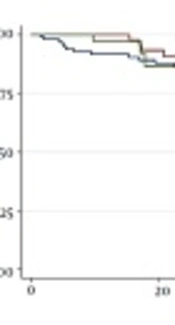
The recurrence rate for IORT and EBRT was 4.4% and 0.4%, respectively, in ELIOT study (Hazard Ratio = 9.3), where 2.5% of the cases were true recurrence and 1.9% were new cancer out of index quadrant for IORT (in contrast to the second group [EBRT] that there was not any new cancer). Nevertheless, if the high-risk group is excluded from the IORT, the recurrence rate was only 1.5% in 452 cases, and in patients with risk factors (199 cases 30.6%), this rate was 11.3%.
The rate of recurrence in TARGIT study was 3.3% versus 1.3% in EBRT as whole group, but in pre-pathologic group, who took IORT concurrently with surgery, this rate was 2.1% versus 1.1% (P = 0.31) without any significant difference (refer to Figures 1 and 2).
![Local recurrence in ELIOT (Left) and pre-pathologic of TARGIT-A (Right) [with permission].](https://brieflands.com/journals/ijcm/articles/68915/figures/ijcm-In_Press-In_Press-68915-i001-preview.webp "Local recurrence in ELIOT (Left) and pre-pathologic of TARGIT-A (Right) [with permission].")
Figure 1.
Local recurrence in ELIOT (Left) and pre-pathologic of TARGIT-A (Right) [with permission].
![TARGIT-A study, local recurrence in pre-pathologic (Left), and post-pathologic (Right) conditions [with permission].](https://brieflands.com/journals/ijcm/articles/68915/figures/ijcm-In_Press-In_Press-68915-i002-preview.webp "TARGIT-A study, local recurrence in pre-pathologic (Left), and post-pathologic (Right) conditions [with permission].")
Figure 2.
TARGIT-A study, local recurrence in pre-pathologic (Left), and post-pathologic (Right) conditions [with permission].
As described in these trials, 15.2% (239 of 1 571) of IORT group took EBRT after pathologic report as supplement when free margin was less than 1 mm and unexpected lobular carcinoma or extensive in-situ component was involved. In some centers, they increased these characters to put patients in this group: free margin 1 to 10 mm, several positive lymph node, and extensive lymphovascular invasion.
In the discussion about the recurrence rate in ELIOT study, unfavorable characteristics were introduced as T > 2 cm, 4 or more positive lymph nodes, grade 3, negative estrogen receptors, and triple negative cases who took only IORT.
These criteria in TARGIT-A study were tumor size more than 2 cm, any positive lymph node, grade 3, and young age, most of which took EBRT after pathologic report.
In TARGIT-A study, 67% (1 140) of the cases had undergone IORT at the same time of surgery and rest of them (33%) took IORT as second stage when the cases were sent to another center for IORT in less than 30 days after first operation. This means that 33% of the patients had two surgeries and in the second operation, the wound was only opened for IORT (post pathologic). The results showed that these two groups had great difference in recurrence rate.
In the second group, the recurrence rate was 5.4% in IORT versus 1.7% in EBRT group with major difference of 1.39% (P = 0.069). This difference is due to the tumor microenvironment change in the first surgery after X-ray radiation to tumor bed.
The rate of distant metastasis did not have major difference in both studies (between 4.8%-5.1% in ELIOT trial and 3.2% - 3.9% in TARGIT-A one).
Risk of local and regional recurrence as well as the 5 distant metastasis rate for both trials understudy are reported in Table 5.
Table 5.
Recurrence Rate in Trials Understudy
| Recurrence | ELIOT 1305 | TARGIT-A 3375 | ||||
|---|---|---|---|---|---|---|
| IORT 651a | EBRT 654a | Log Rank P Value | IORTa | EBRTa | P Value | |
| In breast recurrence | 35 (4.4) | 4 (0.4) | - | - | - | - |
| Local | 21 (2.5) | 4 (0.4) | 0.0003 | 23 (3.3) | 11 (1.3) | 0.042 |
| Regional | 61 (7.5) | 21 (2.8) | - | 46 (4.9) | 37 (4.4) | - |
| Distant metastasis | 33 (5.1) | 35 (4.8) | 0.94 | (3.9) | (3.2) | |
| Group with risk factors 199 (30.6%) cases | 11.3 | - | - | - | - | - |
| Group without risk factors 452 (69.4%) cases | 1.5 | - | - | - | - | - |
a Values are expressed as No. (%) or %.
In contrast to the recurrence rate, The 5-years survival rate in the ELIOT study was shown to be equal in both IORT and EBRT, the total death in IORT and EBRT groups was 3.2% and 3.1%, respectively (P = 0.59). In the TARGIT-A study, total death in TARGIT and EBRT group was 3.9% and 5.3%, respectively.
In TARGIT-A study, the mortality rate for IORT and EBRT groups was 2.9% and 1.9% (P = 0.056), respectively. But, the results of statistical analysis showed that non-breast cancer death (like cardiovascular or other cancer deaths) was significantly less in IORT group, who did not undergo EBRT, (1.4% versus 3.5% in EBRT, P = 0.086).
In ELIOT study, non-breast cancer death in both groups was 1.1% in 11 cases, and breast cancer death was 2.1% in IORT versus 2% in EBRT group.
The rate of breast and non-breast cancer death (mortality) for both ELIOT and TARGIT-A trials are presented in Table 6.
Table 6.
Breast and Non-Breast Mortality Rate in Trials Understudy
| Death | ELIOT | TARGET-A | ||||||||
|---|---|---|---|---|---|---|---|---|---|---|
| IORT | EBRT | P Value | IORT | EBRT | P Value | |||||
| Number | 5-Year Event Rate | Number | 5-Year Event Rate | - | Number | 5-Year Event Rate | Number | 5-Year Event Rate | - | |
| Total death | 34 | 1.7 - 4.7 (3.2%) | 31 | 1.7 - 4.5 (3.1%) | 0.59 | 37 | 1.5 - 4.3 (2.6%) | 51 | 1.1 - 3.2 (1.9%) | - |
| Breast cancer | 23 | 0.9 - 3.3 (2.1%) | 20 | 0.9 - 3.2 (2%) | 0.56 | 20 | 0.7 - 4.6 (1.8%) | 16 | - | 0.56 |
| Other cancers | 11 | 0.2 - 2.0 (1.1%) | 11 | 0.2 - 2.0 (1.1%) | 0.93 | 17 | 0.8 - 2.5 (1.4%) | 35 | 2.3 - 5.2 (3.5%) | 0.0086 |
Local recurrence rate, after breast conserving surgery (BCS) plus EBRT for some important studies are reported in Table 7 (1, 2, 8, 12, 13). As seen in this table, the rate of local recurrence is around 3% to 6%, so as the authors of ELIOT study concluded that 0.4% is much low rate for EBRT in this study and 4.4% of recurrence in IORT group is related to other risk factors and is not so much more than other studies.
Table 7.
Local Recurrence Rate After BCS Plus EBRT in Different Studies
| Study | Local Recurrence, % |
|---|---|
| EORTC | 4.3 |
| START_B | 2.8 |
| Early breast cancer trialists' collaborative group (EBCTCG) | |
| LN+ | 11 |
| LN- | 6.7 |
| TARGIT-A (IORT versus EBRT) | 3.1 versus 1.3 |
| MILAN III | 2.3 |
| Hungary PBRT | 4.7 |
| ELIOT (IORT versus EBRT) | 4.4 versus 0.4 |
Generally, 30.6% of the cases in ELIOT study had unfavorable characteristics, but only 8% received chemotherapy and 13% received both Hormone therapy (HT) and chemotherapy. It means that approximately 10% of high-risk group did not take appropriate adjuvant therapy.
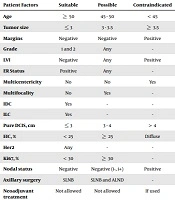
The database of ELIOT study on 1 822 cases from 2000 to 2008 were entered to GEC-ESTRO (Groupe Europeen de Curietherapie-European Society for Therapeutic Radiology and Oncology) classification. GEC-ESTRO recommended dividing patients with breast cancer to 3 groups according to the age, margin status, positive LN, and other characteristic to good, possible and contraindicated group for radical IORT.
According to this classification on ELIOT database, 537 patients (31.5%) included in good group with only 1 mm as negative margin, 468 patients (25.7%) in possible group, who were more than 40 years old and only 1 to 3 positive lymph nodes and close but clear margin < 1 mm and contraindicated group with 767 patients (42.2%), who had unfavorable characteristics like lymphovascular involvement, extensive intraductal (more than 25% DCIS) and more than 4 positive lymph nodes. Regarding these criteria, Table 8 shows the corresponding outcomes (14).
The local recurrence in the good group was only 1.9%, but this value in possible and contraindicated groups were more than 7%, and there was no difference in true recurrence and new ipsilateral cancer.
Table 8.
LR, DM, and OS in ELIOT According to GEC-ESTRO Classification
| Outcome | Good 573, 31.5% Event Rate, % | Possible 468, 25.7% Event Rate, % | Contraindicated 767, 42.2% Event Rate, % | Log Rank P Value | |||
|---|---|---|---|---|---|---|---|
| IBR | 7 | 1.9 | 22 | 7.4 | 46 | 7.7 | 0.001 |
| True recurrence | 6 | 1.6 | 12 | 4.0 | 28 | 4.7 | 0.052 |
| Ipsilateral new cancer | 1 | 0.3 | 10 | 3.3 | 18 | 3.0 | 0.012 |
| RNF | 8 | 2.2 | 2 | 0.7 | 8 | 1.3 | 0.275 |
| DM | 5 | 1.4 | 5 | 1.7 | 23 | 3.9 | 0.016 |
| DFS | 34 | 90.8 | 42 | 85.9 | 110 | 81.5 | 0.004 |
| CSS | 3 | 99.2 | 4 | 98.7 | 24 | 96.0 | 0.014 |
| OS | 5 | 98.6 | 9 | 97.0 | 33 | 94.4 | 0.044 |
Abbreviations: IBR, in breast recurrence; RNF, regional node failure; DM, distant metastasis; DFS, disease-free survival; CSS, cause-specific survival; OS, overall survival.
With Regard to GEC-ESTRO recommendations, increased risk of recurrence is seen in age below 50 years, tumor size more than 2 cm, presence of LVI, multi-centricity, and positive LN. Predictive factors for regional node failure (RNF) is T > 2 cm and for distant metastasis includes T > 2 cm, presence of lymphovascular invasion (LVI), and positive LN, which are not well-delineated in the ELIOT study.
According to ASTRO consensus guideline, which allocated the patients of ELIOT study in 3 groups of suitable, cautionary and unsuitable, 294 cases were classified as suitable, 691 as cautionary, and 812 as unsuitable, which means near half of them were not suitable for sole IORT treatment. The 5-years of ipsilateral breast recurrence rate in each group was 1.5% for suitable, 4.4% for cautionary, and 8.8% for unsuitable groups (15).
According to TARGIT-A study, all cases have undergone to 20 Gy dose in IORT, and patients with unfavorable characters (15%) also received EBRT after IORT. In patients, who received IORT concurrently with lumpectomy, only 1% increase recurrence rate (from 98% to 99% chance to being free of recurrence) was seen, but 2.3% decrease in non-breast cancer death in patients, who did not take EBRT after pathologic report, was obtained (9, 10).
Results of statistical analysis in comparing these two clinical trials showed that the favorable characters like old age, tumor sizes less than 2 cm, invasive ductal carcinoma, negative lymph nodes, or less positive nodes are more frequent in TARGIT-A with respect to the ELIOT one, and invasive lobular carcinoma and grade III are less in TARGIT-A study (significant P-value for all data). So, it seems that the considered criteria in TARGIT-A study for patient allocation in single dose IORT group are more similar to GEC-ESTRO and ASTRO.
Furthermore, 15% of IORT group, who had unfavorable characters, received EBRT; so, this may be the reason for reducing the rate of local recurrence in this study (16).
Comparison of ELIOT and TARGIT-A studies in their suitable groups, who undergone IORT concurrently with surgery, indicated that the local recurrence is 1.5% in the first and 2.1% in the second study.
4. Conclusions
IORT is a practice in partial breast radiation if the tumor characteristics, biomarkers, and demographic data are well considered. Two comprehensive clinical trials, including TARGIT-A and ELIOT were considered and their clinical outcomes were compared and evaluated. It can be concluded that the both trials are acceptable in the structures and related criteria, but due to the different characters and different analyses, the outcomes are different and non-comparable.
The outcome of using IORT is acceptable both with low energy X-ray or electron beam and suitable for breast cancer management without any damage to intra thoracic structures if eligibility criteria are more restricted.