Fulltext
Full text is available in PDF.
International Journal of Cancer Management
The Official Journal of Cancer Research Center (CRC), Shahid Beheshti University of Medical Sciences
Authors
Background: Prostate Specific Antigen (PSA) is a protein currently used in conjunction with the digital rectal examination to detect and guide management of prostate cancer. There are several causes of increase in serum PSA including urological manipulations, medications, prostatic diseases, prostate cancer, prostate inflammation or infection, etc. some studies had reported cystoscopy to cause transient increases in PSA. The present study has been undertaken with an aim to find out the effect of rigid cystoscopy on serum PSA level.
Methods: One hundred two men referring to clinic of urology of Imam Reza Hospital from 2008 to 2010 were included in this study. Their age ranged from 31-88 years with the mean of 65.85 years. Our inclusion criteria were having an indication for cystoscopy like BPH, erection disorder, signs related to prostate or bladder carcinoma. Patients with positive urine culture, any medication affecting PSA level, history of urinary retention, any urological manipulations a few days before and ejaculation 48-72 hours before PSA assessment were excluded from the study. Blood samples were taken before and 24 hours after cystoscopy for PSA measurement. PSA was measured by Sandwich ELISA test using PSA kit (pishtaz kit - made in Iran) containing monoclonal antibody.
Results: PSA level of the study cases varied from 0.1 to 21 ng/ml. Mean PSA values before and after cystoscopy were 3.004± 3.34 and 2.92 ± 2.98 respectively indicating that after cystoscopy not only PSA value did not raise but also decreased to some extent.
Conclusion: Our findings indicate that, cystoscopy has no effect on PSA value and does not lead to its elevation. It can be concluded that serum PSA after rigid cystoscopy is an accurate and reliable finding to decide about patients condition related to prostate cancer.
© 2010, Author(s). This open-access article is available under the Creative Commons Attribution 4.0 (CC BY 4.0) International License (https://creativecommons.org/licenses/by/4.0/), which allows for unrestricted use, distribution, and reproduction in any medium, provided that the original work is properly cited.
Bastani B, Behzadi A, Abbasi M, Hassanloo J, Sedaghati M, et al. The Effect of Cystoscopy on PSA Levels in Patients with Urologic Diseases. Nephro-Urol Mon. 2010;2(1):. doi:
Sirousbakht S, Rezakhaniha B. Effect of Colonoscopy on Prostate-Specific Antigen; New Words about an Old Subject. Int J Cancer Manag. 2018;11(7):e68919. doi: https://doi.org/10.5812/ijcm.68919
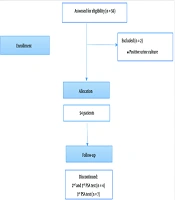
Shahrokhi Damavand R, Akhavan Tavakoli A, Esmaeili S, Aali S, Kazemnezhad E, et al. Is the Serum Prostate-Specific Antigen Level Affected by Urethral Catheterization in Patients with Acute Urinary Retention?. Nephro-Urol Mon. 2024;16(1):e145130. doi: https://doi.org/10.5812/numonthly-145130
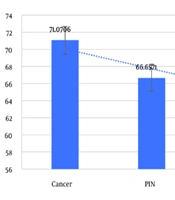
Mohseni Rad H, Hosseinkhani A, Hosseinkhani E, Aali M. Investigation of the Relationship Between Prostate-Specific Antigen Levels and Prostate Cancer in Patients Attending a Urology Clinic from 2014 to 2023. Nephro-Urol Mon. 2024;16(3):e147023. doi: https://doi.org/10.5812/numonthly-147023
Kharrazi H, Amiri Fard N, Rezaei M. A Comparative Study of Serum Prostate Specific Antigen Levels in Patients Suffering from Prostatic & Non-prostatic Cancers. J Kermanshah Univ Med Sci. 2004;8(2):e81329. doi:
More by these authors
Last Update: 3 weeks ago
Last Update: 3 weeks ago
Last Update: 3 weeks ago
Last Update: 9 hours ago
Last Update: 1 day ago
Last Update: 4 days ago