Fulltext
Full text is available in PDF.
International Journal of Cancer Management
The Official Journal of Cancer Research Center (CRC), Shahid Beheshti University of Medical Sciences
Authors
Background: The purpose of the present study was to investigate the frequency of getting such health screenings as mammography and breast self-examination among a group of women and also to identify the role of health beliefs in predicting mammography practice.
Methods: The data were collected from a convenience sample of 113 female staff at the University of Shiraz and Shiraz University of Medical Sciences. The participants completed the Champion Health Beliefs Scale (CHBS) designed to measure patients' perception on mammography of breast cancer screening. The scale assesses health beliefs components such as perceived susceptibility, perceived benefits of mammography screening, and perceived barriers to mammography screening. The participants also answered several questions on practicing Breast Self-Examination (BSE), mammography screening behaviours and health factors such as family history of cancer, and physicians' recommendation for mammography.
Results: The results indicated that 51% of women had BSE, and only 21% had a mammogram. Logistic regression showed that physician's recommendation, and the perceived barriers significantly predicted mammography screening, explaining 27% of the total variance of mammography practice. The participants who saw fewer barriers to have a mammogram and those who had been recommended to have one by their physician were more likely to get it. The present study provides some supports for the health beliefs model.
Conclusions: Data indicated that perceived barriers to have a mammogram predicted not getting one, and physicians' recommendation predicted getting a mammogram by women.
© 2012, Author(s). This open-access article is available under the Creative Commons Attribution 4.0 (CC BY 4.0) International License (https://creativecommons.org/licenses/by/4.0/), which allows for unrestricted use, distribution, and reproduction in any medium, provided that the original work is properly cited.
Masoudiyekta L, Dashtbozorgi B, Gheibizadeh M, Malehi AS, Moradi M. Applying the Health Belief Model in Predicting Breast Cancer Screening Behavior of Women. Jundishapur J Chronic Dis Care. 2015;4(4):e30234. doi: https://doi.org/10.17795/jjcdc-30234
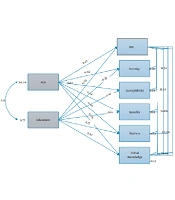
Mousavi F, Shojaei P, Nazemi A, Babania S, Aliniagerdroudbari E. Health Belief Model and Determinants of Breast Self-examination Performance. Int J Cancer Manag. 2021;14(10):e111509. doi: https://doi.org/10.5812/ijcm.111509
Hajian Tilaki K, Auladi S. Awareness, Attitude, and Practice of Breast Cancer Screening Women, and the Associated Socio-Demographic Characteristics, in Northern Iran. Int J Cancer Manag. 2015;8(4):e3429. doi: https://doi.org/10.17795/ijcp.3429
Hatefnia E, Niknami S, Mahmoudi M, Ghofranipour F, Lamyian M. The effects of health belief model education on knowledge, attitude and behavior of Tehran pharmaceutical industry employees regarding breast cancer and mammography. J Kermanshah Univ Med Sci. 2010;14(1):e79539. doi:
Khazir Z, Morowatisharifabad MA, Vaezi A, Enjezab B, Yari F, et al. Perceived Behavioral Control in Mammography: A Qualitative Study of Iranian Women’s Experiences. Int J Cancer Manag. 2019;12(8):e90225. doi: https://doi.org/10.5812/ijcm.90225
Last Update: 2 weeks ago
Last Update: 2 weeks ago
Last Update: 2 weeks ago
Last Update: 3 hours ago
Last Update: 7 hours ago
Last Update: 5 days ago