Fulltext
Full text is available in PDF
International Journal of Endocrinology and Metabolism
Research Institute for Endocrine Sciences
Authors
 1,*
Background: Transsphenoidal surgery (TSS) is the most effective treatment for acromegalic patients, and two major factors that have been suggested as useful predictors in assessing this therapy’s success are: tumor size and preoperative basal growth hormone (GH) levels.
Objectives: The aim of this study was to illustrate the relationship between some predictor factors and transsphenoidal surgery (TSS) outcomes and its remission rate.
Patients and Methods: A total of 20 patients underwent TSS by 4 neurosurgeons in 4 university hospitals in Tehran and were followed up for 1 year. An oral glucose tolerance test was performed at 1 week after surgery and then 3, 6, and 12 months after surgery. Moreover, Insulin Growth Factor- 1 (IGF-1) was measured at 6 and 12 months after surgery.
Results: Initial remission was observed in 7 (35%) patients with a recurrence rate of 10%. The nonresponse rate was 55%. The analysis showed a significant relationship between IGF-1 and surgery outcome in the cured patients at 6 months after surgery (P = 0.005). No significant statistical relationship was found between tumor size and the TSS outcome (P = 0.696).
Conclusions: Given the high failure and recurrence rates following TSS in Iran, it seems important to pay more attention to diagnosing the disease earlier and improving surgical methods.
Copyright © 2011 Kowsar M. P. Co. All rights reserved.
© 2011, Author(s). This open-access article is available under the Creative Commons Attribution 4.0 (CC BY 4.0) International License (https://creativecommons.org/licenses/by/4.0/), which allows for unrestricted use, distribution, and reproduction in any medium, provided that the original work is properly cited.
Taghvaei M, Sadrehosseini SM, Miri SM, Zeinalizadeh M. Endoscopic Transsphenoidal Approach for Surgical Treatment of Growth Hormone Secreting Pituitary Adenoma: Endocrinological Outcome in 49 Patients Based on 2010 Consensus Criteria for Remission - Preliminary Results. Arch Neurosci. 2017;4(3):e14131. doi: https://doi.org/10.5812/archneurosci.14131
Taghavi M, Abutorabi R, Rajabian R, Khazaei M. Surgery for Acromegaly: The Outcome Based on Stringent Criteria of Remission. Int J Endocrinol Metab. 2007;5(4):. doi:
Shirvani M. Results of Transsphenoidal Surgery in 35 Cases of Cushing’s Disease. Int J Endocrinol Metab. 2006;4(1):e94590. doi:
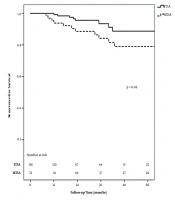
Noiphithak R, Nimmannitya P, Tantongtip D, Sanpawithayakul K, Thitiwichienlert S, et al. Comparison of Endoscopic and Microscopic Transsphenoidal Approaches for the Resection of Pituitary Adenoma. Arch Neurosci. 2021;8(4):e117339. doi: https://doi.org/10.5812/ans.117339
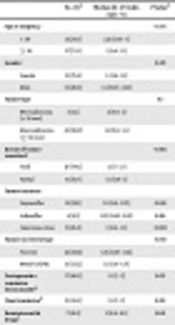
Mohseni S, Aboeerad M, Sharifi F, Tavangar SM, Mohajeri-Tehrani M. Associations of Ki-67 Labeling Index with Clinical and Paraclinical Features of Growth Hormone-Secreting Pituitary Adenomas: A Single Center Report from Iran. Int J Endocrinol Metab. 2019;17(2):e81983. doi: https://doi.org/10.5812/ijem.81983
More by these authors
Last Update: 2 weeks ago
Last Update: 2 weeks ago
Last Update: 2 weeks ago
Last Update: 1 hour ago
Last Update: 7 hours ago
Last Update: 4 days ago
