
1. Introduction
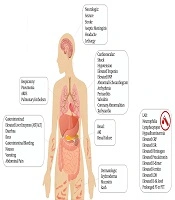
Coronaviruses are enclosed viruses containing linear, non-segmented, single-stranded, and positive-sense strand RNA genetic material. Six other strains of coronaviruses have already been found capable of infecting people; however, the seventh strain, known as SARS COV2, is genetically identical to SARS coronavirus. In December 2019, the COVID-19 global pandemic triggered by SARS-CoV-2 was initially found in Wuhan, China. A novel coronavirus (i.e., severe acute respiratory syndrome-coronavirus 2 [SARS-CoV-2]) caused COVID-19 pandemic, which resulted in the illnesses and death of tens of thousands of people worldwide (1). Initial reports indicated a lower occurrence rate and severity in children (2). Children infected with SARS-CoV-2 are either asymptomatic or afflicted with mild COVID-19 disease, with low rates of hospitalization (< 2%) and death (< 0.03%). Medical evidence has shown the low incidence of acute COVID in children; however, two long term implications of SARS-CoV-2 infection are more serious, one of which is paediatric inflammatory multisystem syndrome temporally associated with SARS-CoV-2 (PIMS-TS) or multisystem inflammatory syndrome in children (MIS-C), an immune mediated disease that affects a small percentage of children (0.1 %) (3). Multisystem inflammatory syndrome is a rare but severe condition that develops approximately 2 - 4 weeks after COVID-19 infection. It is believed that MIS-C is the late presentation of COVID-19 infection associated with noticeable immune activation and different pathways of immune pathogenesis. Moreover, depletion and activation of T-lymphocytes have been found to include a rise in cytokines like INF gamma, IL-10, and tumor necrosis factor (TNF)a, an increase in PLA2G2A and plasma blasts, as well as a decrease in monocytes (HLA-DR) and dendritic cells (pDC). Anti-inflammatory therapy and supportive care have shown great effectiveness in treating children with MIS-C (4). These patients have symptoms similar to those of Kawasaki disease, toxic shock syndrome, sepsis, macrophage activation syndrome, and secondary hemophagocytic lymphohistiocytosis involving multiple organs (e.g., the heart, brain, skin, eyes, and gastrointestinal tract), which is now referred to as a MIS-C (5-7). Cardiac manifestations such as ventricular dysfunction, coronary artery dilatation, aneurysm, arrhythmia, and conduction abnormalities are common (8).
Since very little is known about the incidence of persistent symptoms following infection with SARS-CoV-2 and MIS-C in pediatric age group as well as about the characteristics of "long COVID", this study aimed to report a pediatric patient presenting with MIS-C with cardiac involvement related to SARS-CoV-2 infection in a tertiary-care center in Tehran, Iran.
2. Case Presentation
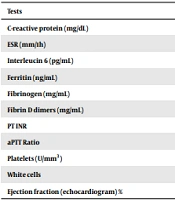
An 11-year-old male with no significant past medical history was referred to our hospital in Tehran, Iran, in September 2020. He had a 7-day history of periorbital and peripheral edema and abdominal pain, and his parents reported the presence of subjective fever at home. He had no symptoms associated with SARS-CoV-2; however, his father had tested positive for SARS-CoV-2 four months before the onset of symptoms. The patient had a history of low-grade fever of about 38°C before hospital admission. Upon admission, he had a temperature of 37.5°C, heart rate of 100 beats/minute, and respiratory rate of 25 breaths/minute. Physical examination revealed decreased breath sound at the base of the right lung, as well as periorbital and lower limb edema. Initial laboratory results showed elevated transaminase levels with alanine transaminase (ALT) of 112 U/L and aspartate transaminase (AST) of 102 U/L, a mild respiratory alkalosis, lactate dehydrogenase of 399 IU/L, elevated D-dimer of 6.5 pg/mL, increased interleukin-6 (IL-6) of 60 pg/mL, and elevated N-terminal prohormone of B-type natriuretic peptide (NT-proBNP) of 384.6 pg/mL. The patients tested positive for immunoglobulin G (IgG) 1.7 S/CO and negative for immunoglobulin M (IgM) 0.6 S/CO in his serum.
Blunting of the right costophrenic angle and cardiomegaly were present in the chest X-ray. Ultrasound revealed severe right pleural effusion containing debris, mild left pleural effusion, moderate ascites, and periportal cuffing due to systemic conditions. An electrocardiogram showed premature ventricular contraction, and a transthoracic echocardiogram revealed a severe failure of right and left ventricles and an ejection fraction of 15 - 20% suggestive of MISC. The patient received systemic corticosteroid and was transferred to the cardiac intensive care unit. Inotropic support with milrinone, epinephrine, and dopamine were initiated. He was treated with prophylactic heparin, captopril, diuretics (Furosemide and Aldactone), calcium, and magnesium. Lidocaine and amiodarone were administered to control the arrhythmia. By the sixth day of admission, his condition deteriorated due to severe myocardial dysfunction manifesting sudden headache, chest pain, loss of consciousness, and bradycardia. Lab results demonstrated elevated cardiac enzymes, troponin of 61 pg/mL, creatine phosphokinase of 353 U/L and creatine kinase of 114 IU/L, white blood cell count of 12.33 × 10³/μL (segmented neutrophils, 51.2 %), platelet count of 78 × 103/μL, elevated C-reactive protein of 16 mg/dL, as well as mixed acidosis and elevated ESR. He was intubated and mechanically ventilated. Despite all the efforts, he expired due to a terminal cardiac arrest.
3. Discussion
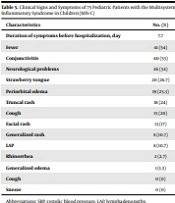
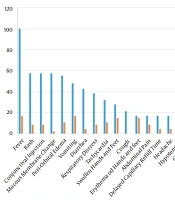
In this study, the case of an 11-year-old male with MIS-C due to SARS-CoV-2 infection was reported. Multisystem inflammatory syndrome in children is the result of an exacerbated and delayed immune response after SARS-CoV-2 infection. The excessive immune response causes cytokine storms followed by an increase in inflammatory cytokines, including TNF, IL-6, IL-10, and gamma interferon (6). Multisystem inflammatory syndrome in children occurs approximately 4 - 5 weeks after a SARS-CoV-2 infection, indicating that MIS-C is caused by a delayed immune response rather than by SARS-CoV-2 infection itself (8) MIS-C mostly causes mucocutaneous (i.e., skin rash and conjunctivitis) and gastrointestinal symptoms, shock, and myocardial dysfunction, requiring intensive care unit admission (9). The Centers for Disease Control and Prevention (CDC) has described MIS-C patients as those aged under 21 years with fever, laboratory evidence of inflammation, and evidence of clinically severe illness requiring hospitalization. In MIS-C, there is multisystem (> 2) organ involvement, including involvement of cardiac, renal, respiratory, hematologic, gastrointestinal, dermatologic or neurological systems. There must not be any possible alternative diagnoses. The patient tests positive for current or recent SARS-CoV-2 infection by RT-PCR, serology, or antigen test; or has been exposed to a suspected or confirmed COVID-19 case within four weeks before the onset of symptoms (10). Our patient met the CDC criteria of MIS-C. Fever was not the presenting symptom of our patient despite the fact that all previous patients with MIS-C presented with fever (6).
Multisystem inflammatory syndrome in children shares symptoms with Kawasaki disease, which makes early diagnosis even harder. These overlapping features result from shared inflammatory cytokines involved in their pathogenesis; however, MIS-C occurs in older ages with higher levels of inflammatory markers (7).
Myocardial dysfunction by ECHO and/or increased troponin-I or pro-BNP levels have been reported in 51 - 90% of the patients with MIS-C, and it has been shown that the rate of coronary artery dilation is 12.5% among children with MIS-C (5, 11-15).
Unfortunately, this patient's condition deteriorated rapidly due to severe cardiomyopathy manifesting with highly elevated cardiac enzymes, reduced cardiac function, arrhythmia, and loss of consciousness in the absence of coronary involvement. The patient went to a cardiogenic shock and required inotropic support and mechanical ventilation in a matter of days. The rapid progression of MIS-C requires special attention, early diagnosis, and emergent treatment, which is hard to achieve considering its atypical presentation and rare occurrence. Treatment with intravenous immunoglobulin, IL-6 or IL-1 inhibitors, systemic corticosteroids, and anticoagulants is recommended for MIS-C patients with myocardial dysfunction in order to control the inflammatory response and reverse the damage (10).
3.1. Conclusions
Despite the rarity of SARS-CoV-2 infection in children, the increasing number of reported cases of critically ill patients with MIS-C highlighted the importance of providing early diagnosis of and effective treatment for this condition in order to reduce further complications, morbidity, and mortality.
The optimal treatment regimes, effective preventive measures, and long-term outcomes were still under debate three years after proposing the disease definition. Due to our limited knowledge about cardiac manifestations of MIS-C, which is likely life-threatening, it was recommended that further studies should be conducted in order to provide screening tests for myocardial dysfunction. Adopting a multidisciplinary approach to treating a patient with MIS-C was found extremely important.