Cover image of the article: Is a New Post-infectious Inflammatory Phenomenon Emerging? Increasing Evidence of a New Multiple Organ Involvement Syndrome in Children

Image Credit:Iran J Pediatr

Is a New Post-infectious Inflammatory Phenomenon Emerging? Increasing Evidence of a New Multiple Organ Involvement Syndrome in Children

Authors

Mehrnaz OlfatMehrnaz Olfat ORCID1, 2, Seyed Hossein MirlohiSeyed Hossein  Mirlohi ORCID3, 2, Meisam SharifzadehMeisam Sharifzadeh ORCID4, 2, Masoud MohammadpourMasoud Mohammadpour ORCID4,*
1Children’s Medical Center, Pediatric Center of Excellence, Tehran, Iran
2Department of Pediatrics, Tehran University of Medical Sciences, Tehran, Iran
3Pediatric Pulmonary Disease and Sleep Medicine Research Center, Children's Medical Center, Tehran University of Medical Sciences, Tehran, Iran
4Division of Pediatric Intensive Care, Children’s Medical Center, Tehran, Iran
*Corresponding Author: Division of Pediatric Intensive Care, Children’s Medical Center, Tehran, Iran. Email: mmpour@tums.ac.ir

Innovative Journal of Pediatrics:Vol. 33, issue 1; e135265
Published online:Feb 25, 2023
Article type:Letter
Received:Jan 28, 2023
Accepted:Jan 31, 2023
How to Cite:Olfat M, Mirlohi SH, Sharifzadeh M, Mohammadpour M. Is a New Post-infectious Inflammatory Phenomenon Emerging? Increasing Evidence of a New Multiple Organ Involvement Syndrome in Children. Inn J Pediatr. 2023;33(1):e135265. doi: https://doi.org/10.5812/ijp-135265

Dear Editor,
Since early October 2022, we had to deal with some critically ill patients we had never dealt with. These cases were already identified in several cities in Iran and even in the world. The typical history of the majority of the cases was as follows: they were previously healthy children, mostly aged 1 - 10 years, and initially presented with flu-like symptoms such as fever, cough, and myalgia for 2 - 3 weeks before admission. After a transient recovery, symptoms flared up again. In the second phase of the illness, they experienced fever, general sense of ill-being, cough, and dyspnea. They were referred to several physicians’ offices and received oral antibiotics and over-the-counter prescriptions. Finally, they sought medical attention due to worsening condition and were referred to our hospital. During the entire admission time, they were critically ill and had substantial respiratory distress.
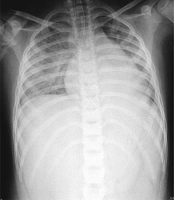
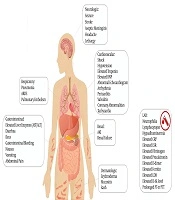
They had variable degrees of lung involvement in chest imaging. An interesting finding was that a significant number of the cases had massive unilateral pleural effusion with or without empyema as well as white lung appearance in chest X-rays (CXR), which led to chest tube insertion and tissue plasminogen activator (tPA) administration in many cases. Most of them required intensive care, and some underwent intubation and mechanical ventilation. Vasoactive drugs were also prescribed for several patients. The clinical presentation had a rapid progressive nature, which we had not experienced in the pediatric population or even during the COVID-19 pandemic. The majority of these patients also had other organ involvements, especially increased cardiac biomarkers along with low systolic ejection fraction in favor of myocarditis, coagulopathy, and life-threatening bleeding, raised liver enzymes and acute hepatitis, and also increased level of creatinine with or without anuria resulting in dialysis. Otitis, adenitis, and meningitis were also observed in few cases. This multiorgan involvement was remarkably similar to what was already seen in multisystem inflammatory syndrome in children (MISC) following COVID-19 infection (1, 2).
Nasopharyngeal PCR for influenza, RSV, and COVID-19 viruses was checked in the course of laboratory investigation, and positive result was obtained for Influenza virus in few patients. The pleural fluid analysis showed considerable number of white blood count (WBC) and lactate dehydrogenase (LDH) in favor of exudative pattern. Another interesting finding was that pleural or blood cultures were positive in a great number of patients with Pneumococci or other organisms. Further evaluation revealed Streptococcus pneumoniae serotype 19-A in some samples, which is believed to cause invasive pneumococcal disease (3). On December 2022, World Health Organization (WHO), as well as the Centers for Disease Control and Prevention in the United States (CDC) also alarmed about an increase in invasive group A streptococcal infections with fatalities among children in Europe and United States (4, 5). On the other hand, some of our patients had high levels of ferritin and D-dimer; and despite appropriate antibiotic therapy, inflammatory markers and proper clinical response were not decreased. These findings along with multiorgan involvement highlighted the role of a post-infectious immune dysregulation rather than an isolated infectious process.
Unfortunately, two of these patients who had crucial cardiac involvement died during the studied period. Seemingly we faced a viral respiratory infection and possibly bacterial superinfection which triggered cytokine storm and resulted in multiple system involvement. Although administering initial treatment using antiviral or antibiotic drugs is inevitable when the symptoms of infection are present, anti-inflammatory treatment, including corticosteroids, should be considered early in the course of the disease, like inflammatory disorders seen in COVID-19 infection (6). To our experience, response to corticosteroid therapy was favorable and may have shortened the hospital length of stay.
In the final stages of our study, several patients and many challenges were left untreated and unresolved. Therefore, our research team continued collecting precise data about this unprecedented phenomenon, which would hopefully be published soon.
Acknowledgments

Footnotes

  • Authors' Contribution: M. O.: Drafting of the manuscript; M. Sh.: Study concept and design; S. H. M: Acquisition of data; M. M.: Critical revision of the manuscript for important intellectual content

  • Conflict of Interests: The authors have no conflict of interests.

  • Funding/Support: It was not declared by the authors.

References

Copyright

Copyright © 2023, Author(s). This is an open-access article distributed under the terms of the Creative Commons Attribution-NonCommercial 4.0 International License (http://creativecommons.org/licenses/by-nc/4.0/) which permits copy and redistribute the material just in noncommercial usages, provided the original work is properly cited.

Similar Articles

12
Nov
2021
A Child with Multiple Inflammatory Syndrome in Children, Stroke and Cardiac Insufficiency

A Child with Multiple Inflammatory Syndrome in Children, Stroke and Cardiac Insufficiency

Seyedeh Narjes Ahmadizadeh,
Fariba Shirvani,
Seyedeh Masumeh Hashemi,
Azita Behzad,
Zahra Pournasiri,
Maryam Alemzadeh
,et al.

Ahmadizadeh SN, Shirvani F, Hashemi SM, Behzad A, Pournasiri Z, et al. A Child with Multiple Inflammatory Syndrome in Children, Stroke and Cardiac Insufficiency. J Compr Ped. 2021;12(4):e115888. doi: https://doi.org/10.5812/compreped.115888

16
Jan
2021
Cardiac Manifestations of Multisystem Inflammatory Syndrome in Children (MIS-C) Associated with SARS-CoV-2 Infection

Cardiac Manifestations of Multisystem Inflammatory Syndrome in Children (MIS-C) Associated with SARS-CoV-2 Infection

Alireza Ghodsi,
Elnaz Mahmoudabadi,
Sara Ghahremani,
Abdolreza Malek

Ghodsi A, Mahmoudabadi E, Ghahremani S, Malek A. Cardiac Manifestations of Multisystem Inflammatory Syndrome in Children (MIS-C) Associated with SARS-CoV-2 Infection. Arch Pediatr Infect Dis. 2021;9(4):e109915. doi: https://doi.org/10.5812/pedinfect.109915

19
Aug
2022
Clinical and Laboratory Characteristics of the Multisystem Inflammatory Syndrome in Children: A Case Series of 75 Patients

Clinical and Laboratory Characteristics of the Multisystem Inflammatory Syndrome in Children: A Case Series of 75 Patients

Shabnam Hajiani Ghotbabadi,
Maryam Mollaie,
Seyedeh Sedigheh Hamzavi,
Anahita Sanaei Dashti

Hajiani Ghotbabadi S, Mollaie M, Hamzavi SS, Sanaei Dashti A. Clinical and Laboratory Characteristics of the Multisystem Inflammatory Syndrome in Children: A Case Series of 75 Patients. Arch Pediatr Infect Dis. 2022;10(4):e120863. doi: https://doi.org/10.5812/pedinfect-120863

9
Apr
2023
Report of the Association Between Multisystem Inflammatory Syndrome and Severe Myocarditis

Report of the Association Between Multisystem Inflammatory Syndrome and Severe Myocarditis

Elmira Hajiesmaeil Memar,
Aliakbar Zeinaloo,
Mohammad Reza Mirzaaghayan,
Mojtaba Gorji,
Azin Ghamari,
Mahya Ghahremanloo
,et al.

Hajiesmaeil Memar E, Zeinaloo A, Mirzaaghayan MR, Gorji M, Ghamari A, et al. Report of the Association Between Multisystem Inflammatory Syndrome and Severe Myocarditis. Inn J Pediatr. 2023;33(3):e122272. doi: https://doi.org/10.5812/ijp-122272

30
Jun
2025
Cardiac Manifestations of Multisystem Inflammatory Syndrome in Iranian Children (MIS-C) Associated with COVID-19; Incidence and One-Year Follow-up

Cardiac Manifestations of Multisystem Inflammatory Syndrome in Iranian Children (MIS-C) Associated with COVID-19; Incidence and One-Year Follow-up

Mina Farshidgohar,
Manoochehr Mahram

Farshidgohar M, Mahram M. Cardiac Manifestations of Multisystem Inflammatory Syndrome in Iranian Children (MIS-C) Associated with COVID-19; Incidence and One-Year Follow-up. J Inflamm Dis. 2025;29(2):e157779. doi: https://doi.org/10.69107/jid-157779

More by these authors

Mehrnaz OlfatPubMedScholar
Seyed Hossein MirlohiPubMedScholar
Meisam SharifzadehPubMedScholar
Masoud MohammadpourPubMedScholar
Share
Cited by
Metrics