Innovative Journal of Pediatrics
The Scientific Journal of Growth & Development Research Center
e-ISSN 3117-5341
Image Credit:Inn J Pediatr
Outline
The Effects of Surfactant on Oxygenation in Term Infants with Respiratory Failure
Authors
Published online:Jul 23, 2013
Article type:Brief Report
Received:Aug 16, 2012
Accepted:May 31, 2013
How to Cite:Beken S, Turkyılmaz C, Koc E, M. Hirfanoglu I, Altuntas N. The Effects of Surfactant on Oxygenation in Term Infants with Respiratory Failure. Inn J Pediatr. 2013;23(4):. doi:
Abstract
Objective: The objective of the study was to evaluate the effects of exogenous surfactant on respiratory indices in term infants with respiratory failure. Methods: Consecutive 18 mechanically ventilated term infants, who received a single dose of exogenous surfactant were retrospectively included into the study. The respiratory outcome of surfactant rescue therapy was evaluated by comparing respiratory indices before and six hours after surfactant administration. Findings: Median oxygenation index (OI), mean alveolar pressure (MAP) and fraction of inspired oxygen (FiO2) values were significantly decreased (P<0.001); median arterial oxygen partial pressure (PaO2), arterial oxygen saturation (SaO2) and PaO2/FiO2 values were significantly increased six hours after surfactant treatment (P<0.001). Conclusion: Rescue therapy with surfactant was found to be effective in the improvement of early respiratory indices in term infants with respiratory failure.
Highlights
References
- 1.References are available on the PDF.
Copyright
© 2013, Author(s). This open-access article is available under the Creative Commons Attribution 4.0 (CC BY 4.0) International License (https://creativecommons.org/licenses/by/4.0/), which allows for unrestricted use, distribution, and reproduction in any medium, provided that the original work is properly cited.
Similar Articles
25
Jul
2016
Comparison of the Efficacy of Three Natural Surfactants (Curosurf, Survanta, and Alveofact) in the Treatment of Respiratory Distress Syndrome Among Neonates: A Randomized Controlled Trial
Mirhadi Mussavi,
Keyvan Mirnia,
Khairollah Asadollahi
Mussavi M, Mirnia K, Asadollahi K. Comparison of the Efficacy of Three Natural Surfactants (Curosurf, Survanta, and Alveofact) in the Treatment of Respiratory Distress Syndrome Among Neonates: A Randomized Controlled Trial. Inn J Pediatr. 2016;26(5):e5743. doi: https://doi.org/10.5812/ijp.5743
8
Feb
2017
Comparison of the Results of Simultaneous Surfactant Administration and Nasal Continuous Positive Airway Pressure (INSURE) and Non-administration of Surfactant for the Treatment of Infants with Respiratory Distress Syndrome
Shamsollah Noripour,
Amir Molaei,
Razieh Bandari,
Alireza Emadi,
Seyd Majid Farokhi Far,
Mohammad Forozeshfard
Noripour S, Molaei A, Bandari R, Emadi A, Farokhi Far SM, et al. Comparison of the Results of Simultaneous Surfactant Administration and Nasal Continuous Positive Airway Pressure (INSURE) and Non-administration of Surfactant for the Treatment of Infants with Respiratory Distress Syndrome. J Compr Ped. 2017;8(1):e37462. doi: https://doi.org/10.5812/compreped.37462
13
Apr
2022
Comparison of Surfactant Administration Efficacy in the Treatment of Respiratory Distress Syndrome in Preterm Neonates: Aerosolization Versus INSURE
Ali Reza Sadeghnia,
Zarineh Mahjoor,
Behzad Barekatain
Sadeghnia AR, Mahjoor Z, Barekatain B. Comparison of Surfactant Administration Efficacy in the Treatment of Respiratory Distress Syndrome in Preterm Neonates: Aerosolization Versus INSURE. Inn J Pediatr. 2022;32(2):e120633. doi: https://doi.org/10.5812/ijp-120633
29
Apr
2026
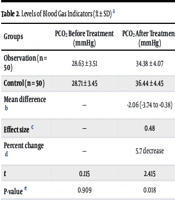
Effect of High-frequency Oscillatory Ventilation-Assisted Pulmonary Surfactant Intervention on Children with Neonatal Respiratory Distress Syndrome
Mingxi Chen,
Hao Wang,
Wenjuan Zhang
Chen M, Wang H, Zhang W. Effect of High-frequency Oscillatory Ventilation-Assisted Pulmonary Surfactant Intervention on Children with Neonatal Respiratory Distress Syndrome. Inn J Pediatr. 2026;36(3):e160903. doi: https://doi.org/10.5812/ijpediatr-160903
27
Jun
2015
Comparing the Effectiveness of Nasal Continuous Positive Airway Pressure (NCPAP) and High Flow Nasal Cannula (HFNC) in Prevention of Post Extubation Assisted Ventilation
Manizheh Mostafa-Gharehbaghi,
Hooshyar Mojabi
Mostafa-Gharehbaghi M, Mojabi H. Comparing the Effectiveness of Nasal Continuous Positive Airway Pressure (NCPAP) and High Flow Nasal Cannula (HFNC) in Prevention of Post Extubation Assisted Ventilation. Zahedan J Res Med Sci. 2015;17(6):e984. doi: https://doi.org/10.17795/zjrms984
Cited by
- Scopus by DOI: 0
Last Update: 1 week ago
- Scopus by Title: 1
Last Update: 1 week ago
- Scopus by Title (Ref): 1
Last Update: 1 week ago
- CrossRef: 0
Last Update: 8 hours ago
- OpenAlex: 0
Last Update: 11 hours ago
- OpenCitations: 0
Last Update: 5 days ago
Comments
Number of Comments:0