
1. Background
Imaging modalities involving ionizing radiation play an important role in diagnosing pediatric patients. The use of computed tomography (CT) has significantly increased in recent years (1). Annually, over one million children in Europe receive CT scans, with country-specific rates typically between 40 and 70 scans per 10,000 children (2). Due to their heightened sensitivity to radiation, the radiation doses administered during CT scans in children are significant. The average radiation exposure in head CT scans is 50 - 60 mGy, which may elevate the risk of leukemia and brain tumors in children (3). Over the past two decades, numerous international guidelines have endorsed the optimization of radiation doses in medical exposures, particularly in CT scans. These include the International Atomic Energy Agency (IAEA), the International Basic Safety Standards (BSS), the European Basic Safety Standards, and the International Commission on Radiological Protection (4-6).
The ALARA principle, meaning "As Low As Reasonably Achievable," is a radiation safety concept focused on reducing radiation exposure and the release of radioactive substances by implementing all feasible measures. It was officially established in the late 1950s as a component of worldwide radiation protection standards (7). The ALARA is especially important in pediatric imaging due to children's heightened sensitivity to ionizing radiation and their longer lifetime during which potential detrimental effects may emerge. The principle is supported by leading international organizations, such as the International Commission on Radiological Protection (ICRP), the United States Nuclear Regulatory Commission (NRC), and the Image Gently Alliance, which advocates for reducing radiation doses in pediatric patients (8).
2. Objectives
This study aims to assess physicians' knowledge of radiation risks and ALARA principles in pediatric healthcare, particularly regarding imaging decisions, and to determine the need for educational interventions to improve awareness in this domain.
3. Methods
This cross-sectional study was conducted over a three-month period (May 30 - August 30, 2025) following receipt of ethical approval. The study population comprised pediatricians and family physicians in Istanbul. Approval was secured from the provincial directorate of health.
Data were gathered anonymously through a standardized, expert-validated online questionnaire administered via Google Forms. Participants were selected using convenience sampling. The survey link was sent via WhatsApp groups for medical professionals, institutional email lists, and direct circulation to eligible physicians within the hospital. Duplicate responses were mitigated by setting a restriction in the Google Forms account that limited each participant to one contribution. The absence of systematic documentation of the total number of physicians who received the survey invitation precluded calculation of a formal response rate, a limitation recognized in the study. The survey comprised four sections: (1) Demographic data (e.g., age, gender, specialty, years of practice, type of institution); (2) understanding of ionizing radiation (e.g., recognition of radiation-based modalities, knowledge of CT doses, and sensitivity of pediatric patients to radiation); (3) engagement with ALARA principles (e.g., previous exposure to the term, capacity to define it, institutional protocols, and utilization of protective equipment); and (4) previous radiation safety training and interest in additional education.
Physicians aged 18 years or older who interact with pediatric patients and voluntarily and thoroughly completed the questionnaire were included. Participants not involved in pediatric care, those who submitted incomplete data, or those who refused to give consent were excluded.
3.1. Sample Size Calculation
The sample size was determined based on multiple considerations. For the primary outcome comparing knowledge scores between pediatricians and family physicians, we anticipated a medium effect size (Cohen's d = 0.5) based on previous literature (9). Using a two-tailed t-test with alpha = 0.05 and power of 80%, a minimum of 64 participants per group was required. To account for the multiple regression analysis planned with 11 predictor variables, we applied Green's formula (N ≥ 50 + 8k, where k = number of predictors), which indicated a minimum sample size of 138 participants (10).
3.2. Questionnaire Development
The questionnaire was adapted from previously published instruments on radiation safety awareness (9, 11) and further refined to reflect the Turkish healthcare context. Initial items were drafted by the research team and then refined through expert validation. The final questionnaire included 21 items divided into four sections: demographic characteristics, knowledge of ionizing radiation, ALARA awareness and institutional practices, and radiation safety training history. Out of these, eight items contributed to the knowledge score. The panel reviewed the items for relevance, clarity, comprehensiveness, and face validity. Formal content validity indices (CVI/CVR) and construct validity assessment were not conducted; this is recognized as a methodological limitation. Content validity was evaluated by an expert panel consisting of five specialists: one family medicine professor, one pediatrics professor, one family medicine specialist, one pediatric specialist, and one radiology specialist. All experts had at least 5 years of clinical experience and were actively involved in medical imaging decisions for pediatric patients. The panel reviewed the questionnaire for its relevance, clarity, comprehensiveness, and the appropriateness of its items. The knowledge score was determined by calculating the raw percentage of correct answers to the knowledge assessment items. Each correct response received a value of 1, while incorrect or "I don't know" answers received a value of 0. The total number of correct responses for each participant was calculated, divided by the total number of questions, and multiplied by 100 to derive a percentage score. This methodology was selected to ensure consistency with analogous radiation safety awareness research (11). The internal consistency of the knowledge scale was evaluated using Cronbach’s alpha as an exploratory measure of item homogeneity. We recognize that for knowledge assessments covering different subdomains, item-total correlations and difficulty indices offer additional psychometric insights, which are reported at the item level in Table 1. Importantly, the eight knowledge items (Table 1) are factual recall questions (such as whether CT increases cancer risk, the meaning of the ALARA acronym, and dose equivalence) and are entirely separate from the regression predictor variables (such as prior ALARA training, self-reported CT dose familiarity, and dose consideration behavior), which are attitudinal and experiential variables taken from different questionnaire sections. No predictor variable was derived from the knowledge test items, so there is no conceptual circularity or endogeneity in the regression model.
| Knowledge Item | Correct Answer (%) | Item-Total Correlation (r_pb) | Discrimination Level |
|---|---|---|---|
| CT scanning increases lifetime cancer risk | 88.7 | 0.54 | Good |
| Children are more sensitive to radiation than adults | 91.9 | 0.62 | Very good |
| MRI and USG do not involve ionizing radiation. | 85.6 | 0.51 | Good |
| Weight is an important parameter affecting radiation dose | 81.5 | 0.49 | Good |
| CT has the highest average radiation dose. | 88.0 | 0.57 | Very good |
| An abdominal CT in a child is equivalent to approximately 300 chest X-rays. | 29.3 | 0.26 | Moderate |
| ALARA (as low as reasonably achievable) | 41.5 | 0.33 | Moderate |
| ALARA compliance includes low dose, shielding, avoiding unnecessary exams, and using alternatives. | 37.8 | 0.31 | Moderate |
| Overall; mean ± SD/cronbach α | 71.9 ± 15.2 | α = 0.87 | - |
Abbreviations: r_pb, point-biserial correlation coefficient; ALARA, as low as reasonably achievable; CT, computed tomography; MRI, magnetic resonance imaging; USG, ultrasonography.
a Values are expressed as the percentage of participants providing a correct response.
b The dose-equivalence figure for abdominal CT (approximately 300 chest X-rays) is based on published estimates (9); actual values may vary with patient size, scanner protocol, and imaging parameters.
3.3. Ethical Assessment
This study was conducted in accordance with the principles of the Declaration of Helsinki. The study was approved by the Ethics Committee of Prof. Dr. Cemil Tascioglu City Hospital (ethics committee No. 48670771-514.99-276150453, dated May 20, 2025). Participation in the study was entirely voluntary, and electronic informed consent was obtained from all participants online.
3.4. Statistical Analysis
Data analysis was conducted with IBM SPSS Statistics 25.0 software. Descriptive statistics are shown as mean ± standard deviation, median (minimum-maximum), and count (percentage).
The chi-square test was used to compare categorical variables, while the independent samples t-test or Mann-Whitney U test was used to compare continuous variables, as appropriate. One-way analysis of variance or the Kruskal-Wallis test was used to compare three or more groups.
Multiple linear regression analysis was conducted to determine independent factors associated with knowledge level. Prior to interpretation, model assumptions were verified: normality of residuals was assessed using P-P plots, homoscedasticity using standardized residual plots, and independence of errors using the Durbin-Watson statistic (DW = 1.94). All assumptions were satisfied. Multicollinearity among independent variables was assessed using the variance inflation factor (VIF), with values below 5 considered acceptable (12). The model's residual distribution and adherence to regression assumptions (normality, homoscedasticity, and independence of errors) were verified. Bivariate analyses were performed as exploratory comparisons; no formal correction for multiple testing was implemented, given that the multiple linear regression model was identified as the principal inferential analysis.
4. Result
A total of 222 physicians were included in the study. Of the participants, 62.6% were female (n = 139) and 37.4% were male (n = 83). The distribution of specialties was as follows: pediatrics, 59.9% (n = 133); and family medicine, 40.1% (n = 89). Regarding professional experience, 38.3% (n = 85) had 0 - 5 years, 30.2% (n = 67) had 6 - 10 years, 20.3% (n = 45) had 11 - 20 years, and 11.3% (n = 25) had ≥ 21 years of experience. According to the type of institution, 69.8% (n = 155) were employed at city hospitals, 15.3% (n = 34) at state hospitals, 8.1% (n = 18) at university hospitals, and 6.8% (n = 15) at other types of healthcare facilities (Table 2).
Table 2.
Demographic and Professional Characteristics of Participants (n = 222) a
| Variables | No. (%) |
|---|---|
| Gender | |
| Female | 139 (62.6) |
| Male | 83 (37.4) |
| Specialty | |
| Pediatrics | 133 (59.9) |
| Family medicine | 89 (40.1) |
| Years of professional experience (y) | |
| 0 - 5 | 85 (38.3) |
| 6 - 10 | 67 (30.2) |
| 11 - 20 | 45 (20.3) |
| ≥ 21 | 25 (11.3) |
| Type of healthcare institution | |
| City hospital | 155 (69.8) |
| State hospital | 34 (15.3) |
| University | 18 (8.1) |
| Other healthcare facility | 15 (6.8) |
a City hospitals: Large tertiary-level Ministry of Health hospitals; State hospitals: District-level public hospitals; University hospitals: Academic medical centers affiliated with medical faculties; Other: Private hospitals and primary care centers.
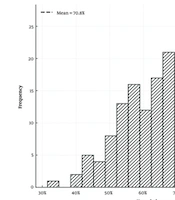
An analysis of participants’ overall knowledge levels revealed a mean knowledge score of 71.4% ± 19.3, with a median value of 72% (interquartile range: 58% - 86%). When categorized by knowledge level using investigator-defined thresholds adopted for interpretive purposes, consistent with analogous radiation safety awareness studies in the literature (11) (these categories were used for descriptive interpretation only and should not be interpreted as validated diagnostic thresholds), 48.6% of the participants (n = 108) were found to have a high level of knowledge (≥ 75%), 32.0% (n = 71) had a moderate level (50% - 74%), and 19.4% (n = 43) demonstrated a low level of knowledge (< 50%) (Figure 1).
![Distribution of knowledge score [%]](https://brieflands.com/journals/ijp/articles/167989/figures/ijp-36-2-167989-i001-preview.webp "Distribution of knowledge score [%]")
Figure 1.
Distribution of knowledge score [%]
A statistically significant difference was found between professions: the mean knowledge score for pediatricians was 74.1% ± 17.8 (n = 133), compared to 68.3% ± 20.6 (n = 89) for family physicians, with the difference being statistically significant (P = 0.038). With respect to professional experience, physicians with 0 - 5 years of experience had a mean knowledge score of 73.8% ± 20.9 (n = 85), whereas those with 21 or more years of experience had a mean knowledge score of 65.4% ± 18.0 (n = 25). This statistically significant difference (P = 0.045) suggests that physicians with less experience demonstrated higher levels of knowledge. An analysis by institution type indicated that individuals employed at university hospitals exhibited a markedly higher mean knowledge score (77.6% ± 18.3, n = 18) than their counterparts at other institutions (69.2% ± 20.4, n = 204) (P = 0.022).
When factors related to training, dose protocols, and radiation awareness were evaluated, participants who had received ALARA training showed a significantly higher mean knowledge score (76.3 ± 17.2%; n = 80) than those without such training (61.2 ± 20.4%; n = 142) (P < 0.001). The mean knowledge score among employees working in institutions with pediatric dose-reduction protocols was 72.5 ± 18.1% (n = 98), compared with 60.4 ± 20.9% (n = 124) in those without such protocols, and the difference was statistically significant (P < 0.001). Participants who reported being knowledgeable about CT doses achieved an average knowledge score of 69.5 ± 19.2% (n = 129), while those lacking such knowledge scored 56.7 ± 21.6% (n = 93) (P = 0.001). Furthermore, participants who reported considering radiation dose when ordering imaging tests had a significantly higher mean knowledge score (68.3 ± 19.7%; n = 153) than those who did not (59.2 ± 21.4%; n = 69) (P = 0.012) (Table 3).
| Comparison | Group 1 | Group 2 | P-Value |
|---|---|---|---|
| Specialty (pediatrics vs. family med.) | 74.1 ± 17.8 (133) | 68.3 ± 20.6 (89) | 0.038 |
| Gender (female vs. male) | 72.9 ± 19.1 (139) | 69.1 ± 20.0 (83) | 0.091 |
| Experience (0 - 5 vs. ≥ 21) (y) | 73.8 ± 20.9 (85) | 65.4 ± 18.0 (25) | 0.045 |
| Institution (university vs. other) | 77.6 ± 18.3 (18) | 69.2 ± 20.4 (204) | 0.022 |
| ALARA (yes vs. no) | 76.3 ± 17.2 (80) | 61.2 ± 20.4 (142) | < 0.001 |
| Protocol (yes vs. no) | 72.5 ± 18.1 (98) | 60.4 ± 20.9 (124) | < 0.001 |
| CT knowledge (yes vs. no) | 69.5 ± 19.2 (129) | 56.7 ± 21.6 (93) | 0.001 |
| Dose considered in decision (yes vs. no) | 68.3 ± 19.7 (153) | 59.2 ± 21.4 (69) | 0.012 |
Abbreviations: ALARA, as low as reasonably achievable; CT, computed tomography.
a Values are expressed as mean ± SD (n).
b Comparisons between two groups used the independent samples t-test or the Mann-Whitney U test, depending on normality (Shapiro-Wilk).
c Comparisons across four experience groups were performed using one-way ANOVA or the Kruskal-Wallis test.
In the analysis of knowledge assessment questions, the mean correct response rate across the eight knowledge items was 71.9% ± 15.2. This item-level mean was consistent with the overall participant mean knowledge score of 71.4% ± 19.3% reported above. The scale demonstrated high internal consistency (Cronbach's α = 0.87). Cronbach's alpha is reported descriptively to characterize overall scale behavior; since the eight items assess different subdomains of radiation safety knowledge, internal consistency is not interpreted as evidence of unidimensionality. Among the best-known topics, 91.9% (n = 204) correctly answered the statement “Children are more sensitive to radiation than adults.” The vast majority of participants correctly stated that “CT-scans may increase lifetime cancer risk” (88.7%; n ≈ 197). The response distribution for the knowledge questions is shown in Table 1.
In the multiple linear regression analysis conducted to determine the factors affecting the knowledge score, the dependent variable was the information/knowledge score, while the independent variables included gender, age, specialty, length of professional experience, academic title, institution type, frequency of examination requests, knowledge of radiation dose, involvement in the dose decision-making process, the existence of a dose-reduction protocol specific to children, and receipt of ALARA training.
Prior to model interpretation, multicollinearity diagnostics were conducted to ensure the validity of regression coefficients. The variance inflation factor (VIF) values for all independent variables ranged from 1.1 to 2.3, with all values below 2.5 and well below the conventional threshold of 5. This indicates no significant multicollinearity among predictors, confirming that the independent contributions of each variable can be interpreted reliably without distortion from inter-variable correlations. The model as a whole was statistically significant (P < 0.001), indicating that 42.6% of the variance in knowledge level (R² = 0.426; adjusted R² = 0.401) was explained by these variables (Table 4).
| Variables | B | Std. Error | t-Value | P-Value | Comments |
|---|---|---|---|---|---|
| Constant | 42.17 | 3.84 | 10.98 | < 0.001 | - |
| ALARA training (present) | +5.46 | 1.12 | 4.88 | < 0.001 | Positively associated with higher knowledge score |
| Dose reduction protocol (present) | +4.82 | 1.08 | 4.46 | < 0.001 | Positively associated with higher knowledge score |
| CT dose knowledge (present) | +3.91 | 1.25 | 3.13 | 0.002 | Positively associated with higher knowledge score |
| Frequency of test requests (per level increase) | +0.31 | 0.09 | 3.52 | 0.001 | Positively associated with higher knowledge score |
| Professional experience 6 - 10 (ref: 0 - 5) (y) | -0.82 | 1.21 | -0.68 | 0.421 | Not significant |
| Professional experience 11 - 20 (ref: 0 - 5) (y) | -1.54 | 1.29 | -1.19 | 0.218 | Not significant |
| Professional experience ≥ 21 (ref: 0 - 5) (y) | -2.91 | 1.38 | -2.11 | 0.048 | Lower knowledge score relative to 0–5 years |
| Gender (female) | +2.14 | 1.02 | 2.10 | 0.037 | Positive association with knowledge score |
| Includes dose in decision (yes) | +2.77 | 1.11 | 2.49 | 0.013 | Positively associated with higher knowledge score |
| Specialty (family medicine, ref = pediatrics) | -3.76 | 1.38 | -2.72 | 0.008 | Negative association with knowledge score |
| Age | +0.09 | 0.11 | 0.79 | 0.433 | Not significant |
| Academic title (specialist/instructor/assoc. prof.) | +0.64 | 0.77 | 0.83 | 0.408 | Not significant |
| Institution type (university/city/state) | +0.52 | 0.84 | 0.62 | 0.536 | Not significant |
Abbreviations: ALARA, as low as reasonably achievable; B, unstandardized regression coefficient; SE, standard error.
a Professional experience was dummy-coded with 0 - 5 years as the reference group; three contrast rows are shown (6 - 10 y, 11 - 20 y, ≥ 21 y), each representing the mean difference in knowledge score relative to the 0 - 5 year group. All other categorical variables were similarly dummy-coded.
b B coefficients represent mean differences in knowledge score holding all other variables constant.
c 95% confidence intervals: ALARA training [3.26, 7.66]; Dose reduction protocol [2.70, 6.94]; CT dose knowledge [1.46, 6.36]; Frequency of requests [0.13, 0.49]; Experience 6 - 10 y [-3.20, 1.56]; Experience 11 - 20 y [-3.97, 0.89]; Experience ≥ 21 y [-5.62, -0.20]; Gender (female) [0.14, 4.14]; Dose in decision [0.59, 4.95]; Specialty (FM) [-6.47, -1.05].
These findings indicate that knowledge level is positively associated with both individual awareness (ALARA training and knowledge of radiation dose) and institutional practices (the existence of protocols). Furthermore, it was determined that physicians who request examinations more frequently and have greater experience also have higher levels of knowledge. Professional experience was modeled as a categorical variable using dummy coding (reference group: 0 - 5 years). Compared to the 0–5 year group, physicians with 6 - 10 years (B = -0.82, P = 0.421), 11 - 20 years (B = -1.54, P = 0.218), and ≥ 21 years (B = -2.91, P = 0.048) of experience showed progressively lower knowledge scores, with the ≥ 21 year group reaching statistical significance. This is consistent with the bivariate finding and suggests that the knowledge advantage among early-career physicians persists after adjustment for other model variables. When specialty was evaluated using pediatrics as a reference, family medicine was a significant negative predictor (B = -3.76, P = 0.008). Regarding model diagnostics, residuals were confirmed to follow an approximately normal distribution on visual inspection of P-P plots. Homoscedasticity was supported through inspection of standardized residual plots, with no systematic patterns detected. Independence of errors was assessed using the Durbin-Watson statistic (DW = 1.94), indicating no significant autocorrelation. These diagnostics confirm the regression model's validity and reliability.
5. Discussion
In this study, physicians’ awareness and knowledge levels regarding radiation safety in pediatric imaging, the ALARA principle, and radiation dose levels were assessed. According to the findings, the average overall knowledge level was 71.4%, and pediatricians demonstrated significantly higher knowledge levels than family physicians. This result may be related to pediatricians' greater exposure to concerns about radiation exposure in children in practice and their increased involvement in training or practical applications in this area (11).
In our study, physicians with 0 - 5 years of experience demonstrated significantly higher knowledge scores compared to those with ≥ 21 years of experience. Some studies support our finding that less experienced physicians may exhibit higher radiation safety knowledge (9). Several factors can explain this unexpected outcome. Recent medical graduates may have benefited from an increased focus on radiation safety principles in medical school during the last decade (13). Selection bias may have influenced our findings, as younger physicians might be more inclined to participate in an online questionnaire. Moreover, physicians educated before the widespread use of CT imaging and the establishment of ALARA principles may not have had similar educational opportunities.
In our study, although employees working in university hospitals had higher levels of knowledge, in a previous study conducted in our country, no significant difference in radiation knowledge was found when pediatricians working in university and state hospitals were compared (9). Increased national awareness and standardization efforts in recent years, as well as expanded training programs at university hospitals, may have contributed to this difference.
We found that participants who had ALARA training had higher knowledge rates, which is supported by current research (14). Our findings support the notion that institutional commitment to pediatric dose-reduction protocols was significantly associated with radiation safety awareness among healthcare professionals. Similarly, in a pediatric study by Patel et al. (15), a reduction of up to 80% in patient radiation exposure was achieved following the implementation of low-dose protocols and real-time dose reporting. This finding highlights the effectiveness of protocol-based radiation safety practices and indicates that knowledge levels are closely related to education and organizational awareness.
Participants showed a strong understanding of fundamental radiation safety principles, particularly regarding children's increased radiosensitivity, which aligns with previous research demonstrating widespread awareness of this critical concept among healthcare professionals (16, 17). The high level of knowledge among the participants about the carcinogenic risks of CT scans may be related to the long-standing knowledge of the relationship between radiation exposure and childhood cancers (18). The response distribution to the knowledge questions indicates that participants exhibited high awareness of basic radiation principles, including ionizing and non-ionizing modalities, dose relationships, and pediatric sensitivity. However, deficits in knowledge persisted in more complex technical domains, such as dose comparisons (e.g., CT-X-ray equivalence) and the detailed content of the ALARA protocol.
Although many studies indicate that pediatricians' knowledge of radiation dose and ALARA principles in children is typically insufficient (9, 19, 20), the observed gap in our study may be partially explained by the very low levels of knowledge documented among family physicians. Previous studies from Norway and Iran reported that family physicians possess insufficient understanding of radiation doses and associated risks in common radiological examinations (21, 22)
The multiple regression analysis explained 42.6% of the variance in knowledge ratings, indicating that radiation knowledge is influenced by several professional, educational, and institutional factors. The presence of ALARA training and pediatric dose-reduction protocols were the most significant predictors of higher knowledge scores in the multivariate analysis, both of which demonstrated notable positive associations. Physicians with higher awareness also reported specific knowledge of CT dose levels and frequently considered dose in imaging decisions. Conversely, being a family physician rather than a pediatrician remained a significant negative determinant. These findings are consistent with other studies suggesting that multiple factors influence radiation awareness among physicians (23). The significant relationship between physicians' ALARA training and knowledge scores found in our study is consistent with studies suggesting that training can significantly increase radiation awareness (16). On the other hand, the fact that family medicine is an independent negative predictor of radiation knowledge suggests differences in professional profiles and educational opportunities (24).
Our findings need to be viewed within the context of the Turkish healthcare system. Turkey has made considerable progress in implementing radiation safeguards in recent years. The Turkish Atomic Energy Authority (TAEK) has instituted standards for radiation safety in medical applications, while the Ministry of Health has issued guidelines for pediatric imaging protocols (25, 26). However, management varies across institutions, possibly due to the knowledge gaps identified between university hospitals and other healthcare facilities in our study. The elevated knowledge scores of university hospital physicians may indicate superior access to continuous education programs and standardized procedures.
These results indicate that organized training programs and the implementation of institutional dose-reduction strategies were associated with physician awareness and compliance with radiation safety standards.
5.1. Limitations
This study has several limitations. Firstly, the capacity to determine associations between variables is limited by its cross-sectional design. The identified correlations between ALARA training and knowledge scores, although statistically significant, do not clearly indicate a causal relationship. Longitudinal studies are necessary to determine whether training increases understanding or whether physicians with a current interest in radiation safety are more inclined to seek such training. Secondly, the study exclusively involved physicians employed in Istanbul; therefore, the findings may not apply to other regions. Istanbul, as Turkey's largest city and home to major academic medical centers, likely has higher baseline knowledge and better access to training than other locations. Additionally, because formal content validity indices and a pilot test were not conducted during questionnaire development, the instrument's psychometric strength may be limited. Thirdly, because participants were recruited using convenience sampling and the total number of invited physicians was not recorded, a formal response rate could not be determined. This limits the ability to evaluate non-response bias and the sample's representativeness. To validate and enhance these findings, future multicenter research with larger and more diverse sample sizes is recommended.
5.1. Conclusions
In conclusion, the findings of this study indicate that physicians' awareness of radiation risks in pediatric imaging and of the ALARA principle is generally moderate to high; however, knowledge gaps persist, particularly among family physicians. Ongoing education should be emphasized for all physicians, regardless of clinical experience, to ensure consistent adherence to radiation safety principles. The ALARA training, pediatric dose-reduction protocols, and specific knowledge of CT dose levels emerged as the strongest independent predictors of radiation safety awareness. Structured educational initiatives and strengthened institutional policies can help boost adherence to high standards and enhance patient safety.