
1. Background
Lower respiratory tract infection (LRTI) consists of tracheitis, bronchiolitis, bronchitis, and pneumonia infections or combinations of these diseases (1). According to the World Health Organization (WHO) 2020 data, the number of deaths in children under 5 years of age is around 5 million, mostly due to preventable or treatable causes. Worldwide, infectious diseases, especially pneumonia, remain the primary cause of mortality among children under five years old, apart from the neonatal period (2). Appropriate treatment, follow-up, and, when necessary, hospitalization of patients with lower respiratory tract infection are important in terms of decreasing mortality in children under 5 years of age. Therefore, appropriate markers should be used in the diagnosis of the disease (3). Pneumonia can be defined as an infectious condition that occurs due to inflammation in the lower respiratory tract. It is a disease that can be diagnosed clinically with history and physical examination findings and is frequently accompanied by fever and respiratory tract symptoms. Considering the whole world, WHO has recommended that any disease with fever and tachypnea should be approached with suspicion of pneumonia until proven otherwise. In this way, it has been predicted that mortality and morbidity will decrease by avoiding missed diagnosis of pneumonia, which is the main cause of mortality in children under 5 years of age (4). Community-acquired pneumonia (CAP) is pneumonia in which the causative agent originates from the community. Among children younger than five years, viruses are the leading etiological agents responsible for infectious diseases. Streptococcus pneumoniae is the most common bacterial agent and is the most important cause of mortality in childhood pneumonia (5). The decision for hospitalization of patients diagnosed with CAP is determined depending on the patient's age, the presence of any underlying chronic disease, and the severity of pneumonia (6). Early diagnosis and treatment of the disease are life-saving (7). Therefore, although many guidelines have been published, there is no objective value to evaluate prognosis other than clinical and physical examination findings regarding the course of the disease.
Bronchiolitis is one of the LRTI subgroups characterized by inflammation of the small airways and is an important cause of mortality and morbidity in children under 2 years of age. Bronchiolitis is an infection with upper respiratory tract symptoms such as runny nose and cough, followed by inflammation of the lower airways. The disease may be a primary infection or secondary to viral upper respiratory tract infections. Clinically, it may be intertwined with recurrent viral wheezing or asthma triggered by viruses (8-10). Two or more viruses have been found in 1 out of every 3 children hospitalized due to bronchiolitis. Respiratory Syncytial Virus (RSV) is the most common cause, but rhinovirus, adenovirus, parainfluenza virus, human metapneumovirus, influenza virus, and coronavirus may also cause bronchiolitis (11). In addition, Mycoplasma pneumoniae and Bordetella pertussis are among the bacterial agents found in infants admitted to hospital with LRTI and wheezing attacks (12, 13). The diagnosis of bronchiolitis is made by history and physical examination.
Albumin is the body's largest protein with many functions in sustaining life, especially in maintaining hemodynamics and blood osmotic pressure. Produced predominantly by the liver, albumin ranks as one of the most plentiful proteins in the human body, with about 40% circulating in the blood. It is likewise a key constituent of extracellular fluids, including lymph, interstitial fluid, and cerebrospinal fluid (14). The multifunctional nature of albumin arises from its diverse array of binding sites, which enable interactions with a wide range of molecules. These include specific sites for fatty acids, heme, and numerous small ligands, as well as metal-binding domains capable of binding metals such as copper, cadmium, nickel, and cobalt. The structural properties of albumin are altered under ischemic attacks associated with oxidative stress, production of reactive oxygen species (ROS), and development of acidosis. In such pathological conditions, its affinity for transition metals, especially cobalt, is reduced. This type of albumin is called ischemia-modified albumin (IMA). The IMA increases in the blood within minutes as a result of oxidative stress and ischemia and then returns to its normal level within 12-24 hours (15).
We searched the literature for studies in relation to IMA levels and lower respiratory tract infections, pneumonia, and bronchiolitis. However, we found only a few studies. One of these reported increased blood IMA levels in community-acquired pneumonia in adults (16). There were also studies showing that IMA levels were found at high levels in SARS-CoV-2 pneumonia (17, 18). However, a study showing that IMA levels did not change in SARS-CoV-2 pneumonia was also available in the literature (19).
2. Objectives
In our study, we aimed to compare the IMA levels of patients diagnosed with LRTI aged between 1 month and 5 years and healthy individuals, to show the relationships between IMA and other laboratory parameters in the pneumonia and bronchiolitis groups, and to evaluate the usefulness of serum IMA level as a diagnostic marker in this disease group.
3. Methods
This was a cross-sectional study conducted between December 2022 and February 2023 at the Pediatrics Clinic of the Health Sciences University, Istanbul Prof. Dr. Cemil Taşcıoğlu City Hospital, enrolling inpatients diagnosed with LRTI. Ethics committee approval for this prospective case-control study was obtained from Istanbul Prof. Dr. Cemil Taşcıoğlu City Hospital Ethics Committee with decision number 330 dated 22/11/2022. The study population included patients between the ages of 1 month and 5 years who were admitted to the inpatient service of our hospital with a diagnosis of LRTI during the study period. Patients were classified as CAP and bronchiolitis based on history and physical examination findings at the time of admission. For the control group of the study, patients under the age of 5 years were selected from the general pediatric outpatient clinic of our hospital who had no comorbidities or active complaints and who had no signs of disease, considering the inclusion and exclusion criteria. This study consisted of 85 subjects, including 30 patients diagnosed with CAP, 30 patients diagnosed with bronchiolitis, and 25 healthy control subjects.
Verbal consent and written informed consent were obtained from all volunteer patients and healthy control subjects in accordance with their age. Demographic characteristics, complaints, history, background, comorbidities, physical examination findings at the time of diagnosis, type of oxygen support, the need for follow-up in the intensive care unit, and the duration of hospitalization were recorded for each patient. Demographic characteristics of healthy control subjects were recorded. In addition to the tests, 3 ml of blood taken from the patients in a yellow biochemistry tube with gel was centrifuged for 20 minutes at 3000 rpm in a Kubota 5010 branded centrifuge device in the hematology clinic laboratory of our hospital. The serum of the samples was transferred into microcentrifuge tubes and stored in the Sanyo Ultra branded -80°C freezer in the same place under appropriate conditions until analysis. The same procedure was applied to the control samples. The IMA levels in all collected samples were simultaneously analyzed with the same kit using the ELISA method. BT Lab Human Ischemia Modified Albumin ELISA kit (Catalog No. E1172Hu, BT-Lab, China) was used in the study. The measurement range of the kit was 2 - 600 ng/mL, and the lower limit of measurement was 1.08 ng/mL.
Hemogram, CRP, procalcitonin (PRC), routine biochemistry tests, blood gas parameters, and posteroanterior chest radiographs ordered for diagnosis during hospitalization were reviewed from the patient's files. The computer database of Istanbul Prof. Dr. Cemil Taşcıoğlu City Hospital was used for data that could not be obtained from the files. Patients with a history of steroid and similar drug use in the last month, history of cerebrovascular disease, congenital heart disease, prematurity, neutropenia, a history of hospitalization in the last 4 weeks, abnormal albumin levels, and immunocompromised status were excluded.
3.1. Statistical Analysis
Statistical analyses were performed using IBM SPSS Statistics (version 22). The Kolmogorov-Smirnov test was applied to assess the normality of data distribution. For parameters meeting the assumption of normality, descriptive statistics (mean, standard deviation, and frequency) were calculated. Group comparisons were conducted using one-way ANOVA, with the Tukey HSD post-hoc test applied to identify the specific group(s) responsible for any statistically significant differences. For parameters not normally distributed, the Kruskal-Wallis test was employed for group comparisons, followed by Dunn’s post-hoc test to determine the group(s) accounting for the observed differences. The Student’s t-test was used to compare normally distributed parameters between two groups, whereas the Mann-Whitney U test was applied for parameters that were not normally distributed. For comparisons of qualitative data, the chi-square test, Fisher’s exact test, and the continuity (Yates) correction were employed. Pearson’s correlation analysis was performed to evaluate relationships between variables with a normal distribution, while Spearman’s rho correlation analysis was used for those without a normal distribution. Optimal cut-off points were determined using receiver operating characteristic (ROC) curve analysis. Statistical significance was set at P < 0.05.
4. Result
A total of 85 children, 53 (62.4%) boys and 32 (37.6%) girls, aged between 2 months and 60 months, were included in the study. The mean age was 24.84 ± 20.01 months and the median age was 23 months. No statistically significant differences were observed between the groups in terms of mean age and gender distribution (P > 0.05). In contrast, serum IMA levels were significantly elevated in the LRTI group compared with the control group (P < 0.05) (Table 1 and Figure 1). The IMA, procalcitonin, and glucose levels were significantly lower in the control group compared to both the bronchiolitis and pneumonia groups (P < 0.05). However, no significant differences were observed between the bronchiolitis and pneumonia groups (P > 0.05).
Table 1.
Demographic, Biochemical and Complete Blood Count Parameters of the LRTI and Control Group
| Variables | Study (n = 60); Mean ± SS (Median) | Control (n = 25); Mean ± SS (Median) | P-Value |
|---|---|---|---|
| Gender; No. (%) | 37 (61.7) | 16 (64.0) | 1.000 a |
| Male | |||
| Female | 23 (38.3) | 9 (36.0) | |
| Age (y) | 24.17 ± 21.32 (19.5) | 26.44 ± 16.74 (30) | 0.533 b |
| IMA (ng/mL) | 184.85 ± 117.51 (145.3) | 93.30 ± 57.73 (70.9) | 0.001 b |
| PRC (µg/L) | 1.29 ± 6.12 (0.11) | 0.03 ± 0.02 (0.02) | 0.001 b |
| CRP (mg/L) | 34.90 ± 65.17 (7.4) | 1.38 ± 1.12 (1.1) | 0.001 b |
| Glucose (mg/dL) | 119.92 ± 33.17 (108) | 87.24 ± 8.99 (87) | 0.001 b |
| Urea (mg/dL) | 16.4 ± 7.01 (16) | 21.40 ± 5.69 (21) | 0.001 b |
| Creatinin (mg/dL) | 0.28 ± 0.1 (0.25) | 0.31 ± 0.09 (0.3) | 0.167 b |
| ALT (U/L) | 19.68 ± 13.62 (16) | 15.68 ± 7.83 (14) | 0.176 b |
| AST (U/L) | 34.28 ± 11.82 (32.5) | 29.12 ± 7.61 (28) | 0.032 b |
| WBC (/UL) | 12697.0 ± 6959.55 (10910) | 8560.4 ± 2121.7 (8020) | 0.001 b |
| Hemoglobin (g/L) | 11.587 ± 1.372 | 11.840 ± 1.174 | 0.422 c |
| Hematocrit (%) | 33.952 ± 5.3372 | 34.660 ± 3.509 | 0.544 c |
| RBC (106/UL) | 4.55 ± 0.67 | 4.54 ± 0.44 | 0.644 c |
| Neutrophil (%) | 55.51 ± 25.54 | 43.72 ± 11.72 | 0.005 c |
| Lymphocyte (%) | 36.02 ± 23.13 | 46.12 ± 11.72 | 0.009 c |
| Platelet count (103/UL) | 397.65 ± 116.82 | 343.96 ± 84.64 | 0.041 c |
a Continuity (yates) correction P < 0.05.
b Mann-Whitney U test.
c Student t test.
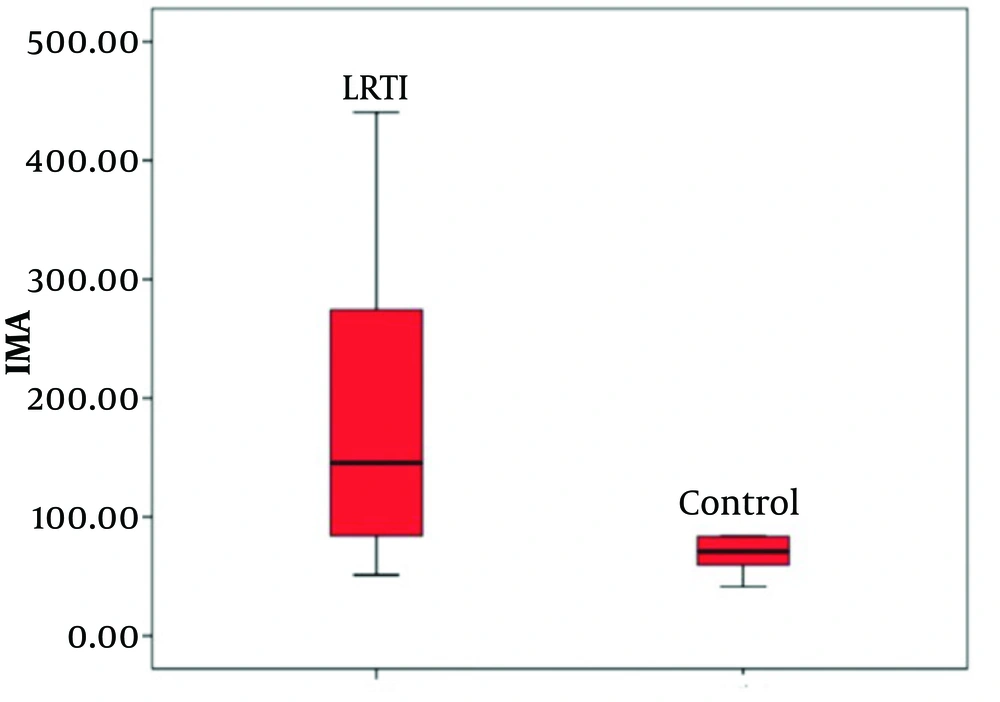
Figure 1.
Distribution of ischemia-modified value in LRTI and control group
The IMA, procalcitonin, and glucose levels of the control group were markedly lower than those of the bronchiolitis and pneumonia groups (P < 0.05). No statistically relevant difference was observed between the bronchiolitis and pneumonia groups in terms of IMA, procalcitonin, and glucose levels (P > 0.05). The pneumonia group exhibited higher CRP levels than the bronchiolitis and control groups (P < 0.05), whereas CRP levels did not differ significantly between the bronchiolitis and control groups (P > 0.05) (Table 2).
Table 2.
Evaluation of Groups in Terms of Biochemical Parameters
| Variables | Bronchiolitis (n = 30); Mean ± SS (Median) | Pneumonia (n = 30); Mean ± SS (Median) | Control (n = 25); Mean ± SS (Median) | P-Value a |
|---|---|---|---|---|
| IMA (ng/mL) | 168.7 ± 100.83 (139.2) | 201.0 ± 131.86 (147.1) | 93.30 ± 57.73 (70.9) | 0.001 |
| PRC (µg/L) | 0.14 ± 0.14 (0.1) | 2.45 ± 8.57 (0.2) | 0.03 ± 0.02 (0.02) | 0.001 |
| CRP (mg/L) | 6.11 ± 12.06 (2.7) | 63.70 ± 82.33 (22.6) | 1.38 ± 1.12 (1.1) | 0.001 |
| Glucose (mg/dL) | 115 ± 31.22 (104) | 124.83 ± 34.84 (115) | 87.24 ± 8.99 (87) | 0.001 |
| Urea (mg/dL) | 14.6 ± 6.7 (12) | 18.20 ± 6.98 (17) | 21.40 ± 5.69 (21) | 0.001 |
| Creatinin (mg/dL) | 0.26 ± 0.08 (0.2) | 0.30 ± 0.11 (0.26) | 0.31 ± 0.09 (0.3) | 0.111 |
| ALT (U/L) | 20.8 ± 16.24 (16) | 18.57 ± 10.53 (16.5) | 15.68 ± 7.83 (14) | 0.358 |
| AST (U/L) | 35.17 ± 11.88 (33.5) | 33.40 ± 11.89 (32) | 29.12 ± 7.61 (28) | 0.081 |
| Albumin (g/L) | 4.59 ± 0.23 (4.6) | 4.49 ± 0.29 (4.5) | 4.25 ± 0.32 (4.2) | 0.001 |
a Kruskal-Wallis test.
The diagnostic performance of IMA for LRTI was assessed using an ROC curve. The obtained AUC was 0.788 (standard error: 0.05), and this value was statistically higher than 0.5 (P = 0.001; P < 0.05). The threshold for IMA in the diagnosis of LRTI was > 83.7 ng/mL. The sensitivity and specificity of this value were 76.7% and 76%, respectively (Table 3 and Figure 2).
Table 3.
The Receiver Operating Characteristic Analysis Results for Ischemia-Modified, Procalcitonin, CRP and WBC in LRTI Diagnosis
| Variables | Optimal Cut-Point Value | AUC | SE | P-Value | Sensitivity | Specificity |
|---|---|---|---|---|---|---|
| IMA (ng/mL) | > 83.7 | 0.788 | 0.05 | 0.001 | 76.7 | 76.0 |
| Procalcitonin (µg/L) | > 0.05 | 0.971 | 0.02 | 0.001 | 95.0 | 88.0 |
| CRP (mg/L) | > 4.2 | 0.826 | 0.04 | 0.001 | 58.3 | 100.0 |
| WBC ( /UL) | > 10780 | 0.721 | 0.06 | 0.001 | 53.3 | 88.0 |
Abbreviation: AUC, area under curve.
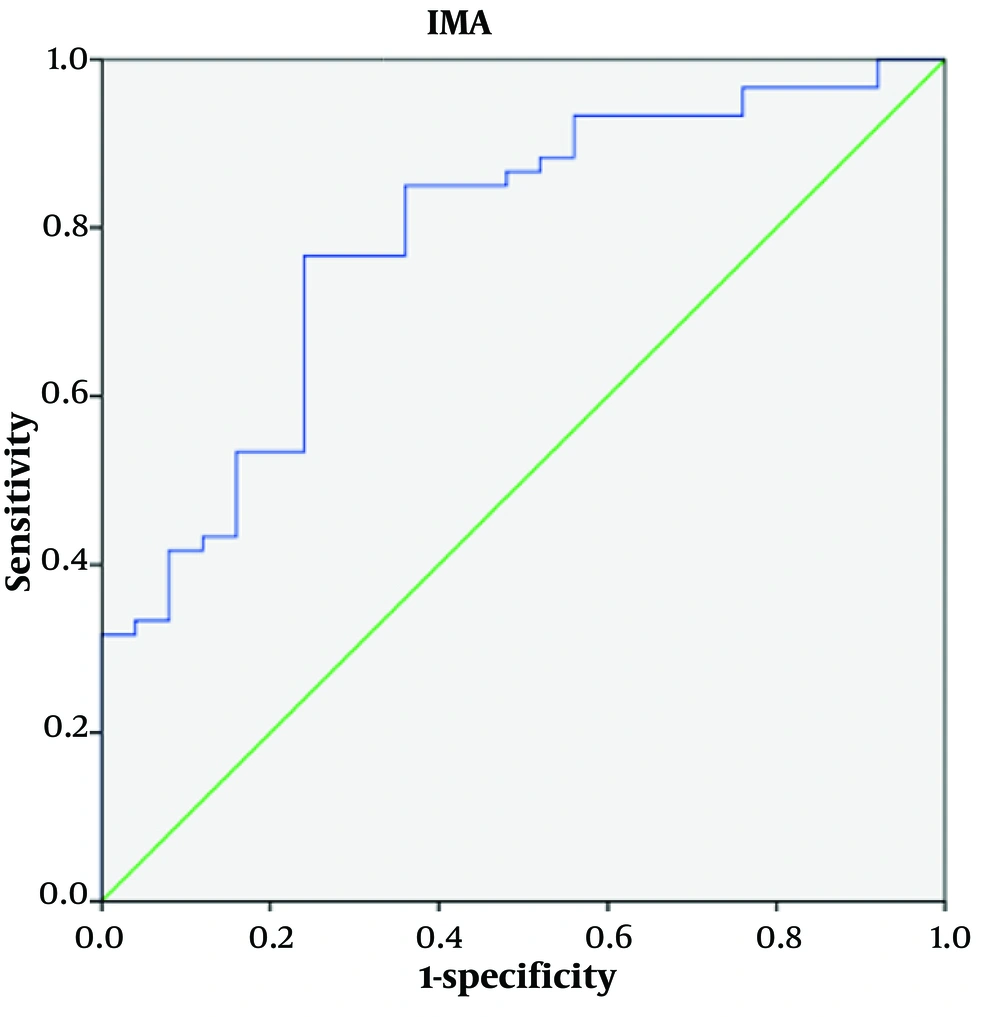
Figure 2.
Receiver operating characteristic Curve for ischemia-modified in LRTI diagnosis
Among patients with LRTI (n = 60), subdivided into bronchiolitis (n = 30) and pneumonia (n = 30), IMA showed no significant association with biochemical markers including procalcitonin, CRP, glucose, creatinine, ALT, AST, and albumin (P > 0.05). In the LRTI group, no significant statistical correlation was found between IMA levels and gender, presence of fever, age, duration of fever, day with the highest fever, duration of cough, and duration of hospitalization. These parameters were also not statistically significantly different between the bronchiolitis, pneumonia, and control groups (P > 0.05).
There was no statistically relevant difference in IMA levels between the subgroups formed according to procalcitonin (< 0.05; ≥ 0.5 (µg/L), CRP (< 5; ≥ 5 mg/L), and lactate (< 1.2; ≥ 1.2 mmol/L) levels in each of the LRTI (n = 60), bronchiolitis (n = 30), and pneumonia (n = 30) groups (P > 0.05).
5. Discussion
Lower respiratory tract infections are among the leading causes of infectious deaths worldwide. Especially in children under five years of age, respiratory diseases, especially pneumonia, are among the leading causes of mortality and morbidity. The LRTI is diagnosed primarily through patient history and physical examination findings. Therefore, it has become difficult to standardize the diagnosis. Although laboratory data and imaging methods support the diagnosis, there is no clear marker for definitive diagnosis and prognosis (20, 21).
Ischemia-modified albumin occurs as a modified form of albumin as a result of oxidative stress and hypoxia. It was first used in the literature in the diagnosis of cardiovascular diseases. In subsequent studies, it has been used in many diseases in which ischemia is present and oxidative stress is prominent (22). Our findings demonstrated that serum IMA levels in the LRTI group were statistically higher than those in the control group. Our study is the first study in which IMA levels were evaluated in patients diagnosed with LRTI, bronchiolitis, and pneumonia in childhood. Compared with the control group, serum IMA concentrations were markedly increased in patients with bronchiolitis and pneumonia. However, we did not find any correlation between biochemical parameters and serum IMA levels.
Bolatkale et al. investigated how serum IMA levels changed in patients diagnosed with community-acquired pneumonia in a study consisting of 81 adults and 81 control subjects. In this study, patients exhibited higher serum IMA and CRP levels compared with the control group, and this difference was statistically significant (16). Sağlam et al. reported that serum IMA levels were elevated in coronavirus disease 2019 (COVID-19) patients showing pneumonic infiltration on computed tomography when compared with the control group. They stated that examination of thrombotic parameters affecting prognosis, especially IMA, may be guiding in predicting pneumonic infiltration (17). Acar et al. found high serum IMA levels in patients with severe SARS-CoV-2 pneumonia. In this study, it was reported that serum IMA level showed 70.2% sensitivity and 85.4% specificity in the diagnosis of the disease (18). The high serum IMA levels found in the patient group in our study are compatible with the studies in the literature. However, in the study conducted by Altınbaş et al. involving 90 patients hospitalized with a diagnosis of COVID-19 pneumonia and 60 healthy control subjects, serum IMA levels of patients diagnosed with COVID-19 pneumonia were not different from those of the control group. In addition, serum IMA levels were compared for mild-moderate and severe patients, and no difference was found between them (19).
In the current study, serum IMA values of patients diagnosed with LRTI with and without the need for high-flow nasal cannula (HFNC) oxygenation treatment to determine the severity of the disease were compared, and no difference was found between them. As a result, more research is needed because there are few studies in the literature and there are differences between the data. Our findings showed no statistical difference between the groups regarding mean age and gender distribution, in agreement with previous reports. In a study including 56 cases in which serum IMA levels were compared with the control group in children diagnosed with asthma, there was no statistical difference in terms of mean age and gender distribution (23).
Again, in a study by Nazik et al. in which pediatric patients diagnosed with appendicitis, including 63 cases, were compared with the healthy population, 60% of the patients were male and 40% were female, and no significant difference was found in gender distribution (24). It is known that IMA levels increase with hypoxia and oxidative stress (25). Hypoxia may develop during asthma attacks. Dogru et al. measured IMA levels in 26 patients with asthma and 26 control patients in 3 groups: During asthma attack, in the asymptomatic period 4 weeks after asthma attack, and in the control group. They found that the IMA levels of the patients during the attack were significantly higher than those of the control group. Again, a positive correlation was observed between asthma attack severity and IMA levels (23).
In our study, we found statistically significantly higher IMA levels in patients diagnosed with bronchiolitis, which is an inflammatory process triggered by viral pathogens, compared with the control group. It is known that IMA level reaches a level that can be measured diagnostically in the blood within minutes as a result of inflammation following exposure to hypoxia (26). Falkensammer et al., in their study involving 12 healthy volunteers, induced femoral muscle ischemia with exercise and cuff pressure. They then compared IMA and lactate levels. They found no significant correlation between IMA and lactate levels, whereas they found that IMA levels increased immediately upon release of the cuff and returned to normal levels within 30 minutes (27). In the study by Turedi et al., IMA levels were compared at the time of diagnosis, at the 3rd hour of treatment, and in the control group in patients diagnosed with carbon monoxide poisoning known to cause tissue ischemia. The IMA values measured at the time of diagnosis were found to be significantly higher than the IMA levels measured at the 3rd hour of treatment, and the post-treatment measurements were also found to be significantly higher than those of the control group (28). In this context, IMA value for LRTI may be more useful in early diagnosis and treatment than other serum markers of inflammation. In this way, high morbidity and mortality rates may be prevented.
In a meta-analysis of 31 studies comparing diagnostic markers for pediatric pneumonia cases by Gunaratnam et al., serum CRP (70% sensitivity, 64% specificity, cut-off point 53 mg/L) and procalcitonin (69% sensitivity, 64% specificity, cut-off point 0.59 ng/mL) values were shown to be better than white blood cell count (63% sensitivity, 48% specificity, cut-off point 13000) in the diagnosis of pneumonia (29). In our study, we performed ROC analysis for IMA, CRP, PRC, and white blood cell count for the diagnosis of LRTI and pneumonia. For the diagnosis of LRTI, IMA (76.7% sensitivity, 76% specificity, cut-off point 83.7 ng/m/L), CRP (58.3% sensitivity, 100% specificity, cut-off point 4.2 mg/L), procalcitonin (95% sensitivity, 88% specificity, cut-off point 0.05 ng/mL), and white blood cell count (53.3% sensitivity, 88% specificity, cut-off point 10.780) were found to be significant. When the ROC curve analyses drawn in patients diagnosed with CAP were analyzed, diagnostic sensitivity and diagnostic specificity for CRP and PRC were found to be higher than those for white blood cell count, just as in the study by Gunaratnam et al. (29). In our study, although IMA, CRP, and PRC levels were found to be statistically significantly higher between the LRTI and control groups, no significant correlation was found between IMA levels and CRP and PRC levels. We think that this is because we could not clearly differentiate the patients as having viral or bacterial pneumonia at the time of diagnosis. Wu et al. examined the relationship between disease severity and CRP levels in patients diagnosed with CAP and found no significant correlation (30).
In our study, we did not find a statistically significant difference when we compared the levels of IMA, CRP, PRC, and hemogram parameters in patients diagnosed with CAP with and without the need for HFNC treatment. In a study including 20 patients hospitalized in the pediatric intensive care unit, the relationship between blood gas parameters and serum IMA levels was examined and no correlation was found (31). Falkensammer et al. compared IMA and lactate levels measured with femoral muscle ischemia and found no significant correlation between IMA and lactate levels (27). In our study, we examined the relationship between IMA levels and lactate levels, which is one of the bedside blood gas parameters of patients diagnosed with pneumonia and bronchiolitis, and we did not find a significant difference between IMA and blood gas parameters in the study group. In a study by Masarweh et al. investigating risk factors for the severity and complications of CAP, it was found that high serum CRP values and increased oxygen demand were positively correlated with the development of complications in CAP (32).
The diagnosis of CAP in children is based on history and physical examination findings, and the diagnosis is supported by laboratory and imaging methods. There are hospitalization criteria for children due to CAP, but there is no scoring system. Existing scoring systems have been tried to be modified from adult studies (33). In the literature, it has been shown that scoring systems that determine the severity of the disease in CAP should include laboratory data (34). In the present study, no statistically detectable correlation was found between serum IMA levels and patients’ history or physical examination findings. We think that the reason for this situation is the lack of a scoring system based on laboratory data. There is a need for scoring systems including laboratory parameters in the diagnosis of CAP. Therefore, we believe that serum IMA levels may be useful in the diagnosis of lower respiratory tract infection or in the exclusion of the disease in addition to procalcitonin, CRP, hemogram, and routine biochemical tests.
5.1. Limitations
This study has several limitations. First, the relatively small sample size may have limited the statistical power of the study. Second, other biomarkers of oxidative stress could not be evaluated alongside IMA. In addition, the single-center design may restrict the generalizability of our findings to other pediatric populations and healthcare settings. Future multicenter studies with larger and more diverse cohorts are needed to validate the diagnostic performance of IMA in LRTI.
5.2. Conclusion
The LRTI group exhibited higher IMA concentrations than the healthy control group. The IMA levels in each of the bronchiolitis and pneumonia groups were higher than those in the healthy control group. However, the IMA levels in the bronchiolitis and pneumonia groups were not different. Serum IMA levels can be used to exclude the diagnosis of lower respiratory tract infection, but more studies are needed in this regard.