
1. Background
Several medications in pediatrics have been implicated in nephrotoxic acute kidney injury (AKI), including antivirals such as acyclovir. Factors like age, pharmacogenetics, underlying disease, medication dose, and concurrent drug use all influence the severity of nephrotoxic insults (1). AKI is characterized by a sudden deterioration in renal function, leading to the accumulation of nitrogenous waste products and improper electrolyte control (2). It may also cause a drop in urine production. AKI affects almost 25% of critically ill children and at least 5% of non-critically ill hospitalized children (2). Acute kidney injury has been attributed to higher mortality rates, longer hospital stays, irreversible renal function loss, and a greater likelihood of developing chronic kidney disease (CKD) (2). Acyclovir, a nucleoside analog used in pediatrics, preferentially suppresses herpesvirus replication (3). It is used to treat human herpesvirus infections such as herpes simplex virus (HSV) and varicella-zoster virus (VZV), as well as meningoencephalitis and newborn sepsis (3). Although acyclovir is generally well tolerated, it can cause nephrotoxicity by accumulating insoluble crystals in renal tubules (4). Other documented mechanisms of AKI include electrolyte loss, tubular malfunction, and direct injury to renal tubular cells. Risk factors for acyclovir nephrotoxicity include older age, obesity, prolonged treatment duration, and concurrent use of other nephrotoxic medications (5). Effective techniques for managing AKI with acyclovir include avoiding rapid medication infusions, ensuring IV hydration, and adjusting doses for inadequate renal function. However, some patients might need hemodialysis for AKI (6). In a previous study, 150 pediatric patients were included, with ages ranging from 2 days to 18.6 years. Among them, 27 children (18%) developed at least stage 1 AKI (7). In a pediatric cohort involving 373 treatment courses, renal dysfunction was observed in 35% of cases: 22% classified as risk, 9.7% as injury, and 3.8% as failure. Most dysfunction occurred within 48 hours of initiating acyclovir, with renal function returning to the normal range but not always to baseline during follow-up (8). In another study involving 89 patients with a mean age of 48 years, AKI occurred in 34 patients (38.2%), with 24% classified as Stage 1, 44% as Stage 2, and 32% as Stage 3. Approximately two-thirds of the AKI cases were in the more severe stages (2 and 3), and 5.6% of patients in Stage 3 required dialysis (9). Despite global reports of acyclovir-related AKI, most available data come from adult or non-local studies. There is limited evidence on how often this happens in children in Saudi Arabia or what factors may increase the risk. Hydration protocols and the use of other nephrotoxic drugs may play a key role, but this has not been well studied locally. Given the common use of IV acyclovir in hospitalized children, it is important to understand its renal safety in our setting.
2. Objectives
This study aims to explore the incidence of AKI in pediatric patients receiving acyclovir and to assess the impact of hydration and co-administered nephrotoxic agents. The findings may help guide safer use of acyclovir in clinical practice.
3. Methods
This single-center retrospective cohort study was conducted at King Abdullah Specialized Children’s Hospital (KASCH) in Riyadh, Saudi Arabia. The study protocol was reviewed and approved by the Institutional Review Board at King Abdullah International Medical Research Center (KAIMRC). All hospitalized pediatric patients younger than 14 years who received intravenous acyclovir between June 2020 and December 2023 were eligible for inclusion. Patients were admitted to the Neonatal Intensive Care Unit (NICU), Pediatric Intensive Care Unit (PICU), or general pediatric wards based on clinical severity. Patients were excluded if they met any of the following criteria: Transfer from another institution while already receiving acyclovir, receipt of intravenous acyclovir for less than 24 hours, neonates younger than 7 days of age, pre-existing chronic kidney disease, missing baseline or follow-up serum creatinine values, hematologic or oncologic malignancies, missing or unclear documentation of intravenous fluid intake, or evidence of AKI within 72 hours prior to acyclovir initiation.
Data were extracted from the hospital’s electronic medical records (EMR) using automated tools supported by institutional resources to maintain data accuracy and standardization. A structured protocol with defined criteria guided the data collection process. Variables collected included demographic and anthropometric data, clinical diagnoses, indications for acyclovir use, treatment duration and dosage, exposure to nephrotoxic medications and IV fluids, and relevant laboratory parameters [e.g., serum creatinine, estimated creatinine clearance (CrCl)]. Acute kidney injury was defined and staged according to the Kidney Disease: Improving Global Outcomes (KDIGO) Clinical Practice Guidelines for AKI (10). Creatinine clearance was calculated using the original Schwartz formula, incorporating patient height and the highest recorded serum creatinine level during acyclovir treatment (11). Hydration status during acyclovir therapy was categorized based on documented IV fluid orders as: No hydration, half maintenance, maintenance, 1.5× maintenance, and double maintenance. Others included fluid regimens not fitting maintenance-based calculations (e.g., bolus therapy, TPN, or individualized regimens).
3.1. Statistical Analysis
Descriptive statistics were used to summarize patient characteristics, acyclovir exposure, hydration categories, and renal outcomes. Continuous variables were reported as medians with ranges or interquartile ranges (IQR), and means with standard deviations (SD), where appropriate. Categorical variables were presented as frequencies and percentages. Given the extremely low incidence of AKI (n = 1), no inferential statistical tests or multivariable analyses were performed due to insufficient statistical power. Exact binomial confidence intervals (Clopper–Pearson method) were calculated for the incidence of AKI. Analyses that were considered in earlier versions (including inferential comparisons) were removed due to the limited number of events. Data analysis was conducted using IBM SPSS Statistics version 26 (IBM Corp., Armonk, NY, USA).
3.2. Ethical Approval
This study was approved by the Institutional Review Board of King Abdullah International Medical Research Center (KAIMRC), Riyadh, Saudi Arabia [IRB number: (IRB/0657/24)]. All data were anonymized and handled in accordance with ethical standards and institutional policies. Given the retrospective nature of the study, the requirement for informed consent was waived by the IRB.
4. Results
Demographic characteristics of participants and their treatment duration: A sample of 100 children was administered acyclovir for different indications. The sample consists of 46 female children and 54 male children, with corresponding percentages of 46% and 54%, respectively. The most common acyclovir dose was 10 mg/kg (44%), and the median treatment duration was 4 days (range 2 - 77). Table 1 shows the statistics of the demographic characteristics and treatment duration of the participants as follows.
Table 1.
Demographic Characteristics of Participants and Duration of Treatment a
| Variables | Values |
|---|---|
| Age at acyclovir administration in months | 22.5 (0.5 - 156) |
| Gender | |
| Male | 54 (54) |
| Female | 46 (46) |
| Body weight in Kg at diagnosis | 11.7 (3.4 - 91.6) |
| Duration of treatment in days | 4 (2 - 77) |
a Values are as expressed as mean (range) or No (%).
Dose and indication for acyclovir, estimated glomerular filtration rate (eGFR), and creatinine levels:
The most common dose of acyclovir used in mg/kg is 10 mg/kg (44%). Whereas the most common indication for treatment with acyclovir is encephalitis (32%), as illustrated in Table 2. The mean values for eGFR and creatinine levels at different intervals-baseline, 48hr after starting therapy, 72hr after starting therapy, and 48hr after stopping therapy-are also illustrated in Table 2.
Table 2.
Dose and Indications for Treatment by Acyclovir, eGFR, and Creatinine Levels a
| Variables | Values |
|---|---|
| Acyclovir dose in (mg/kg) | |
| 5 | 7 (7) |
| 7 | 2 (2) |
| 10 | 44 (44) |
| 12 | 1 (1) |
| 15 | 26 (26) |
| 20 | 20 (20) |
| Indications for treatment by acyclovir | |
| Encephalitis | 32 (32) |
| Presumed HSV infection | 30 (30) |
| Others b | 20 (20) |
| Meningitis | 13 (13) |
| Sepsis | 4 (4) |
| Presumed varicella infection | 1 (1) |
| eGFR baseline (mL/min/1.73 m²) | 113.08 ± 39.39 |
| eGFR within 48 h of starting therapy | 122.14 ± 38.46 |
| eGFR within 72 h of starting therapy | 119.46 ± 35.82 |
| eGFR after 48 h of stopping therapy | 120.61 ± 37.68 |
| Serum creatinine baseline, mean (µmol/L) | 40.23 ± 9.91 |
| Serum creatinine within 48 h of starting therapy | 37.15 ± 9.46 |
| Serum creatinine within 72 h of starting therapy | 38.76 ± 12.24 |
| Serum creatinine after 48 h of stopping therapy | 41.07 ± 19.44 |
Abbreviation: eGFR, estimated glomerular filtration rate.
a Values are as expressed as No (%) or mean ± SD.
b Others include fever with suspected viral etiology, abnormal CSF findings without confirmed diagnosis, or prophylactic use in immunocompromised patients.
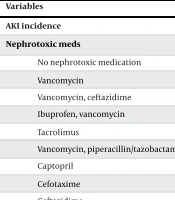
In our sample (n = 100), only one case developed AKI, which represents a 1% AKI incidence rate, as illustrated in Table 3. Table 3 illustrates the frequency of the use of nephrotoxic medications for the treatment of the participants. It shows that vancomycin is the most commonly used nephrotoxic medication (35%). Table 3 also indicates the different levels of hydration, where 77% of participants experienced maintenance hydration. Moreover, Table 3 demonstrates that 37% of patients received IV fluids for the full acyclovir treatment course, while 63% of them did not. One case of AKI was documented. The patient was a 9-year-old previously healthy girl who presented with refractory status epilepticus secondary to suspected viral encephalitis. She was initiated on IV acyclovir (600 mg every 8 hours for 9 days), vancomycin, and meropenem, along with preventive maintenance hydration. Her hydration category was maintenance IVF. She received intravenous fluids (IVF) throughout the acyclovir treatment course. Despite these measures, she developed stage 3 AKI on the first day of admission, with a serum creatinine level of 109 µmol/L that remained elevated. Her clinical course was complicated by persistent seizures, hypotension requiring multiple vasopressors, oliguria progressing to anuria, and metabolic acidosis with hyperkalemia. Continuous renal replacement therapy (CRRT) was initiated, but her renal function did not improve. She later developed bradycardia and pulseless electrical activity, and after 40 minutes of unsuccessful resuscitation, was pronounced deceased. This was the only case of AKI observed during the study period. Maintenance intravenous fluid (IVF) corresponds to the “maintenance hydration” category as defined in the Methods section. Information on pre-treatment hydration timing prior to the first acyclovir dose was not consistently available in the electronic medical records.
Table 3.
| Variables | Values |
|---|---|
| AKI incidence | 1 (1) |
| Nephrotoxic meds | |
| No nephrotoxic medication | 41 (41) |
| Vancomycin | 35 (35) |
| Vancomycin, ceftazidime | 5 (5) |
| Ibuprofen, vancomycin | 4 (4) |
| Tacrolimus | 2 (2) |
| Vancomycin, piperacillin/tazobactam | 2 (2) |
| Captopril | 1 (1) |
| Cefotaxime | 1 (1) |
| Ceftazidime | 1 (1) |
| Ibuprofen | 1 (1) |
| Amphotericin B, ganciclovir | 1 (1) |
| Vancomycin, amphotericin B | 1 (1) |
| Vancomycin, valganciclovir | 1 (1) |
| Vancomycin, ceftazidime, ibuprofen | 1 (1) |
| Vancomycin, ceftazidime, piperacillin/tazobactam | 1 (1) |
| Captopril, vancomycin, ibuprofen | 1 (1) |
| Ceftazidime, gentamicin, vancomycin, topiramate | 1 (1) |
| Hydration, | |
| No hydration | 1 (1) |
| Double maintenance | 2 (2) |
| One and half maintenance | 7 (7) |
| Maintenance | 77 (77) |
| Half maintenance | 10 (10) |
| Others c | 3 (3) |
| IVF fluids for full acyclovir treatment course | |
| No | 63 (63) |
| Yes | 37 (37) |
a Values are as expressed as No (%).
b No hydration indicates no scheduled intravenous fluid administration during acyclovir therapy. Half maintenance, maintenance, one and half maintenance, and double maintenance refer to intravenous fluid rates corresponding to 0.5×, 1×, 1.5×, and 2× the standard pediatric maintenance fluid requirement, respectively, as calculated per institutional pediatric fluid guidelines.
c Others include fluid regimens not based on maintenance calculations, such as fluid boluses, total parenteral nutrition (TPN), or individualized fluid plans based on clinical judgment.
5. Discussion
In this retrospective cohort study, we found a notably low incidence (1%) of AKI among pediatric patients receiving intravenous acyclovir, despite the fact that more than half of the cohort (59%) were exposed to at least one nephrotoxic medication, most commonly vancomycin. This contrasts with previous studies that reported higher rates of AKI, including those by Sandery, Rao, and Batool, where acyclovir-associated nephrotoxicity was more frequently observed (7-9). Several factors may explain the lower observed incidence, including patient age, dosing practices, illness severity, and institutional monitoring protocols. The majority of patients (77%) received maintenance IVF, reflecting routine clinical practice at our institution. These measures reflect routine clinical practice; however, no conclusions regarding their effect on AKI risk can be drawn in the absence of a comparator group and inferential analysis. In contrast, studies with higher AKI rates often lacked standardized hydration strategies or included patients with higher acyclovir dosing regimens. Additionally, our patient population was younger (median age 22.5 months), which may have influenced susceptibility, as older age has been linked to higher AKI risk in some cohorts. Despite preventive hydration and appropriate dosing, she progressed to stage 3 AKI requiring renal replacement therapy and ultimately died. This case underscores that even with proper protocols, AKI can still occur in high-risk patients, especially those with systemic complications, severe infections, or exposure to multiple nephrotoxins. No formal causality assessment tool (e.g., Naranjo or WHO-UMC) was applied due to the retrospective design and limitations in data granularity. The observed AKI case occurred in a clinically complex setting, including hemodynamic instability, suspected central nervous system infection, exposure to multiple nephrotoxic medications (e.g., vancomycin and meropenem), and features of multiorgan dysfunction. Therefore, causality cannot be attributed solely to acyclovir. This aligns with previous studies demonstrating that AKI in critically ill patients, particularly in the context of sepsis, is often multifactorial and influenced by hemodynamic instability, infection, and exposure to nephrotoxic agents (12). Our findings suggest that intravenous acyclovir was associated with a low observed incidence of AKI in this cohort; however, no conclusions can be drawn regarding the role of hydration or other clinical practices due to the descriptive nature of the study. However, the role of hydration in reducing AKI risk remains uncertain and cannot be determined from this study. Individualized risk assessment remains essential, particularly in patients with underlying comorbidities or those receiving other nephrotoxic agents. In such cases, early involvement of a nephrology team and frequent renal function monitoring should be considered. Clinicians should remain cautious and avoid assuming that standard hydration alone is always sufficient. This study adds valuable local data to a field where pediatric evidence from Saudi Arabia is limited. A key strength is the relatively consistent documentation and use of hydration protocols, which allowed us to describe hydration practices within the cohort. The inclusion of detailed medication exposure and renal function trends further supports the reliability of our findings. However, several limitations must be acknowledged. First, the retrospective design carries inherent risks of data incompleteness or misclassification. Second, this was a single-center study with a relatively small sample size, which may limit the generalizability of the results. Third, we excluded neonates younger than 7 days and patients with missing data, which could potentially underrepresent AKI incidence in broader populations. Lastly, we relied on creatinine-based definitions, which may not fully capture early or subclinical renal injury, especially in very young children with low baseline creatinine levels. Despite its limitations, this study suggests a low observed incidence of AKI in this cohort. Standard maintenance IVF were commonly used as part of routine care in this cohort; however, their adequacy in preventing AKI cannot be determined from this study. In our cohort, most patients received maintenance IVF as part of routine clinical care. These findings highlight the importance of protocol-driven care and support the integration of risk stratification into acyclovir prescribing practices. In high-risk patients, such as those with CNS infections, hemodynamic instability, or multiple nephrotoxic exposures, closer monitoring and individualized fluid strategies are crucial. Because nearly all patients received some degree of hydration and only one AKI event occurred, the independent effect of hydration on AKI risk could not be evaluated. The low AKI incidence may reflect the dosing and duration used in this cohort, the relatively young age distribution, institutional infusion and monitoring practices, and differences in illness severity compared with prior studies, in addition to potential confounding from concomitant nephrotoxic medications. Additionally, no standardized causality assessment tool was applied, limiting the ability to attribute AKI specifically to acyclovir. Information on pre-treatment hydration timing was also not consistently available, which may affect interpretation of hydration-related findings. Future research should focus on prospective, multicenter studies with larger sample sizes to confirm these findings and explore additional risk factors, such as pharmacogenetic profiles, fluid balance monitoring, and dose-exposure relationships.
5.1. Conclusions
In this retrospective cohort, IV acyclovir was associated with a very low incidence of AKI in hospitalized pediatric patients. Due to the low number of events and lack of a comparator group, causal conclusions about preventive strategies such as hydration cannot be drawn. Prospective multicenter studies are needed to better define risk factors and prevention approaches.