Innovative Journal of Pediatrics
The Scientific Journal of Growth & Development Research Center
e-ISSN 3117-5341
Image Credit:Inn J Pediatr
Outline
What Is the Best Available Evidence for Using Homeopathy in Patients with Intellectual Disabilities?
Authors
Published online:Jul 04, 2014
Article type:Review Article
Received:Jul 04, 2013
Accepted:Jul 13, 2014
How to Cite:Shaddel F, Ghazirad M. What Is the Best Available Evidence for Using Homeopathy in Patients with Intellectual Disabilities?. Inn J Pediatr. 2014;24(4):. doi:
Abstract
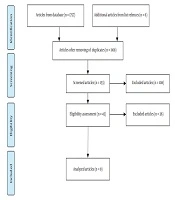
Objective: The debate about the effectiveness of homeopathy hits the headlines from time to time. Reported evidences for the role of homeopathy in psychiatric illness relevant to people with intellectual disabilities are patchy and inconsistent. In this review we summarize the best available evidence for the use of homeopathy to treat the psychiatric disorders common in this population.Methods: Systematic literature review was conducted through February 2012 to July 2012 in AMED, CINHAL, BNI, EMBASE, MEDLINE, PSYCHINFO and GOOGLE SCHOLAR. In the next steps thirty eight homeopathic associations were contacted and a top-up literature search was done on Scopus and World of Science databases till March 2014. Twelve relevant clinical trials were identified and included in this study. The quality of each trial was assessed by the Oxford quality scoring system (Known as Jadad score) as well as subjective review by two reviewers independently (good versus poor).Findings: The largest body of evidence pertained to the use of homeopathy in the treatment of attention deficit hyperactivity disorder (ADHD). There is heterogeneity in the quality of trials and also the outcome of studies but overall our findings suggest some potential for using homeopathy in ADHD. Current evidences do not support the use of homeopathy for treatment of speech and language difficulties. There was only one trial concerning the use of homeopathy in Autistic Spectrum Disorder. This was of a poor quality and unable to provide any recommendation.Conclusion: Whilst acknowledging the risk of publication and language bias in our study, the currently available evidences are neither conclusive nor comprehensive enough to give us a clear picture for the use of homeopathy in patients with intellectual disabilities. There are large gaps in the body of evidence concerning the role of homeopathy in the treatment of common disorders in intellectual disability, such as autism, challenging behavior or developmental arrest in childhood.
Highlights
References
- 1.References are available on the PDF.
Copyright
© 2014, Author(s). This open-access article is available under the Creative Commons Attribution 4.0 (CC BY 4.0) International License (https://creativecommons.org/licenses/by/4.0/), which allows for unrestricted use, distribution, and reproduction in any medium, provided that the original work is properly cited.
Similar Articles
6
Jan
2019
Challenges and Barriers Faced by Home Care Centers: An Integrative Review
Leila Valizadeh,
Vahid Zamanzadeh,
Saman Saber,
Toktam Kianian
Valizadeh L, Zamanzadeh V, Saber S, Kianian T. Challenges and Barriers Faced by Home Care Centers: An Integrative Review. Med Surg Nurs J. 2018;7(3):e83486. doi: https://doi.org/10.5812/msnj.83486
19
Feb
2024
The Effects of a Gluten-Free/Casein-Free Diet on Behavioral Indices in Children with Autism Spectrum Disorder: A Systematic Review and Meta-analysis
Parviz Karimi,
Maryam Deldar,
Kourosh Sayehmiri
Karimi P, Deldar M, Sayehmiri K. The Effects of a Gluten-Free/Casein-Free Diet on Behavioral Indices in Children with Autism Spectrum Disorder: A Systematic Review and Meta-analysis. Inn J Pediatr. 2024;34(1):e140372. doi: https://doi.org/10.5812/ijp-140372
17
Oct
2016
Autism Research in Iran: A Scientometric Study
Hadi Zarafshan,
Mohammad Reza Mohammadi,
Seyed Abbas Motevalian,
Farid Abolhassani,
Ali Khaleghi,
Vandad Sharifi
Zarafshan H, Mohammadi MR, Motevalian SA, Abolhassani F, Khaleghi A, et al. Autism Research in Iran: A Scientometric Study. Iran J Psychiatry Behav Sci. 2017;11(2):e7350. doi: https://doi.org/10.5812/ijpbs.7350
19
Apr
2018

Is There any Correlation Between Executive Dysfunction and Behavioral Symptoms in Autistic Children? A Systematic Review
Vali Shiri,
Seyed Ali Hoseyni,
Ebrahim Pishyareh,
Vahid Nejati,
Mahbubeh Emami,
Esmail Shiri
Shiri V, Hoseyni SA, Pishyareh E, Nejati V, Emami M, et al. Is There any Correlation Between Executive Dysfunction and Behavioral Symptoms in Autistic Children? A Systematic Review. Arch Neurosci. 2018;5(2):e64303. doi: https://doi.org/10.5812/archneurosci.64303
23
Oct
2020
Characteristics and Efficacy of Play Therapy Interventions in Visually Impaired Children and Adolescents: A Systematic Review Study
Fatemeh Ghasemifard,
Hooshang Mirzaie,
Mehdi Jafari Oori,
Abbas Riazi
Ghasemifard F, Mirzaie H, Jafari Oori M, Riazi A. Characteristics and Efficacy of Play Therapy Interventions in Visually Impaired Children and Adolescents: A Systematic Review Study. Inn J Pediatr. 2020;30(6):e106927. doi: https://doi.org/10.5812/ijp.106927
Cited by
- Scopus by DOI: 0
Last Update: 1 week ago
- Scopus by Title: 1
Last Update: 1 week ago
- Scopus by Title (Ref): 1
Last Update: 1 week ago
- CrossRef: 0
Last Update: 3 hours ago
- OpenAlex: 0
Last Update: 6 hours ago
- OpenCitations: 0
Last Update: 5 days ago
Comments
Number of Comments:0