
1. Background
The world has been affected by the coronavirus disease 2019 (COVID-19) pandemic, which appeared in late 2019 in Wuhan, China. The emerging virus later became known as acute respiratory syndrome coronavirus 2 (SARS-CoV-2) and, due to its high transmission, spread first in China and then around the world (1). As of March 15, 2022, the incidence and death rate of COVID-19 in the world were 462,410,472 and 6,075,462, respectively, and in Iran, 7,133,139 and 139,282, respectively (2). From the earliest days of the emergence of COVID-19, the majority of healthcare workers (HCWs) on the frontlines against this pandemic have played a significant role in advancing the diagnosis, vaccination, and care of the patients (3, 4).
Due to their occupational nature, HCWs are always exposed to physical and psychological risks (5). They work in shifts and in scheduled rotations; they have direct contact with patients who sometimes die. They are also exposed to waste and biological and chemical compounds in the workplace (6-8). Healthcare work is inherently a stressful profession that demands relatively high levels of physical and mental activity that can cause fatigue, burnout, dissatisfaction, low efficiency, and retirement (9). During the COVID-19 pandemic, the performance of healthcare systems became more difficult and increased the physical and psychological burden of HCWs due to the unknown pathogenicity of the virus, increase in the number of patients affected, increase in deaths due to the virus, insufficient drugs, lack of medical equipment, reallocation of duties, shortage and heaviness of personal protective equipment (PPE), resource-allocation and ethical decisions, direct contact with critically ill patients, prolonged daily working hours, lack of public and organizational support, shift work, risk of infection, risk of death, and risk of transmission of the virus to loved ones (10).
When an infectious disease spreads, individuals’ psychological responses play a crucial role in shaping both the pattern of the spread of the disease and the occurrence of social disorder and emotional distress during and after the outbreak (11). The COVID-19 pandemic as a large-scale disaster can be related to considerable increases in mental health disorders (immediate and over longer periods in the aftermath of the trauma) and psychological reactions (including emotional distress, maladaptive behaviors, and defensive responses) (12). Studies conducted during the COVID-19 pandemic acknowledge that the most common psychological symptoms among HCWs were burnout, anxiety, stress, post-traumatic stress, and depression. Working in a stressful environment leads to burnout, which in turn leads to emotional exhaustion, depersonalization, and reduction of personal efficacy (13). In addition, burnout can bring about increased medical errors, decreased quality of patient-physician communication, decreased job satisfaction, depression, alcohol dependence, and a raised risk of suicide (14, 15).
Resilience refers to an individual’s ability to regain his/her initial balance or achieve a better balance after crises, which can sometimes result in turning threats into opportunities (16-19). Moreover, resilience has been related to flexibility in emotional regulation during a crisis (20). Research has demonstrated that resilience can play a protective role with diagnoses such as depression, anxiety, and stress (17, 21, 22). This reflects that career resilience can be inversely related to burnout, and the higher an individual resilience is, the better his/her mental health will be (23, 24).
2. Objectives
The primary goal of the current study was to evaluate the prevalence of burnout and related demographic and occupational risk factors in Iranian HCWs facing COVID-19. Secondarily, this study aimed to study the relationship between burnout and anxiety, depression, and career resilience among HCWs. Knowledge of the factors that cause and aggravate imbalance in mental health in critical situations among HCWs can help identify the strategies to maintain and improve the mental health of HCWs in events similar to the COVID-19 pandemic.
3. Methods
3.1. Study Setting and Participants
A cross-sectional study was performed on the first week of January 2022 during the fifth wave of the COVID-19 pandemic. The study population included nurses, medical laboratory technicians, hospital supervisors, surgical technologists, administrative staff, midwifery technicians, and those who were identified as frontline HCWs in 12 hospitals in Fars province, Iran.
3.2. Ethical Considerations
Prior to the completion of the questionnaire, the objectives and importance of the study were clarified for the participants. After receiving informed consent, the participants were asked to anonymously answer the questions. The participants were free to withdraw from the study at any time during the online survey.
3.3. Sample and Sampling
The data were collected between January 5 to February 9, 2022. To avoid disease transmission and face-to-face interaction, an online questionnaire constructed in Porsline WhatsApp as one of the main social communication tools in Iran was distributed. The inclusion criteria were employment in healthcare centers during the COVID-19 pandemic, residence in Iran, at least 3 years of work experience in the healthcare system, and consent for contribution to the study. The exclusion criterion was the incompleteness of the questionnaires. The final sample consisted of 610 HCWs.
3.4. Measures
The demographic and occupational characteristics collected by the author-made questionnaire were age, gender identity, healthcare work experience, educational level, marital status, place of work, working position, daily working hours, number of night shifts per week, access to PPE, perception about PPE safety, direct exposure to COVID-19 patients, history of COVID-19 infection, history of mental health diagnoses, and those under-treatment by a psychiatrist.
The Maslach burnout inventory health services survey for medical personnel (MBI-HSS-MP) was used to assess occupational burnout. The MBI-HSS-MP has been widely used to assess burnout among HCWs and has satisfactory validity and reliability (25). The MBI-HSS consists of 22 items that measure emotional exhaustion (9 items), depersonalization (5 items), and personal accomplishment (8 items). The total burnout score was classified into three categories (mild: 0 - 44, moderate: 45 - 88, and severe: 88 - 132). Participants in the severe category were classified as HCWs with psychological symptoms. In addition, Spearman’s correlation coefficient and Cronbach’s alpha for the three dimensions of the Persian version of the MBI-HSS questionnaire were greater than 0.4 and 0.7, respectively (26).
The psychological components of anxiety and depression were assessed using the 14-item Hospital Anxiety and Depression Scale (HADS), which is divided into anxiety and depression subscales (7 items each). This is a 4-point Likert scale (0 - 3 score) designed to measure the mood changes (especially anxiety and depression) of HCWs and patients in non-psychiatric hospitals. The cut-off score of the scale is 11, and higher scores are clinically significant. The Persian version of this scale has shown a content validity index of 0.76 (27).
The career resilience of the HCWs was assessed using the Career Resilience Questionnaire (CRQ). This scale assesses the tendency to change, risk-taking, networking, self-confidence, success, self-awareness, awareness of the procedures and demands, adjustability, independence, and active learning in the face of crises and problems in the workplace (16). This questionnaire consists of 25 questions in the form of a 5-point Likert scale (0 - 4). High scores indicate good career resilience (maximum: 140), and scores lower than 28 indicate unfavorable career resilience. Additionally, the Persian version of the CRQ had Cronbach’s alpha and validity of 0.88 and 0.75, respectively (28).
3.5. Data Analysis
The chi-square test was also used to compare the nominal or rank qualitative variable between the levels of other variables. The Pearson correlation test was used to evaluate the relationship between the quantitative variables. Moreover, Spearman’s correlation test was used if it was not normal. Multiple linear regression analysis was applied to control the effect of possible confounding variables and identify the factors associated with the psychological impacts on HCWs during the COVID-19 pandemic. The odd ratio (OR) with a confidence interval (CI) of 95% and a P < 0.05 were identified as statistically significant. All data analyses were performed in SPSS software (version 22.0).
4. Results
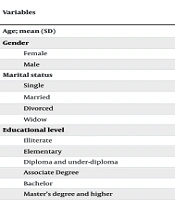
The mean and standard deviation (SD) of male and female participants’ ages were 29.77 ± 5.73 and 33.65 ± 7.18 years, respectively. In this study, 81% of the participants (n = 497) were frontline workers in COVID-19 units. As to marital status, most of the participants (71.3%) were married. The qualification of the majority of participants was a bachelor’s degree (n = 558), and 2.8% and 5.7% had an associate’s degree (n = 17) and a master’s degree (n = 35), respectively. The detailed demographic and occupational characteristics of the studied HCWs are summarized in Table 1.
Table 1.
Characteristics of Participants a
| Variables | Values |
|---|---|
| Age (y) | |
| Mean ± SD | 33.26 ± 7.13 |
| Median (min - max) | 32.00 (20 - 52) |
| Work experience (y) | |
| Mean ± SD | 9.49 ± 7.28 |
| Median (min - max) | 8.0 (3 - 27) |
| Gender | |
| Female | 546 (79.5) |
| Male | 64 (10.5) |
| Marital status | |
| Single | 160 (26.2) |
| Married with child | 283 (46.4) |
| Married without child | 152 (24.9) |
| Divorced | 3 (0.5) |
| Widow | 12 (2.0) |
| Working position | |
| Nurses | 415 (68.0) |
| Medical laboratory technicians | 11 (1.8) |
| Hospital supervisors | 40 (6.6) |
| Surgical technologists | 42 (6.9) |
| Administrative staff | 2 (0.32) |
| Midwifery technicians | 94 (15.4) |
| Others | 6 (0.98) |
| Place of work | |
| Emergency medical service | 71 (11.6) |
| ICU | 54 (8.9) |
| CCU | 19 (3.1) |
| Internal-general ward | 91 (15.1) |
| Surgical | 100 (16.4) |
| Dialysis ward | 24 (3.9) |
| Psychiatric ward | 6 (1.0) |
| Others | 244 (40.0) |
| Average daily working hours | |
| 6 - 9 | 384 (63.0) |
| 9 - 12 | 190 (31.1) |
| 12 - 15 | 36 (5.9) |
| Average weekly night shifts | |
| 1 - 2 | 358 (58.7) |
| 3 - 4 | 40 (6.6) |
| > 4 | 212 (34.7) |
| Access to PPE | |
| Rarely | 224 (37.2) |
| Sometimes | 46 (7.5) |
| Often | 123 (20.2) |
| Permanent | 214 (35.1) |
| Perception of PPE safety | |
| Effect-less | 21 (3.4) |
| Relatively safe | 448 (73.5) |
| Completely safe | 141 (23.1) |
| Direct exposure to COVID-19 patients | |
| Yes | 516 (84.6) |
| No | 94 (15.4) |
| History infection of COVID-19 | |
| Yes | 387 (63.4) |
| No | 223 (36.6) |
| History of imbalance in mental health | |
| Yes | 27 (4.4) |
| No | 583 (95.6) |
| Under-treatment of psychiatrist | |
| Yes | 42 (6.9) |
| No | 568 (93.1) |
Abbreviations: SD, standard deviation; min, minimum; max, maximum; PPE, personal protective equipment; COVID-19, coronavirus disease 2019; ICU, intensive care unit; CCU, cardiac care unit.
a Values are expressed as No. (%) unless otherwise indicated.
The mean score on the burnout scale was 53.19 ± 23.11. Table 2 shows the descriptive statistics of the total score of burnout and its three dimensions among the studied HCWs. As can be seen, the emotional exhaustion and personal accomplishment in the majority of the studied HCWs were in the moderate category. Moreover, the total burnout score of most participants was in the moderate category. However, the depersonalization score in the HCWs was in the mild category (80.7%).
Table 2.
Descriptive Statistics of Burnout Scale a
| Dimension | Mean ± SD | Category | |||
|---|---|---|---|---|---|
| Median (Range) | Mild (0 - 44) | Moderate (45 - 88) | Severe (88 - 132) | ||
| Emotional exhaustion | 29.67 ± 14.12 | 27.5 (0 - 54) | 44 (7.2) | 364 (59.7) | 202 (33.1) |
| Depersonalization | 5.35 ± 6.49 | 3.0 (0 - 30) | 492 (80.7) | 95 (15.6) | 23 (3.8) |
| Personal accomplishment | 17.18 ± 7.81 | 17.0 (6 - 42) | 273 (44.8) | 307 (50.3) | 30 (4.9) |
| Total | 53.19 ± 23.11 | 50.0 (6 -126) | 239 (39.2) | 330 (54.1) | 41 (6.7) |
Abbreviation: SD, standard deviation.
a Values are expressed as No. (%) unless otherwise indicated.
Table 3 shows descriptive statistics on anxiety (HAD-A), depression (HAD-D), and total Hospital Anxiety and Depression Scale (HADS) scores. The results indicated that the HADS score in 87.9% (n = 532) of the studied HCWs during the COVID-19 pandemic was higher than the cut-off point, and this requires clinical attention and evaluation.
Table 3.
Descriptive Statistics of Anxiety, Depression, and Career Resilience
| Variables | Mean ± SD | Median | Min - Max |
|---|---|---|---|
| Anxiety (HAD-A) | 9.38 ± 2.03 | 9.0 | 3.0 - 15.0 |
| Depression (HAD-D) | 7.79 ± 3.7 | 8.0 | 1.0 - 18.0 |
| HADS | 17.18 a ± 4.54 | 17.0 | 6.0 - 30.0 |
| Career resilience | 40.64 b ± 13.66 | 40.0 | 5.0 - 75.0 |
Abbreviations: SD, standard deviation; Min, minimum; Max, maximum; HADS, Hospital Anxiety and Depression Scale.
a Cut-off point = 11.
b Cut-off point = 28.
According to Table 3, the mean total CRQ score was higher than the cut-off score (28), indicating good career resilience. Based on the cut-off score, 18.7% (n = 114) of the HCWs had poor career resilience.
Different levels of burnout and anxiety-depression were observed between demographic and occupational variables (i.e., marital status, work position, place of work, average weekly night shift, average daily working hours, access to PPE, perception about PPE safety, history of infection by COVID-19, history of imbalance mental health, and under-treatment of psychiatrist) (P < 0.01). Furthermore, the results indicated that career resilience was not significantly different in different levels of demographic variables (P > 0.05); however, there was a significant difference in various levels of occupational variables (i.e., work position, place of work, average daily working hours, average weekly night shift, access to PPE, and perception about PPE safety) (P < 0.001) (Table 4). As can be seen in Table 4, the highest scores of burnout and anxiety-depression (71.2 ± 17.9 and 21.0 ± 4.87, respectively) and the lowest scores of career resilience (19.6 ± 9.73) were reported by the HCWs of the intensive care unit (ICU). Moreover, the results showed that the mean burnout score in most of the occupational groups was in the moderate category, and the worst burnout score was related to nurses.
Table 4.
Comparison of Psychological Parameters by Demographic and Occupational Characteristics of the Studied Healthcare Workers
| Variables | Burnout | Anxiety and Depression | Career Resilience | |||
|---|---|---|---|---|---|---|
| Mean ± SD | P-Value | Mean ± SD | P-Value | Mean ± SD | P-Value | |
| Gender | 0.014 | 0.78 | 0.148 | |||
| Female | 52.4 ± 22.8 | 17.2 ± 4.45 | 43.0 ± 16.3 | |||
| Male | 59.9 ± 24.6 | 17.0 ± 5.23 | 40.4 ± 13.3 | |||
| Marital status | 0.002 | 0.001 | 0.139 | |||
| Single | 57.2 ± 27.0 | 17.1 ± 4.63 | 41.8 ± 15.3 | |||
| Married with child | 49.4 ± 20.1 | 16.9 ± 4.39 | 39.9 ± 12.3 | |||
| Married without child | 54.9 ± 23.0 | 17.3 ± 4.33 | 40.9 ± 14.5 | |||
| Divorced | 71.0 ± 17.3 | 29.7 ± 0.57 | 24.3 ± 6.3 | |||
| Widow | 61.0 ± 23.1 | 18.6 ± 5.82 | 23.3 ± 4.3 | |||
| Working position | 0.001 | 0.001 | 0.001 | |||
| Nurses | 57.4 ± 23.1 | 17.6 ± 4.60 | 39.4 ± 13.9 | |||
| Medical laboratory technicians | 49.3 ± 22.7 | 17.8 ± 4.11 | 43.5 ± 17.8 | |||
| Hospital supervisors | 47.9 ± 15.3 | 16.7 ± 3.67 | 42.3 ± 9.5 | |||
| Surgical technologists | 46.6 ± 24.0 | 17.9 ± 5.59 | 38.6 ± 10.6 | |||
| Administrative staff | 44.0 ± 0.01 | 14.0 ± 0.01 | 55.0 ± 0.01 | |||
| Midwifery technicians | 41.3 ± 20.1 | 15.2 ± 3.7 | 46.0 ± 13.9 | |||
| Others | 48.0 ± 22.9 | 17.8 ± 4.08 | 44.0 ± 18.9 | |||
| Place of work | 0.001 | 0.001 | 0.001 | |||
| Emergency medical service | 56.6 ± 25.3 | 17.3 ± 3.35 | 39.5 ± 11.3 | |||
| ICU | 75.2 ± 17.9 | 21.0 ± 4.87 | 19.6 ± 9.73 | |||
| CCU | 51.3 ± 15.0 | 18.0 ± 3.75 | 42.4 ± 10.1 | |||
| Internal-general ward | 55.8 ± 22.5 | 16.7 ± 4.82 | 41.3 ± 13.9 | |||
| Surgical | 56.2 ± 24.0 | 17.9 ± 4.82 | 43.6 ± 15.1 | |||
| Dialysis ward | 58.4 ± 27.8 | 16.5 ± 4.56 | 39.0 ± 9.24 | |||
| Psychiatric ward | 64.9 ± 7.2 | 18.7 ± 2.59 | 19.7 ± 9.81 | |||
| Others | 46.4 ± 20.2 | 16.3 ± 4.51 | 37.5 ± 8.95 | |||
| Average daily working hours | 0.001 | 0.271 | 0.014 | |||
| 6 - 9 | 50.0 ± 20.9 | 16.9 ± 4.56 | 43.0 ± 13.6 | |||
| 9 - 12 | 56.9 ± 24.6 | 17.6 ± 4.50 | 39.7 ± 13.2 | |||
| 12 - 15 | 67.0 ± 29.0 | 17.7 ± 4.58 | 38.4 ± 16.9 | |||
| Average weekly night shifts | 0.001 | 0.004 | 0.003 | |||
| 1 - 2 | 51.5 ± 21.7 | 16.9 ± 4.75 | 37.7 ± 13.0 | |||
| 3 - 4 | 58.2 ± 26.0 | 18.5 ± 4.90 | 36.7 ± 16.9 | |||
| > 4 | 55.0 ± 23.8 | 17.32 ± 3.92 | 43.2 ± 13.6 | |||
| Access to PPE | 0.001 | 0.001 | 0.001 | |||
| Rarely | 71.3 ± 21.3 | 19.2 ± 4.32 | 41.5 ± 13.9 | |||
| Sometimes | 59.7 ± 24.8 | 17.7 ± 4.62 | 36.0 ± 9.65 | |||
| Often | 55.8 ± 22.3 | 17.5 ± 3.94 | 37.2 ± 12.6 | |||
| Always | 46.0 ± 21.0 | 16.0 ± 4.54 | 42.7 ± 14.2 | |||
| Perception of PPE safety | 0.001 | 0.001 | 0.001 | |||
| Effect-less | 85.4 ± 24.4 | 21.2 ± 2.66 | 24.7 ± 14.6 | |||
| Relatively safe | 55.1 ± 21.5 | 17.7 ± 4.39 | 38.9 ± 12.3 | |||
| Completely safe | 42.2 ± 21.8 | 14.8 ± 4.24 | 48.6 ± 13.7 | |||
| Direct exposure to COVID-19 patients | 0.159 | 0.098 | 0.978 | |||
| Yes | 53.7 ± 23.9 | 17.3 ± 4.63 | 40.6 ± 13.4 | |||
| No | 50.1 ± 18.3 | 16.5 ± 3.91 | 40.7 ± 15.2 | |||
| History infection of COVID-19 | 0.004 | 0.001 | 0.007 | |||
| Yes | 55.2 ± 23.6 | 17.8 ± 4.50 | 39.5 ± 13.1 | |||
| No | 49.6 ± 21.9 | 16.1 ± 4.44 | 42.6 ± 14.4 | |||
| History of mental health diagnosis | 0.001 | 0.056 | 0.309 | |||
| Yes | 80.4 ± 18.4 | 18.8 ± 4.68 | 43.3 ± 16.3 | |||
| No | 51.9 ± 22.5 | 17.1 ± 4.52 | 40.5 ± 13.5 | |||
| Under-treatment of psychiatrist | 0.001 | 0.001 | 0.013 | |||
| Yes | 73.8 ± 21.6 | 20.2 ± 3.31 | 35.4 ± 8.79 | |||
| No | 51.7 ± 22.5 | 16.9 ± 4.54 | 41.0 ± 13.9 | |||
Abbreviations: SD, standard deviation; PPE, personal protective equipment; COVID-19, coronavirus disease 2019; ICU, intensive care unit; CCU, cardiac care unit.
As shown in Table 5, the Pearson correlation coefficient indicates a direct and significant relationship between burnout and anxiety-depression that showed a strong correlation (r = 0.530, P < 0.001) (Table 5). On the other hand, there was a negative and significant correlation between burnout and resilience and between anxiety-depression and resilience (P < 0.001, r = -0.433 and -0.473, respectively). The higher the burnout and anxiety-depression is, the lower the score of career resilience is.
Table 5.
Correlation Between Burnout, Hospital Anxiety and Depression Scale, and Resilience
| Variables | r | P-Value |
|---|---|---|
| Burnout and HADS | 0.530 | < 0.001 |
| Burnout and resilience | -0.433 | < 0.001 |
| Resilience and HADS | -0.479 | < 0.001 |
Abbreviation: HADS, Hospital Anxiety and Depression Scale.
It was observed that the independent risk factors for burnout were marital status, average daily working hours, average weekly night shift, access to PPE, and direct exposure to COVID-19 patients (Table 6). By adjusting the effect of other variables, it was noticed that the mean score of burnout in married HCWs was 3.44 points lower than the single participants (95% CI: -7.56 - 0.68, P < 0.05). Nevertheless, the number of night shifts had a significant impact on increasing the burnout of HCWs (B = 1.84, 95% CI: 0.077 - 2.29, P < 0.05). The effect of daily working hours on burnout score was notable and significantly increased the burnout score of the studied HCWs (B = 5.65, 95% CI: 1.77 - 9.53, P < 0.05).
Table 6.
Risk of Psychological Impacts: Logistic Regression Analysis
| Variables | Burnout | Anxiety-Depression | Career Resilience | |||||||||
|---|---|---|---|---|---|---|---|---|---|---|---|---|
| B | SE | 95% CI for B (Lower - Upper) | P-Value | B | SE | 95% CI for B (Lower - Upper) | P-Value | B | SE | 95% CI for B (Lower - Upper) | P-Value | |
| Age | 0.005 | 0.011 | -0.28 - 0.37 | 0.78 | 0.001 | 0.003 | -0.005 - 0.008 | 0.737 | 0.001 | 0.010 | -0.02 - 0.020 | 0.946 |
| Work experience | -0.380 | 0.136 | -0.648 - -0.113 | 0.005 | -0.71 | 0.021 | -0.124 - -0.018 | 0.009 | 0.399 | 0.081 | 0.240 - 0.559 | 0.001 |
| Marital status | -3.44 | 2.10 | -7.56 - 0.68 | 0.041 | 0.115 | 0.418 | -0.706 - 0.935 | 0.784 | -2.67 | 1.25 | -5.13 - -0.222 | 0.033 |
| Daily working hours | 5.65 | 1.97 | 1.77 - 9.53 | 0.004 | 0.124 | 0.393 | -0.648 - 0.896 | 0.752 | 3.26 | 1.17 | 0.928 - 5.57 | 0.006 |
| Weekly night shifts | 1.18 | 0.564 | 0.077 - 2.29 | 0.036 | 0.169 | 0.112 | -0.051 - 0.390 | 0.132 | 0.627 | 0.336 | -0.033 - 1.28 | 0.06 |
| Access to PPE | -1.44 | 0.722 | -2.86 - -0.027 | 0.046 | -0.495 | 0.144 | -0.777 - -0.213 | 0.001 | -0.094 | 0.430 | -0.938 - 0.750 | 0.82 |
| Direct exposure to COVID-19 patients | -4.022 | 2.52 | -8.97 - 0.930 | 0.111 | -0.978 | 0.502 | -1.96 - 0.008 | 0.048 | 0.482 | 1.50 | -0.24 - 3.43 | 0.74 |
Abbreviations: CI, confidence interval; SE, standard error; PPE, personal protective equipment; COVID-19, coronavirus disease 2019.
As shown in Table 6, access to PPE and direct exposure to patients with COVID-19 had the greatest impact on the anxiety-depression of the Iranian studied HCWs; the rate score of depression-anxiety in workers without direct exposure to patients was 0.978 points lower than the workers with direct exposure to patients with COVID-19 (95% CI: -1.96 - 0.008, P < 0.05). Moreover, the rate score of depression-anxiety in workers with permanent access to PPE was 0.495 points lower than the workers with rare access to PPE (95% CI: -0.77 - -0.213, P < 0.05). In the present study, marital status and daily working hours had the greatest impact on the career resilience of HCWs (Table 6). The average score of career resilience in single workers was 2.67 points lower than in the married ones (95% CI: -5.13 - 0.222, P < 0.05); additionally, the rate of career resilience of HCWs with normal daily working hours (6 - 9 hours) was 3.26 points higher than the subjects with long daily working (95% CI: 0.928 - 5.58, P < 0.05).
5. Discussion
During the outbreak of emerging diseases, mental health is adversely impacted, and HCWs experience these adverse effects more than the general population (29, 30). In the current study, most of the samples were HCWs, and this is due to the larger number of these samples in the study environment than other groups. On the other hand, the existing studies also show that HCWs are highly affected psychologically by the COVID-19 outbreak, which can be due to the direct contact of this group with patients infected with COVID-19. For example, the findings of Aksoy and Kocak’s study in Turkey (Iran’s neighboring country) showed that about half of the HCWs (48.8%) were in contact with patients suspected of having COVID-19, and about one-third of these medical clinicians (29.8%) provided care to the patients diagnosed with COVID-19, which had caused high psychological tension for this group of caregivers (31).
One of the objectives of this study was to evaluate the mental health status, including burnout, anxiety, depression, and career resilience, of Iranian HCWs during the COVID-19 pandemic. Firstly, the present study showed that the total burnout score of most of the participants was not in good condition. The known causes of burnout in medical and paramedical workers include high workload, high job stress, high time pressure, and limited organizational support, all of which are exacerbated during the outbreak of emerging diseases (32). Daily working hours, working night shifts, direct contact with infected patients, the stress of infection of emerging disease, the stress of transmission of the disease to a loved one, and lack of access to appropriate PPE have a great role in the severity of burnout among the HCWs (33) that the results of the present study confirm it. Furthermore, HCWs in their workplaces deal with the main risk factors for burnout, including sleep disorders (working night shifts), emotional disorders (contact with patients), and job dissatisfaction (poor organizational support) (34).
Based on the results, the current study showed that working night shifts (more than two shifts per week) had a significant effect on burnout in HCWs. Sleep disorders are one of the common problems among the nurses who work night shifts that play a significant role in reducing job satisfaction, supervision, and task execution speed and increasing burnout and human errors in nurses (35, 36). The relation of gender to psychological symptoms is fascinating, given that it was seen even during the severe acute respiratory syndrome (SARS) pandemic (37). The analysis of the data showed that marital status and gender have a significant effect on the burnout of the HCWs; accordingly, burnout, anxiety, and depression scores were higher among widows and divorcees than others. Differences in coping styles might be a factor in healthcare women’s burnout during the COVID-19 pandemic because women, in addition to their jobs, have more responsibilities than men as primary caregivers for dependents during a pandemic (38). Furthermore, women often perform unpaid household duties that can increase their burnout (39). The results of Vahedian-Azimi et al.’s study showed that psychological symptoms in married Iranian women are lower than in single women (40).
Burnout is a condition of physical or mental breakdown caused by overwork or high stress (41). It was also observed that with the increase in daily working hours, the burnout of the studied HCWs increased, and their career resilience score decreased. The COVID-19 pandemic has led to a change in directives regarding the working hours of Iranian HCWs, who had been forced to work long hours. Long-term daily work leads to a rise in physical and emotional exhaustion and decreases self-efficacy and control over personal life (42, 43).
The present study showed that the highest scores of burnout and anxiety-depression, in addition to the lowest scores of career resilience, were reported by ICU professionals, which is consistent with the results of similar studies (7, 44). During the COVID-19 pandemic, the symptoms of burnout and other psychological symptoms in HCWs include the inability to help patients, high volume of patients, lack of control, and feelings of powerlessness (45). These findings indicated the role of the shortage of staff in emergencies, long hours of work, limitation of time and resources, and direct contact with infected patients in the mental health of ICU professionals.
The results showed that HCWs with rare access to PPE, workers with a low perception of PPE safety, and HCWs with direct exposure to patients of COVID-19 reported the highest scores of burnout and anxiety-depression symptoms. Access to PPE has led to a reduction in burnout and anxiety-depression among HCWs during COVID-19 (46). Moreover, a low perception of PPE safety can increase the stress and anxiety caused by the fear of being infected, potential death, or infection of a patient or family member (47). Due to the constant and direct exposure to patients with COVID-19, regular access to appropriate PPE can reduce the risk and stress caused by infection or transmission of the COVID-19 virus, which will lead to a reduction in burnout (45, 47).
The results indicated that anxiety-depression score was higher than the others in single HCWs, surgical technicians, ICU professionals, and those with long working hours, rare access to PPE, and a history of infection. During the COVID-19 pandemic, HCWs around the world lived in a constant condition of vigilance and alarm, with fear of infecting their family members and without sufficient social or organizational support (41). During this period, some causes of psychological symptoms in HCWs, such as emotional exhaustion, fear, stress, anxiety, depression, suffering, and nervousness, were exacerbated. On the other hand, poor organizational support and distance from the family increased the symptoms of the psychological disorder of the HCWs (32).
The results showed that burnout has a positive and significant relationship to anxiety-depression, and burnout and anxiety-depression had a negative and significant relationship to career resilience. Perceived organizational support and resilience (as an individual factor) are two main parameters affecting burnout, anxiety, and depression. A similar study of Canadian HCWs during COVID-19 reported that there was a negative and significant relationship between burnout and resilience (r = 0.43, P < 0.01) (46).
The data indicated that employees in the ICU have poor career resilience, which is consistent with the results of deficient burnout and anxiety-depression scales. Previous studies have acknowledged that career resilience in nurses in different wards of the hospital (type of occupation) is different, and the higher the level of workload, job sensitivity, and job stress of nurses, the lower their career resilience (7, 48).
Given that HCWs are at the frontline of the fight against the COVID-19 virus, ensuring the well-being and emotional resilience of HCWs is a key component in the continuity and effectiveness of healthcare services during the COVID-19 pandemic. On the other hand, HCWs during the COVID-19 pandemic are exposed to isolation and discrimination, overwork, fear, stress, anxiety, sleep disorders, and physical and emotional fatigue; therefore, their career resilience is compromised (16, 45, 49).
Finally, it can be concluded that during the outbreak of COVID-19, Iranian HCWs experienced various burnout psychological symptoms. The current study identified some of the occupational variables that significantly influenced the level of psychological distress in HCWs during the COVID-19 pandemic.
It is important to note several limitations in this study. Firstly, the stratified sampling method used in this study did not provide the possibility of investigating all the HCWs, and participants were not examined equally from all working positions. Secondly, since this was a cross-sectional study, it was not possible to examine the cause-and-effect relationship of the variables. Thirdly, despite the present study authors’ efforts to obtain real results from the participants, the results obtained from the online questionnaire might have contained errors. Additionally, recall bias, selection bias, and response bias might have led to over- or under-estimating the psychological symptoms. Fourthly, due to the use of an online questionnaire, the study could not confirm the clinical diagnosis of mental health problems using valid psychological scales. Fifthly, due to the use of an online questionnaire, there was no certainty that the mental symptoms reported were only related to COVID-19.
It is suggested that further review and longitudinal studies should be conducted to investigate the mental health of HCWs during and following the COVID-19 pandemic. It is also necessary that further studies determine the effectiveness of psychosocial support for HCWs. Randomized clinical trial studies will be helpful in determining the effectiveness of organizational and social supports aimed at improving the mental health of HCWs. Healthcare workers should be able to receive assistance from psychological and psychiatric services (preferably stepped care) to address the adverse psychological impacts resulting from the COVID-19 pandemic. Healthcare workers with a history of preexisting psychiatric disorders should be identified by workplace hospitals and given further support and attention.
5.1. Conclusions
This survey shows that psychological symptoms are evident in the Iranian HCWs during the COVID-19 pandemic. Over three-quarters of Iranian HCWs experienced different degrees of depression, anxiety, poor career resilience, and burnout symptoms. The highest and most severe psychological symptoms were reported by ICU professionals. The variables of marital status, long daily working hours, night shift working, access to PPE, and direct exposure to patients with COVID-19 have a significant impact on the anxiety, depression, burnout, and career resilience of the HCWs.