1. Background
Mindfulness is often defined as an elevated state of awareness achieved through focused, nonjudgmental attention to the present moment. This practice cultivates a nonreactive awareness, helping individuals remain anchored in the present while avoiding distractions or emotional responses (1). Mindfulness training has proven effective in enhancing psychological well-being and emotional regulation, particularly among women (2). Bishop et al. (3) proposed a dual-component framework of mindfulness involving self-regulation of attention and an open, interested, and accepting attitude toward experiences. Research has shown that mindfulness enhances emotional regulation, cognitive flexibility, and stress management, making it a significant construct in education. It promotes emotional resilience, strengthens teacher-student relationships, and benefits the well-being of both teachers and students. Jennings (4) emphasizes that mindfulness enhances teachers’ mental health and creates more supportive classroom environments.
A key critique of mindfulness research concerns its methodological challenges, including potential bias from self-report measures and inconsistencies in mindfulness definitions across studies, which limit generalizability and causal conclusions (5). To effectively address these concerns, it is advisable to implement rigorous methodologies such as randomized controlled trials and objective assessments to enhance the validation of mindfulness outcomes within educational contexts. Moreover, mindfulness interventions should be specifically customized to meet the diverse requirements of students. Empirical evidence indicates that, although beneficial for many, mindfulness practices may induce discomfort in students grappling with unresolved trauma or elevated anxiety levels. Customizing interventions to align with the unique needs and preparedness of students can significantly contribute to ensuring both their safety and overall effectiveness.
To understand mindfulness’s impact, it is essential to examine its effects on cognition, attention, emotion, physiology, and behavior. Studies have indicated that mindfulness can positively influence these domains (6), leading to diverse outcomes in workplace settings (7). The model proposed by Bishop et al. (3) defines mindfulness as involving two components: Self-regulation of attention—maintaining focus on present events and shifting attention as needed—and an open, accepting, and curious orientation toward experiences. In other words, mindfulness involves awareness of immediate experiences and a nonjudgmental attitude toward them, which relates to both positive and negative psychological variables (8).
Teaching, a particularly demanding profession, requires complex social, emotional, and cognitive skills (9). Teachers encounter diverse classroom experiences and relational expectations, necessitating emotional resilience and effective stress management. Mindfulness facilitates the development of these competencies, aiding teachers in maintaining focus and balance. Rising levels of stress and burnout represent considerable challenges, with approximately one-third of teachers reporting elevated daily stress, leading to emotional fatigue and diminished job satisfaction (4). Consequently, mindfulness practices are gaining increased recognition for their efficacy in alleviating stress and enhancing emotional regulation, thereby contributing to the overall well-being of instructors.
In addition to mindfulness, various other strategies, including social-emotional learning (SEL), stress management training, and peer support initiatives, have proven significant in bolstering teacher well-being and facilitating effective classroom management. These strategies provide a more holistic approach to supporting educators in diverse educational environments (10).
Teachers face numerous daily decisions that require significant emotional and attentional resources (11). Effective classroom management relies on teachers’ ability to maintain a broad awareness of classroom dynamics while addressing individual student needs (12). Research indicates that primary school teachers experience higher levels of burnout and stress compared to their high school counterparts (13). Training teachers in mindfulness strategies can be beneficial, as studies have shown that mindful teachers have better interactions with students, positively impacting students’ emotional regulation and academic performance (4). Techniques such as focused attention, walking meditation, pauses, breath control, and observation of thoughts can enhance coping in difficult situations (14). For instance, previous research has demonstrated the impact of mindfulness-based stress reduction (MBSR) training on overall health (15).
Despite its importance, age differences in mindfulness research are often overlooked. Some studies suggest that older adults exhibit higher attentiveness and emotional regulation than younger individuals (16). However, existing literature presents contradictory findings regarding mindfulness across age groups (17). Addressing these discrepancies is vital for understanding how age affects mindfulness, particularly in educational contexts where teachers of varying ages engage with mindfulness practices with limited exploration of age-specific factors affecting mindfulness effectiveness.
The existing corpus of mindfulness assessments remains limited, creating deficiencies in evaluating the efficacy of interventions such as MBSR in enhancing mindfulness levels. Various self-report instruments for measuring mindfulness have emerged, each with distinct attributes and constraints. The Freiburg Mindfulness Inventory (FMI), Mindful Attention Awareness Scale (MAAS), Kentucky inventory of mindfulness skills (KIMS), Cognitive and Affective Mindfulness Scale (CAMS), Toronto Mindfulness Scale (TMS), Five Facets Mindfulness Questionnaire (FFMQ), Southampton Mindfulness Questionnaire (SMQ), and Philadelphia Mindfulness Scale assess mindfulness through diverse methodologies and frameworks (18). However, none of these instruments is deemed appropriate for assessing mindfulness in teaching.
The Mindfulness in Teaching Scale (MTS), created by Frank et al. (19), assesses mindfulness in education through intrapersonal and interpersonal dimensions. Intrapersonal mindfulness involves a teacher’s self-awareness and regulation, while interpersonal mindfulness focuses on mindful interactions with students and colleagues, addressing both personal and social demands of teaching. Although self-report questionnaires like the MTS are common, they have limitations such as response biases. Therefore, incorporating objective measures (e.g., physiological data) and mixed-method designs could enhance understanding of mindfulness effects (5).
Additionally, western-based mindfulness concepts may not fully apply across cultures, as they often lack the spiritual or ethical aspects emphasized in other contexts. In Iran, a teacher-specific mindfulness scale is needed to address the unique challenges teachers encounter, as existing scales like the Langer Mindfulness Scale (LMS) and TMS may not capture the complexities of teaching in this context. The MTS, with its focus on intrapersonal and interpersonal mindfulness, is particularly suitable for assessing Iranian instructors’ mindfulness. Additionally, the Persian version of the MAAS has been studied among Iranian women with breast cancer to measure their mindful attention and awareness (18).
To adapt the MTS for the Iranian context, it is crucial to consider linguistic nuances, cultural values, and local educational expectations that may influence responses. This process could involve expert consultation, pilot testing, and incorporating culturally relevant examples that resonate with Iranian educators. Such adaptations will help ensure that the MTS accurately reflects the cultural and contextual realities of teaching in Iran.
2. Objectives
The current investigation endeavors to evaluate the psychometric attributes and validity of the MTS within educational settings, employing confirmatory factor analysis (CFA) alongside the LMS to ascertain convergent validity. Additionally, this study will scrutinize measurement invariance across varying educational levels and age groups, thereby ensuring that the scale uniformly quantifies mindfulness among diverse populations. Through the assessment of these dimensions, the research aspires to enhance the scale’s relevance and enrich the comprehension of mindfulness within a spectrum of educational environments.
3. Methods
3.1. Population and Sample
This psychometric study evaluated the mindfulness status among 735 Iranian teachers from Hormozgan province, comprising 23.5% male and 76.5% female participants, aged 20 - 55 years (mean = 34.71, SD = 6.38), teaching at primary and secondary school levels. Participants met the inclusion criteria of having at least two years of teaching experience and proficiency in Persian. Exclusions were made for individuals with a significant psychiatric history or those not actively teaching, as verified by the Education Office. Participants’ records were reviewed to identify any prior documentation of significant psychiatric diagnoses in their professional or institutional profiles. Individuals meeting these exclusion criteria were not included in the study. The sample size was determined through power analysis, ensuring sufficient power to detect meaningful effects in the CFA, thus supporting methodological rigor.
3.2. Instruments
Mindfulness was assessed using the MTS (19), which includes two subscales: Intrapersonal mindfulness (items 1 - 9) and interpersonal mindfulness (items 10 - 14), rated on a five-point Likert scale. Previous studies demonstrated satisfactory reliability for these subscales (α = 0.711 for interpersonal and 0.86 for intrapersonal). To ensure convergent validity, the LMS (20), a dependable and accurate assessment of mindfulness, was used. This scale has been validated in Iran by Moafian et al. (21), with a Cronbach’s alpha of 0.77 in this study. The MTS was systematically adapted into Persian using the international test commission’s procedures, which included translation, back-translation, and cultural adjustments. To ensure cultural relevance, the process involved consultations with local educational experts, focus groups with teachers, and pilot testing of the translated scale to gather feedback on its clarity and suitability for the Iranian context.
3.3. Implementation Method
Data collection was conducted via SHAD, a secure online platform widely used in the Iranian education system. Participants were selected using a random selection method to ensure an unbiased sample. The data collection process spanned four weeks, allowing sufficient time to gather responses while maintaining participant confidentiality and data security. The survey, presented in Persian, was accessible to all participants, and data integrity was maintained through restrictions on multiple submissions. The informed consent process was conducted prior to data collection. The study received ethical approval from the Ethics Committee of University of Hormozgan (code: HU-1402-211), confirming that all necessary ethical guidelines were followed in conducting this research.
3.4. Statistical Analysis
In the descriptive statistics section, the mean, standard deviation, and Pearson correlation coefficient were utilized to elucidate the characteristics of the data. For inferential statistics, CFA was employed to assess the psychometric properties of the MTS, validating its two-factor structure (intrapersonal and interpersonal mindfulness) within the Iranian context. Convergent validity was tested through correlations with the LMS scores.
Data analysis included screening for outliers using z-scores, and assessing normality and multicollinearity using the variance inflation factor (VIF). No significant outliers or multicollinearity issues were identified, indicating that the data were suitable for analysis. The fit indices for the CFA were evaluated based on Hu and Bentler’s recommendations (22), using the following criteria: Comparative Fit Index (CFI) ≥ 0.90, root mean square error of approximation (RMSEA) ≤ 0.08, and χ2/DF < 3.0.
To assess internal consistency, Cronbach’s alpha and McDonald’s omega coefficients were calculated, both exceeding 0.70, confirming strong reliability. The statistical analyses were performed using AMOS-24 and SPSS-26, with a significance level set at P < 0.05. Additionally, data completeness was ensured, as there were no missing responses during the data collection process. All participants provided full responses to the survey, ensuring a 100% response rate.
4. Results
4.1. Descriptive Results
This study was conducted on 735 elementary and high school teachers. Descriptive indicators related to demographic variables are presented below. The demographic characteristics of the participants are detailed in Table 1.
Table 1.
Participants Demographics
| Characteristics | No. (%) or Mean ± SD |
|---|---|
| Total sample size | 735 (100) |
| Teaching level | |
| Primary school teachers | 370 (50.34) |
| High school teachers | 365 (49.66) |
| Gender | |
| Male | 356 (48.44) |
| Female | 379 (51.56) |
| Age (y) | 34.71 ± 6.38 |
| 24 - 30 | 250 (34.01) |
| 31 - 40 | 320 (43.54) |
| 41 - 55 | 165 (22.45) |
| Years of teaching experience (y) | |
| 1 - 5 | 195 (26.53) |
| 6 - 10 | 280 (38.10) |
| 11 - 20 | 170 (23.13) |
| > 21 | 90 (12.24) |
| Subject areas taught | |
| Primary schools | 370 (50.34) |
| Mathematics | 112 (15.24) |
| Science | 118 (16.05) |
| Social studies | 103 (14.01) |
| Others | 32 (4.36) |
According to the data presented in Table 1, 48% of the participants identified as male, while 52% identified as female. The distribution was equal, with 50% representing primary school educators and 50% representing secondary school teachers. The majority of individuals fell within the age category of 31 - 40 years, accounting for 43.54% of the sample. Regarding teaching experience, the majority of respondents (38.10%) had between 6 to 10 years of teaching experience. Table 2 displays the means of scores for the MTS items within the overall sample, along with normality indices and item reliability.
Table 2.
Indexes of Normality, Descriptive Statistics, and Item Analysis of the Mindfulness in Teaching Scale (N = 735)
| Variables | Mean ± SD | r Item-Total | Skewness; SE: 0.090 | Kurtosis; SE: 0.180 | K-S | α if Item Deleted |
|---|---|---|---|---|---|---|
| Items | ||||||
| 1 | 1.73 ± 1.05 | 0.40 a | 1.48 | 1.37 | 0.33 | 0.65 |
| 2 | 1.39 ± 0.73 | 0.36 a | 2.29 | 1.82 | 0.41 | 0.66 |
| 3 | 1.45 ± 0.83 | 0.42 a | 2.13 | 1.50 | 0.41 | 0.64 |
| 4 | 1.79 ± 1.04 | 0.40 a | 1.42 | 1.49 | 0.28 | 0.65 |
| 5 | 2.01 ± 1.03 | 0.41 a | 0.86 | 0.09 | 0.22 | 0.65 |
| 6 | 1.16 ± 0.49 | 0.42 a | 1.98 | 1.24 | 0.50 | 0.66 |
| 7 | 1.20 ± 0.59 | 0.32 a | 1.73 | 1.21 | 0.49 | 0.67 |
| 8 | 1.13 ± 0.43 | 0.26 a | 1.41 | 2.44 | 0.51 | 0.68 |
| 9 | 1.77 ± 0.78 | 0.32 a | 1.19 | 2.29 | 0.25 | 0.66 |
| 10 | 3.37 ± 1.16 | 0.36 a | -0.25 | -0.74 | 0.16 | 0.65 |
| 11 | 4.28 ± 0.89 | 0.46 a | -1.26 | 1.46 | 0.30 | 0.61 |
| 12 | 4.26 ± 0.89 | 0.48 a | -1.10 | 0.75 | 0.30 | 0.60 |
| 13 | 3.64 ± 1.19 | 0.41a | -0.65 | -0.39 | 0.21 | 0.62 |
| 14 | 3.44 ± 1.13 | 0.43 a | -0.31 | -0.65 | 0.17 | 0.61 |
| Intrapersonal | 13.64 ± 3.90 | 0.71 a | 1.26 | 1.86 | 0.14 | 0.69 |
| Interpersonal | 18.99 ± 3.52 | 0.63 a | -0.42 | -0.00 | 0.08 | 0.67 |
| Total mindfulness | 32.63 ± 5.05 | 1 | 0.26 | 0.61 | 0.07 | 0.58 |
| LMS total score | 59.63 ± 6.85 | 0.23 a | -0.52 | 1.39 | 0.06 | 0.73 |
a Significant correlation at the 0.01 level (2-tailed).
According to Table 2, all factor loadings for the MTS were statistically significant, validating its two components: Intrapersonal and Interpersonal mindfulness. The skewness and kurtosis indices, along with the results of the Kolmogorov-Smirnov test for all items, indicate that the scores on these items are normally distributed. The alpha coefficient for all items is above 0.60, which is considered satisfactory.
4.2. Model Fit Indices
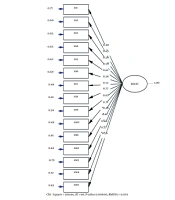
The model fit indices indicated an acceptable fit for the overall sample, as well as across different educational levels and age groups. The criteria met included CFI values above 0.90, RMSEA below 0.08, and χ2/df ratios under 3.0. Additionally, all items’ factor loadings exceeded the 0.30 threshold, further confirming the scale’s consistency across various groups. The model fit indices for the total sample, educational levels, and age groups are detailed in Table 3.
Table 3.
Model Fit Indexes of Total, Educational Levels, and Age Groups
| Variables | χ2 | df | χ2/df | P-Value | RMSEA (95% CI) | CFI |
|---|---|---|---|---|---|---|
| Primary school | 135.02 | 69 | 1.95 | 0.001 | 0.050 (0.038; 0.063) | 0.905 |
| High school | 145.67 | 71 | 2.05 | 0.001 | 0.054 (0.042; 0.067) | 0.905 |
| Age group 1 (< 40) | 144.21 | 71 | 2.03 | 0.001 | 0.053 (0.040; 0.065) | 0.901 |
| Age group 2 (> 40) | 137.99 | 70 | 1.97 | 0.001 | 0.054 (0.042; 0.067) | 0.907 |
| Total | 192.72 | 71 | 2.71 | 0.001 | 0.048 (0.040; 0.057) | 0.915 |
Abbreviations: CFI, Comparative Fit Index; RMSEA, root mean square error of approximation.
The regression coefficients reported in Table 3 illustrate the strength and direction of the relationships between the latent constructs and individual scale items. Higher regression coefficients suggest a stronger association between a given item and its underlying factor. Importantly, although some coefficients are lower than 0.30, they remain statistically significant, confirming that all items meaningfully contribute to the scale.
Table 4 presents the factor loadings for the items across the entire sample, including elementary and high school teachers, as well as individuals below and above the age of 40. The results confirm the substantial loading of the items onto their respective components. Although certain items, such as item 8, exhibit lower factor loadings (e.g., below the 0.30 threshold), it is important to note that all loadings are statistically significant. This statistical significance indicates that each item significantly contributes to the latent construct, even when its loading is relatively low. Despite the variations in loadings, the overall factor structure remains valid and aligns with previous research, thereby reinforcing the construct validity of the scale.
Table 4.
Factor Loadings of the Scale Items in the in Total, Educational Levels, and Age Groups
| Variables | Beta | Total | Primary | High School | < 40 | > 40 | |||||
|---|---|---|---|---|---|---|---|---|---|---|---|
| 95% Cl | P-Value | Beta | P-Value | Beta | P-Value | Beta | P-Value | Beta | P-Value | ||
| Intrapersonal | |||||||||||
| Item 1 | 0.51 | 0.49; 0.53 | 0.001 | 0.52 | 0.001 | 0.57 | 0.001 | 0.52 | 0.001 | 0.48 | 0.001 |
| Item 2 | 0.41 | 0.38; 0.43 | 0.001 | 0.41 | 0.001 | 0.44 | 0.001 | 0.53 | 0.001 | 0.29 | 0.001 |
| Item 3 | 0.50 | 0.48; 0.53 | 0.001 | 0.52 | 0.001 | 0.52 | 0.001 | 0.50 | 0.001 | 0.46 | 0.001 |
| Item 4 | 0.46 | 0.42; 0.49 | 0.001 | 0.46 | 0.001 | 0.55 | 0.001 | 0.51 | 0.001 | 0.35 | 0.001 |
| Item 5 | 0.47 | 0.44; 0.49 | 0.001 | 0.45 | 0.001 | 0.50 | 0.001 | 0.46 | 0.001 | 0.45 | 0.001 |
| Item 6 | 0.47 | 0.45; 0.50 | 0.001 | 0.47 | 0.001 | 0.52 | 0.001 | 0.48 | 0.001 | 0.51 | 0.001 |
| Item 7 | 0.34 | 0.31; 0.35 | 0.001 | 0.33 | 0.001 | 0.37 | 0.001 | 0.23 | 0.001 | 0.42 | 0.001 |
| Item 8 | 0.26 | 0.22; 0.31 | 0.001 | 0.26 | 0.001 | 0.33 | 0.001 | 0.18 | 0.001 | 0.39 | 0.001 |
| Item 9 | 0.41 | 0.38; 0.43 | 0.001 | 0.51 | 0.001 | 0.45 | 0.001 | 0.41 | 0.001 | 0.44 | 0.001 |
| Interpersonal | |||||||||||
| Item 10 | 0.44 | 0.40; 0.48 | 0.001 | 0.44 | 0.001 | 0.40 | 0.001 | 0.42 | 0.001 | 0.49 | 0.001 |
| Item 11 | 0.63 | 0.59; 0.66 | 0.001 | 0.65 | 0.001 | 0.65 | 0.001 | 0.55 | 0.001 | 0.71 | 0.001 |
| Item 12 | 0.63 | 0.61; 0.67 | 0.001 | 0.61 | 0.001 | 0.58 | 0.001 | 0.61 | 0.001 | 0.63 | 0.001 |
| Item 13 | 0.49 | 0.45; 0.52 | 0.001 | 0.51 | 0.001 | 0.47 | 0.001 | 0.55 | 0.001 | 0.43 | 0.001 |
| Item 14 | 0.53 | 0.50; 0.55 | 0.001 | 0.57 | 0.001 | 0.55 | 0.001 | 0.56 | 0.001 | 0.49 | 0.001 |
4.3. Measurement Invariance
The analysis of measurement invariance demonstrated strong consistency across age groups (above and below 40 years) and educational levels (primary and high school teachers). For age groups, transitions to metric and scalar invariance models showed Δχ2 values of 19.25 (Δdf = 12; P > 0.05) and 7.33 (Δdf = 5; P > 0.05), respectively, with minimal changes in the CFI (Table 5). For educational levels, the metric invariance model yielded a Δχ2 of 6.75 (Δdf = 12; P > 0.05), while the scalar invariance model resulted in a Δχ2 of 22.36 (Δdf = 14; P > 0.05), supporting consistent measurement across subgroups (Table 5).
Table 5.
Fit Indexes for the Invariance Test in Age and Educational Level Groups
| Variables | χ2 | df | P-Value | RMSEA (95% CI) | CFI | Δχ2 | Δ CFI |
|---|---|---|---|---|---|---|---|
| Age groups | |||||||
| Age group 1 (< 40) | 144.21 | 71 | 0.001 | 0.053 (0.040; 0.065) | 0.901 | - | - |
| Age group 2 (> 40) | 137.99 | 70 | 0.001 | 0.054 (0.042; 0.067) | 0.907 | - | - |
| Invariance | |||||||
| Configural | 244.51 | 134 | - | 0.034 (0.027; 0.059) | 0.925 | - | - |
| Metric | 263.763 | 146 | 0.08 | 0.033 (0.027; 0.057) | 0.920 | 19.25ns (Δdf = 12) | 0.001 |
| Scalar | 271.098 | 151 | 0.19 | 0.033 (0.027; 0.056) | 0.912 | 7.33ns (Δdf = 5) | 0.001 |
| Educational level | |||||||
| Primary | 135.02 | 69 | 0.001 | 0.050 (0.038; 0.063) | 0.905 | - | - |
| High school | 145.67 | 71 | 0.001 | 0.054 (0.042; 0.067) | 0.905 | - | - |
| Invariance | |||||||
| Configural | 266.239 | 134 | - | 0.037 (0.030; 0.043) | 0.911 | - | - |
| Metric | 272.99 | 146 | 0.87 | 0.034 (0.028; 0.041) | 0.914 | 6.75ns (Δdf = 12) | 0.001 |
| Scalar | 295.358 | 160 | 0.07 | 0.034 (0.028; 0.040) | 0.909 | 22.36ns (Δdf = 14) | 0.001 |
Abbreviation: CFI, Comparative Fit Index; RMSEA, root mean square error of approximation.
Table 5 presents the findings related to measurement invariance across age and educational levels. Given the measurement invariance across these groups, the MTS can be reliably used across different age and educational groups.
4.4. Convergent Validity and Reliability
The reliability of the MTS and its two dimensions was evaluated using Cronbach’s alpha. Convergent validity was assessed by examining the relationship between MTS scores and LMS scores. Detailed correlation coefficients and Cronbach’s alpha values are provided in Table 6.
Table 6.
Mindfulness in Teaching Scale Convergent Validity and Internal Consistency Reliability (N = 735)
| Variables | α | 95% CI | ω | 1 | 2 | 3 | 4 |
|---|---|---|---|---|---|---|---|
| Total mindfulness | 0.85 | 0.54; 0.62 | 0.60 | 1 | - | - | - |
| Intrapersonal | 0.69 | 0.66; 0.72 | 0.70 | 0.71 a | 1 | - | - |
| Interpersonal | 0.68 | 0.65; 0.71 | 0.71 | 0.63 a | 0.09 b | 1 | - |
| LMS | 0.64 | 0.61; 0.67 | 0.71 | 0.23 a | 0.08 b | 0.24 a | 1 |
a P-value < 0.01.
b P-value < 0.05.
According to Table 6, the MTS demonstrates adequate and satisfactory reliability for the entire scale and its components. Additionally, the significant correlation of this scale with the LMS indicates its convergent validity.
5. Discussion
The study aimed to assess the psychometric properties of the MTS among primary and secondary school teachers in Iran, confirming its structural validity within the sample. It included a detailed analysis of factorial invariance across different educational levels and age groups, as well as its correlation with the LMS for convergent validity. Analysis of demographic differences, including age and educational level invariance, revealed no significant differences in mindfulness scores, further supporting the MTS as an appropriate tool for diverse teacher populations in Iran. While measurement invariance indexes demonstrated the scale’s consistency across demographics, some differences in mindfulness levels and patterns were noted, suggesting varying quality of mindfulness practices among the groups. Future research can explore these variations to improve the effectiveness of tailored mindfulness interventions.
The MTS’s reliability and validity were supported by strong Cronbach’s alpha values for internal consistency, favorable CFA indices (e.g., CFI and RMSEA) for construct validity, and positive fit indices from measurement invariance testing across age and educational levels. The study’s results are consistent with findings from other countries, including the United States, where teachers with higher mindfulness levels report lower stress and greater job satisfaction (23). Research conducted in the United Kingdom and Australia highlights the positive effects of integrating mindfulness practices into teacher training programs on both teacher well-being and student engagement (24). According to Frank et al. (19), teachers’ intrapersonal mindfulness strongly correlates with present-centered awareness, which includes being attentive to the present moment. The present research focus aligns with the objectives of similar studies, including a Portuguese study validating the MTS and its psychometric properties (25). Both studies emphasize the importance of mindfulness in education and its role in enhancing educators’ mental health and well-being.
In contrast to earlier investigations (19-21), our research significantly broadens the existing literature by affirming the structural validity, factorial invariance, and convergent validity of the MTS within an Iranian educator demographic, an area previously unexamined. Whereas earlier studies have scrutinized the psychometric attributes of this scale within Western and various international contexts, our study represents the inaugural attempt to evaluate measurement invariance across diverse educational levels and age demographics within Iran. This cultural adaptation is of paramount importance, as perceptions and practices related to mindfulness may vary owing to sociocultural influences, such as collectivism, hierarchical relationships between teachers and students, and region-specific educational standards.
Additionally, while previous studies have broadly examined the impact of mindfulness on teacher well-being, our research provides empirical evidence regarding demographic influences (age, education level) on mindfulness levels among Iranian teachers. The findings suggest that while the MTS is structurally consistent across groups, variations in mindfulness practices exist, warranting further research into culturally tailored mindfulness interventions for educators. The confirmation of the MTS’s two-factor structure in an Iranian sample contributes to a cross-cultural understanding of mindfulness in teaching, indicating its general relevance. This framework highlights that the key mindfulness components align with Iranian cultural values and practices, emphasizing the need for culturally relevant mindfulness interventions to enhance teacher well-being and attainment of educational outcomes.
While the study validates this structure, cultural factors like collectivism, respect for authority, and local educational norms may affect how mindfulness is perceived and practiced among Iranian teachers. Future research should examine these influences to improve the cultural sensitivity and effectiveness of mindfulness interventions. The reliability of the MTS revealed satisfactory coefficients for the overall scale and its subcomponents, which is consistent with previous studies (19, 26). Furthermore, the correlation between MTS and LMS scores confirmed convergent validity. The factorial invariance of the MTS across educational levels and age groups demonstrated acceptable alignment, suggesting teachers’ responses were consistent regardless of their educational backgrounds.
As for the limitations of the study, focusing exclusively on Iranian teachers may limit the generalizability of the findings, and the use of virtual data collection could introduce sample bias. Additionally, the self-report nature of the MTS may lead to response biases. The absence of a control group in this psychometric evaluation further limits the ability to compare mindfulness levels and assess the impact of specific interventions. Future research should incorporate control groups to improve comparisons and intervention assessments. While the study offers valuable insights, addressing these limitations could enhance the robustness and applicability of the findings across various educational contexts.
5.1. Conclusions
Overall, the findings of the present study highlight the potential for further exploration of the MTS’s role in educational settings. They suggest that integrating mindfulness training into teacher professional development could enhance their emotional resilience and well-being, which are essential for fostering positive classroom environments. Our findings emphasize the importance of integrating mindfulness training programs into teacher education and professional development. Given that high levels of mindfulness correlate with lower stress and burnout, educational institutions and policymakers could incorporate structured mindfulness programs to promote mental health resilience among educators. Furthermore, recognizing demographic variations in mindfulness scores suggests the need for targeted interventions that cater to the specific needs of teachers based on their age and educational level. Moreover, educational policies that advocate for mindfulness initiatives may foster sustainable well-being among teachers and improve the overall quality of education within Iran.
Subsequent research may also concentrate on longitudinal studies that investigate the evolution of mindfulness over time, the impact of mindfulness training on teacher well-being, as well as cross-cultural evaluations of mindfulness practices in various educational settings. It is advisable that forthcoming studies employ mixed-methods approaches to gather qualitative data, thereby offering more profound insights into teachers’ experiences with mindfulness, as well as the contextual factors that influence its implementation.