
1. Background
Since its emergence in late 2019, the COVID-19 pandemic has affected populations worldwide (1, 2). It became a global crisis, infecting hundreds of millions of people and causing millions of deaths, with transmission continuing into 2025. As of early 2025, over 775 million confirmed COVID-19 cases had been reported worldwide, although the true number is likely higher because of underreporting and limited testing in some regions (3, 4). The total number of reported deaths attributed to COVID-19 exceeds 7 million, and estimates of excess mortality suggest that the true death toll could be between 18 and 33 million globally (3). The pandemic has affected virtually every country and continent, with major outbreaks recorded in North America, Europe, Asia, South America, Africa, and Oceania. For example, the United States has reported over 111 million cases, India over 45 million, and Europe collectively over 250 million cases (5, 6). The virus has caused multiple waves of infection, with intensity varying over time and across regions. Despite widespread vaccination efforts and public health measures, COVID-19 continues to cause new cases and deaths, although at a reduced rate compared with earlier in the pandemic. Recent data from January 2025 show hundreds of thousands of new cases reported globally each month, with some decline in transmission rates observed (7-9). Studies have shown that the COVID-19 pandemic has had wide-ranging and profound consequences for human society across multiple dimensions. The pandemic caused unprecedented disruptions to daily life, work, and social interactions due to measures such as social distancing, lockdowns, and the closure of schools, universities, and public gathering places. These changes led to increased social isolation, anxiety, and psychological stress worldwide (10, 11). Prolonged home confinement also intensified domestic pressures, particularly in patriarchal societies, increasing the risk of domestic violence and family conflict (10, 12). COVID-19 led to job losses, economic recession, and financial burdens on families, which in turn increased disputes, dissatisfaction, and even divorce rates. Weddings and social bonds declined because of restrictions, and many families experienced increased psychological problems and abuse (11, 13). The pandemic exacerbated existing social inequalities related to income, education, race, ethnicity, and gender. Vulnerable populations—such as the poor, the elderly, youth, disabled people, refugees, and informal workers—were disproportionately affected by both the health crisis and its social and economic fallout (14, 15). The disruption of education for over a billion young people may have long-term effects on skills and opportunities (15, 16). Isolation and uncertainty contributed to widespread mental health challenges, including loneliness, panic, and social anxiety. The pandemic also altered lifestyle factors such as physical activity, diet, smoking, and alcohol consumption, affecting overall quality of life (17, 18). The crisis exposed and deepened societal divisions but also revealed resilience, creativity, and innovation. However, the social fabric in many settings was strained, with concerns about social disintegration if negative consequences are not addressed through coordinated policies (14, 19).
The COVID-19 pandemic has had extensive and multifaceted social, economic, psychological, and cultural effects on individuals, families, communities, and societies worldwide. These consequences have been predominantly detrimental, although some positive effects have also been reported. Addressing these complex effects requires targeted strategies and supportive policies, particularly for vulnerable groups, to mitigate long-term harm. Although numerous studies have examined the broad social and psychological consequences of the pandemic, a significant gap remains in understanding how the deeply personal experience of severe illness—particularly COVID-19 hospitalization—reshapes individuals’ core human values, worldviews, and existential orientations.
Hospitalization represents a critical turning point in the illness experience and is often accompanied by fear, uncertainty, proximity to mortality, and profound disruption of daily functioning, all of which can catalyze shifts in meaning-making, priorities, and value systems. However, limited research has specifically explored these transformations using qualitative methodologies capable of capturing the depth, nuance, and subjectivity of lived experience.
Given the existential nature of value transformation, a qualitative phenomenological approach—particularly Interpretative Phenomenological Analysis (IPA)—is well suited to this inquiry. IPA enables an in-depth exploration of how individuals interpret and assign meaning to life-altering events, emphasizing both subjective experience and the researcher’s interpretative engagement. This method aligns directly with the study’s objective of elucidating how confronting severe illness during COVID-19 hospitalization prompts long-term shifts in psychological, social, ethical, and existential values.
2. Objectives
This study aimed to address the existing knowledge gap by examining how individuals hospitalized with COVID-19 experience and interpret long-term changes in their human values. It focuses on themes including resilience, spiritual growth, existential reflection, the redefinition of life priorities, moral and ethical reconsideration, and shifts in interpersonal trust and social responsibility. This research may advance theoretical understanding and provide practical insights to inform psychosocial support programs, ethical decision-making frameworks, and policy initiatives aimed at post-COVID recovery. Also, the study was designed to contribute to a deeper understanding of how a major global health crisis may constitute a profound existential juncture, reshaping not only behaviors but also the core values and orientations that guide individuals and societies.
3. Methods
This study employed IPA as the primary methodological framework to explore lived experiences and long-term transformations in human values among individuals who had been hospitalized due to COVID-19 (20-23). IPA was selected because it is particularly suited to examining how individuals make sense of major life events and construct meaning from experiences that challenge their assumptions, identity, and worldview (23, 24). Given the profound psychological, social, and existential consequences of COVID-19 hospitalization, IPA provided an appropriate framework for understanding participants’ subjective interpretations of value transformation.
3.1. Research Team and Reflexivity
All interviews were conducted by the first author, a registered nurse with direct clinical experience in caring for patients with COVID-19 before and during the pandemic. No prior clinical, therapeutic, or personal relationship existed between the interviewer and the participants before recruitment. Before providing consent, participants were informed about the interviewer’s professional background, research role, and the study objectives.
Recognizing that prior professional experience could influence interpretation, reflexivity was integrated throughout the research process. The primary researcher maintained a reflexive journal documenting personal assumptions, expectations, emotional responses, and emerging interpretations. Initial assumptions included the expectation that severe illness might influence participants’ priorities regarding health, relationships, and life meaning. Reflexive notes were reviewed during analysis to challenge preconceptions, enhance interpretive rigor, and ensure that the findings remained grounded in participants’ narratives rather than in the researcher’s assumptions.
3.2. Participants and Recruitment
Participants were recruited using purposive maximum-variation sampling to capture a broad range of experiences and perspectives regarding post-hospitalization value transformation.
Potential participants were identified through post-discharge medical records of individuals who had previously been hospitalized due to COVID-19 in three major referral hospitals in Tehran, Iran: Firoozgar Hospital, Hazrat Rasool Akram Hospital, and Moheb Yas Hospital. Participants were recruited through community follow-up networks and hospital-based patient records. Eligible individuals were initially contacted by telephone by a member of the research team, provided with information about the study objectives and procedures, and invited to participate voluntarily. Those who expressed interest were subsequently screened for eligibility and scheduled for an interview at a mutually convenient time and place.
A total of 23 participants were included in the study. Variation was sought in age, gender, educational level, illness severity, hospitalization experiences, and socioeconomic background. At the time of the interviews, participants had been discharged from the hospital for a minimum of six months, enabling them to reflect on the enduring impact of COVID-19 hospitalization and long-term transformations in their values, beliefs, and life perspectives.
Inclusion criteria required participants to: (a) have experienced at least one hospitalization due to confirmed COVID-19 infection; (b) be aged 18 years or older; (c) be willing and able to participate in an in-depth interview; (d) have sufficient Persian language proficiency and cognitive capacity to articulate their experiences; and (e) be in a stable psychological condition at the time of the interview. Exclusion criteria included unwillingness to continue participation, severe physical or psychological conditions preventing meaningful engagement, inability to provide informed consent, and lack of confirmed hospitalization due to COVID-19.
3.3. Data Collection
Data were collected through semi-structured, in-depth interviews between March 2024 and April 2025. Interviews were conducted in locations selected by the participants to ensure privacy and comfort, including private rooms in community health centers and participants’ homes. Each interview lasted approximately 45 - 60 minutes, was audio-recorded with permission, and transcribed verbatim.
The interview guide included open-ended questions such as: “Can you describe how your values changed after hospitalization?” and “What experiences during hospitalization most influenced your perception of life, relationships, and personal priorities?” Follow-up and probing questions were used to facilitate deeper exploration of participants’ experiences and meanings.
3.4. Data Analysis
Data analysis followed the six-step Interpretative Phenomenological Analysis framework proposed by Smith, Flowers, and Larkin (23, 25). Alternative phenomenological traditions were not used as analytic frameworks in this study. Analysis involved:
1) repeated reading and immersion in individual transcripts;
2) initial noting and detailed exploratory comments;
3) development of emergent themes;
4) clustering of emergent themes into superordinate themes;
5) cross-case analysis to identify patterns of convergence and divergence across participants; and
6) interpretative synthesis of meanings related to value transformation following COVID-19 hospitalization.
Two members of the research team independently reviewed and coded the transcripts during the early stages of analysis. Coding decisions, thematic interpretations, and emerging conceptual relationships were discussed in regular analytic meetings. Disagreements were resolved through discussion and consensus, with reference to the original transcripts and reflexive notes. Emergent themes were developed through iterative comparisons within and across cases. NVivo software was used to facilitate data organization, coding, and retrieval. An audit trail documenting coding decisions, theme development and refinement, analytic memos, and reflexive notes was maintained throughout the study to enhance dependability and confirmability. Data collection continued until interpretative saturation was achieved, defined as the point at which no substantially new experiential meanings or thematic insights emerged from successive interviews.
Interpretative saturation was considered achieved when no substantially new experiential meanings, value-related interpretations, or superordinate themes emerged across three consecutive interviews. Following the twentieth interview, no new conceptual insights were identified; therefore, three additional interviews were conducted to confirm thematic completeness, resulting in a final sample of 23 participants.
3.5. Trustworthiness
To ensure trustworthiness, Lincoln and Guba’s criteria of credibility, transferability, dependability, and confirmability were applied. Credibility was enhanced through member checking and prolonged engagement with the data. Peer debriefing sessions were conducted throughout the analysis process. Dependability and confirmability were strengthened through the maintenance of a detailed audit trail, reflexive journaling, and documentation of analytical decisions. Transferability was supported through rich descriptions of the participants, context, and findings.
3.6. Ethical Considerations
Ethical principles were strictly observed throughout the study. All participants provided written and verbal informed consent before participation. Participants were informed of their right to withdraw from the study at any time without consequences. Confidentiality and anonymity were maintained throughout data collection, analysis, and reporting. Ethical approval was obtained from the Research Ethics Committee of Iran University of Medical Sciences (Approval No. IR.IUMS.REC.1403.1131) before the study began.
4. Results
4.1. Participant Characteristics
A total of 23 individuals participated in this study, representing a diverse range of demographic characteristics. Regarding gender, 14 participants (60.9%) were male and 9 participants (39.1%) were female. Regarding age, the largest group was aged 31 - 45 years (10 participants; 43.5%), followed by those aged 46 - 60 years (7 participants; 30.4%). Participants aged 18 - 30 years accounted for 4 participants (17.4%), and those older than 60 years comprised the smallest group (2 participants; 8.7%).
Regarding education level, most participants had at least a high school education: 9 participants (39.1%) held a bachelor’s degree, 7 participants (30.4%) held a master’s degree, and 3 participants (13.0%) held a doctorate. A smaller proportion (4 participants; 17.4%) had a high school education or below.
Regarding marital status, 13 participants (56.5%) were married, whereas 10 participants (43.5%) were single. Most participants were employed (14 participants; 60.9%); 7 participants (30.4%) were unemployed, and 2 participants (8.7%) were retired.
Regarding COVID-19 illness experience, most participants (17 participants; 73.9%) had been hospitalized for 7 days or less, whereas 6 participants (26.1%) had been hospitalized for more than 7 days. Regarding mental health status before contracting COVID-19, 18 participants (78.3%) reported good mental health, whereas 5 participants (21.7%) reported stress or anxiety.
Regarding economic status, 11 participants (47.8%) were in the middle-income group, and 6 participants (26.1%) were in each of the high- and low-income groups. Table 1 presents the demographic characteristics of the participants in the study.
Table 1.
Demographic Characteristics of Participants (N = 23)
| Characteristics | Number | Percentage |
|---|---|---|
| Gender | ||
| Male | 14 | 60.9 |
| Female | 9 | 39.1 |
| Age (y) | ||
| 18 - 30 | 4 | 17.4 |
| 31 - 45 | 10 | 43.5 |
| 46 - 60 | 7 | 30.4 |
| > 60 | 2 | 8.7 |
| Education Level | ||
| High school or below | 4 | 17.4 |
| Bachelor's degree | 9 | 39.1 |
| Master's degree | 7 | 30.4 |
| Doctorate | 3 | 13.0 |
| Marital Status | ||
| Married | 13 | 56.5 |
| Single | 10 | 43.5 |
| Employment Status | ||
| Employed | 14 | 60.9 |
| Unemployed | 7 | 30.4 |
| Retired | 2 | 8.7 |
| COVID-19 Illness Experience (d) | ||
| Hospitalized > 7 | 6 | 26.1 |
| Hospitalized ≤ 7 | 17 | 73.9 |
| Mental Health Status Before Illness | ||
| Good (no mental health issues) | 18 | 78.3 |
| Average (stress/anxiety) | 5 | 21.7 |
| Economic Status | ||
| High income | 6 | 26.1 |
| Middle income | 11 | 47.8 |
| Low income | 6 | 26.1 |
Table 2 reports the themes derived from participants’ lived experiences regarding human values.
Table 2.
Superordinate Themes and Value Transformations Derived from Participants’ Lived Experiences Following COVID-19 Hospitalization
| Main Themes | Central Interpretative Focus (Underlying Question) | Sub-Themes (Key Concepts) | Interpretative Description | Illustrative Manifestations |
|---|---|---|---|---|
| Theme 1: Existential Reorientation | How did hospitalization reshape participants’ understanding of life, mortality, suffering, and meaning? | Mortality Awareness; Life Purpose and Meaning; Existential Reflection; Spirituality; Hope | Hospitalization functioned as an existential disruption that confronted participants with mortality, uncertainty, and suffering. Through this experience, individuals reconstructed meaning, reassessed life priorities, and developed renewed spiritual and existential perspectives. | Reconsidering life goals; reflecting on death and human fragility; strengthening spiritual beliefs; appreciating life as finite and meaningful; cultivating hope despite uncertainty. |
| Theme 2: Self-Reconstruction and Personal Growth | How did participants reinterpret themselves and their personal capacities following severe illness? | Gratitude; Self-Compassion; Forgiveness; Patience and Tolerance; Vulnerability; Adaptation; Personal Growth | Participants described a transformation in self-understanding characterized by acceptance of vulnerability, emotional maturation, and the development of new psychological resources. The illness experience prompted greater self-awareness and personal growth. | Expressing gratitude for survival; becoming more forgiving; accepting personal limitations; adapting to changed circumstances; developing patience and emotional resilience. |
| Theme 3: Relational and Social Connectedness | How did hospitalization transform participants’ relationships with others and their sense of social belonging? | Empathy; Human Connection; Interdependence; Solidarity; Dignity; Community and Social Responsibility; Social Isolation and Loneliness | Experiences of illness and recovery reshaped participants’ relationships with others, increasing awareness of human interdependence and strengthening social and moral commitments. Simultaneously, experiences of isolation highlighted the value of meaningful human connection. | Deepening family relationships; supporting others facing illness; engaging in community initiatives; recognizing shared vulnerability; valuing social belonging and human dignity. |
| Theme 4: Health as a Reconstructed Core Value | How did participants redefine the meaning and value of health after hospitalization? | Physical Health; Mental Well-Being; Self-Care; Health-Promoting Behaviors; Resilience; Health Equity | Health shifted from a largely taken-for-granted condition to a consciously protected and highly valued life priority. Participants described increased responsibility toward both personal and collective well-being. | Adopting healthier lifestyles; prioritizing mental health; engaging in preventive behaviors; managing stress more effectively; advocating equitable access to healthcare. |
| Theme 5: Reconfiguration of Daily Life and Social Roles | How did participants reorganize their everyday lives, roles, and future orientations following recovery? | Work–Life Balance; Technology and Digital Life; Autonomy; Agency and Control; Future Planning | Participants reevaluated daily routines, professional commitments, and future aspirations. Greater emphasis was placed on personal autonomy, intentional living, and balancing work with broader life priorities. | Reducing work-centered lifestyles; using digital technologies for connection and support; exercising greater control over personal decisions; redefining future goals and priorities. |
| Theme 6: Societal, Ethical, and Institutional Reappraisal | How did hospitalization influence participants’ views of society, institutions, and collective moral responsibilities? | Trust in Science and Institutions; Ethical Responsibility; Justice and Fairness; Global Awareness and Inequality; Environmental Awareness | Beyond personal change, participants critically reassessed broader social systems and collective responsibilities. Hospitalization fostered reflection on trust, social justice, public responsibility, and global interconnectedness. | Reconsidering trust in healthcare systems; valuing scientific knowledge; reflecting on ethical obligations toward others; recognizing social inequalities; becoming more conscious of environmental and societal issues. |
4.2. Superordinate Themes
The analysis identified six interrelated superordinate themes capturing how participants interpreted and reconstructed their values following COVID-19 hospitalization. Rather than representing isolated outcomes, these themes reflect an ongoing meaning-making process through which individuals reevaluated their relationships with themselves, others, health, everyday life, and society. Participants described hospitalization as a profound existential disruption that initiated value transformation across personal, relational, ethical, and societal domains. Collectively, the themes illustrate how severe illness prompted not only recovery from disease but also an enduring reconsideration of identity, priorities, responsibilities, and the meaning of human flourishing.
4.2.1. Existential Reorientation
Participants described COVID-19 hospitalization as a profound existential disruption that challenged previously unquestioned assumptions about life, health, certainty, and personal continuity. The experience of severe illness and proximity to death confronted many participants with their mortality, prompting a fundamental reappraisal of life’s meaning and priorities. Rather than viewing survival solely as a medical outcome, participants interpreted it as an invitation to reconsider what constitutes a meaningful existence.
Across narratives, awareness of mortality emerged not merely as fear of death but as a catalyst for existential reflection. Participants reported becoming more conscious of the finite nature of life, leading them to reevaluate relationships, aspirations, and daily concerns. Spiritual beliefs and practices often provided interpretive frameworks through which participants made sense of suffering, uncertainty, and recovery.
Participant 10 reflected:
“Being so close to death really made me reflect on my life. I thought about what really matters—family, love, and finding peace within myself.”
For many participants, hope was reconstructed not as confidence in a predictable future but as the capacity to live meaningfully despite uncertainty. Nevertheless, a small number of participants continued to struggle with unresolved existential questions, indicating that meaning reconstruction was neither uniform nor complete for all individuals.
4.2.2. Self-Reconstruction and Personal Growth
Hospitalization also transformed participants’ perceptions of themselves. Participants frequently described the illness experience as revealing personal vulnerabilities that had previously been ignored or denied. Rather than interpreting vulnerability solely as weakness, many came to understand it as an inevitable aspect of being human and an important source of personal growth.
This reconstruction of the self was reflected in increased self-compassion, patience, forgiveness, and acceptance of personal limitations. Participants described becoming less self-critical and more attentive to their emotional and psychological needs. Gratitude emerged as a particularly prominent value, reflecting appreciation not only for survival but also for ordinary aspects of life that had previously been taken for granted.
One participant explained:
“After leaving the hospital, I stopped expecting perfection from myself. I learned to appreciate small things and to be kinder to myself.”
However, the process of self-reconstruction was not always straightforward. Several participants reported periods of emotional instability and uncertainty while attempting to integrate the experience into a coherent sense of identity. These accounts suggest that personal transformation involved an ongoing negotiation between vulnerability and resilience.
4.2.3. Relational and Social Connectedness
Participants consistently described hospitalization as intensifying awareness of human interconnectedness. Experiences of physical isolation, dependence on healthcare professionals, and separation from loved ones highlighted the relational foundations of everyday life. Consequently, relationships were increasingly perceived not merely as sources of support but as central components of meaning and well-being.
Participants frequently reported heightened empathy toward others who were suffering. Witnessing illness and death among fellow patients fostered a sense of solidarity and shared vulnerability. Many participants described becoming more attentive to the needs of family members, friends, and broader communities after discharge.
Participant 8 stated:
“When I was in the hospital, I saw so many patients suffering. It made me realize how important it is to support each other.”
Beyond interpersonal relationships, participants reported a stronger sense of social responsibility and recognition of mutual dependence. However, these positive developments often coexisted with memories of loneliness, separation, and social disruption experienced during hospitalization. These accounts underscore the complex and sometimes contradictory nature of relational transformation.
4.2.4. Health as a Reconstructed Core Value
A central transformation across narratives involved a redefinition of health. Before hospitalization, many participants described health as an assumed background condition that received little conscious attention. Following recovery, health emerged as a highly valued and actively protected dimension of life.
Participants increasingly viewed health as encompassing physical, psychological, and social well-being rather than merely the absence of disease. This broadened understanding led many to adopt preventive behaviors, engage in self-care practices, and prioritize mental health alongside physical recovery.
Participant 9 explained:
“The experience made me realize just how fragile our health is. Now, I take better care of myself.”
Importantly, participants did not view health solely as an individual responsibility. Many reflected on issues of healthcare access, social inequalities, and collective responsibility for protecting vulnerable populations. Thus, health became both a personal value and a broader ethical concern.
4.2.5. Reconfiguration of Daily Life and Social Roles
Hospitalization prompted participants to critically reassess the organization of their daily lives. Many questioned previously accepted assumptions regarding productivity, professional achievement, and time allocation. The experience encouraged a shift away from exclusively work-centered identities toward a more balanced integration of personal, familial, and occupational priorities.
Participant 6 reflected:
“I realized how much I was neglecting my personal life for work.”
Participants also described increased intentionality in planning for the future. Rather than assuming continuity and stability, they became more conscious of uncertainty and, therefore, more deliberate in deciding how to spend their time and energy. Digital technologies played a significant role in this transformation. During hospitalization, virtual communication became an essential means of maintaining social connections and accessing information. While participants appreciated these benefits, some also expressed concern about increased dependence on technology and the limitations of digitally mediated relationships.
Overall, this theme reflects not only behavioral adaptation but also a deeper reconsideration of what constitutes a worthwhile and balanced life.
4.2.6. Societal, Ethical, and Institutional Reappraisal
Participants’ reflections extended beyond personal and relational domains to encompass broader social, ethical, and institutional concerns. Direct encounters with healthcare systems, public health policies, and scientific information prompted critical reassessments of trust, responsibility, and justice within society.
For some participants, positive experiences with healthcare professionals reinforced trust in science and medical institutions. Others became more aware of structural inequalities exposed by the pandemic, including disparities in access to healthcare and social resources.
Participant 12 observed:
“The pandemic showed me how connected we all are, but also how unfairly resources are distributed.”
Participants frequently framed these observations in ethical terms. Questions concerning fairness, collective responsibility, and social obligation emerged repeatedly throughout the interviews. The pandemic was interpreted not only as a health crisis but also as a moral and societal challenge that revealed the interconnected nature of human well-being.
4.3. Integrative Interpretation
Across all six themes, participants interpreted COVID-19 hospitalization as far more than a temporary medical event. Rather, hospitalization functioned as a critical life disruption that challenged existing assumptions about mortality, identity, relationships, health, and society. The themes should, therefore, be understood as interconnected dimensions of a broader process of value reconstruction.
Participants’ narratives suggest a dynamic interpretative pathway in which confrontation with mortality stimulated existential reflection; existential reflection contributed to the reconstruction of the self; personal transformation enhanced relational awareness and social responsibility; and these experiences subsequently influenced attitudes toward health, daily life, institutions, and ethical commitments. Value transformation was thus not experienced as a single outcome but as an ongoing process through which participants redefined their understanding of themselves, others, and the world following severe illness.
Taken together, the findings indicate that COVID-19 hospitalization served as a catalyst for enduring transformations in human values across existential, personal, relational, health-related, and societal domains. These transformations reflect participants’ continuing efforts to construct meaning from a life-threatening experience and to integrate that experience into a revised framework for living.
Moreover, the findings suggest that value transformation after COVID-19 hospitalization should not be understood as a linear process or a collection of independent domains. Instead, participants’ narratives revealed an interconnected process of meaning reconstruction in which changes in one domain continuously influenced and reshaped others. As illustrated in Figure 1, the conceptual map represents the interpretative structure derived from the IPA analysis, demonstrating how personal, relational, health-related, societal, and existential experiences collectively contributed to the reconstruction of human values after severe illness.
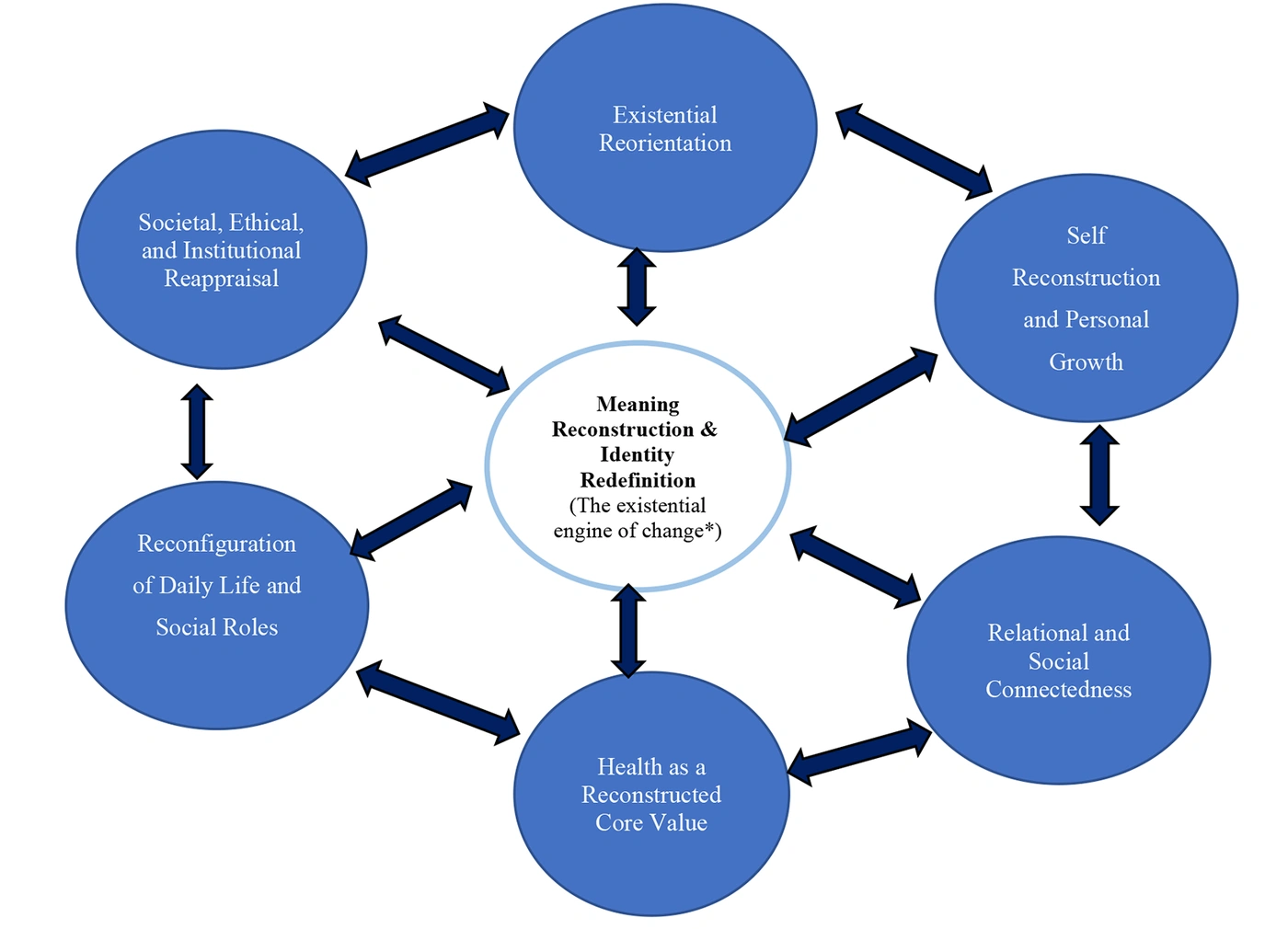
Figure 1.
IPA-Derived Conceptual Model of Meaning Reconstruction and Identity Reconfiguration Following COVID-19 Hospitalization. IPA-derived conceptual model illustrating the dynamic process of meaning reconstruction and human value transformation following COVID-19 hospitalization. Participants interpreted hospitalization as an existential turning point that initiated interconnected processes of existential reorientation, self-reconstruction, relational connectedness, health-value reconstruction, reconfiguration of daily life and social roles, and societal, ethical, and institutional reappraisal. Together, these domains contributed to an ongoing reconstruction of meaning and identity in the aftermath of severe illness.
The experience of COVID-19 hospitalization disrupted participants’ prior assumptions about health, safety, identity, and social connectedness. Through this disruption, individuals engaged in an ongoing interpretative process in which they reconsidered what was meaningful, important, and valuable in their lives. Although six superordinate themes were identified analytically, participants’ experiences demonstrated that these dimensions were deeply interconnected and dynamically co-constructed.
Personal and psychological transformation appeared to be a central process through which participants interpreted vulnerability, uncertainty, and mortality. This internal transformation often initiated ethical and existential reflection, encouraging individuals to reconsider life priorities, personal responsibility, and the meaning of existence. At the same time, changes in relationships and social values shaped recovery experiences by redefining the importance of connection, empathy, and mutual support. Participants frequently described human relationships not only as sources of emotional support but also as foundations for rebuilding identity after illness.
Health and wellness were reconstructed beyond the absence of disease and became associated with self-awareness, prevention, and appreciation of everyday life. These changing perceptions of health were connected with broader reflections on healthcare systems, institutional trust, and social justice. Participants’ experiences of hospitalization influenced how they viewed healthcare structures, communication, responsibility, and fairness during times of crisis.
Similarly, lifestyle and digital transformations represented adaptations to changed realities, influencing autonomy, work-life balance, and perceptions of control. Increased reliance on digital communication and altered daily routines became part of a broader process of redefining personal priorities and future goals.
Institutional trust and ethical considerations emerged as interconnected dimensions reflecting participants’ interpretations of societal responses to the pandemic. Experiences of care, uncertainty, inequality, and collective responsibility shaped how individuals evaluated institutions and their obligations toward others.
Overall, the conceptual map illustrates an ongoing cycle of meaning reconstruction rather than a fixed sequence of change. COVID-19 hospitalization acted as a critical life event that initiated reflection, adaptation, and reinterpretation, through which participants reconstructed their understanding of themselves, their relationships, and their place within society.
In other words, these core concepts are deeply interconnected, as illustrated in the conceptual map (Figure 1). Figure 2 shows conceptual model illustrating the interconnected domains of human value reconstruction following COVID-19 hospitalization. Participants interpreted hospitalization as an existential turning point that initiated ongoing processes of meaning-making across existential, personal, relational, health-related, societal, and institutional domains.
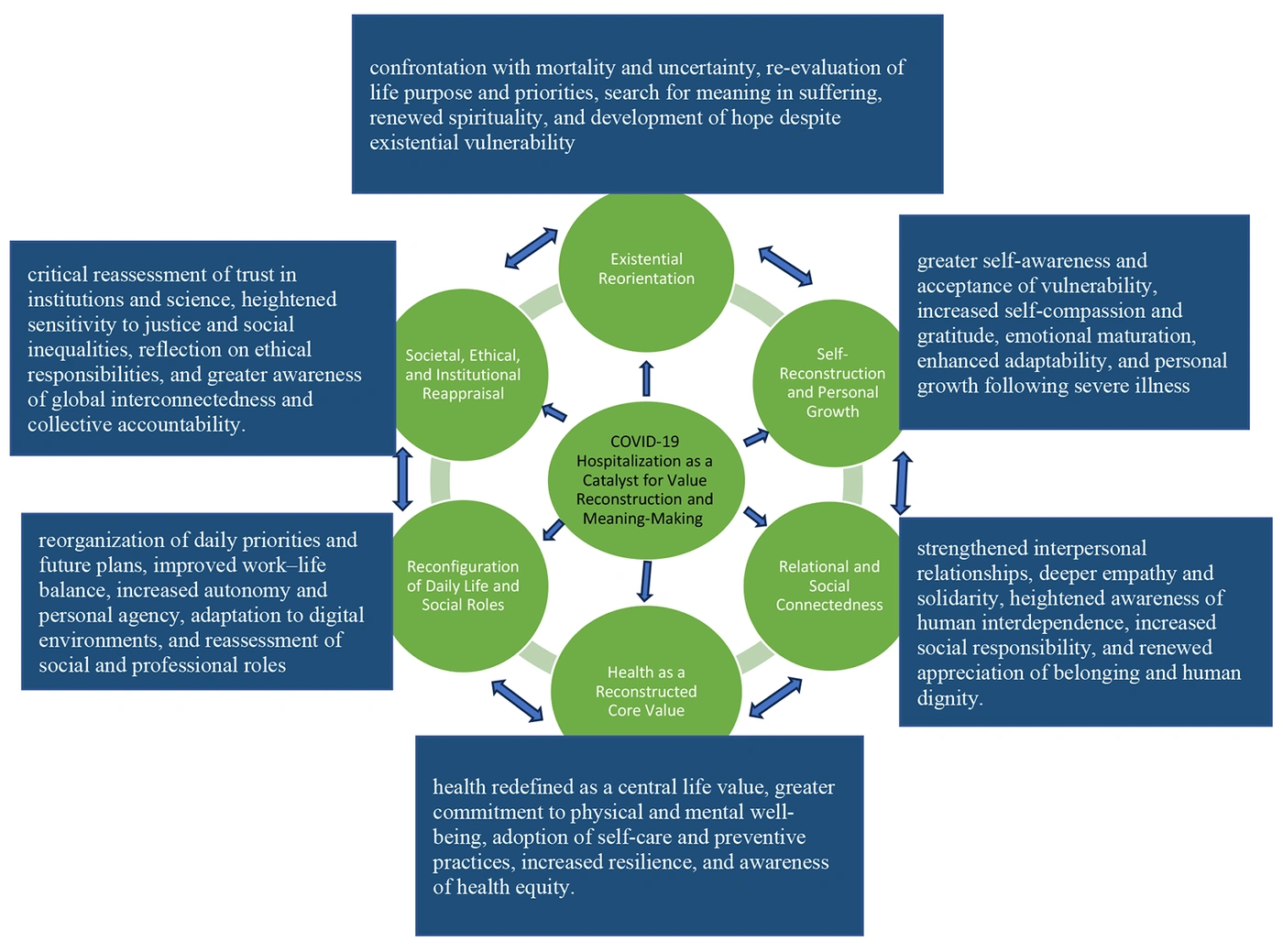
Figure 2.
Overview of Value Transformation Themes Identified Following COVID-19 Hospitalization; Note: Figure 1 = How did change occur? (Interpretative process/model); Figure 2 = What changed? (Themes).
Contracting COVID-19 and subsequent hospitalization constituted a transformative process that prompted individuals to reassess their values and beliefs across psychological, social, ethical, institutional, and existential domains. Although analyzed in six distinct conceptual categories, these dimensions did not function in isolation; rather, they formed a dynamic, holistic system reflecting the complexity of value transformation in the post-pandemic era.
For example, personal and psychological transformation often triggered ethical and existential reflection, as confronting illness and mortality led to deep moral reevaluation and a search for meaning. Social values and human relationships closely interacted with health and wellness, as social support built psychological resilience, whereas isolation could hinder recovery. Health concerns naturally led to questions of institutional trust, justice, and equity. Changes in work-life balance and digital reliance influenced personal autonomy and purpose, prompting individuals to seek greater control and fulfillment. Institutional trust and ethical considerations intertwined, raising questions about fairness, responsibility, and societal values. Finally, global and environmental awareness, heightened by the pandemic’s worldwide impact, fostered spirituality and a renewed sense of human interconnectedness.
This interconnected web of transformation reveals the deep and lasting impact of COVID-19, especially for those who endured severe illness and hospitalization. Visualized as a cycle, the process begins with personal growth, reshapes social relationships, influences health and lifestyle perspectives, and culminates in changes in institutional trust and ethical reflection, together offering a comprehensive picture of human value evolution in response to a global crisis.
5. Discussion
This study provides an interpretative account of long-term transformations in human values following COVID-19 hospitalization through six interconnected superordinate themes: 1) Existential Reorientation; 2) Self-Reconstruction and Personal Growth; 3) Relational and Social Connectedness; 4) Health as a Reconstructed Core Value; 5) Reconfiguration of Daily Life and Social Roles; and 6) Societal, Ethical, and Institutional Reappraisal. Collectively, these themes indicate that hospitalization for COVID-19 was experienced not merely as a medical event but as a profound disruption to participants’ previously established assumptions regarding identity, vulnerability, relationships, health, responsibility, and the social world.
Using an IPA approach, this study highlights how individuals retrospectively constructed meaning from a life-threatening health experience and renegotiated their values through ongoing processes of reflection, adaptation, and identity reconstruction. Rather than representing isolated psychological outcomes, value transformations emerged as dynamic interpretative processes through which participants reorganized their understanding of themselves and their relationships with others after severe illness.
The first theme, Existential Reorientation, represents a fundamental shift in participants’ perceptions of mortality, uncertainty, and the meaning of life. Hospitalization created an existential disruption that challenged prior assumptions of safety, control, and personal invulnerability. Participants frequently described increased awareness of human fragility, gratitude for survival, and a renewed search for purpose. These findings are consistent with phenomenological perspectives emphasizing that encounters with suffering and vulnerability can stimulate existential reflection and meaning reconstruction.
The second theme, Self-Reconstruction and Personal Growth, demonstrates how participants reconstructed their sense of identity following hospitalization. Many participants described developing greater psychological awareness, resilience, self-compassion, and revised personal priorities. Importantly, this transformation was not interpreted as a straightforward positive outcome of illness; rather, participants described a complex process in which fear, loss, uncertainty, and personal growth coexisted. This finding extends previous COVID-19 literature by suggesting that severe illness may function as a catalyst for identity renegotiation and personal transformation beyond symptom recovery.
Previous studies have predominantly focused on the physical and psychological consequences of COVID-19 hospitalization, including fatigue, respiratory complications, anxiety, depression, cognitive difficulties, and reduced quality of life (26-28). However, evidence regarding how severe illness reshapes personal values and existential perspectives remains limited (29, 30). The findings contribute to this area by demonstrating that recovery after hospitalization involves not only biological restoration but also the reconstruction of meaning, priorities, and personal values.
The third theme, Relational and Social Connectedness, highlights transformations in interpersonal values following hospitalization. Participants frequently reported increased appreciation for family support, emotional connection, empathy, and social solidarity. Hospitalization often revealed the importance of previously overlooked relationships and heightened awareness of dependence on others during periods of vulnerability. Nevertheless, participants also described isolation, social withdrawal, or difficulty communicating their struggles, indicating that value transformation was not uniform and could include both strengthened connections and relational challenges. These findings underscore the complexity of post-illness social adaptation (31-33).
The fourth theme, Health as a Reconstructed Core Value, reflects a fundamental redefinition of health from a taken-for-granted condition to a central life priority. Persistent symptoms, prolonged recovery, and uncertainty regarding future health prompted participants to reconsider self-care, prevention, and lifestyle choices. While previous studies have documented post-COVID health-related limitations (27, 34, 35), these findings extend the literature by illustrating a deeper value-based transformation underlying health behaviors, whereby health became integrated into participants’ broader understanding of identity and life priorities.
The fifth theme, Reconfiguration of Daily Life and Social Roles, captures how hospitalization disrupted prior routines, occupational identities, and expectations regarding productivity and social functioning. Participants described challenges related to fatigue, cognitive difficulties, employment changes, and altered daily responsibilities (36-39). However, these disruptions also prompted reflection on work-life balance, personal fulfillment, and alternative definitions of success. Thus, hospitalization influenced not only what participants did in daily life but also how they evaluated the meaning and importance of these activities.
The sixth theme, Societal, Ethical, and Institutional Reappraisal, reflects broader considerations regarding trust, fairness, collective responsibility, and social systems. Participants’ experiences of healthcare delivery, pandemic management, and perceived inequalities shaped their evaluations of institutions and societal values. Some participants expressed reduced confidence in healthcare systems or authorities, whereas others developed greater appreciation for collective responsibility and social cooperation (40-42). These findings suggest that severe illness can extend beyond individual transformation and influence perceptions of societal structures and ethical responsibilities.
Ethical and existential reflections were particularly evident among participants who experienced prolonged hospitalization or severe disease courses. Encounters with uncertainty, dependency, and perceived inequalities prompted deeper considerations of dignity, autonomy, fairness, and human interconnectedness (43-47). Within an IPA framework, these reflections demonstrate how individuals interpret disruptive experiences and integrate them into evolving narratives of self and society.
Participant diversity further indicates that value transformation was shaped by personal context (48-50). Differences in age, education, employment status, and available social resources influenced how participants interpreted hospitalization and recovery. Younger participants often emphasized identity development and future-oriented change, whereas older participants more frequently reflected on mortality, vulnerability, and life priorities. These variations highlight that value transformation is an individualized and context-dependent process rather than a universal response to illness.
The interpretative strength of this study was supported by methodological rigor, including reflexive engagement, systematic analysis, member checking, peer discussion, and maintenance of an audit trail. The researcher’s clinical background provided contextual sensitivity to participants’ experiences; however, reflexive practices were applied to critically examine assumptions and minimize the influence of professional perspectives on interpretation. This reflexive process was essential because participants’ narratives involved complex emotional and existential meanings that required careful interpretation rather than simple categorization.
5.1. Study Limitations and Mitigation Strategies
Although the study provides valuable insight into long-term value transformation after COVID-19 hospitalization, several limitations should be acknowledged. The context-specific sample and qualitative design limit statistical generalizability; however, the purpose of IPA is analytical depth and understanding of meaning rather than population estimation. Future longitudinal qualitative studies could further explore how these transformed values evolve over time and whether similar patterns emerge among survivors of other major health crises.
Several limitations should be acknowledged, along with the steps taken to mitigate them.
First, the sample size was relatively small (n = 23), which is consistent with qualitative phenomenological research. To enhance data richness and depth, maximum variation sampling was employed to ensure a diverse range of experiences in terms of age, gender, education, and hospitalization duration.
Second, participants were recruited from a single geographic region and predominantly reflected similar cultural and socioeconomic backgrounds. To improve transferability, purposive sampling targeted a range of socioeconomic statuses, marital statuses, and employment conditions, thereby enabling the inclusion of multiple perspectives within the available context.
Third, the study relied on self-reported experiences, which may have introduced recall bias. To mitigate this, semi-structured interviews allowed for probing questions and follow-ups, encouraging participants to elaborate on and clarify their responses, and member checking was conducted to confirm the accuracy of interpreted meanings.
Fourth, although the inherent subjectivity of interpretative phenomenological analysis means that the findings are influenced by the researcher’s lens, reflexivity practices were applied rigorously. The researcher documented positionality, a professional background in healthcare, and engagement with the data, thereby ensuring transparency and credibility.
Fifth, certain subgroups (for example, individuals with severe cognitive impairment, critical illness, or language barriers) were excluded, which may have limited representation of the full spectrum of COVID-19 hospitalization experiences. This exclusion was a necessary ethical and methodological precaution to ensure meaningful participation, and future research could target these subgroups.
Finally, while this study provides rich qualitative insights into value transformations, it does not quantify their prevalence or magnitude. Complementary quantitative or mixed-method studies are recommended to address this gap.
Overall, these mitigation strategies enhanced the trustworthiness, credibility, and relevance of the findings despite inherent limitations in qualitative phenomenological research.
5.2. Conclusions
COVID-19 hospitalization represents a transformative life experience that may reshape human values across existential, psychological, relational, health-related, social, and ethical domains. The findings demonstrate that recovery extends beyond symptom resolution and includes an ongoing process of meaning-making and value reconstruction. Understanding these transformations may support the development of more comprehensive post-COVID care models that integrate psychological, social, and existential dimensions into long-term recovery planning.