1. Background
Depression is a widespread disorder that poses a major public health challenge and substantially impairs quality of life. It represents a crisis of the self, characterized by a loss of identity, meaning, and agency, leaving individuals estranged from both the world and their inner sense of being and reduced to emptiness and disconnection (1).
In psychology and philosophy, the self is conceptualized as a dynamic, multilayered system shaped by interactions among emotional, cognitive, and narrative processes. It functions as a living matrix of meaning-making that sustains identity coherence, life continuity, and subjective agency (2). When these axes collapse, life becomes fragmented and devoid of meaning, and depression emerges as a crisis of authenticity and coherence that requires examination through the lens of self-structure rather than symptomatology alone (3).
Theoretical frameworks have highlighted multiple dimensions of this crisis. Beck’s cognitive model conceptualizes depression as resulting from the activation of negative schemas and core beliefs (4). Rogers, through the distinction between the “real self” and the “ideal self,” identifies existential dissatisfaction arising from the gap between reality and aspiration (5). Winnicott underscores the importance of the early caregiving environment and the “good-enough mother” in the formation of the “true self,” whereas the absence of such conditions leads to the emergence of a “false self.” Phenomenological and existential perspectives describe depression as alienation from presence and disruption of life’s narrative (6). Contemporary psychotherapeutic approaches emphasize the stability of self-representation across roles and contexts as essential for psychological integrity and note that instability in this representation perpetuates depression.
Empirical studies have shown that depression is closely linked to disturbances in self-representation (7). Depressed individuals often describe themselves as “fractured,” caught between estrangement from the past, loss of identity coherence, and an inability to envision the future. Other research has framed depression as a disorder of the “narrative self,” marked by unfamiliarity with the self, weakened self-control, and the collapse of life’s story (8). At the pre-reflective level, changes in affect and agency further contribute to identity fragmentation (9). Longitudinal studies reveal that the quality of life narratives—especially themes of agency and connectedness—strongly correlate with the course of depression and recovery (10). Overall, depression is not merely a clinical symptom but a disruption in the semantic and narrative structure of the self (11).
Empirical research has shown that depression is linked to disturbances in self-representation (12). Depressed individuals often describe themselves as “fractured,” caught between estrangement from the past, loss of identity coherence, and an inability to imagine the future (13). Other studies have defined depression as a disorder of the “narrative self,” involving unfamiliarity with the self, weakened control, and the collapse of life’s story (14). At the pre-reflective level, changes in affect and agency also contribute to identity disruption (15). Longitudinal studies indicate that the quality of life narratives—especially themes of agency and continuity—are strongly associated with the course of depression and recovery (16).
Despite extensive theoretical and empirical research, a significant gap remains in the literature: most studies are limited to clinical symptoms or general accounts of alienation and have not systematically examined the subtle and multilayered dimensions of self-representation using thematic-semantic analysis (17). An underexplored question is how depressed individuals, under psychological pressures and role conflicts, engage in processes of renaming the self, reconstructing or denying fragmented identity narratives, and using symbolic defenses as strategies for meaning-making (18, 19).
Phenomenological studies have examined the general structure of the self in depression. Studies have also shown that psychological pain, anxiety, and maladaptive patterns of emotional self-regulation are associated with greater depression severity. Moreover, increased social media use combined with reduced physical activity has been associated with higher levels of depression in this population (20-22). However, no research has specifically analyzed linguistic metaphors and symbolic self-representations as defensive mechanisms within a cultural context. These processes require frameworks capable of tracing semantic clusters and identity narratives. The absence of such inquiry indicates that a clear and comprehensive picture of self-representation in depression has not yet been achieved.
Focusing on women with depression helps address this research gap. Women’s self-experience may be more complex and vulnerable because of overlapping roles and multiple responsibilities, which can contribute to defensive themes, repeated renaming, and fragmented narratives. Thematic analysis in this group may reveal layers that are less visible in general or male-focused studies. Thus, women are not merely a demographic subgroup but an important population for examining complex themes of self-representation.
The innovation of this study lies in moving beyond symptom-based and general narrative accounts toward the transformative structure of self-themes. By presenting a four-stage model—renaming, renarrating, integration, and stabilization—it shows that the shift from a fragmented or denied self to an authentic and integrated self is not superficial but reflects a deep structural reconstruction occurring simultaneously across cognitive, emotional, and narrative levels. This framework addresses the existing gap in the literature and offers a new conceptual lens for understanding depression and guiding interventions. By placing the complexity of women’s self-themes at the center of analysis, the study provides a systematic, evidence-based path toward restoring authenticity and coherence.
2. Objectives
This study examines self-related dynamics in depression, focusing on the interaction between inner experience and social pressures. The primary objective is to identify recurring patterns of identity fragmentation and distorted perceptions that undermine psychological coherence. Accordingly, the study proposes a conceptual framework for rebuilding the authentic self, extending beyond symptom-focused accounts to examine cognitive, emotional, and narrative layers. By emphasizing identity coherence, emotional regulation, and psychological integration, the framework aims to inform novel therapeutic strategies that restore authenticity and support the re-narration of life stories. In doing so, the study offers a new perspective on the crisis of the self in depression and on the design of interventions grounded in multilayered identity representations.
3. Methods
3.1. Research Design
This qualitative study examined the experience of the “self” in individuals with depression and its interaction with social and cultural contexts. Data were collected through in-depth semi-structured interviews to capture participants’ narratives of self-experience and the psychosocial dynamics of depression. Data were analyzed using thematic analysis, grounded in inductive reasoning.
3.2. Participants
The study sample consisted of twelve women with a clinical diagnosis of depression who were recruited through purposive sampling from clinical and therapeutic settings. Sampling continued until theoretical saturation was reached, ensuring sufficient depth and diversity of the data. Participants were included if they met the following criteria: a formal psychiatric diagnosis of depression confirmed through structured clinical interviews, a score of 19 or above on the Beck Depression Inventory (BDI), age between 18 and 60 years, ability to verbally articulate subjective experiences, and provision of informed consent. Exclusion criteria were defined to minimize confounding factors and included the presence of severe comorbid psychiatric disorders such as psychosis, bipolar disorder, or significant cognitive impairment; use of psychoactive substances outside prescribed therapeutic regimens; and inability to meaningfully engage in the interview process due to profound emotional, cognitive, or speech-related difficulties. To enhance the richness and representativeness of the dataset, demographic diversity in terms of age and socio-cultural background was deliberately considered during participant recruitment.
3.3. Instruments
Data were collected through in-depth semi-structured interviews guided by a thematic analysis framework. This qualitative instrument was designed to elicit the semantic, metaphorical, visual, and emotional dimensions of the experiences of women diagnosed with depression, thereby enabling the exploration of the mental structure of the “self” in relation to the external environment. The interview questions were deliberately open-ended, reflective, and flexible, allowing meanings to emerge organically from participants’ narratives without imposing a predefined theoretical framework. The interview protocol was developed inductively and semiotically, targeting the conceptual and symbolic aspects of self-representation. Participants were asked to describe the mental image that comes to mind when they think about themselves and to reflect on how they experience themselves in relation to others. They were invited to recount moments when they felt disconnected from their sense of self and to provide detailed descriptions of those experiences. To examine the linguistic and emotional tone of self-perception during depressive episodes, participants were asked which words they most frequently use to describe themselves during such periods. Further questions focused on personal meaning-making and conceptual reflections, such as how they would define themselves when explaining themselves to someone else. To investigate internal roles and defensive responses, participants were asked which part of themselves becomes most active when facing difficult situations. They also reflected on how their sense of self has changed over time, particularly when comparing their pre-depression self with their current experience. The interviews further explored inner dialogue and mental voice by asking whether participants perceived an internal voice that speaks to them and how they would characterize it. Finally, participants were asked to describe their ideal self and to articulate how it differs from their current self-perception. This qualitative instrument was designed to capture nuanced and multilayered representations of the self, providing insight into the symbolic and experiential disruptions that characterize depressive states in women.
3.4. Procedure
Individual semi-structured interviews were conducted in private settings to ensure comfort and ethical compliance. Each session lasted approximately 60 minutes and was audio-recorded after informed consent was obtained. Open-ended questions allowed participants to express their perceptions of the self and its coherence under depressive conditions. Interviews were transcribed verbatim and analyzed using thematic analysis through iterative coding and theme development. Two independent researchers collaborated to enhance reliability, and member checking was used to validate interpretations. Ethical principles such as confidentiality and respect for autonomy were strictly observed, ensuring both methodological rigor and participants’ well-being.
3.5. Data Analysis
Data were analyzed using inductive thematic analysis to identify the psychological and emotional structures of self-experience in depression. Interviews were transcribed verbatim and repeatedly reviewed, with linguistic markers, metaphors, mental imagery, and inner speech identified as meaning units. These meaning units were coded based on conceptual and emotional relevance, organized into descriptive themes, and refined through iterative reflection. MAXQDA software was used for systematic data management. The analysis followed four steps: identifying meaning units line by line, clustering codes into categories, integrating clusters around self-representation, and extracting overarching themes that captured participants’ experiences.
3.6. Data Validation
To enhance the credibility of the findings, two main strategies were employed: expert review and analytical triangulation. During expert review, portions of the coded data and the thematic framework were examined and refined by specialists in psychology and qualitative methodology. For analytical triangulation, two independent researchers participated in the analysis, and discrepancies were resolved through semantic consensus. Additionally, member checking with several participants, systematic documentation of the process, reflective memos, peer debriefing sessions, and prolonged engagement with the data were conducted. Collectively, these methods supported the scientific validity and conceptual coherence of the study.
4. Results
4.1. Demographic Findings
Participants varied in age (27 - 56), education, and marital status, each of which shaped their experience of depression. Educational background influenced expression: women with higher levels of education used more abstract metaphors, whereas those with lower levels of education relied on more concrete imagery. Marital status also mattered: married women highlighted spousal and family pressures with metaphors such as “a heavy mountain” or “a broken mirror,” whereas single women emphasized loneliness and social judgment. Overall, depression was contextualized within demographic factors, which affected both its intensity and how the “self” was represented.
4.2. Descriptive–Qualitative Findings
Analysis of the in-depth interview data identified six major themes related to patterns of mental self-representation. For each model, one interview excerpt is presented to illustrate participants’ experiences of the self in relation to identity, emotion, and meaning. The findings are summarized in Table 1.
Table 1.
Types of Mental Self-Representations in Depressed Women
| Verbatim Excerpt | Linguistic & Cultural Metaphors | Basic Theme | Organizing Theme | Global Theme | Psychological Origin | Therapeutic Application |
|---|---|---|---|---|---|---|
| “I feel like an actor playing the cheerful role…” | “Like a mask always on my face” / “Being behind the curtain” | Social masking, self-neglect, relational submission | Crisis of meaning and identity tension | Adaptive Self | Winnicott; Attachment Theory; Submissiveness Schema | Working with the mask metaphor to differentiate authentic vs. social self; boundary-setting |
| “Even in silence I feel judged…” | “Like a voice constantly shouting in my ear”/ “Others’ eyes always above me” | Sensitivity to others’ gaze, social avoidance | Inner self-erosion | Critical Self | Defect/Shame Schema; Cognitive Therapy | Using the voice metaphor to transform the inner judge into a caring observer; compassion practices |
| “I can’t say I’m upset… I just suddenly explode.” | “Like a wall blocking my feelings”/ “Still water that never stirs” | Emotional numbness, explosive outbursts under pressure | Emotional and cognitive blockage | Repressed Self | Repression Defense Mechanism; Psychoanalysis | Working with the wall metaphor to break emotional barriers; safe emotional expression |
| “I must be a successful woman… but I only feel like a failure.” | “Like a mountain I must climb” / “Shoulds and musts” / “Husband’s expectations like a heavy mountain on my shoulders” | Constant comparison, sense of failure | Duality between real and ideal self | Idealized Self | Rogers’ Theory; Real vs. Ideal Self Gap | Using the mountain metaphor to recalibrate unrealistic standards, addressing family and social pressures on women; focusing on realistic goals |
| “I feel torn between home, work, and my children…” | “Like a broken mirror showing me in pieces” / “Being torn between roles” / “Divided between husband’s demands and family duties.” | Disconnection between roles, identity confusion | Collapse of psychological structure | Fragmented Self | Kohut’s Self Psychology; Lack of empathic mirroring | Working with the broken mirror metaphor to rebuild identity coherence; addressing family role pressures; daily rituals |
| “I’m sad but I laugh… I don’t want to know what I feel.” | “Like a light turned off inside me” / “Laughing over sorrow” | Incoherent emotional responses, lack of awareness | Gap in self-awareness | Denied Self | Denial Defense: Freud’s Structural Model | Using the light metaphor to increase emotional clarity, mindfulness practices |
4.2.1. Interviews
4.2.1.1. Adaptive Self
One participant stated: "When I am with my family, I try to appear calm and cheerful, but inside I feel exhausted and drained." Another participant explained: "I feel as if I am acting for others; my true self is hidden behind a mask."
In the interviews, participants described the Adaptive Self through metaphors such as “I feel like an actor playing the cheerful role,” “a mask always on my face,” and “being behind the curtain.” The basic themes in this state included social masking, self-neglect, and relational submission; at the organizing level, these culminated in a crisis of meaning and identity tension, ultimately forming the global theme of the Adaptive Self. Its proposed psychological origins lie in Winnicott’s theory of the true/false self, insecure attachment patterns, and the submissiveness schema. The proposed therapeutic application involves working with the metaphor of the mask to differentiate between the authentic and social self, along with practicing boundary-setting in relationships. This self-state reflects a gap between the authentic self and the social self. Participants reported masking their true emotions and performing socially acceptable roles, which led to emotional exhaustion and existential meaninglessness.
4.2.1.2. Critical Self
One participant stated: "A voice in my head constantly tells me that I am not enough, that everyone else is better than me." Another participant explained: "When I remain silent in social gatherings, I think others are judging me, and this feeling burns inside."
In the interviews, participants described the Critical Self through metaphors such as “Even in silence I feel judged,” “a voice constantly shouting in my ear,” and “others’ eyes always above me.” The basic themes in this state included hypersensitivity to others’ gaze and social avoidance; at the organizing level, these culminated in inner erosion, ultimately forming the global theme of the Critical Self. Its proposed psychological origins are rooted in the defect/shame schema and cognitive distortions such as error magnification and mind-reading. The proposed therapeutic application involves working with the metaphor of the voice to transform the inner judge into a compassionate observer and practicing self-compassion. This self-state reflects experiences of shame, rumination, and self-devaluation. Participants reported a relentless inner judging voice that eroded their sense of worth and led to social withdrawal.
4.2.1.3. Repressed Self
One participant stated: "Sometimes I suppress my emotions so much that I no longer know what I want, until suddenly I explode." Another participant explained: "I feel like stagnant water—motionless, but ready to break under the slightest pressure."
In the interviews, participants described the Repressed Self through metaphors such as “I can’t say I’m upset… I just suddenly explode,” “like a wall blocking my feelings,” and “still water that never stirs.” The basic themes in this state included emotional numbness and sudden outbursts under pressure; at the organizing level, these culminated in emotional and cognitive blockage, ultimately forming the global theme of the Repressed Self. Its proposed psychological origins lie in the defense mechanism of repression and the rigid functioning of the ego in psychoanalytic theory. The proposed therapeutic application involves working with the metaphor of the wall to break emotional barriers and practicing safe emotional expression. This self-state reflects long-term suppression of emotions, leading to emotional deadness followed by maladaptive outbursts. Participants felt that their emotions were trapped behind a wall, preventing the natural flow of affect. The metaphors of the “wall” and “stagnant water” vividly illustrate emotional paralysis and blockage, highlighting the inability to process feelings in a healthy way.
4.2.1.4. Idealized Self
One participant stated: "I always think I should be a successful woman, but whenever I compare myself to others, I feel defeated." Another participant explained: "My family’s expectations are like a heavy mountain on my shoulders; I cannot escape from under it."
In the interviews, participants described the Idealized Self through metaphors such as “I must be a successful woman… but I only feel like a failure,” “like a mountain I must climb,” “shoulds and musts,” and “my husband’s expectations like a heavy mountain on my shoulders.” The basic themes in this state included constant comparison and feelings of failure; at the organizing level, these culminated in a duality between the real and ideal self, ultimately forming the global theme of the Idealized Self. Its proposed psychological origins lie in Rogers’ theory of incongruence between the real and ideal self and rigid cognitive rules of “musts” and “shoulds.” The proposed therapeutic application involves working with the metaphor of the mountain to recalibrate unrealistic standards, reduce social and familial pressures, and focus on realistic goals. This self-state reflects a chronic gap between unrealistic standards and actual capacities. Participants reported being trapped in cycles of comparison and perceived failure, which led to hopelessness, self-blame, and persistent dissatisfaction. The metaphor of the “mountain” vividly conveys the weight of social and familial expectations, illustrating how the burden of “musts” and “shoulds” makes life feel exhausting and unattainable.
4.2.1.5. Fragmented Self
One participant stated: "I am torn between being a mother, a wife, and a worker; I am never whole." Another participant explained: "I feel like a broken mirror, each piece showing a different image of me."
In the interviews, participants described the Fragmented Self through metaphors such as “I feel torn between home, work, and my children,” “like a broken mirror that shows me in pieces,” and “being split among roles.” The basic themes in this state included role fragmentation and identity confusion; at the organizing level, these culminated in the collapse of psychological structure, ultimately forming the global theme of the Fragmented Self. Its proposed psychological origins lie in Kohut’s self-psychology, particularly failures in empathic mirroring and role conflicts. The proposed therapeutic application involves working with the metaphor of the broken mirror to rebuild identity coherence and manage the pressures of family and social roles. This self-state reflects the loss of a coherent life narrative and identity. Participants experienced themselves as fragmented and disjointed, which led to confusion, helplessness, and reduced daily functioning. The metaphor of the “broken mirror” vividly illustrates the collapse of psychological and identity structure, showing how individuals can no longer maintain a unified image of the self.
4.2.1.6. Denied Self
One participant stated: "I laugh and say I am fine, but inside I feel extinguished, with no light left." Another participant explained: "When asked about my feelings, I usually say I don’t know; it is as if I don’t want to know."
In the interviews, participants described the Denied Self through metaphors such as “I am sad but I laugh… I do not want to know what I feel,” “like a lamp extinguished inside me,” and “laughing over sorrow.” The basic themes in this state included inconsistent emotional responses and lack of awareness; at the organizing level, these culminated in a gap in self-awareness, ultimately forming the global theme of the Denied Self. Its proposed psychological origins lie in the defense mechanism of denial within Freud’s structural model and the phenomenon of alexithymia. The proposed therapeutic application involves working with the metaphor of the lamp to enhance emotional clarity and practicing mindfulness. This self-state reflects emotional blindness and an inability to label or regulate feelings. Participants reported denying their emotions, which led to numbness, avoidance, and delays in seeking treatment.
Figures 1 and 2 present the hierarchical thematic structure of self-representation derived from qualitative analysis of interviews with women experiencing depression. At the center lies the conceptual core of the “Self,” which expands into six global themes: Adaptive Self, Critical Self, Repressed Self, Idealized Self, Fragmented Self, and Denied Self. Each global theme is supported by organizing themes and further divided into basic themes, which reflect specific emotional patterns, cultural metaphors, and symbolic expressions reported by participants. The map illustrates how depression affects identity at multiple levels, revealing a multidimensional structure of disrupted self-experience.
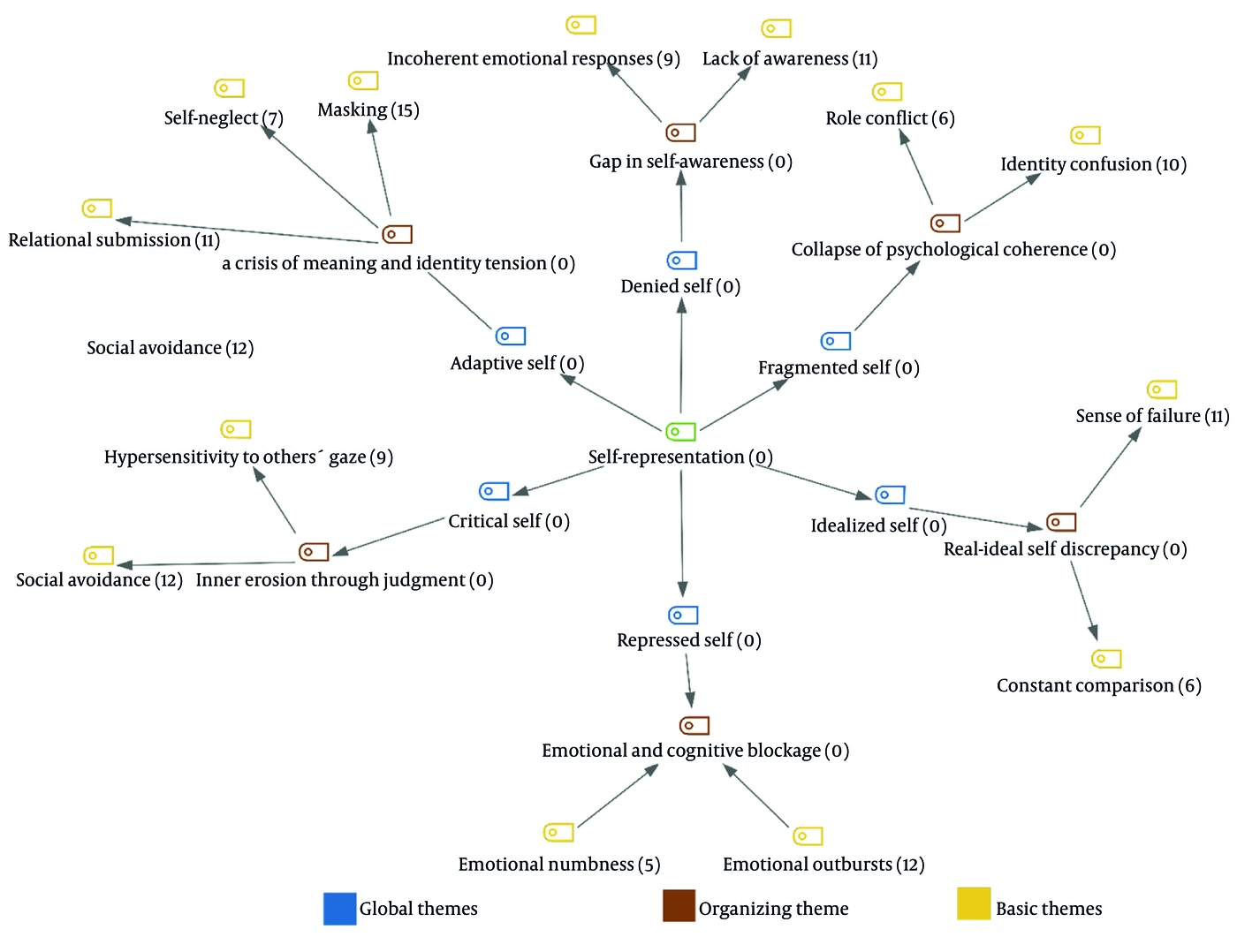
Figure 1.
Thematic map of self-representation in women with depression, illustrating the hierarchical structure from the central global theme to organizing themes and subthemes as derived from qualitative thematic analysis.
Table 2 presents the operational pathway of the Authentic Self Reconstruction Model. It translates the conceptual framework into practical elements such as structured therapeutic sessions, targeted homework assignments, and measurable progress indicators. The pathway unfolds across four sequential phases: Recognition, Rewriting, Integration, and Consolidation.
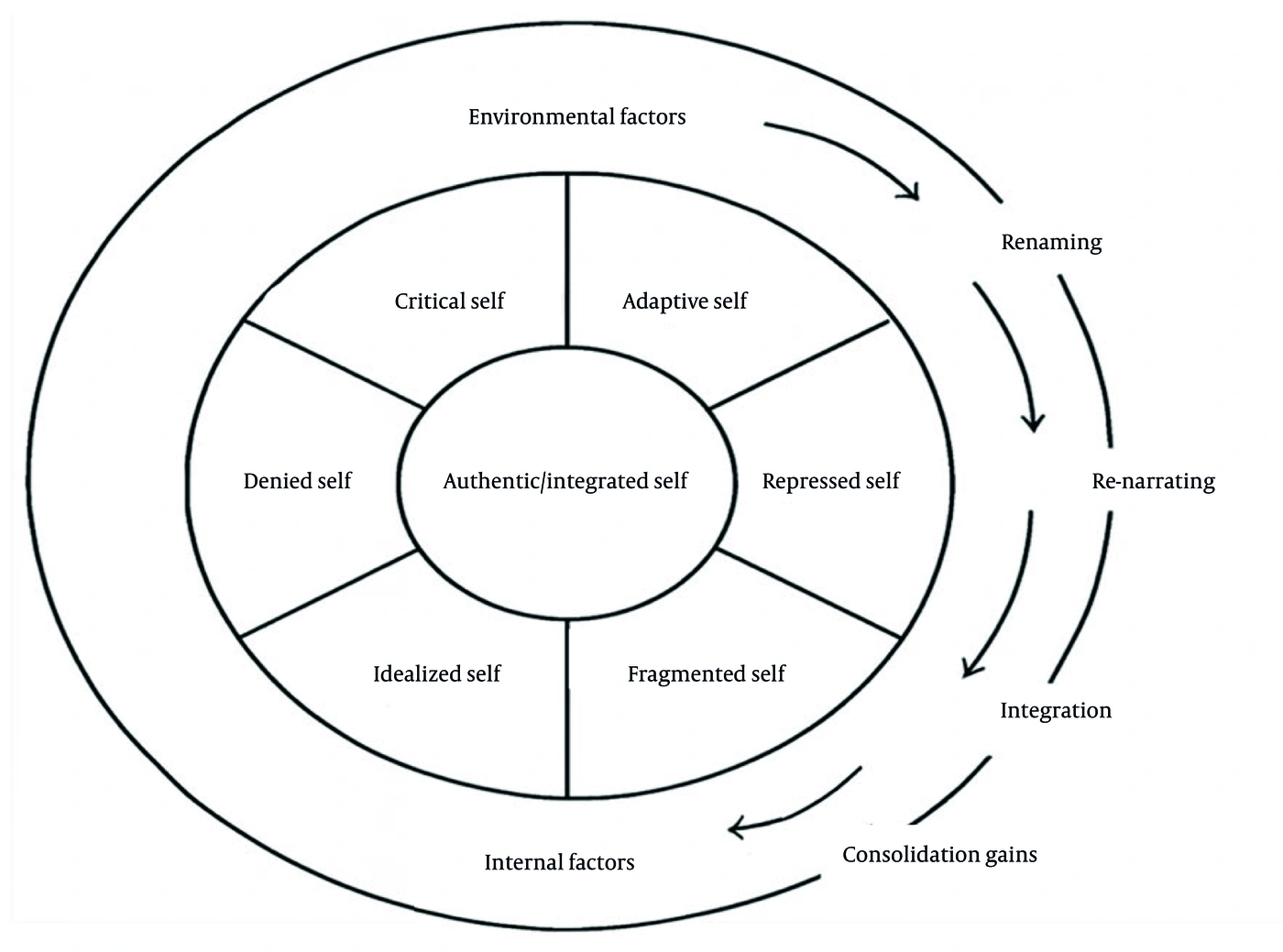
Figure 2.
Conceptual Representation of Authentic Self Reconstruction in Depression-Focused Psychotherapy
Table 2.
Authentic Self Reconstruction Model: Therapeutic Pathway from Recognition to Integration
| Therapeutic Phases and Main Objectives | Key Interventions | Homework | Progress Indicators |
|---|---|---|---|
| Recognition | |||
| 1. Extracting core metaphors and narratives | Metaphor-based interview, narrative timeline, basic body awareness | List of personal metaphors + record 3 daily situations | Identification of at least 3 self-states with clear examples |
| 2. Completing labeling and compassionate observation | Metaphor glossary, non-judgmental observation practice, activation map | “Compassionate Observation” notebook for 3 triggering situations | Ability to pause briefly and describe the stimulus–response cycle without judgment |
| 3. Dialogue between parts and introduction of “Caring Observer” | Parts Dialogue, boundary recognition, emotional safety protocol | Write a short dialogue between two parts + breathing exercise | Emergence of compassionate sentences and reduction of self-criticism intensity |
| Rewriting | |||
| 4. Adjusting unrealistic “shoulds” and standards | Extracting should/should-not rules, redefining goals, micro-success scale | Step-by-step plan for one real goal + record micro-successes | Reduced gap between idealized and real self, increased gradual satisfaction |
| 5. Emotional regulation and safe expression | Emotion labeling, emotional writing, body-based exercises | Three sessions of emotional writing + daily body exercise | Reduced numbness and fewer emotional outbursts |
| 6. Transforming Inner Judge into Caring Observer | Redefining judge’s sentences, self-compassion practice, guided dialogue | Write 10 compassionate replacement sentences | Reduced rumination and increased social motivation |
| Integration | |||
| 7. Compassionate boundary-setting and reclaiming personal voice | Mask metaphor work, boundary protocol, micro-authenticity practice | Implement three small boundaries + record authentic experiences | Increased authentic behaviors and reduced social fatigue |
| 8. Narrative coherence and role alignment | Life narrative mapping, identity anchors, daily rituals | Implement daily rituals + review roles | Reduced confusion and improved daily functioning |
| 9. Emotional clarity and body–emotion linkage (Denied Self) | Sensory mindfulness, lamp metaphor, safe communication scenarios | Record 5 emotion-labeling moments + one safe dialogue | Reduced avoidance and increased emotional readiness |
| Consolidation | |||
| 10. Collaboration of self-parts in a real goal | Role planning, scheduling presence of parts | Execute a goal and record collaboration experience | Reduced inner conflict and increased situational efficiency |
| 11. Resilience and relapse prevention | Challenge scenarios, coping strategies, constructive failure review | Coping plan for three key triggers | Maintaining coherence under stress and quick return to rituals |
| 12. Final summary and personal toolkit | Review progress indicators, compile metaphor toolkit and rituals | Start monthly booster program | Self-efficacy, sense of possibility, and commitment to maintaining changes |
Table 2 demonstrates the operational pathway of the Authentic Self Reconstruction Model, which was designed as a therapeutic package consisting of 12 sessions across four sequential phases. In the Recognition phase (Sessions 1 - 3), the aim was to extract personal metaphors, cultivate compassionate observation, initiate dialogue among self-parts, and introduce the Caring Observer. Key interventions included metaphor-based interviews, narrative timeline construction, body awareness exercises, and boundary recognition. Homework involved compiling a personal metaphor list, maintaining an observation notebook, and writing short dialogues between self-parts. Progress indicators included the identification of at least three distinct self-states, the ability to pause and describe stimulus–response cycles without judgment, and the emergence of compassionate language.
In the Rewriting phase (Sessions 4 - 6), the focus was on adjusting unrealistic standards, facilitating safe emotional expression, and transforming the Inner Judge into the Caring Observer. Key interventions included auditing should/should-not rules, redefining goals, emotional writing, body-based exercises, and guided dialogue. Homework consisted of developing a stepwise goal plan, practicing emotional writing, and formulating compassionate replacement sentences. Progress indicators included narrowing the gap between the real and ideal self, decreased emotional numbness and outbursts, reduced rumination, and enhanced social motivation.
In the Integration phase (Sessions 7 - 9), the package was designed to establish compassionate boundaries, recover personal voice, strengthen narrative coherence, align roles, and enhance emotional clarity for the Denied Self. Key interventions included mask metaphor work, boundary-setting protocols, identification of narrative anchors, daily rituals, sensory mindfulness, and safe communication scenarios. Homework involved implementing boundaries, practicing daily rituals, documenting emotion-labeling moments, and rehearsing safe dialogues. Progress indicators included increased authentic behaviors, reduced social fatigue, improved daily functioning, diminished avoidance, and greater emotional readiness.
Finally, in the Consolidation phase (Sessions 10 - 12), the aim was to stabilize changes, foster collaboration among self-parts toward real goals, prevent relapse, and compile a personalized metaphor toolkit. Key interventions included role planning, coping strategy development, constructive failure review, and booster program design. Homework included executing a real goal, preparing coping plans for key triggers, and initiating monthly booster rituals. Progress indicators included reduced inner conflict, sustained coherence under stress, rapid return to rituals, enhanced self-efficacy, and strengthened commitment to maintaining change. The package was designed so that each session was explicitly linked to a therapeutic objective, practical homework, and measurable progress indicators. In this way, the conceptual framework of Authentic Self Reconstruction is translated into an operational pathway that can enhance emotional clarity, narrative coherence, and daily agency within psychotherapy.
Table 3 illustrates the reliability and validity of the extracted codes. Thematic coding reliability, assessed through Cohen’s Kappa, ranged from 0.76 to 0.91, reflecting good to excellent inter-rater agreement. The highest reliability was observed for Repressed Self (κ = 0.91), indicating almost perfect consensus, while the lowest was for Denied Self (κ = 0.76), which remained within the acceptable range. Other themes—including Adaptive Self (κ = 0.87), Critical Self (κ = 0.82), Idealized Self (κ = 0.79), and Fragmented Self (κ = 0.84)—also demonstrated strong agreement, confirming the statistical reliability of the framework.
Table 3.
Reliability and Validity Assessment of Extracted Themes
| Global Theme | κ (Cohen’s Kappa) | Expert Consensus Level | Construct Validity (Theory Alignment) | Interpretive Validity a |
|---|---|---|---|---|
| Adaptive Self | 0.87 | Full consensus | Winnicott’s True/False Self | ✓ |
| Critical Self | 0.82 | Partial consensus | Defect/Shame Schema | ✓ |
| Repressed Self | 0.91 | Full consensus | Defense mechanism of repression | ✓ |
| Idealized Self | 0.79 | Consensus with revision | Rogers’ Real vs. Ideal Self | ✓ |
| Fragmented Self | 0.84 | Full consensus | Kohut’s Self-Psychology | ✓ |
| Denied Self | 0.76 | Partial discrepancy | Denial & Alexithymia | ✓ |
a Interpretive Validity: Participant feedback was consistent across all themes.
Validity was established through systematic alignment with psychological theories: Adaptive Self with Winnicott’s true/false self, Critical Self with the defect/shame schema, Idealized Self with Rogers’ real vs. ideal self discrepancy, Fragmented Self with Kohut’s self-psychology, and Repressed Self with repression as a defense mechanism. Interpretive validity was reinforced by participant feedback, confirming that the themes accurately represented their psychological realities.
In addition, the content validity of the Authentic Self Reconstruction treatment package was evaluated by seven experts in psychology and counseling. The overall content validity index (CVI) was 0.87, exceeding the minimum threshold of 0.78, and the content validity ratio (CVR) was 0.76, surpassing Lawshe’s critical value of 0.62 for seven experts. These results indicate that the items were clear, relevant, and necessary. In summary, Table 3 confirms that the extracted codes are both statistically reliable and conceptually valid. The high Kappa values, combined with expert review, theoretical alignment, and participant feedback, ensure the credibility of the thematic framework. Furthermore, the CVI and CVR results demonstrate that the treatment package has satisfactory content validity and can be evaluated in future experimental studies and randomized clinical trials.
5. Discussion
The findings of this study indicate that depression in women is not merely a mood or cognitive disorder but a complex process that leads to the disintegration of the structural organization of the “self.” This breakdown manifests in six distinct self-states: the Adaptive Self, the Critical Self, the Repressed Self, the Idealized Self, the Fragmented Self, and the Denied Self. Each of these states is expressed through specific metaphors that not only reflect women’s inner experiences but also reveal the pathways through which psychopathology in depression develops.
The Adaptive Self illustrates how external conformity and social compliance gradually replace inner authenticity. Women, particularly in contexts in which marital and familial roles are more dominant, often silence their inner voice to maintain social acceptance and avoid conflict. Metaphors such as “a mask on the face” or “being behind the curtain” depict this defensive adaptation—an adaptation that, although it may serve a protective function in the short term, ultimately erodes psychological integrity over time and leads to exhaustion and a crisis of meaning (23).
The Critical Self arises from the internalization of judgmental voices and gradually transforms into an inner persecutor. In their narratives, women repeatedly described this experience through metaphors such as “others’ eyes always above me” or “a voice constantly shouting in my ear”—images that vividly portray the persistent pressure of shame and self-devaluation. In this state, external observation and social scrutiny become an inner judge that undermines self-worth, traps the individual in cycles of rumination, and drives social withdrawal. This process not only intensifies feelings of worthlessness but also consolidates depression and contributes to the persistence of psychopathology (24).
The Repressed Self reveals vulnerability in emotion regulation. In social and familial contexts in which the expression of feelings is met with blame or disregard, women suppress their emotions to such an extent that this suppression eventually leads to sudden outbursts. Metaphors such as “a wall blocking feelings” or “still water that never stirs” vividly illustrate the numbing effect of repression, which clinically manifests as emotional numbness, bodily tension, and explosive emotional reactions. This process disrupts the natural flow of affect and contributes to maladaptive emotion regulation in depression (25).
The Idealized Self highlights the destructive impact of unrealistic standards and external expectations. Women often used metaphors such as “a mountain I must climb” or “my husband’s expectations like a heavy mountain on my shoulders”—images that vividly illustrate the burden of social and familial demands. The persistent gap between the real and ideal self fosters chronic dissatisfaction, hopelessness, and self-blame, thereby reinforcing the depressive cycle (26).
The Fragmented Self, portrayed through the metaphor of “a broken mirror,” reflects the collapse of identity coherence under the strain of conflicting roles such as motherhood, marriage, and employment. This fragmentation results in confusion, reduced daily functioning, and a pervasive sense of meaninglessness, ultimately paving the way for psychopathology and depression (27).
The Denied Self, by actively negating emotions, severs the individual’s connection with inner experience and sustains avoidance; this rupture delays therapeutic progress, intensifies feelings of worthlessness and hopelessness, and ultimately may contribute to depression and persistent psychopathology (28).
These findings indicate that the psychopathology of depression is rooted not only in symptomatic expressions but also in deeper layers of psychological organization. Women’s metaphors and narratives reveal pathways through which internal pressures (such as attachment patterns, core beliefs, trauma networks, and physiological states) and external demands (including family roles, social norms, and economic strain) chronically overactivate compliance and self-criticism while silencing emotional expression and identity coherence.
From a therapeutic perspective, these findings highlight the need to reconstruct the Authentic Self. The Authentic Self Reconstruction Model demonstrates that sustainable change occurs only when the central coordinating core is reactivated, enabling flexible and value-driven regulation of peripheral self-states. The four therapeutic stages—Renaming, Renarration, Integration, and Consolidation—provide a practical pathway for restoring emotional clarity, narrative coherence, and daily agency.
Overall, these results emphasize the importance of a multilayered approach to depression: therapy must move beyond symptom reduction to address the structural vulnerabilities of psychological organization. Only through such reconstruction can women regain authenticity, resilience, and the possibility of living a value-driven and meaningful life.
The results of Table 2 indicate that the Authentic Self Reconstruction package is not merely a twelve-session program but an architecture of change that systematically targets the three fundamental breakdowns of depression—disrupted life narratives, emotional ambiguity, and the dominance of compliance and self-criticism. In the Recognition phase, the design focuses on extracting personal metaphors, cultivating compassionate observation, and initiating dialogue among self-parts so that the first breakdown, emotional ambiguity, is corrected. By renaming vague experiences and introducing the Caring Observer instead of a harsh inner judge, the self-states are given visibility and voice, and compassionate language begins to replace inner attack. In the Rewriting phase, unrealistic standards are adjusted and goals are redefined so that the gap between the real and ideal self is corrected. Emotional writing and body-based exercises provide safe channels for expression, while the Inner Judge is transformed into the Caring Observer, demonstrating that self-criticism can become constructive and cycles of suppression and outburst can be converted into gradual, safe expression. In the Integration phase, compassionate boundary-setting, recovery of a personal voice, and strengthening of narrative coherence are designed to correct identity fragmentation. Work with the mask metaphor, daily rituals, and sensory mindfulness enables the Denied Self to regain recognition of suppressed emotions and helps fragmented roles to be woven into a more coherent narrative. In the Consolidation phase, changes are stabilized and collaboration among self-parts toward real goals is strengthened. The compilation of a personal metaphor toolkit and the design of monthly booster rituals ensure that therapeutic gains are transferred into procedural memory and daily life, building an anti-relapse architecture that maintains coherence under internal and external pressures.
This pathway demonstrates that the designed package not only aims to reduce symptoms but also addresses vulnerable self-structures. Each phase directly addresses one of the fundamental breakdowns of depression and corrects it. Thus, as a theoretical and practical design, the Authentic Self Reconstruction Model indicates that self-coherence can be restored, emotional clarity enhanced, and the possibility of living an authentic, resilient, and value-driven life regained for individuals struggling with depression.
The results of Table 3 show that the framework of Authentic Self Reconstruction is statistically reliable and conceptually valid. The themes align with established psychological theories, and participant feedback confirmed their interpretive soundness. Overall, the designed treatment package demonstrates sufficient validity to be applied in future research and clinical trials.
The implications and educational and supervisory applications of the Authentic Self Reconstruction model for therapists are as follows. Therapists learn to understand depression and other psychological problems not merely as a set of symptoms but as a disruption in the organization of the self. This perspective enhances their ability to work across a wide range of disorders and shifts the focus from symptoms to shared mechanisms of psychological vulnerability. During training, therapists become familiar with methods for working through metaphor and narrative; they learn to use metaphor-based interviews, life-story rewriting, and culturally attuned language to transform patients’ vague experiences into clear and workable expressions. Their capacity for compassionate boundary-setting is strengthened so that they can help patients balance excessive compliance with their personal voice, and the role of the critical self is redefined—from a harsh inner judge into a “Caring Observer” that retains an evaluative function without producing inner attack.
For future research, it is recommended that the Authentic Self Reconstruction model be evaluated in experimental designs and tested through randomized clinical trials across different groups. As an initial step, a single-group feasibility study could be conducted to evaluate the validity and acceptability of the treatment package, its practicality, therapist adherence to the protocol, and process indicators such as emotional clarity, narrative coherence, and role integration. Following this, a small randomized trial with two or three groups (intervention group versus usual care or waitlist) would allow for preliminary comparisons.
In such a design, outcome assessments should be conducted in a blinded manner. Random allocation may be performed either simply or in blocks, with minimal stratification based on symptom severity. Therapist fidelity to the protocol should be recorded session by session and incorporated into the analysis. Given the limited sample size, predefined sensitivity analyses are necessary to test the robustness of the findings. This stepwise mixed-methods approach provides a foundation for experimentally testing the model and advancing toward larger, evidence-based clinical trials.
The policy implications of this study extend beyond the individual level and have the potential to influence both treatment and education systems. The findings emphasize the need to train therapists in working with metaphors, narratives, and compassionate boundary-setting—an approach that can lead to the development of formal training programs and specialized retraining in clinical centers. The presence of defined process indicators within the model provides a foundation for establishing a standardized system of clinical supervision and for using fidelity checklists to ensure service quality in counseling centers. Attention to cultural adaptation and the use of local metaphors and narratives highlight the need to align treatment packages with the language and culture of the community. Moreover, the demanding nature of working with complex narratives and multiple aspects of the “self” underscores the importance of preventing therapist burnout. Policy initiatives could therefore include emotional support and training in self-care strategies for practitioners. The study also shows that, prior to large-scale implementation, feasibility studies and small stepwise trials should be supported to pave the way for larger, evidence-based clinical trials. Finally, integrating this treatment package into counseling services and primary care can enhance the quality of mental health services and enable policymakers to strengthen the national mental health system through a scientific and culturally sensitive approach.
5.1. Conclusions
The findings of this study demonstrate that depression in women is not merely a simple mood or cognitive disorder but a complex process that disrupts the psychological organization of the “self.” This disruption manifested in six distinct self-states—Adaptive Self, Critical Self, Repressed Self, Idealized Self, Fragmented Self, and Denied Self—each expressed through specific metaphors and narratives that revealed the pathways of psychopathology in depression. The Authentic Self Reconstruction Model was introduced as a theoretical and therapeutic framework consisting of four main stages: Recognition, Rewriting, Integration, and Consolidation. These stages provide a practical pathway for restoring emotional clarity, creating coherence in life narratives, and strengthening the individual’s capacity to manage roles and daily activities. At the conceptual level, this therapeutic package not only addresses symptom reduction but also targets the structural vulnerabilities of depression, including emotional ambiguity, the gap between the real and ideal self, and identity fragmentation. Reliability and validity results confirmed that the designed framework possesses sufficient statistical and conceptual credibility and can serve as a foundation for feasibility studies and future randomized clinical trials. Overall, this study highlights the importance of a multilayered approach based on reconstructing the structure of the “self” and indicates that the proposed model has the potential to be empirically tested and validated in future research. Importantly, the model’s focus on self-states and reconstructive processes suggests that it may function as a transdiagnostic framework, applicable across multiple forms of psychological vulnerability beyond depression.