Cover image of the article: Evaluation of the Effect of Caffeine on the Acquisition and Expression of Nicotine-Induced Conditioned Place Preference

Image Credit:Iran J Psychiatry Behav Sci

Evaluation of the Effect of Caffeine on the Acquisition and Expression of Nicotine-Induced Conditioned Place Preference

Authors

Yaser Salimi1, Aryan Mehrara1, Ahmad Shariati Bidar1, Mohammad Ali Barkar1, Kosar Meshraghi1, Reza FartootzadehReza Fartootzadeh ORCID2,*
1Student Research Committee, Ramsar Campus, Mazandaran University of Medical Sciences, Ramsar, Iran
2Department of Physiology, Ramsar Campus, Mazandaran University of Medical Sciences, Ramsar, Iran
*Corresponding Author: Department of Physiology, Ramsar Campus, Mazandaran University of Medical Sciences, Ramsar, Iran. Email: fartootzadeh@gmail.com

IJ Psychiatry and Behavioral Sciences:Vol. 20, issue 4; e173353
Published online:Sep 15, 2026
Article type:Research Article
Received:Jul 07, 2026
Accepted:Sep 11, 2026
How to Cite:Salimi Y, Mehrara A, Shariati Bidar A, Barkar MA, Meshraghi K, et al. Evaluation of the Effect of Caffeine on the Acquisition and Expression of Nicotine-Induced Conditioned Place Preference. Iran J Psychiatry Behav Sci. 2026;20(4):e173353. doi: https://doi.org/10.5812/ijpbs-173353

Abstract

Background:

Addiction is a chronic condition characterized by persistent, uncontrolled drug seeking and use despite harmful consequences. Nicotine and caffeine are among the most widely used psychoactive substances worldwide, largely due to the high prevalence of tobacco smoking and coffee consumption. Moreover, use of these two substances commonly overlaps within the same individuals.

Objectives:

This study examined whether caffeine modulates the acquisition and expression of nicotine-induced conditioned place preference (CPP) in male mice.

Methods:

The CPP apparatus consisted of two spacious conditioning chambers. For each mouse, the time spent in the chamber associated with drug exposure was measured during the preconditioning and postconditioning sessions. The CPP score was calculated by subtracting the time spent in the drug-associated chamber before conditioning from the corresponding time recorded after conditioning. Male mice were randomly assigned to eight groups (n = 6 per group), and the study was conducted in two phases: acquisition and expression. During the CPP acquisition phase, mice received subcutaneous injections of caffeine at three doses (5, 10, or 20 mg/kg) concurrently with nicotine (0.5 mg/kg) during conditioning. During the CPP expression phase, nicotine was administered during conditioning, whereas caffeine was administered on the test day.

Results:

A significant difference was observed between the saline and nicotine groups, indicating that nicotine induced a significant CPP (P < 0.05). During the acquisition phase, coadministration of caffeine (5 mg/kg, s.c.) prevented the development of nicotine-induced CPP. Furthermore, during the expression phase, caffeine administration reduced the expression of nicotine-induced CPP.

Conclusions:

Although the present study did not demonstrate a synergistic interaction between caffeine and nicotine, the findings indicate that caffeine can attenuate the rewarding effects of nicotine in the CPP model.

1. Background

Addiction is a chronic disorder characterized by an inability to control the use of psychoactive substances despite adverse consequences. It involves impaired control over substance use and persistent drug-seeking and drug-taking behaviors, often accompanied by physiological and psychological dependence. Addiction can disrupt neural circuits underlying reward, motivation, and behavioral control. Prolonged exposure to addictive substances induces persistent neuroadaptations in the brain’s reward pathways, altering the structure and function of neurons and synapses in regions involved in motivation, reward processing, and decision-making. These neurobiological changes can contribute to a range of biological, physiological, psychological, and social consequences.
The principal reward centers in the brain include the ventral tegmental area (VTA) and the nucleus accumbens (NAc) (1). Several neurotransmitters, including GABA, glutamate, and dopamine, are involved in reward and addiction (2).
Tobacco smoking is among the most prevalent forms of substance use associated with nicotine dependence. Nicotine is a potent psychoactive substance that exerts profound effects on neural circuits involved in reward, motivation, and behavior (3).
Caffeine is a widely consumed central nervous system stimulant that primarily exerts its effects by antagonizing adenosine receptors. In addition to its effects on the adenosinergic system, caffeine can modulate several other neurotransmitter systems, including dopaminergic, serotonergic, and cholinergic signaling pathways (4).
The widespread consumption of tobacco and coffee has made nicotine and caffeine two of the most commonly used psychoactive substances in many societies, and their use frequently occurs concurrently. Smokers and former smokers have been reported to have a greater tendency to consume caffeine (5).
Although the relationship between caffeine and nicotine has received research attention, the available evidence remains relatively limited (6, 7). Previous investigations have identified a positive association between caffeine intake and the consumption of stimulant substances, with particularly strong co-use patterns reported between caffeine consumption and nicotine exposure through tobacco use (5, 6, 8). Given that caffeine acts primarily as an antagonist at adenosine receptors and can modulate acetylcholine levels in the hippocampus and cerebral cortex (9-11), a modulatory interaction between the adenosinergic and cholinergic systems may contribute to nicotine- and caffeine-induced behavioral effects.
Research has indicated that prolonged exposure to caffeine can enhance the behavioral and neurochemical effects of nicotine (6, 12). One study examined the combined impact of nicotine and caffeine on dopamine release, showing an additive effect in the NAc and a synergistic effect in the medial prefrontal cortex (13).

2. Objectives

Despite extensive research on the independent effects of nicotine and caffeine on neural function, their potential interactions and combined effects remain insufficiently understood. Given the frequent concurrent use of these substances, this study investigated whether caffeine modulates the acquisition and expression of nicotine-induced conditioned place preference (CPP) in male mice.

3. Methods

3.1. Animals

The subjects were healthy adult male NMRI mice (8 weeks old) weighing 25 - 30 g and obtained from the Amol Institute, Iran. They were housed four per cage in standard laboratory cages containing sawdust bedding, with ad libitum access to tap water and laboratory chow. The mice were maintained at a controlled temperature of 23 ± 2 °C under a 12/12-hour light/dark cycle (7:00 - 19:00).
All animals were allowed at least 1 week of acclimatization to laboratory conditions before the experiments. In addition, each mouse was handled for 5 minutes daily.
All procedures were performed during the light phase, starting at 8 AM, with the noon shift beginning at 12 PM. Mice were monitored daily, with increased observation during the post-treatment period, for signs of distress or adverse drug-related effects. Monitoring included body weight, food and water intake, grooming, locomotor activity, injection-site reactions, neurological or behavioral abnormalities, and overall appearance.
This work was approved by the Animal Use Ethics Committee at Mazandaran University of Medical Sciences (ethics code: IR.MAZUMS.RIB.REC.1402.099), and all procedures complied with the NIH Guide for the Care and Use of Laboratory Animals (8th edition, 2011).
The treatment order, cage order, and CPP testing order were randomized on the first day and maintained on subsequent days to ensure that each mouse was tested at a consistent time of day. All investigators were blinded during treatment administration, behavioral scoring, and data analysis, as appropriate for the study design.
To minimize potential cage-related effects, cage-change frequency and bedding volume were standardized across groups. The location of the behavioral testing apparatus was kept constant throughout the experiment. In addition, animals were handled daily for one week before the start of the experiments and throughout the study to minimize handling-related stress.
Humane endpoints were predefined and included severe weight loss, inability to eat or drink, persistent recumbency, severe respiratory distress, self-mutilation, uncontrolled seizures, or any other condition associated with unrelieved pain or distress. Animals reaching a predefined humane endpoint were humanely euthanized in accordance with the institutional Animal Care and Use Committee guidelines. Appropriate supportive care and veterinary consultation were provided whenever adverse effects or signs of distress were observed.
At the end of the study, all mice were humanely euthanized in a CO2 chamber in accordance with the institution’s animal ethics committee approval and applicable national animal welfare guidelines. Death was confirmed by the absence of respiration, heartbeat, and reflexes. Carcasses were then disposed of according to the institution’s approved biohazard waste management procedures.

3.2. Drugs

Caffeine anhydrous and nicotine hydrogen tartrate salt (Sigma-Aldrich, Germany) were dissolved in saline and administered subcutaneously at an injection volume of 1 mL/kg (s.c.).

3.3. Apparatus

The CPP apparatus consisted of two large conditioning compartments (A and B) that were identical in size but differed in design and were connected by a guillotine door. A smaller connecting tunnel (C) linked the two chambers through a removable wall.

3.4. Experiments

3.4.1. Conditioned Place Preference Procedure

A biased CPP method was used (more effective with nicotine than an unbiased approach) (14-16). The experiments were conducted over 5 days and included preconditioning, conditioning, and postconditioning phases.

3.4.1.1. Preconditioning (Introduction Period)

On day 1, mice were placed in compartment C with the doors open for 10 minutes to explore all chambers. The time spent in each chamber was recorded, and each mouse’s chamber preference was determined. The chamber in which a mouse spent the most time was designated as the preferred chamber.
Mice that spent more than 80% of the total time in either compartment would have been excluded; however, none of the mice in the present study met this criterion.

3.4.1.2. Conditioning (Acquisition Period)

From days 2 to 4, the animals underwent six 20-minute sessions (three drug-pairing sessions and three vehicle sessions), with a 4-hour interval between sessions. During each session, the doors were closed to restrict movement. On the mornings of days 2 and 4, animals received a saline injection and were placed in the preferred chamber; in the evening, they received nicotine and caffeine in the non-preferred chamber. On day 3, the drugs were administered in the morning (non-preferred side), and saline was administered in the evening (preferred side).

3.4.1.3. Postconditioning (Testing Period)

On day 5, animals were placed in compartment C with the doors open and allowed to explore for 10 minutes. Preference change, used as the CPP index, was calculated as the difference between the time spent in the drug-paired compartment after and before conditioning (14, 15, 17).
In the CPP expression phase, nicotine was administered during conditioning on days 2, 3, and 4, whereas caffeine was administered during the test phase on day 5.
After each experiment, the entire apparatus was thoroughly cleaned with alcohol. All experiments were conducted in a dedicated testing room in which environmental conditions, including ambient noise, odors, and apparatus positioning, were standardized and carefully controlled.

3.5. Experimental Design

The study comprised two parts: acquisition and expression (Figure 1). In the acquisition phase of CPP, nicotine and different doses of caffeine were administered subcutaneously during conditioning.
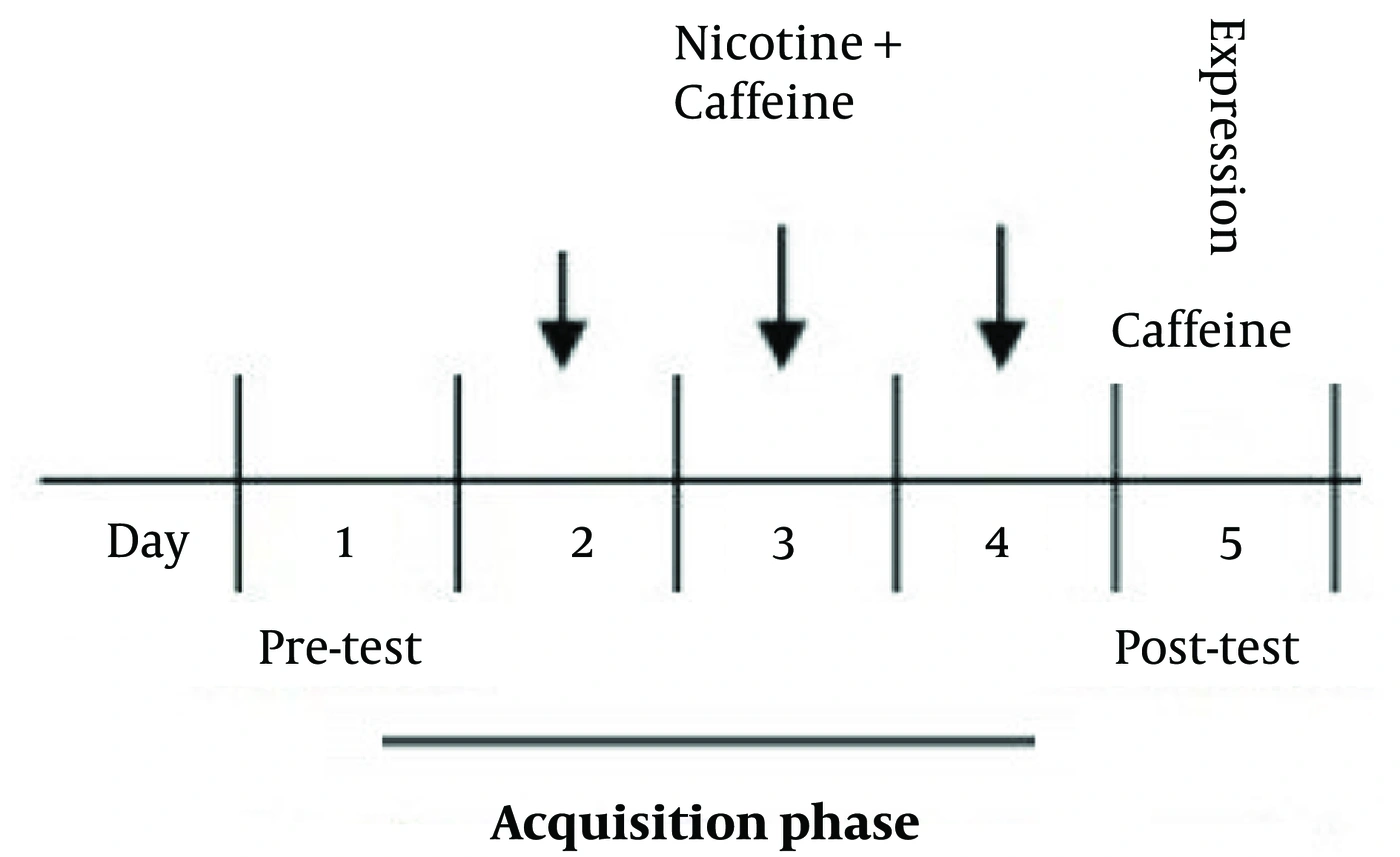
An experimental timeline showing preconditioning, conditioning, drug administration, and testing.
Figure 1.
An experimental timeline showing preconditioning, conditioning, drug administration, and testing.
In the expression phase, nicotine was administered during conditioning, and caffeine at different doses was administered during the test phase.
Animals were randomly assigned to eight experimental groups (n = 6 per group). The experimental groups and treatment schedules were as follows:
1) Saline control group: Animals received subcutaneous injections of saline on days 2, 3, and 4.
2) Nicotine control group: Animals received subcutaneous injections of nicotine on days 2, 3, and 4.
3) Nicotine (0.5 mg/kg) + caffeine (5 mg/kg) acquisition group: Animals received simultaneous subcutaneous injections of nicotine (0.5 mg/kg) and caffeine (5 mg/kg) on days 2, 3, and 4.
4) Nicotine (0.5 mg/kg) + caffeine (10 mg/kg) acquisition group: Animals received simultaneous subcutaneous injections of nicotine (0.5 mg/kg) and caffeine (10 mg/kg) on days 2, 3, and 4.
5) Nicotine (0.5 mg/kg) + caffeine (20 mg/kg) acquisition group: Animals received simultaneous subcutaneous injections of nicotine (0.5 mg/kg) and caffeine (20 mg/kg) on days 2, 3, and 4.
6) Nicotine (0.5 mg/kg) + caffeine (5 mg/kg) expression group: Animals received subcutaneous injections of nicotine (0.5 mg/kg) on days 2, 3, and 4, followed by a subcutaneous injection of caffeine (5 mg/kg) on day 5.
7) Nicotine (0.5 mg/kg) + caffeine (10 mg/kg) expression group: Animals received subcutaneous injections of nicotine (0.5 mg/kg) on days 2, 3, and 4, followed by a subcutaneous injection of caffeine (10 mg/kg) on day 5.
8) Nicotine (0.5 mg/kg) + caffeine (20 mg/kg) expression group: Animals received subcutaneous injections of nicotine (0.5 mg/kg) on days 2, 3, and 4, followed by a subcutaneous injection of caffeine (20 mg/kg) on day 5.
To minimize the number of animals used, the saline and nicotine control groups were shared between the acquisition and expression experiments.

3.6. Statistical Analysis

Data were analyzed using one-way ANOVA followed by post hoc Tukey tests. Data are presented as mean ± SEM. P values < 0.05 were considered statistically significant.

4. Results

4.1. Impact of 0.5 mg/kg Nicotine on Conditioned Place Preference

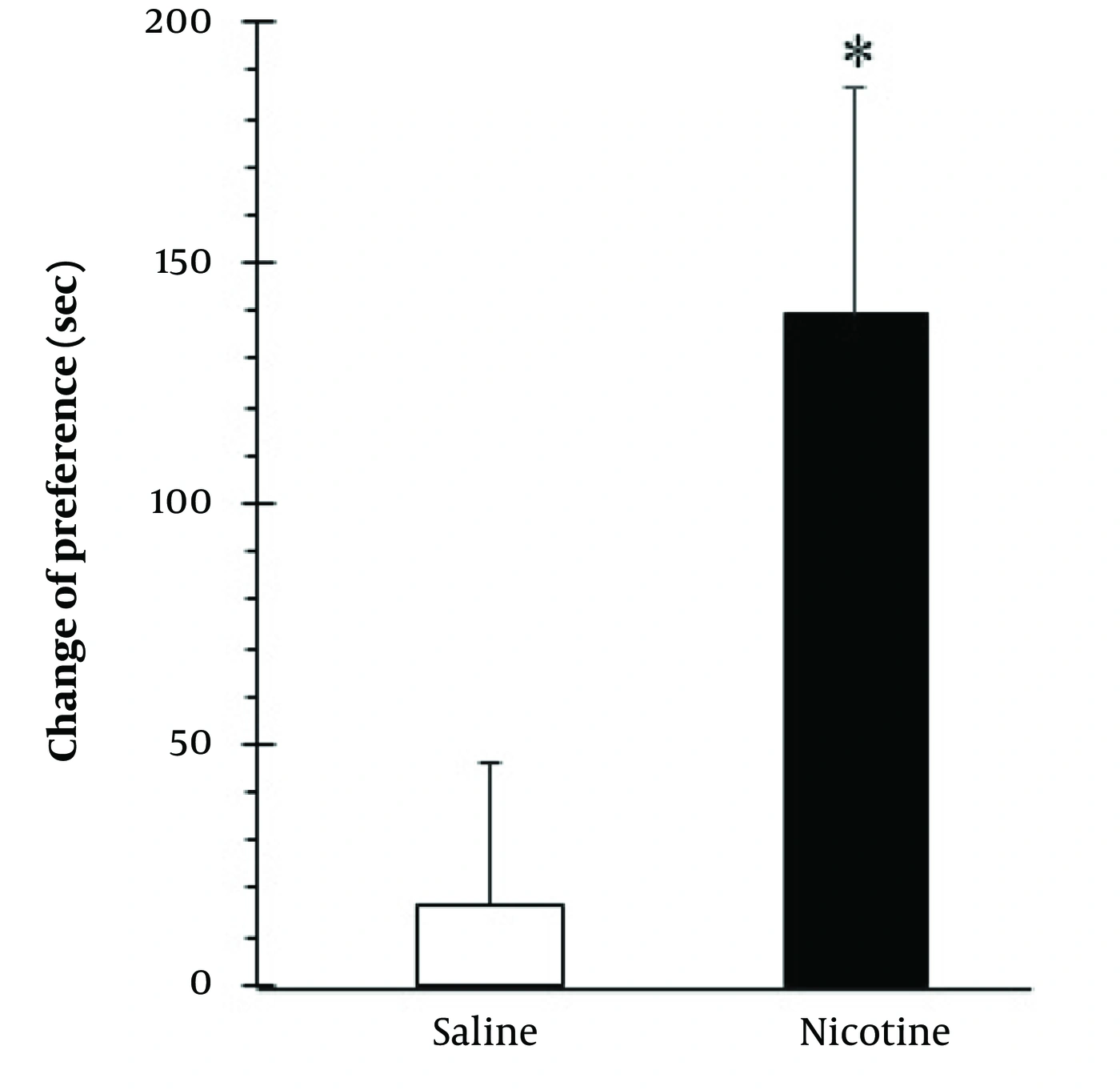
Nicotine at 0.5 mg/kg significantly increased preference compared with saline (P < 0.05), indicating that this dose induced CPP (Figure 2).
Nicotine injection's effect on CPP acquisition (n = 6 per group). <i>Preference change</i> was measured as the difference in time spent on the 5th day versus the 1st day within the drug-paired zone. Data are shown as mean ± SEM. The error bars represent the standard error of the mean (SEM). *P &lt; 0.05 indicates significance from the saline group.
Figure 2.
Nicotine injection's effect on CPP acquisition (n = 6 per group). Preference change was measured as the difference in time spent on the 5th day versus the 1st day within the drug-paired zone. Data are shown as mean ± SEM. The error bars represent the standard error of the mean (SEM). *P < 0.05 indicates significance from the saline group.

4.2. Effects of Various Caffeine Doses on Nicotine-Induced Conditioned Place Preference Acquisition

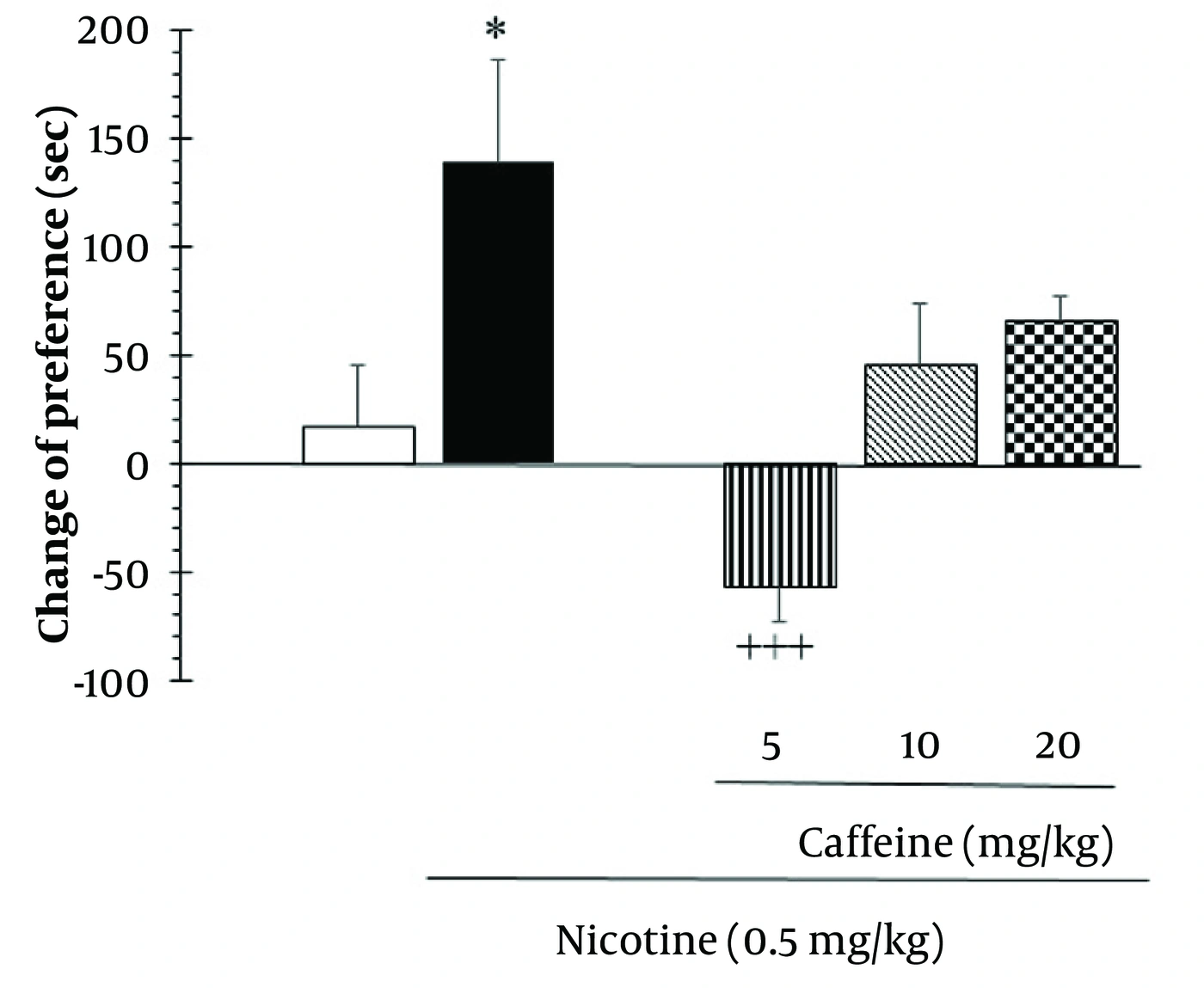
A significant difference was observed between the nicotine control group and the Caff-5 group; however, no significant differences were found between the nicotine control group and the Caff-10 or Caff-20 groups [F(4, 29) = 5.889, P = 0.0018] (Figure 3).
The impact of different caffeine doses on nicotine-induced CPP acquisition (n = 6 per group). <i>Preference change</i> was determined as the difference in time spent on the 5th versus the 1st day in the drug zone. Data are mean ± SEM. The error bars represent the standard error of the mean (SEM). *P &lt; 0.05 indicates significance from the saline-control group. +++P &lt; 0.001 indicates significance from the nicotine-control group.
Figure 3.
The impact of different caffeine doses on nicotine-induced CPP acquisition (n = 6 per group). Preference change was determined as the difference in time spent on the 5th versus the 1st day in the drug zone. Data are mean ± SEM. The error bars represent the standard error of the mean (SEM). *P < 0.05 indicates significance from the saline-control group. +++P < 0.001 indicates significance from the nicotine-control group.

4.3. Effects of Caffeine Doses on the Expression of Nicotine-Induced Conditioned Place Preference

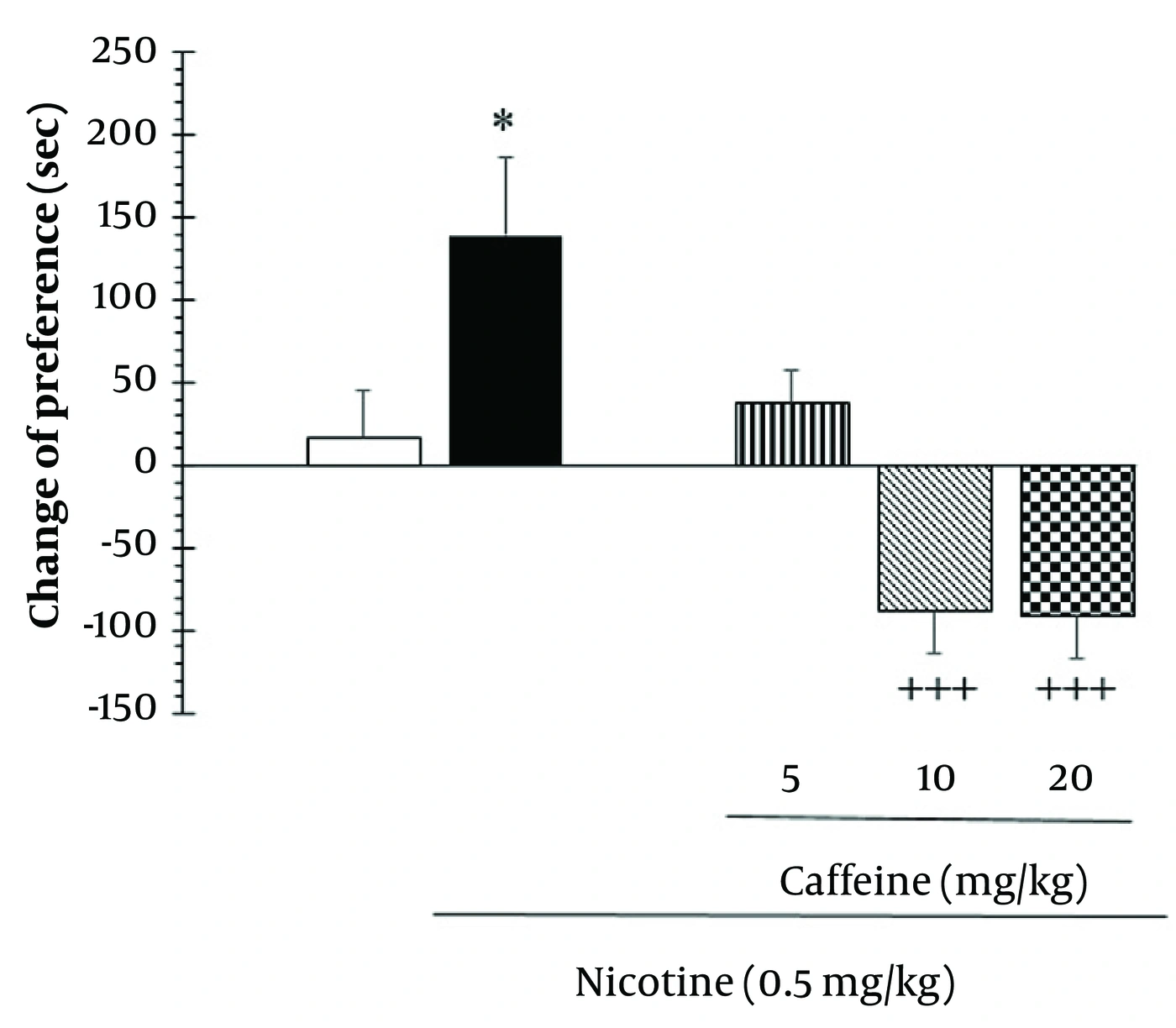
Significant differences were observed between the nicotine control group and the Caff-10 and Caff-20 groups [F(4, 29) = 9.446, P = 0.0001] (Figure 4).
Impact of caffeine doses on the expression of nicotine-induced CPP (n = 6 per group). <i>Preference change</i> was calculated as the difference between time spent on the 5th and 1st days in the drug zone. Data are mean ± SEM. The error bars represent the standard error of the mean (SEM). *P &lt; 0.05 indicates significance from the saline-control group. +++P &lt; 0.001 indicates significance from the nicotine-control group.
Figure 4.
Impact of caffeine doses on the expression of nicotine-induced CPP (n = 6 per group). Preference change was calculated as the difference between time spent on the 5th and 1st days in the drug zone. Data are mean ± SEM. The error bars represent the standard error of the mean (SEM). *P < 0.05 indicates significance from the saline-control group. +++P < 0.001 indicates significance from the nicotine-control group.

5. Discussion

This study examined how nicotine and caffeine interact to influence the acquisition and expression of CPP in male mice. The results from the acquisition phase indicated that a subcutaneous injection of 5 mg/kg caffeine reduced the acquisition of nicotine-induced CPP. However, this reduction with doses of 10 and 20 mg/kg caffeine was not statistically significant, indicating the absence of a monotonic dose–response pattern.
The findings from the expression phase also demonstrated that caffeine injection reduced nicotine-induced CPP and inhibited its established expression.
Drug interactions may have important implications for addiction and its treatment. The interaction between caffeine and nicotine is particularly relevant because these substances are widely consumed together.
Numerous studies have shown an additive effect of nicotine consumption on CPP induction (18, 19); in 2015, Kutlu et al. showed that nicotine induces CPP by activating the brain reward pathway, leading to dopamine release. This dopamine release contributes to rewarding effects that become associated with the environment in which nicotine is consumed, thereby strengthening preference for that environment over time (20).
Consistent with previous studies (14, 15), our findings showed that 0.5 mg/kg nicotine produced a significant conditioned place preference.
Nicotine affects motivational and aversive responses mainly by activating VTA nicotinic acetylcholine receptors, which are present in both dopamine and non-dopamine neurons (21). The rewarding effects of nicotine result from the balanced regulation of inhibitory and excitatory inputs to VTA dopamine neurons, which increases glutamatergic excitation and reduces GABAergic inhibition (22).
Activation of VTA cholinergic receptors then controls dopamine release into the NAc, contributing to its reinforcing effect (23).
It has been previously reported that administration of caffeine (24) and nicotine (22) alone increases glutamate release and glutamatergic neurotransmission. The interaction between caffeine and nicotine might alter glutamatergic signaling, potentially affecting brain glutamate concentrations.
Recent research has also shown that coadministration of nicotine and caffeine reduces cortical levels of neurotransmitters such as glutamate, glycine, aspartate, and taurine, while significantly increasing GABA levels. EEG analysis revealed increased delta wave power and decreased theta, beta-1, and beta-2 waves following nicotine and caffeine treatment (25).
These findings may explain our observation that caffeine inhibits nicotine-elicited CPP acquisition and expression.
Similarly, coadministration of ethanol and caffeine significantly altered ethanol conditioning outcomes (26), although some studies indicate that caffeine combined with ethanol does not affect ethanol-induced CPP (27, 28).
Variations in experimental design—such as different administration routes, animal strains, timing, number of postconditioning tests, and stimulus exposure intervals—likely account for these discrepancies.
Overall, low doses of caffeine combined with nicotine prevented the acquisition of conditioned place preference, and medium to high doses of caffeine during the postconditioning phase inhibited nicotine-induced CPP expression.
Our results do not support a synergistic interaction between caffeine and nicotine; instead, caffeine appears to diminish nicotine’s effects in the CPP model. When administered together, caffeine seems to block nicotine’s ability to establish place conditioning, suggesting that it can interfere with nicotine conditioning effects.
These findings align with previous research showing that caffeine reduces the acquisition (26) and expression (29) of ethanol-induced CPP, likely by disrupting cognitive processes involved in conditioned responses.

5.1. Conclusions

These findings provide additional insight into the interaction between caffeine and nicotine. They suggest that the interaction between caffeine and nicotine warrants further investigation to understand the mechanisms underlying these interactions. The findings also emphasize the importance of understanding the specific circumstances influencing nicotine and caffeine interactions to prevent misconceptions about their combined use.

5.2. Study Limitations

The limitations of this study include the use of an animal model, the small sample size, the inclusion of only male mice, limitations inherent to the behavioral model, and uncertain clinical applicability.
Acknowledgments

Footnotes

  • AI Use Disclosure:ChatGPT was used for text editing in the materials and methods section at a Moderate level.

  • Authors' Contribution:Study Concept and Design: R. F. and Y. S.; Analysis and Interpretation of Data: R. F. and Y. S.; Manuscript Drafting: A. M.; Critical Revision for Important Intellectual Content: M. A. B., A. S. B., and S. B.; Statistical Analysis: R. F., Y. S., A. M., M. A. B., and A. S. B.; Administrative, Technical, and Material Support: R. F., Y. S., A. M., M. A. B., and A. S. B.

  • Conflict of Interests Statement:The authors declare no conflicts of interest for this study.

  • Data Availability:The dataset presented in the study is available on request from the corresponding author during submission or after publication.

  • Ethical Approval:This study was approved under the ethical approval code of IR.MAZUMS.RIB.REC.1402.099 .

  • Funding/Support:This research was funded by a grant (18367) from the Mazandaran University of Medical Sciences, Ramsar, Iran.

References

  • 1.
    Cooper S, Robison AJ, Mazei-Robison MS. Reward circuitry in addiction. Neurotherapeutics. 2017;14(3):687-97. [PubMed ID: 28324454]. [PubMed Central ID: PMC5509624]. https://doi.org/10.1007/s13311-017-0525-z].
  • 2.
    Ebrahimi MN, Banazadeh M, Alitaneh Z, Jaafari Suha A, Esmaeili A, Hasannejad-Asl B, et al. The distribution of neurotransmitters in the brain circuitry: mesolimbic pathway and addiction. Physiology & behavior. 2024;284. 114639. [PubMed ID: 39004195]. https://doi.org/10.1016/j.physbeh.2024.114639].
  • 3.
    Abbondanza A, Urushadze A, Alves-Barboza AR, Janickova H. Expression and function of nicotinic acetylcholine receptors in specific neuronal populations: Focus on striatal and prefrontal circuits. Pharmacological Research. 2024;204. 107190. [PubMed ID: 38704107]. https://doi.org/10.1016/j.phrs.2024.107190.
  • 4.
    Sharma VK, Sharma A, Verma KK, Gaur PK, Kaushik R, Abdali B. A Comprehensive Review on Pharmacological Potentials of Caffeine. Journal of Applied Pharmaceutical Sciences and Research. 2023;6(3):16-26. https://doi.org/10.31069/japsr.v6i3.04].
  • 5.
    Bjørngaard JH, Nordestgaard AT, Taylor AE, Treur JL, Gabrielsen ME, Munafò MR, et al. Heavier smoking increases coffee consumption: findings from a Mendelian randomization analysis. International journal of epidemiology. 2017;46(6):1958-67. [PubMed ID: 29025033]. [PubMed Central ID: PMC5837196]. https://doi.org/10.1093/ije/dyx147.
  • 6.
    Rezvani AH, Sexton HG, Johnson J, Wells C, Gordon K, Levin ED. Effects of caffeine on alcohol consumption and nicotine self‐administration in rats. Alcoholism: Clinical and Experimental Research. 2013;37(9):1609-17. [PubMed ID: 23895206]. [PubMed Central ID: PMC3775986]. https://doi.org/10.1111/acer.12127].
  • 7.
    Dutra-Tavares AC, Ribeiro-Carvalho A, Nunes F, Araújo UC, Bruno V, Marcourakis T, et al. Lifetime caffeine and adolescent nicotine exposure in mice: effects on anxiety-like behavior and reward. Journal of Developmental Origins of Health and Disease. 2023;14(3):362-70. [PubMed ID: 37009674]. https://doi.org/10.1017/S2040174423000077].
  • 8.
    Kristjansson AL, Kogan SM, Mann MJ, Smith ML, Lilly CL, James JE. Possible role of caffeine in nicotine use onset among early adolescents: Evidence from the Young Mountaineer Health Study Cohort. PLoS One. 2023;18(5). e0285682. [PubMed ID: 37167246]. [PubMed Central ID: PMC10174549]. https://doi.org/10.1371/journal.pone.0285682].
  • 9.
    Pohanka M. The effects of caffeine on the cholinergic system. Mini Reviews in Medicinal Chemistry. 2014;14(6):543-9. [PubMed ID: 24873820]. https://doi.org/10.2174/1389557514666140529223436].
  • 10.
    Adebola AO, Sunday FO, Esther OO, Oladele OJ, Yinka OS, Oluwole OS, et al. Effects of the Combination of Caffeine, Nicotine, and 3, 4 Methylenedioxymethamphetamine (MDMA) on the Hippocampus of Experimental Wistar Rats. Tropical Journal of Natural Product Research. 2024;8(5):7264. https://doi.org/10.26538/tjnpr/v8i5.31].
  • 11.
    Bhardwaj I, Ansari AH, Rai SP, Singh S, Singh D. Molecular targets of caffeine in the central nervous system. Progress in Brain Research. 2024;288:35-58. [PubMed ID: 39168558]. https://doi.org/10.1016/bs.pbr.2024.06.012].
  • 12.
    Liu X, Jernigan C. Effects of caffeine on persistence and reinstatement of nicotine-seeking behavior in rats: interaction with nicotine-associated cues. Psychopharmacology. 2012;220(3):541-50. [PubMed ID: 21947355]. [PubMed Central ID: PMC3676876]. https://doi.org/10.1007/s00213-011-2505-z].
  • 13.
    Costas-Ferreira C, Barreiro-Chapela M, Durán R, Faro LRF. Possible potentiating effects of combined administration of alcohol, caffeine, and nicotine on in vivo dopamine release in addiction-related circuits within the CNS of rats. Biomedicines. 2024;12(11):2591. [PubMed ID: 39595157]. [PubMed Central ID: PMC11592005]. https://doi.org/10.3390/biomedicines12112591].
  • 14.
    Fartootzadeh R, Azizi F, Alaei H, Reisi P. Functional crosstalk of nucleus accumbens CB1 and OX2 receptors in response to nicotine-induced place preference. Neuroscience letters. 2019;698:160-4. [PubMed ID: 30659912]. https://doi.org/10.1016/j.neulet.2019.01.027].
  • 15.
    Azizi F, Fartootzadeh R, Alaei H, Reisi P. Effects of concurrent blockade of OX2 and CB1 receptors in the ventral tegmental area on nicotine-induced place preference in rats. Neuroscience Letters. 2018;684:121-6. [PubMed ID: 30017709]. https://doi.org/10.1016/j.neulet.2018.07.017].
  • 16.
    Bates EA. The interaction of ethanol and nicotine in male and female adolescent rats: examination of their rewarding effects as a function of dose [dissertation]. Long Beach; 2021.
  • 17.
    Hashemizadeh S, Sardari M, Rezayof A. Basolateral amygdala CB1 cannabinoid receptors mediate nicotine-induced place preference. Progress in neuro-psychopharmacology & biological psychiatry. 2014;51:65-71. [PubMed ID: 24468643]. https://doi.org/10.1016/j.pnpbp.2014.01.010].
  • 18.
    Buzzi B, AlSharari SD, Vaughn J, Kalck E, Rogers WD, Baldwin A, et al. Nicotine reward in the conditioned place preference test across a panel of male inbred mice and F1 crosses: genetic influence and correlation with variation in nicotine antinociception. Psychopharmacology. 2025;243(5):1271-1281. [PubMed ID: 41091170]. https://doi.org/10.1007/s00213-025-06926-4].
  • 19.
    Huang EYK, Hung HY, Chen YH, Kao JH, Tsai AL, Chow LH. Effects of dextromethorphan on nicotine-induced reward, behavioral sensitization, withdrawal signs, and drug seeking-related behavior in rats. Nicotine and Tobacco Research. 2023;25(7):1251-60. [PubMed ID: 36520961]. https://doi.org/10.1093/ntr/ntac287].
  • 20.
    Kutlu MG, Ortega LA, Gould TJ. Strain-dependent performance in nicotine-induced conditioned place preference. Behavioral neuroscience. 2015;129(1):37-41. [PubMed ID: 25546366]. [PubMed Central ID: PMC4459496]. https://doi.org/10.1037/bne0000029].
  • 21.
    Liu Y, Wei H, Zhang J, Cheng G, Cao J, Huang Y, et al. The neurophysiological effects of nicotine and research progress. Chemico-Biological Interactions. 2026;435. 112148. [PubMed ID: 42176769]. https://doi.org/10.1016/j.cbi.2026.112148].
  • 22.
    Yan Y, Beckley NA, Kim VJ, Drenan RM. Differential Nicotinic Modulation of Glutamatergic and GABAergic VTA Microcircuits. eNeuro. 2019;6(6):ENEURO.0298-19.2019. [PubMed ID: 31744841]. [PubMed Central ID: PMC6893235]. https://doi.org/10.1523/ENEURO.0298-19.2019].
  • 23.
    Wickham R, Solecki W, Rathbun L, McIntosh JM, Addy NA. Ventral tegmental area α6β2 nicotinic acetylcholine receptors modulate phasic dopamine release in the nucleus accumbens core. Psychopharmacology (Berl). 2013;229(1):73-82. [PubMed ID: 23624852]. [PubMed Central ID: PMC3742574]. https://doi.org/10.1007/s00213-013-3082-0].
  • 24.
    Martins RS, Rombo DM, Gonçalves-Ribeiro J, Meneses C, Borges-Martins VPP, Ribeiro JA, et al. Caffeine has a dual influence on NMDA receptor-mediated glutamatergic transmission at the hippocampus. Purinergic signalling. 2020;16(4):503-18. [PubMed ID: 33025424]. [PubMed Central ID: PMC7855183]. https://doi.org/10.1007/s11302-020-09724-z].
  • 25.
    Mourad IM, Noor NA, Mohammed HS, Aboul Ezz HS, Khadrawy YA. A Neurochemical and Electrophysiological Study on the Combined Effects of Caffeine and Nicotine in the Cortex of Rats. Basic and Clinical Neuroscience. 2021;12(5):681-692. [PubMed ID: 35173922]. [PubMed Central ID: PMC8818121]. https://doi.org/10.32598/bcn.2021.2100.1].
  • 26.
    Porru S, Maccioni R, Bassareo V, Peana AT, Salamone JD, Correa M, et al. Effects of caffeine on ethanol-elicited place preference, place aversion and ERK phosphorylation in CD-1 mice. Journal of Psychopharmacology. 2020;34(12):1357-70. [PubMed ID: 33103552]. https://doi.org/10.1177/0269881120965892].
  • 27.
    Hilbert MLT, May CE, Griffin WC. Conditioned reinforcement and locomotor activating effects of caffeine and ethanol combinations in mice. Pharmacology Biochemistry and Behavior. 2013;110:168-73. [PubMed ID: 23872371]. [PubMed Central ID: PMC3805737]. https://doi.org/10.1016/j.pbb.2013.07.008].
  • 28.
    Zuniga A, Cunningham CL. Rewarding and aversive doses of caffeine alter activity but not conditioned place preference induced by ethanol in DBA/2J mice. Pharmacology Biochemistry and Behavior. 2019;187. 172799. [PubMed ID: 31678181]. [PubMed Central ID: PMC6927548]. https://doi.org/10.1016/j.pbb.2019.172799].
  • 29.
    Okhuarobo A, Igbe I, Yahaya A, Sule Z. Effect of caffeine on alcohol consumption and alcohol-induced conditioned place preference in rodents. Journal of Basic and Clinical Physiology and Pharmacology. 2018;30(1):19-28. [PubMed ID: 30099411]. https://doi.org/10.1515/jbcpp-2018-0068].

Copyright

Copyright © 2026, Salimi et al. This open-access article is available under the Creative Commons Attribution 4.0 (CC BY 4.0) International License (https://creativecommons.org/licenses/by/4.0/), which allows for unrestricted use, distribution, and reproduction in any medium, provided that the original work is properly cited.

Similar Articles

7
Jan
2013
Administration of Cannabinoid Receptor Antagonist into the Ventral Tegmental Area Could Inhibit Conditioned Place Preference Induced by Chemical Stimulation of the Lateral Hypothalamus

Administration of Cannabinoid Receptor Antagonist into the Ventral Tegmental Area Could Inhibit Conditioned Place Preference Induced by Chemical Stimulation of the Lateral Hypothalamus

Zahra Taslimi,
Saeid Yazdi-Ravandi,,
Abbas Haghparast

Taslimi Z, Yazdi-Ravandi, S, Haghparast A. Administration of Cannabinoid Receptor Antagonist into the Ventral Tegmental Area Could Inhibit Conditioned Place Preference Induced by Chemical Stimulation of the Lateral Hypothalamus. Zahedan J Res Med Sci. 2013;15(7):e92928. doi:

27
Jan
2021
Assessing the Effect of Diazepam on Methamphetamine-Induced Seeking Behavior in Rats

Assessing the Effect of Diazepam on Methamphetamine-Induced Seeking Behavior in Rats

Kamaledin Alaedini,
Esmaeel Riahi,
Elaheh Karimi,
Maryam Farahmandfar

Alaedini K, Riahi E, Karimi E, Farahmandfar M. Assessing the Effect of Diazepam on Methamphetamine-Induced Seeking Behavior in Rats. Iran J Psychiatry Behav Sci. 2021;15(1):e85560. doi: https://doi.org/10.5812/ijpbs.85560

24
Dec
2016
The Effect of Compulsory and Voluntary Exercise on Morphine-Induced Conditioned Place Preference in Rats

The Effect of Compulsory and Voluntary Exercise on Morphine-Induced Conditioned Place Preference in Rats

Karim Ranjbar,
Mojtaba Naghshvarian Jahromi,
Seyedeh Fatemeh Sajjadi

Ranjbar K, Naghshvarian Jahromi M, Fatemeh Sajjadi S. The Effect of Compulsory and Voluntary Exercise on Morphine-Induced Conditioned Place Preference in Rats. Arch Neurosci. 2017;4(1):e41488. doi: https://doi.org/10.5812/archneurosci.41488

25
Feb
2012
Effects of reversible inactivation of the ventral tegmental area on the firing rate of neurons in the shell sub-region of the nucleus accumbens and on morphine-induced conditioned place preference in the rat

Effects of reversible inactivation of the ventral tegmental area on the firing rate of neurons in the shell sub-region of the nucleus accumbens and on morphine-induced conditioned place preference in the rat

Abbas Haghparast,
Mahsa Modab,
Mohammad EbrahimzadehSarvestani,
Mojtaba Kermani

Haghparast A, Modab M, EbrahimzadehSarvestani M, Kermani M. Effects of reversible inactivation of the ventral tegmental area on the firing rate of neurons in the shell sub-region of the nucleus accumbens and on morphine-induced conditioned place preference in the rat. koomesh. 2012;13(2):e152508. doi:

31
Jan
2019
The Involvement of Intra-Hippocampal Dopamine Receptors in the Conditioned Place Preference Induced By Orexin Administration into the Rat Ventral Tegmental Area

The Involvement of Intra-Hippocampal Dopamine Receptors in the Conditioned Place Preference Induced By Orexin Administration into the Rat Ventral Tegmental Area

Farzaneh Sadat Naghavi,
Parastoo Namvar,
Fatemeh Sadeghzadeh,
Abbas Haghparast

Naghavi FS, Namvar P, Sadeghzadeh F, Haghparast A. The Involvement of Intra-Hippocampal Dopamine Receptors in the Conditioned Place Preference Induced By Orexin Administration into the Rat Ventral Tegmental Area. Iran J Pharm Res. 2019;18(1):e126133. doi: https://doi.org/10.22037/ijpr.2019.2344

More by these authors

Yaser SalimiPubMedScholar
Aryan MehraraPubMedScholar
Ahmad Shariati BidarPubMedScholar
Mohammad Ali BarkarPubMedScholar
Kosar MeshraghiPubMedScholar
Reza FartootzadehPubMedScholar
Share
Cited by
Metrics