This study aimed to evaluate the effect of diazepam administration during and after the withdrawal period on the drug-seeking behavior induced by the single-dose methamphetamine injection in previously methamphetamine-dependent male rats that were abstinent during the study. We used a CPP paradigm, which is a classic model for assessing the effects of drug-related rewards, in order to evaluate the mechanisms through which methamphetamine yields rewarding memories (
25). Based on the findings, a 3-days injection of methamphetamine (1 mg/kg) caused a significant bias toward the chamber that was associated with methamphetamine. This finding is consistent with the results reported by previous studies that utilized a similar dose of methamphetamine (
14,
27-
29).
Recent evidence demonstrated that dopamine is the main factor for normal ‘wanting’, and its activation in the nucleus acumens can be sufficient to enhance cue-triggered compulsive ‘wanting’ in addiction (
30). There are evidence indicating that psychostimulants including methamphetamine, increases dopamine release in this brain area (
5,
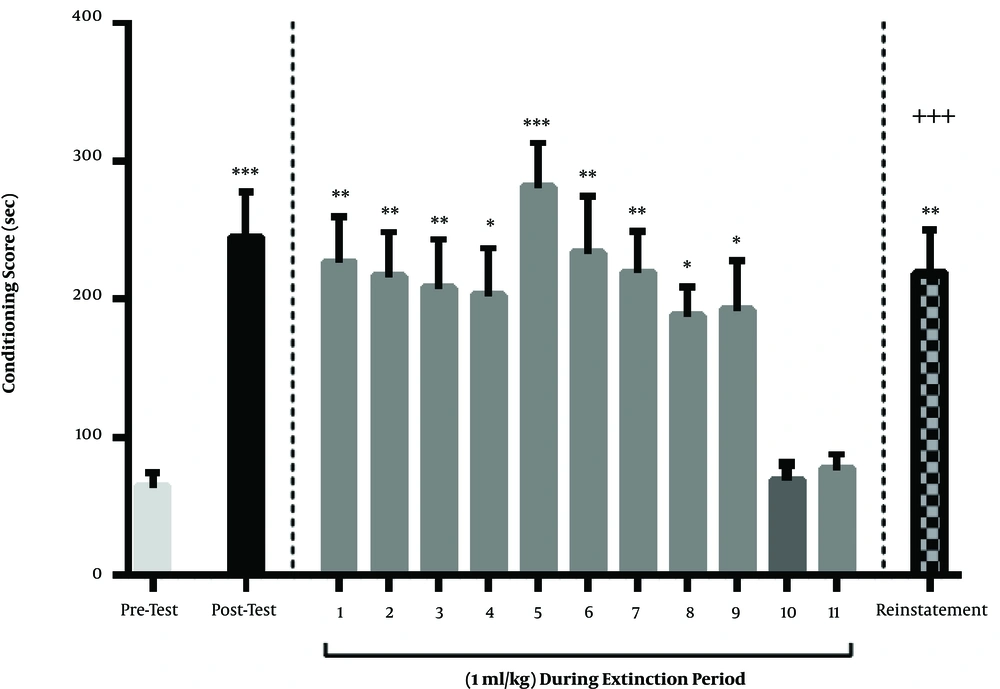
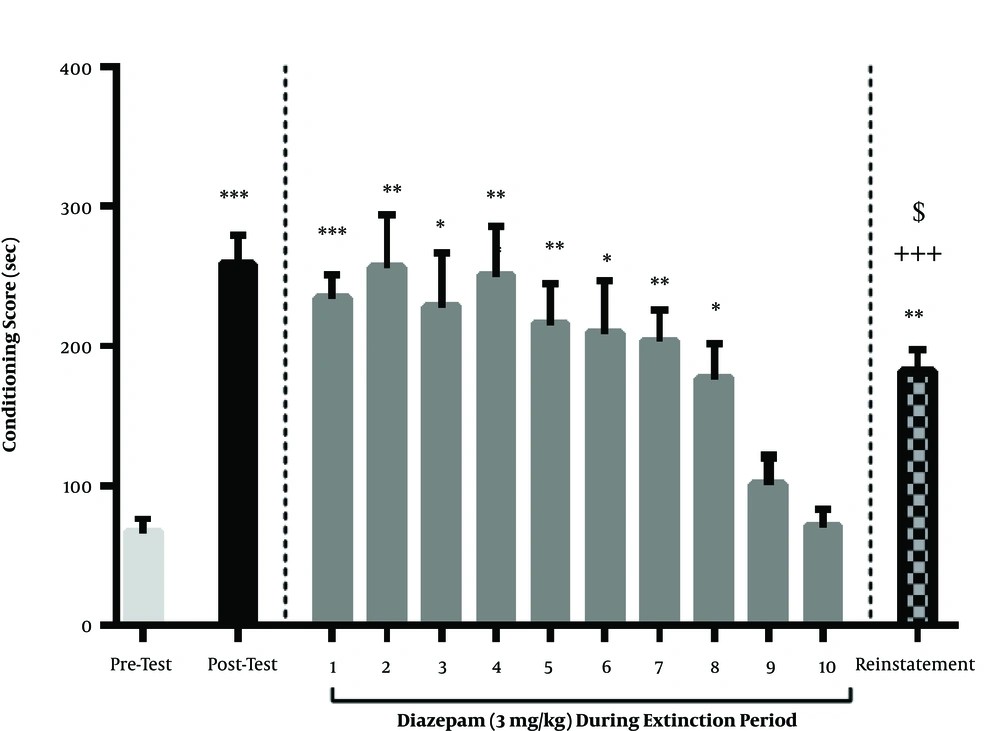
30). Therefore, increasing the CPP score by administering methamphetamine can be expected. In the present study, administering diazepam (3 mg/kg) reduced the extinction period shortly, and the significant reduction in the withdrawal period occurred on day one and for the extinction period, it happened on the 9th and 10th days. This effect showed that daily administration of diazepam leads to a faster attenuation of CPP score in rats. Our data also showed that the reinstatement of the place of preference primed by the methamphetamine injection was suppressed by diazepam treatment during the extinction period.
Previous studies evaluated the effect of benzodiazepines and other GABA agonists in CPP induced with psychostimulants in both conditioning and extinction periods. For instance, a study reported that oxazepam (benzodiazepine agonist) administration before the final methamphetamine CPP test in methamphetamine-dependent rats led to significant declines in CPP. In the same study, oxazepam (10 mg/kg ip) was injected 30 minutes before CPP testing following 4 days of conditioning (
15). Leri et al. (
17) demonstrated that injecting diazepam before conditioning with methamphetamine and its co-administration in this phase attenuated the CPP induced with methamphetamine. This effect was not observed in morphine conditioned rats (
17).
In another research, Meririnne et al. (
5) compared the effect of diazepam and zolpidem administration on amphetamine and cocaine-induced CPP in rats. The conditioning phase in their study lasted for 8 days. They injected diazepam and zolpidem to separated groups during the conditional periods. For both methamphetamine and cocaine conditioned rats, receiving diazepam was associated with reduced CPP in post conditional phase, but zolpidem was less effective. They concluded that differential distribution of omega1- and omega2- receptors in the brain is responsible for such observation (
5). On the other hand, their results are not consistent with the findings reported by Spense et al. (
19), which reported that oxazepam attenuated methamphetamine self-administration but alprazolam did not have such effect. To figure out if this result arose from the GABAA receptor or translocator protein (TLPO), they used antagonists of GABAA and TLPO before administration of alprazolam and oxazepam. They concluded that GABAA is responsible for the enhancement of methamphetamine self-administration in the alprazolam group (
19), though they measured drug-seeking behavior via drug self-administration that is based on the operant conditioning rule.
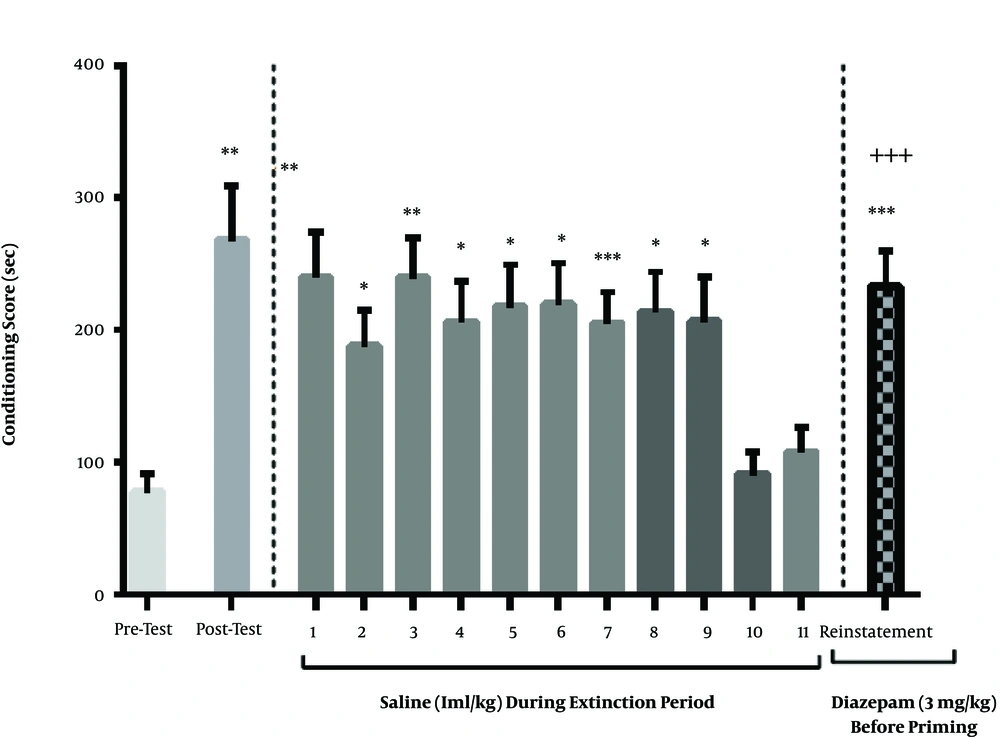
Although previous studies have reported conflicting results, it seems that most studies indicated promising results in the case of using benzodiazepines in individuals that recently were dependent on methamphetamine or other psychostimulants. None of the abovementioned studies have evaluated the effect of benzodiazepine on the reinstatement phase. In fact, few studies have investigated this issue. Our results showed that a single dose of diazepam before the priming dose of methamphetamine could not prevent the reinstatement of methamphetamine-induced CPP.
Ito et al. (
22) also reported findings that are mostly consistent with our results. They indicated that treatment with clonazepam, a benzodiazepine agonist, before each methamphetamine administration during the dependence period could prevent the emergence of behavioral sensitivity to methamphetamine, which occurs after the withdrawal period accompanied by increased locomotor activity in rats. Pretreatment with flumazenil, as a benzodiazepine antagonist, can prevent this effect of clonazepam. In the final part of their research, they administrated clonazepam (1 mg/kg) before the methamphetamine challenge (1 mg/kg). The rats were previously sensitized to methamphetamine (within a 10-day period) and the challenge was performed on day 17 or 18. The results showed motor activity enhancement. They found that clonazepam could not prevent the development of behavioral sensitivity to methamphetamine, after the appearance of this behavior (
22). It seems that different mechanisms are responsible for primary sensitization and relapse. There are studies that reported changes in the ventral tegmental area, prefrontal cortex, and ventral pallidum other than nucleus accumbence are responsible for the pattern of expression of behavioral sensitization (
31).
Cellular studies have illustrated two types of changes in the somatodendritic dopamine region elicit by exposure to sensitizing drugs or stressors: (1) the dopaminergic cell groups; and (2) GABA regulation of dopaminergic cell groups. These changes cause the dopaminergic neurons of sensitized animals to become either increasingly sensitive to excitatory pharmacological and environmental stimuli or desensitized to inhibitor regulation. These changes in the terminal field can alter patterns of dopamine release in sensitized animals (
32).
However, this phenomenon might be a possible mechanism. We know that multifarious mechanisms and neurotransmitters are involved in the long-term potentiation and reward phenomenon. Thus, further studies are needed to further reveal the underlying mechanisms of relapse and therapeutic strategies.
5.1. Conclusions
This study, by providing evidence at the behavioral level, demonstrated that administration of diazepam during extinction period is associated with declined maintenance and reinstatement of Meth-induced CPP. Moreover, the effects of diazepam can to somehow be attributed to dose, duration, and timing of diazepam administration as well as age and gender of the rats. Future studies are needed to extend our knowledge beyond the effects of benzodiazepines on drug taking behavior.