Fulltext
Full text is available in the PDF.
IJ Psychiatry and Behavioral Sciences
IJPBS is the Official Journal of Mazandaran University of Medical Sciences
Image Credit:Iran J Psychiatry Behav Sci
Authors
Objective: The purpose of the present preliminary study was to explore the prevalence of nonmedical abuse of benzodiazepines in a group of opiate-dependent patients who were on methadone maintenance treatment (MMT) program in outpatient clinics in the south-west of Tehran, Iran.
Methods: 114 male and female opiate-dependent clients who met DSM.IV-TR criteria for opiate dependence with mean age 36.5 years participated in the study from 16 clinics and completed a self-report questionnaire on demographics and substance use details. Then the participants were interviewed on the details of nonmedical abuse of benzodiazepines.
Results: The study findings indicated that the current nonmedical abuse of benzodiazepines was commonly prevalent among participants. The most common current benzodiazepines abused were alprazolam (100%) followed by chlordiazepoxide (96.5%), clonazepam (94.7%), diazepam (86.8%), lorazepam (79.8%) and oxazepam (73.7%) respectively. Depression (77%) and anxiety (72.8%) were frequently reported as the most important reasons associated with consuming benzodiazepines followed by problem in anger control (44.7%), suicide thought (12.3%), self-injury (7.9%), and suicide commitment (5.3%) respectively.
Conclusion: Nonmedical abuse of benzodiazepines is an important problem among opiate addicts which should be considered in treatment interventions during MMT program.
Declaration of Interest: None.
Citation: Nonmedical abuse of benzodiazepines in opiate dependents in Tehran, Iran. Babakhanian M, Sadeghi M, Mansoori N, Alam Mehrjerdi Z, Tabatabai M. Iran J Psychiatry Behav Sci 2011; 6(1): 62-7.
© 2012, Author(s). This open-access article is available under the Creative Commons Attribution 4.0 (CC BY 4.0) International License (https://creativecommons.org/licenses/by/4.0/), which allows for unrestricted use, distribution, and reproduction in any medium, provided that the original work is properly cited.
Eskandarieh S, Jafari F, Yazdani S, Hazrati N, Saberi-Zafarghandi MB. Compulsory Maintenance Treatment Program Amongst Iranian Injection Drug Users and Its Side Effects. Int J High Risk Behav Addict. 2014;3(4):e21765. doi: https://doi.org/10.5812/ijhrba.21765
Dana S, Effatpanah M, Mahjoub A. The New Epidemic Problem of Psychoactive Drugs at Drug Treatment Centers of Iran: Implications for Education, Prevention and Treatment. Iran J Psychiatry Behav Sci. 2018;12(2):e63555. doi: https://doi.org/10.5812/ijpbs.63555

Khosravi M, Shamekhi M. Dissociative Experiences Among Methadone Maintenance Treatment Patients. Int J High Risk Behav Addict. 2019;8(1):e80216. doi: https://doi.org/10.5812/ijhrba.80216
Hosseini SH, Taghipour M, Tavakkoli M, Hamta A. Demographic Features of Patients in Methadone Maintenance Treatment, Referred To Private Mmt Clinic, Sari-Iran (2009-2010). Shiraz E-Med J. 2012;13(3):. doi:
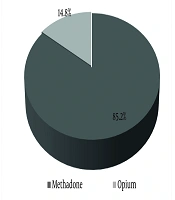
Mosavat A, Soleymani Nejad A, Vahdani N, Kazempour Keleshteri Z, Badsar A, et al. Patterns of Methadone and Opium Syrup Use in Drug Abuse Treatment in Rasht. Compr Health Biomed Stud. 2025;3(3):e158042. doi: https://doi.org/10.5812/chbs-158042
Last Update: 3 weeks ago
Last Update: 3 weeks ago
Last Update: 3 weeks ago
Last Update: 5 days ago
Last Update: 23 hours ago
Last Update: 3 days ago