Fulltext
The full text is available in PDF.
International Cardiovascular Research Journal
An annual journal in scientific affiliation with the Cardiovascular Research Center, Shiraz University of Medical Sciences
Image Credit:Int Cardiovasc Res J
Authors
Background: Transposition of Great Arteries (TGA) is a serious congenital heart disease which can be accompanied by good outcomes with anatomic correction within the first few weeks of life.
Objectives: The present study aimed to evaluate electrocardiographic changes in the children with uncomplicated Arterial Switch Operation (ASO).
Patients and Methods: Twelve lead electrocardiograms were obtained from thirty-three patients with TGA after ASO. Then, the patients’ QT-dispersion and P-wave dispersion were compared to those of 33 age- and gender-matched individuals as the normal control group. Both groups were also evaluated by M-mode echocardiography. Student’s t-test and Pearson correlation were used to analyze the data. Besides, P < 0.05 was considered as statistically significant.
Results: The mean age of the patients and the control group was 41 ± 3.7 and 40.12 ± 4.2 months, respectively. Comparison of P wave, T wave, QRS complex, PR interval, QT segment, and corrected QT segment showed significant differences in the frequency of inverted T wave in pericardial leads [V3, V4, V5, and V6] (P = 0.004; more in patients), P wave amplitude in lead II (P < 0.001; more in patients), R wave amplitude in V1 (P = 0.016; smaller in patients), R and S waves amplitude in V6 (P = 0.004 and P = 0.001; taller in patients), corrected QT segment (in lead V5; P < 0.0001: prolonger in patients), and PR interval (P = 0.001; prolonger in patients). However, no significant differences were found regarding the vector axis and heart rate. Right bundle branch block (18% vs. 0%), Bifascicular (3% vs. 0%), and first-degree blocks (15% vs. 0%) were significantly more in the patients. Besides, the PR interval was longer in the corrected complex TGA (146 ± 24.4 vs. 127.7 ± 23.1, P = 0.001). Moreover, R/S ratio in lead V1 was significantly prolonger, among the patients (2.86 ± 3.35 vs. 0.706 ± 0.53, P = 0.002). Nonetheless, no significant was observed between the patients and controls concerning the mean of QT dispersion. On the other hand, the two groups were significantly difference in terms of P wave dispersion (25.7 ± 13.8 vs. 33.74 ± 12.9, P = 0.024).
Conclusions: In this study, first-degree block and right bundle branch were detected in the operated patients with TGA. Increased P dispersion in these patients may increase the risk of atrial arrhythmia. Thus, long-term follow-up is necessary in these patients.
© 2014, Author(s). This open-access article is available under the Creative Commons Attribution 4.0 (CC BY 4.0) International License (https://creativecommons.org/licenses/by/4.0/), which allows for unrestricted use, distribution, and reproduction in any medium, provided that the original work is properly cited.
Mirzaaghayan MR, Ghamari A, Amini S, Rabbani A, Mohebbi A, et al. A 3-Year Single Surgeon Experience of the Arterial Switch Operation. Inn J Pediatr. 2020;30(5):e98540. doi: https://doi.org/10.5812/ijp.98540
Amoozgar H, Salaminia S, Amirghofran A, Cheriki S, Borzouee M, et al. Evaluation of Cardiac and Valvular Function after Arterial Switch Operation: A Midterm Follow-Up. Int Cardiovasc Res J. 2017;7(3):e12420. doi:
Muzaffar T, Ahmad Ganie F, Gpoal Swamy S, Wani N. The Surgical Outcome of Anomalous Origin of the Left Coronary Artery from the Pulmonary Artery. Int Cardiovasc Res J. 2017;8(2):e12030. doi:
Edraki M, Sadeghi M, Keshavarz K, Mehdizadegan N. Early Post-Operative Arrhythmias and Their Risk Factors after Total Repair of Tetralogy of Fallot in Pediatric Patients. Int Cardiovasc Res J. 2019;13(3):e84360. doi:
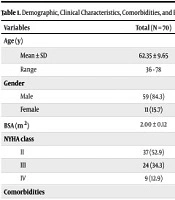
Saad AM, Messeha MM, Abdelmageed NA, Farid AM. The Value of Intraoperative Transesophageal Echocardiography in Predicting the Incidence of Atrial Fibrillation After Coronary Artery Bypass Grafting: A Prospective Cohort Study. J Cell Mol Anesth. 2025;10(4):e167020. doi: https://doi.org/10.5812/jcma-167020
Last Update: 1 week ago
Last Update: 1 week ago
Last Update: 1 week ago
Last Update: 8 hours ago
Last Update: 11 hours ago
Last Update: 5 days ago
