Fulltext
The full text is available in PDF.
International Cardiovascular Research Journal
An annual journal in scientific affiliation with the Cardiovascular Research Center, Shiraz University of Medical Sciences
Image Credit:Int Cardiovasc Res J
Authors
Background: Published studies have shown excellent success rates and also low rates of
life-threatening complications with trans-catheter closure of patent ductus arteriosus
(PDA). However, most studies to date have been conducted in developed nations and
reports from developing countries such as Iran are lacking.
Objectives: To report our experience with trans-catheter closure of patent ductus
arteriosus (PDA) and compare two devices and complications.
Patients and Methods: From 2007 to 2011, 72 consecutive PDA cases were prospectively
enrolled. For PDAs ≤ 2 mm, the coiling method was employed whereas patients with
PDA > 2 mm received Amplatzer duct occlusion (ADO). Success was defined as trivial
residual shunt (< 1 mm) in the echocardiography performed 30 minutes after the
procedure. After the procedure, the patients were admitted to the pediatric cardiology
ward and observed for 72 hours during which the occurrence of major and minor
complications was monitored. Major complications included cardiac arrest, displacement
and/or embolization of the device and patient needing blood transfusion due to severe
hemorrhage. Sampling was based on convenience method and the patients who had
significant pulmonary artery hypertension were excluded from our study. Statistical
analyses were done using SPSS software version 23 (IBM corp., New York, United States).
Continuous variables are presented as mean ± standard deviation. The Mann-Whitney
U test was used to compare the differences between two independent groups. Categorical
variables were depicted as proportions and compared across the intervention groups,
using Chi-square with Fisher’s exact text where appropriate. In all tests, a P value < 0.05
was deemed necessary to reject the null hypothesis.
Results: With the coiling (n = 39) and Amplatzer methods (n = 33), successful closure was
observed totally and recovered with no major complications. Frequent complications were
benign arrhythmia (44.4%), and hemorrhage in 1 (1.4%) of the patients. Complication
rate did not differ between the two techniques (P > 0.05).
Conclusions: Excellent and comparable success rates for both closure techniques were
observed and no major complications were observed.
© 2017, Author(s). This open-access article is available under the Creative Commons Attribution 4.0 (CC BY 4.0) International License (https://creativecommons.org/licenses/by/4.0/), which allows for unrestricted use, distribution, and reproduction in any medium, provided that the original work is properly cited.
Amoozgar H, Salehi S, Farhadi P, Edraki MR, Borzoee M, et al. Follow-Up Results of Device Occlusion of Patent Ductus Arteriosus. Inn J Pediatr. 2016;26(3):e3621. doi: https://doi.org/10.5812/ijp.3621
Edraki M, Jouhari L, Naghshzan A, Amoozgar H, Mohammadi H, et al. Ductus Arteriosus Stenting in Neonates with Pulmonary Valve Atresia: Outcomes and Considerations. Inn J Pediatr. 2022;32(5):e119742. doi: https://doi.org/10.5812/ijp-119742
Behjati-Ardakani M, Behjati-Ardakani M, Hosseini S, Noori N. Long-Term Results of Transcatheter Closure of Patent Ductus Arteriosus in Infants Using Amplatzer Duct Occluder. Inn J Pediatr. 2013;23(4):. doi:
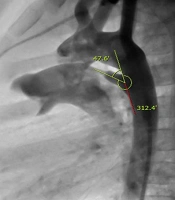
Ko H, Lee HD, Ban GH, Kim G, Byun J, et al. Angle Formed Between Patent Ductus Arteriosus and Descending Thoracic Aorta in a Beating Heart: A Helpful Study to Design a Better Device for Occluding Patent Ductus Arteriosus. Inn J Pediatr. 2021;31(5):e117162. doi: https://doi.org/10.5812/ijp.117162
Ghaderian M, Merajie M, Mortezaeian H, Aarabi M, Mohammad Y, et al. Efficacy and Safety of Using Amplatzer Ductal Occluder for Transcatheter Closure of Perimembranous Ventricular Septal Defect in Pediatrics. Inn J Pediatr. 2015;25(2):-. doi: https://doi.org/10.5812/ijp.386
Last Update: 1 day ago
Last Update: 1 day ago
Last Update: 1 day ago
Last Update: 4 hours ago
Last Update: 8 hours ago
Last Update: 4 days ago

