Fulltext
The full text is available in PDF.
International Cardiovascular Research Journal
An annual journal in scientific affiliation with the Cardiovascular Research Center, Shiraz University of Medical Sciences
Image Credit:Int Cardiovasc Res J
Authors
Background: The interest in beating heart surgery is growing since better results can be obtained with this procedure compared to conventional myocardial protection techniques using cardioplegic solutions. This led us to consider mitral valve replacement with beating heart.
Objectives: This study aimed to determine the safety and efficacy of beating heart mitral valve replacement without cross clamp.
Methods: This prospective study was conducted on the patients with isolated mitral valve disease requiring mitral valve replacement according to ACC / AHA guidelines. In this study, 15 patients underwent mitral valve replacement using beating heart technique (Group A) and 15 ones underwent mitral valve replacement using arrested heart technique (Group B). The patients were randomized using block randomization. The data were analyzed using the SPSS statistical software.
Results: Preoperative parameters were comparable in the two groups. Most of the patients in both study groups were in NYHA class III or IV. Postoperatively, however, most of the patients in the two groups were either in NYHA class I or II. No mortality occurred in the beating heart group, while one mortality occurred in the arrested heart group. The results showed a significant difference between the two groups regarding the mean bypass time, mean operating time, mean ICU stay, and mean length of hospital stay.
Conclusions: Beating heart mitral valve replacement is equally safe as the arrested heart technique. Thus, it is recommended as an appropriate alternative to the arrested heart technique for mitral valve replacement.
© 2017, Author(s). This open-access article is available under the Creative Commons Attribution 4.0 (CC BY 4.0) International License (https://creativecommons.org/licenses/by/4.0/), which allows for unrestricted use, distribution, and reproduction in any medium, provided that the original work is properly cited.
Khorsandi M, Dougherty S, Shaikhrezai K, Khorsandi D, Brackenbury ET. A Case of Beating Heart High Risk Aortic Valve Replacement in the Setting of Previous Bypass Graft Surgery. Multidiscip Cardio Annal. 2016;7(1):e8808. doi: https://doi.org/10.17795/mcardia.8808
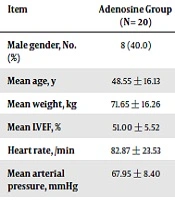
Ghasemi F, Azarfarin R, Salahi S, Baharestani B, Alizadeh Ghavidel A. The Effects of Cold Blood Cardioplegia with and without Adenosine on Hemodynamic Status of Patients Undergoing Mitral Valve Surgery. Multidiscip Cardio Annal. 2020;11(1):e96919. doi: https://doi.org/10.5812/mca.96919
Altaani HA, Jaber S. Tricuspid Valve Replacement, Mechnical vs. Biological Valve, Which Is Better?. Int Cardiovasc Res J. 2017;7(2):e12708. doi:
Ghaffari S, Salehi R, Goldost Juibary M, Abbasnejad M. The Outcome of Tricuspid Regurgitation after Mitral Balloon Valvutomy for Severe Mitral Stenosis. Int Cardiovasc Res J. 2009;3(4):e67878. doi:
Roshanali F, Vedadian A, Shoar S, Sandoughdaran S, Naderan M, et al. The Viable Mitral Annular Dynamics and Left Ventricular Function after Mitral Valve Repair by Biological Rings. Int Cardiovasc Res J. 2017;6(4):e12787. doi:
More by these authors
Last Update: 1 week ago
Last Update: 1 week ago
Last Update: 1 week ago
Last Update: 3 hours ago
Last Update: 6 hours ago
Last Update: 5 days ago
