Fulltext
The full text is available in PDF.
International Cardiovascular Research Journal
An annual journal in scientific affiliation with the Cardiovascular Research Center, Shiraz University of Medical Sciences
Image Credit:Int Cardiovasc Res J
Authors
Background:: Increase in the number of patients treated with Implantable Cardioverter Defibrillator (ICD) requests more attention regarding its complications.
Objectives:: This study aimed to assess the generator- and lead-related complications at implantation and during follow-up in the patients who were treated with ICD for primary and secondary prevention reasons.
Methods:: We retrospectively reviewed 255 consecutive patients who underwent transvenous ICD implantation for the first time in a 7-year period and were followed-up for 3 years at Tehran Heart Center. The personal and clinical data of the patients as well as specific data on the ICD implantation were retrieved. The frequency of each of the complications was reported and the study variables were compared between the patients with and without complications using Student’s t-test and chi-square test where appropriate. P values less than 0.05 were considered as statistically significant.
Results:: Out of a total of 525 implanted leads and 255 implanted devices in 255 patients (mean age = 62.57 ± 13.50 years; male = 196 [76.9%]), complications leading to generator or lead replacement occurred in 32 patients (12.5%). The results revealed no significant difference between the patients with and without complications regarding gender and age (P = 0.206 and P = 0.824, respectively). Also, no significant difference was found between the two groups concerning the ejection fraction (P = 0.271). Lead fracture was the most frequent lead-related complication and was observed in 17 patients (6.6%). Besides, it was mainly observed in the RV leads. Generator-related complications leading to generator replacement were observed in 2 patients (0.7%).
Conclusions:: Despite considerable improvements in the ICD technology, the rate of the ICD complications leading to device replacement and surgical revision, especially those related to the leads, is still clinically important.
© 2017, Author(s). This open-access article is available under the Creative Commons Attribution 4.0 (CC BY 4.0) International License (https://creativecommons.org/licenses/by/4.0/), which allows for unrestricted use, distribution, and reproduction in any medium, provided that the original work is properly cited.
Pasyar N, Sharif F, Rakhshan M, Nikoo MH, Navab E. Patients’ experiences of living with implantable cardioverter defibrillators. Int Cardiovasc Res J. 2017;11(3):e10960. doi:
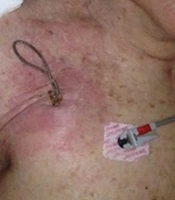
Barmpas A, Stakos D, Pfeiffer S, Heimeshoff M, MaaBen C, et al. Clinically Focused Review of Diagnosis and Treatment of Cardiovascular Implantable Electronic Device Infections. Int J Infect. 2019;6(3):e11992. doi: https://doi.org/10.5812/iji.11992
Bonanno C, Rossillo A, Paccanaro M, Ramondo AB, Raviele A. Updated Meta-Analysis of Randomized Trials Comparing Safety and Efficacy of Intraoperative Defibrillation Testing with No Defibrillation Testing On Implantable Cardioverter-Defibrillator Implantation. Int J Cardiovasc Pract. 2017;2(4):e130074. doi: https://doi.org/10.21859/ijcp-030105
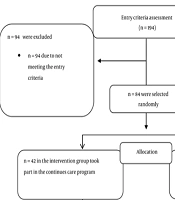
Afshar S, Haghjoo M, Matourypour P, Zakerimoghadam M. The Effect of Continuous Care Program on Short-Term Outcomes of Patients with Implantable Cardioverter-Defibrillator (ICD). Int Cardiovasc Res J. 2024;18(1):e139921. doi: https://doi.org/10.5812/icrj-139921
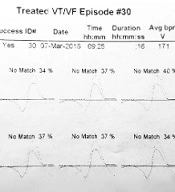
Tabaghi S, Mahmoudi E, Namazi MH, Khaheshi I, Akbarzadeh MA. Clinical Predictors of Successful Anti-tachycardia Pacing for Ventricular Arrhythmia Termination. Int J Cardiovasc Pract. 2021;6(2):e131817. doi: https://doi.org/10.5812/intjcardiovascpract-131817
Last Update: 1 week ago
Last Update: 1 week ago
Last Update: 1 week ago
Last Update: 10 hours ago
Last Update: 13 hours ago
Last Update: 5 days ago
