Fulltext
The full text is available in PDF.
International Cardiovascular Research Journal
An annual journal in scientific affiliation with the Cardiovascular Research Center, Shiraz University of Medical Sciences
Image Credit:Int Cardiovasc Res J
Authors
Background:: The present study aimed to investigate the relationship between Left Atrial Volume (LAV), a marker of diastolic dysfunction, and the frequency of malignant ventricular arrhythmia in the patients with left ventricular dysfunction and a previously implanted Implantable Cardioverter Defibrillator (ICD) device.
Methods:: This cross-sectional study was conducted on 32 patients with ischemic or idiopathic dilated cardiomyopathy, each having had an ICD device implanted at least 1 year beforehand. The ventricular arrhythmia episodes which were detected and stored by the device were retrieved and evaluated. In addition to routine echocardiographic measurements, all the patients had their LAV and LAV indexes calculated.
After all, student’s t-test, Mann-Whitney U test, and Pearson correlation were used to analyze the data. Besides, P value < 0.05 was considered as statistically significant.
Results:: This study was conducted on 4 female and 28 male patients with the mean age of 58.41 ± 9.97 years. Among the study patients, 21 had at least one previous myocardial infarction. In addition, 17 patients had experienced sustained VT or VF within the last year. No significant difference was found between the patients with and without malignant ventricular arrhythmias (sustained VT or VF) regarding LAV (17 patients with arrhythmia (68 + 23.39 mL) vs. 15 patients without arrhythmia (55.13 ± 20.41 mL); P = 0.100). However, the LAV index was significantly higher in the patients with arrhythmia compared to those without arrhythmia (39.27 ± 12.19 mL / m2 vs. 25.18 ± 7.45 mL / m2; P = 0.004).
Both LAV (73.33 ± 17.64 mL and 57.52 ± 23.15 mL, respectively; P = 0.040) and LAV index (40.86 ± 8.47 mL / m2 and 28.20 ± 11.77 mL / m2, respectively; P = 0.010) were significantly greater in the patients with ICD shock therapy within the last year compared to the others. However, both groups were similar regarding Left Ventricular Volume (LVV), LVV index, and ejection fraction.
Conclusions:: The study findings demonstrated that LAV and LAV index could be used in detecting the patients who are at high risk of malignant ventricular arrhythmias.
© 2017, Author(s). This open-access article is available under the Creative Commons Attribution 4.0 (CC BY 4.0) International License (https://creativecommons.org/licenses/by/4.0/), which allows for unrestricted use, distribution, and reproduction in any medium, provided that the original work is properly cited.
Razeghian-Jahromi I, Sayadi M, Naeemi R, Moaref A, Nikoo MH, et al. Identification of Candidates For Implantable Cardioverter Defibrillator Insertion As Primary Prevention: Global Longitudinal Strain Helps. Int Cardiovasc Res J. 2019;13(1):e77073. doi:
Nabati M, Bakhshinasab S, Farsavian AA, Rasolpor F, Yazdani- Charati J. Atrial Fibrillation as a Risk Marker in Patients with Decompensated Heart Failure. Int Cardiovasc Res J. 2020;14(2):e103597. doi:
Sadeghpour A, Kyavar M, Behzadnia N, Maddadi S, Parsaei M, et al. Left Ventricular Systolic Dyssynchrony in Patients with Hypertrophic Cardiomyopathy: The prevalence and its Relation to Syncope. Int Cardiovasc Res J. 2017;4(4):e58475. doi:
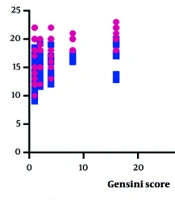
Safi M, Bayat F, Gachkar L, Shahri MR. Correlation of LVEDP with Severity of Coronary Artery Involvement in Patients Referred to Modarres Hospital with Coronary Artery Disease. Int J Cardiovasc Pract. 2025;10(1):e159763. doi: https://doi.org/10.5812/intjcardiovascpract-159763
Esmaeilzadeh M, Saadatifar H, Mohebbi A, Noohi F, Samiei N, et al. Prevalence of Left Ventricular Diastolic Asynchrony in Patient with Systolic Heart Failure. Int Cardiovasc Res J. 2019;13(1):e175353. doi:
Last Update: 1 week ago
Last Update: 1 week ago
Last Update: 1 week ago
Last Update: 9 hours ago
Last Update: 12 hours ago
Last Update: 5 days ago
