Fulltext
The full text is available in PDF.
International Cardiovascular Research Journal
An annual journal in scientific affiliation with the Cardiovascular Research Center, Shiraz University of Medical Sciences
Image Credit:Int Cardiovasc Res J
Authors
Appropriate sensing is indispensable for appropriate functioning of implantable cardioverter-defibrillator (ICD). Oversensing is a major clinical dilemma in patients with ICD leading to inappropriate ventricular arrhythmia detection and therapy. T-wave oversensing is an important clinical problem leading to QRS double counting with inappropriate therapy, in particular. We present a patient with dilated cardiomyopathy and intermittent T wave oversensing by an ICD which could be resolved by device reprogramming.
© 2010, Author(s). This open-access article is available under the Creative Commons Attribution 4.0 (CC BY 4.0) International License (https://creativecommons.org/licenses/by/4.0/), which allows for unrestricted use, distribution, and reproduction in any medium, provided that the original work is properly cited.
Akbarzadeh MA, Namazi MH, Safi M, Sheibani M. Strategy to manage T-Wave Oversensing in a Biventricular ICD. Int J Cardiovasc Pract. 2017;2(2):e130065. doi: https://doi.org/10.21859/ijcp-020205
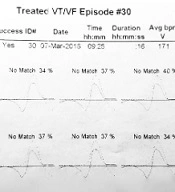
Tabaghi S, Mahmoudi E, Namazi MH, Khaheshi I, Akbarzadeh MA. Clinical Predictors of Successful Anti-tachycardia Pacing for Ventricular Arrhythmia Termination. Int J Cardiovasc Pract. 2021;6(2):e131817. doi: https://doi.org/10.5812/intjcardiovascpract-131817
Akbarzadeh MA. His Bundle Extrasystole or A Dual Atrioventricular Nodal Response. Int J Cardiovasc Pract. 2018;3(1):e130260. doi: https://doi.org/10.21859/ijcp-03104
Yamini Sharif A, Soofizadeh N, Shafiee A, Kazemisaeid A, Jalali A, et al. Generator and Lead-Related Complications of Implantable Cardioverter Defibrillators. Int Cardiovasc Res J. 2017;8(2):e12035. doi:
Senja Agusta L, P. Riswati H, R. Akbar R, Rizal A. Bradycardia-Induced Recurrent Torsade de Pointes: When Serenity Turns into Chaosity. Int J Cardiovasc Pract. 2018;3(4):e130274. doi: https://doi.org/10.21859/ijcp-03045
Last Update: 3 weeks ago
Last Update: 3 weeks ago
Last Update: 3 weeks ago
Last Update: 5 hours ago
Last Update: 1 day ago
Last Update: 4 days ago