Fulltext
The full text is available in PDF.
International Cardiovascular Research Journal
An annual journal in scientific affiliation with the Cardiovascular Research Center, Shiraz University of Medical Sciences
Image Credit:Int Cardiovasc Res J
Authors
Background: Statin treatment can cause elevation of the liver aminotransferase levels in
1-3% of the patients with hypercholesterolemia. Previous studies indicate that vitamin E
plays a role in declining the increased levels of liver enzymes caused by fatty liver disease.
Objectives: We conducted this study to determine the effect of vitamin E on liver
aminotransferase levels in patients with elevated aminotransferase levels due to statin
consumption.
Materials and Methods: This study was a randomized, double-blind, placebo-controlled
trials. Eligible patients were those who developed elevated aminotransferase levels
after initiation of statin. They were randomized into the intervention group (vitamin
E capsules, 400 units/day for one month) and placebo group. Randomization was done
with permuted block sampling method with a 2:1 enrolment ratio. Study capsules
were allocated in separate packs blinded and labeled using a four-digit code. Alanine
aminotransferase (ALT) and asparate aminotransferase (AST) levels were checked in
the beginning and one month after the intervention. Comparison of the levels before and
after the intervention was done by paired sample T-test, and between group difference
was checked by independent sample T-test.
Results: A final number of 23 patients enrolled in this study (15 in the intervention and
8 in the control parallel groups). Baseline ALT and AST levels in both groups showed
no difference (74.3 ± 9.1 vs. 77.6 ± 17.5, P = 0.9; and 50 ± 8.2 vs. 43.3 ± 9.3, P = 0.34,
respectively). With consumption of vitamin E, ALT level was decreased from 77.6 ± 17.5
to 40.9 ± 13.4, showing a significant difference with placebo (treatment difference = -25.7,
P = 0.04). However, the reduction of asparate aminotransferase level from 43.3 ± 9.3 to
29.8 ± 5.9 was not significant compared to placebo (treatment difference = -1.5, P = 0.12).
Conclusions: Vitamin E therapy in patients with moderately elevated aminotransferase
levels (1.5-3 times than basal levels) due to statin consumption may be beneficial and can
reduce the asymptomatic hepatocellular damages.
© 2018, Author(s). This open-access article is available under the Creative Commons Attribution 4.0 (CC BY 4.0) International License (https://creativecommons.org/licenses/by/4.0/), which allows for unrestricted use, distribution, and reproduction in any medium, provided that the original work is properly cited.
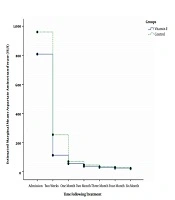
Shahramian I, Tabrizian K, Afshari M, Bazi A, Bahmadisani E. Accelerating Effects of Vitamin E Supplementation on Liver Enzyme Normalization in Children with Acute Hepatitis A Infection; a Single-Blinded Clinical Trial. Arch Clin Infect Dis. 2020;15(6):e100591. doi: https://doi.org/10.5812/archcid.100591
Sadeghi R, Eidi MR, Zamani N. Association of Serum Vitamin D Level and Serum Lipids Profile. Int J Cardiovasc Pract. 2018;3(2):e130282. doi: https://doi.org/10.21859/ijcp-03203
Shidfar F, Mousavi SN, lorvand Amiri H, Agah S, Hoseini S, et al. Reduction of Some Atherogenic Indices in Patients with Non-Alcoholic Fatty Liver by Vitamin D and Calcium Co-Supplementation: A Double Blind Randomized Controlled Clinical Trial. Iran J Pharm Res. 2019;18(1):e127857. doi: https://doi.org/10.22037/ijpr.2019.2357
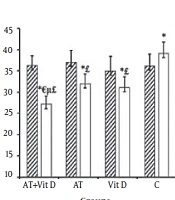
Hoseini Z, Behpour N, Hoseini R. Co-treatment with Vitamin D Supplementation and Aerobic Training in Elderly Women with Vit D Deficiency and NAFLD: A Single-blind Controlled Trial. Hepat Mon. 2020;20(2):e96437. doi: https://doi.org/10.5812/hepatmon.96437
Uzum A, Toprak O, Gumustas M, Ciftci S, Sen S. Effect of Vitamin E Supplementation on Plasma Lipid, Apolipoprotein and Lipoprotein Profiles in Patients on Peritoneal Dialysis and Hemodialysis. Nephro-Urol Mon. 2010;2(2):. doi:
Last Update: 1 day ago
Last Update: 1 day ago
Last Update: 1 day ago
Last Update: 7 hours ago
Last Update: 11 hours ago
Last Update: 4 days ago
