Fulltext
The full text is available in PDF.
International Cardiovascular Research Journal
An annual journal in scientific affiliation with the Cardiovascular Research Center, Shiraz University of Medical Sciences

Image Credit:Int Cardiovasc Res J
Authors
Background: We sought to evaluate the impact of different therapeutic strategies on longitudinal regional myocardial
systolic function in the early phase of acute myocardial infarction using strain rate imaging.
Methods: A total of 38 patients (34 males), with first acute myocardial infarction (AMI) were evaluated. Our
patients were divided into 3 groups according to the kind of therapy. The mean age of the patients was 55 ± 9.4
years (range: 39- 75 years). Mean left ventricular ejection fraction (LVEF) in the patients was 41 ± 10.7%. Primary
percutaneous coronary intervention (PCI) was performed in 10 patients. Sixteen patients were treated by
thrombolytic therapy using streptokinase (SK) and 12 were followed-up conservatively. All patients underwent
a comprehensive echocardiography study including SR imaging within 3- 5 days after AMI. The parameters
measured included peak systolic strain (peakε) and strain rate (SRs), end-systolic strain (εes), post systolic shortening
(PSS), time to peak systolic strain rate (tSRs), time to end of shortening (teSRs), post systolic strain (PSε),
post-systolic strain index (PSI), PSS ratio (PSS/ εMax ) and peak postsystolic strain rate (SRPSS).
Results: There was not any association either between WMSI and tå (P=0.4), or MI location and PSS ratio
(P=0.13). But there was an inverse relationship between WMSI and mean SRS, especially when WMSI was
more pronounced. A significant relationship was found between tε and teSRs with the kind of therapy (shorter in
PCI group (P= 0.04). Using a simple linear regression model, no association was found between PSS ratio and
SRs (â=0.056, P =0.70), PSI and teSRs (β= -0.772, P =0.12). Simple linear regression model showed a weak but
significant relationship between PSI and Median tε (β = -0.851, P = 0.04; r =0.33).
Conclusion: Our study showed that PCI resulted in early recovery of regional systolic function of infarcted
myocardium during the early stage of acute myocardial infarction.
© 2009, Author(s). This open-access article is available under the Creative Commons Attribution 4.0 (CC BY 4.0) International License (https://creativecommons.org/licenses/by/4.0/), which allows for unrestricted use, distribution, and reproduction in any medium, provided that the original work is properly cited.

Attar A, Zahed M, Hosseinpour A, Azami P, Kamalpour J, et al. Predictive Value of Global Longitudinal Strain on the Recovery of Left Ventricular Function Following ST-Segment Elevation Myocardial Infarction. Shiraz E-Med J. 2024;25(4):e142307. doi: https://doi.org/10.5812/semj-142307
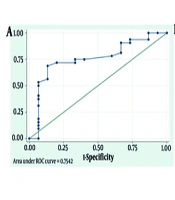
Jalalian R, Bagheri B, Alipour A, Sinaeii M, Mohammadi M, et al. The Rule of Speckle Tracking Echocardiography Indicators, Including Post Systolic Shortening Index, in Predicting Left Ventricular Ejection Fraction Improvement and Detection of Viable Myocardium in Patients With ST-segment Elevation Myocardial Infarction who Undergo Late Percutaneous Coronary Intervention. Int J Cardiovasc Pract. 2025;10(1):e160173. doi: https://doi.org/10.5812/intjcardiovascpract-160173

Heidari Sarvestani A, Separham A, Khezerloo N. Assessment of Strain and Strain Rate in Patients with Coronary Artery Disease Before and After Percutaneous Intervention on Left Anterior Descending Coronary Artery. Int J Cardiovasc Pract. 2019;4(2):e130548. doi: https://doi.org/10.29252/ijcp-24016
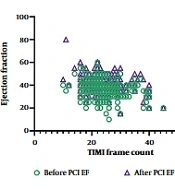
Safi M, Heidarpour Kiaee F, Khani M, Deravi N, Banihashemian SZ, et al. Association of Ejection Fraction with Reperfusion Parameters Before and After Primary Percutaneous Coronary Intervention. Int J Cardiovasc Pract. 2023;8(2):e142571. doi: https://doi.org/10.5812/intjcardiovascpract-142571

Mahfood H, Balleh H. Diagnostic Value of Strain Rate Imaging by Tissue Doppler in Patients with Suspected Coronary Artery Disease. Int Cardiovasc Res J. 2016;10(4):e9808. doi:
Last Update: 3 weeks ago
Last Update: 3 weeks ago
Last Update: 3 weeks ago
Last Update: 7 hours ago
Last Update: 1 day ago
Last Update: 4 days ago
