Fulltext
The full text is available in PDF.
International Cardiovascular Research Journal
An annual journal in scientific affiliation with the Cardiovascular Research Center, Shiraz University of Medical Sciences
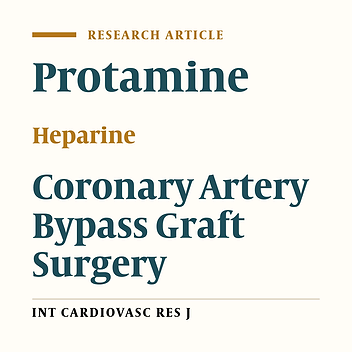
Image Credit:Int Cardiovasc Res J
Authors
Background: Administration of Protamine sulfate for heparin neutralization after cardiopulmonary bypass may
be associated with adverse reactions such as transient hypotension to cardiovascular collapse. Although catastrophic
events are rare and occur only in 2.6% of cardiac surgeries, it is associated with adverse postoperative
outcome. The aim of this study is to investigate whether bolus administration of calcium gluconate can minimize
the adverse hemodynamic effects of protamine.
Patients and Methods: This randomized clinical trial (RCT) prospective study was conducted between Feb.
2006 to Dec. 2008. The patients were randomly allocated into three groups including group A (42 patients) who
received only protamine after weaning from cardiopulmonary, group B (44 patients) concomitantly treated with
protamine sulfate and calcium gluconate, and group C (40 patients) receiving calcium gluconate 5 minutes before
administration of protamine. Hemodynamic variables such as systolic and diastolic blood pressures, mean
of arterial pressure, central venous pressure and heart rate were obtained 0, 2, 4, 6, 8 and 10 minutes after
protamine administration from each group.
Results: Systolic blood pressure in groups A (control) and C (calcium administration before protamine) 0,2,4,6,8
and 10 minutes after protamine administration initially decreased and increased subsequently (P=0.228). Also no
statistically significant difference was found in diastolic blood pressure (DBP), mean arterial pressure (MAP),
central venous pressure (CVP), and heart rate (HR) in 0,2,4,6,8, and 10 minutes in any of the three groups.
Conclusion: In our study, hemodynamic changes in 10 minutes after protamine administration for heparin neutralization
in patients with good left ventricular systolic function after coronary artery bypass grafting surgery
were mild, and prophylactic calcium gluconate administration concurrent with or before protamine injection
was not recommended.
© 2009, Author(s). This open-access article is available under the Creative Commons Attribution 4.0 (CC BY 4.0) International License (https://creativecommons.org/licenses/by/4.0/), which allows for unrestricted use, distribution, and reproduction in any medium, provided that the original work is properly cited.
Sadeghi S, Austin N, Totonchi Z, Bakhshandeh H, Hadavand N, et al. Impact of Procaine Hydrochloride Versus Lidocaine in Cardioplegic Solution, on Reperfusion Arrhythmia During Coronary Artery Bypass Graft Surgery. Multidiscip Cardio Annal. 2018;9(2):e67749. doi: https://doi.org/10.5812/mcardia.67749
Rezaei M. Does Clopidogrel Increase Blood Loss Following Coronary Artery Bypass Surgery?. Multidiscip Cardio Annal. 2011;3(2):e8744. doi:
Boettcher BT, Olund TJ, Pagel PS. Acute Severe Thrombocytopenia Occurring After Administration of Eptifibatide Postpones Emergent Coronary Artery Surgery. Anesth Pain Med. 2016;6(4):e37575. doi: https://doi.org/10.5812/aapm.37575
Mesbah Kiaee M, Safari S, Movaseghi GR, Mohaghegh Dolatabadi MR, Ghorbanlo M, et al. The Effect of Intravenous Magnesium Sulfate and Lidocaine in Hemodynamic Responses to Endotracheal Intubation in Elective Coronary Artery Bypass Grafting: A Randomized Controlled Clinical Trial. Anesth Pain Med. 2014;4(3):e15905. doi: https://doi.org/10.5812/aapm.15905
Ziyaeifard M, Ferasat-Kish R, Azarfarin R, Aghdaii N, Nejatisini H, et al. Comparison of the Effect of Heparinized Normal Saline Solution Versus Saline Solutions in Arterial and Central Venous Catheters on Complete Blood Count After Cardiac Surgery. Anesth Pain Med. 2022;12(4):e113345. doi: https://doi.org/10.5812/aapm-113345
Last Update: 3 weeks ago
Last Update: 3 weeks ago
Last Update: 3 weeks ago
Last Update: 5 hours ago
Last Update: 1 day ago
Last Update: 4 days ago
