


1. Context
2. A Short Review on Biofilm History
3. Bacterial Attachments: Biofilm Architecture
4. Gene Transformation in Bacterial Communities
5. Quorum Sensing in Bacteria as a Noticeable Target
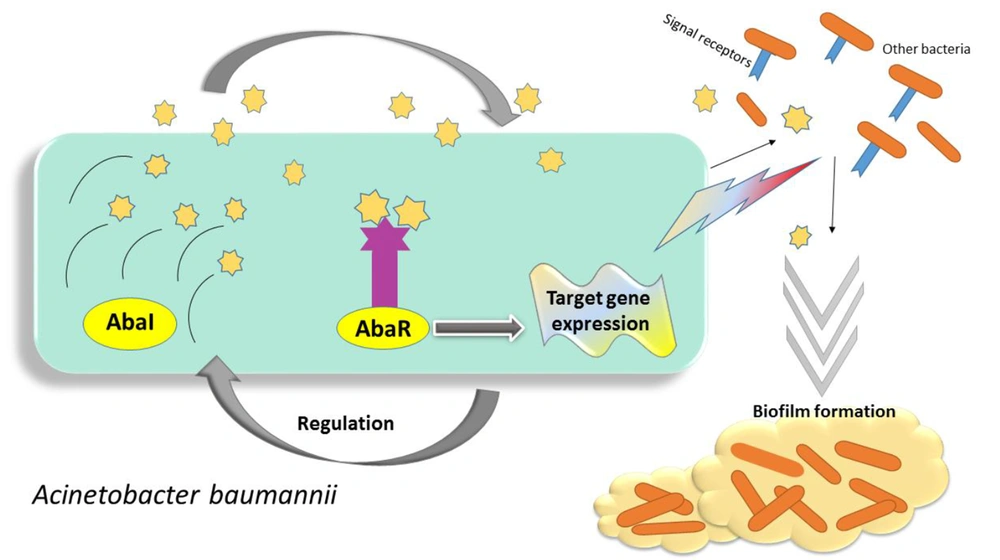
The Quorums Sensing network in Acinetobacter baumannii is known as the LuxIR-system, consisting of AbaI and AbaR components, as described previously. This figure demonstrates the several steps of signal production of A. baumannii as follows: First, under a desirable condition, bacteria produce signaling molecules, then the surrounding bacteria begin to sense these signals and activate their specific receptors to receive the signals. Finally, the reception of signals leads to the expression of relevant virulence genes.
6. Relevance of Quorum Sensing and Quorum Quenching
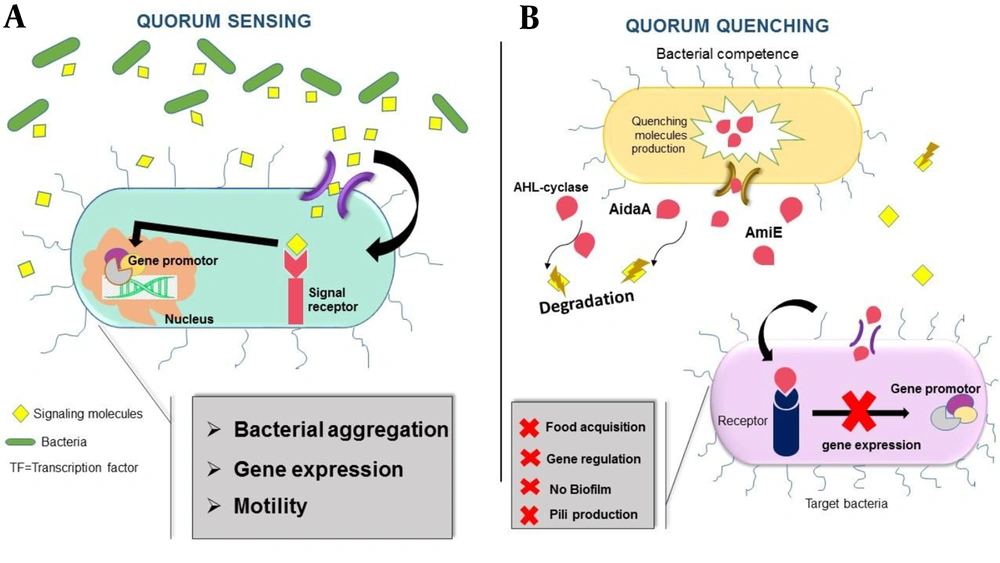
A: Bacteria usually activate Quorum sensing systems to generate signaling molecules to link to other surrounding bacteria. These bacteria receive the signaling molecules by specific receptors and then activate nucleus transcriptional factors to express relevant genes. B: While bacteria under a multi-species condition include strategies to obtain some advantages for the acquisition of food and ecological niches, Quorum quenching mechanisms interfere with critical factors of quorum sensing networks and quench the activation of quorum network communication. AHL-cyclase, AmiE, and AidA enzymes as a Quorum Quenching mechanism affect inter-species relationships by hydrolyzing and degrading signaling molecules. Accordingly, the surrounding bacteria will not receive signals and express beneficial genes (pili production, biofilm formation).


