
1. Background
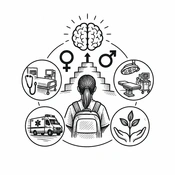
Psychological distress is highly prevalent among healthcare students, with recent evidence indicating that approximately 65% experience significant stress and nearly 60% report burnout symptoms during training (1). Students enrolled in technically demanding, high-risk clinical disciplines, including anesthesia nursing, operating room technology, and prehospital emergency medical services, often report moderate to high levels of stress and anxiety related to complex clinical decision-making, exposure to life-threatening situations, and high performance expectations (2-4). Prolonged exposure to these stressors has been associated with impaired academic performance, reduced professional competence, and increased attrition in health professions education (1).
Recent developments in educational psychology highlight the importance of psychological resources that help students maintain their well-being and academic performance under challenging circumstances (5). Emotional intelligence (EI), self-compassion (SC), and academic resilience (AR) have received considerable attention in health professions education. These closely related constructs support adaptation, academic success, and protection against burnout (5-7). Based on the ability framework described by Mayer et al. (8), EI refers to an individual's ability to identify, interpret, and regulate emotions in oneself and others. These abilities are essential for effective interpersonal interactions, sound clinical judgment, and coping with stressful healthcare environments (7, 9-11). Self-compassion, described by Neff as comprising self-kindness, recognition of common humanity, and mindful awareness of personal suffering (12), enables students to approach academic difficulties with understanding and acceptance rather than excessive self-criticism, thereby reducing psychological strain (13, 14). Academic resilience, rooted in resilience theory (12), reflects an individual's capacity to maintain motivation, engagement, and achievement despite educational challenges and setbacks. It facilitates adaptation to demanding academic and clinical requirements among healthcare students (8, 15).
Although EI, SC, and AR are positively associated and predict academic success and mental health outcomes among healthcare students (15, 16), their distribution across demographic and educational characteristics remains unclear. Gender differences in EI have been widely investigated among health science students, but findings are inconsistent. Several studies, particularly in nursing education, report higher EI scores among female students (17, 18), whereas others report no significant differences or higher scores among male students (19, 20). These discrepancies have been attributed to contextual factors such as gender norms within healthcare professions, cultural expectations, and differences in training environments (19, 20). Gender-related variation in EI may therefore depend on discipline and context rather than being universal.
Evidence regarding gender differences in SC is similarly inconclusive. Some studies suggest slightly higher SC levels among male students, potentially reflecting greater self-criticism among female students (21), whereas others report no significant gender differences in healthcare education settings (6, 22). These inconsistencies highlight the need to examine gender patterns in EI and SC in demanding allied health disciplines, including anesthesia, operating room technology, and emergency medical services. These disciplines have received comparatively little attention, particularly in Middle Eastern contexts, where gender roles and educational experiences may differ from those in Western settings.
The influence of academic progression on psychological resources also remains insufficiently understood. Several studies suggest that EI increases during health professions training as students gain clinical experience and professional maturity (20, 23, 24). Other studies, however, report minimal change, suggesting that personality traits or the educational environment may be stronger determinants than academic stage (25, 26). Studies of AR likewise show heterogeneous trends. Pharmacy students may report declining resilience over time as they encounter more academic setbacks (27), whereas nursing students often show increasing resilience as clinical experience builds confidence and coping capacity (28). These mixed findings suggest that trajectories of EI and AR are shaped by the clinical demands, curricula, and stress profiles of each healthcare discipline.
Despite the recognized importance of psychological resources in healthcare education, technically intensive allied health disciplines, including anesthesia, operating room technology, and emergency medical services, remain underexplored compared with medicine and general nursing. Concurrent variation in EI, SC, and AR across demographic characteristics and educational stages in demanding training environments is also not fully understood.
2. Objectives
Based on the existing literature, this study aimed to examine differences in these constructs among undergraduate students across these fields. The following hypotheses were tested:
Hypothesis 1: There are significant gender differences in EI and SC, with female students expected to report higher EI and male students higher SC.
Hypothesis 2: Academic progression significantly influences psychological resources, with senior students reporting lower SC and AR due to increased clinical exposure and academic workload.
Hypothesis 3: Marital status and academic discipline significantly differentiate students' AR levels.
3. Methods
3.1. Research Design and Participants
This multicenter cross-sectional study compared psychological profiles among allied health students. Data were derived from a larger research project conducted between January and September 2025 at four medical universities in Tehran. The primary project used structural equation modeling (SEM) to test a theoretical framework of predictive relationships. The present study addressed a distinct and independent set of research questions regarding demographic and academic-stage differences in EI, SC, and AR. This focused analysis aimed to identify potentially vulnerable subgroups, such as those defined by gender or semester, that the aggregate SEM approach might overlook, thereby informing targeted educational interventions.
3.2. Measures
Data were collected using four instruments: a demographic questionnaire and three standardized questionnaires corresponding to the primary study variables. All tools had previously been adapted for the Iranian context, and their psychometric properties were evaluated in the present study.
Demographic information was collected using a researcher-designed questionnaire covering participants' personal and educational characteristics, including age, gender, and current academic semester.
Participants' SC was measured using the 12-item Short Form of the Self-Compassion Scale (SCS-SF), developed by Raes et al. (29). Items are rated on a five-point Likert scale from 1 ("almost never") to 5 ("almost always"). Total scores range from 12 to 60, with higher scores indicating greater SC. The Persian version has demonstrated satisfactory validity and reliability, with Khanjani et al. reporting a Cronbach α coefficient of 0.86. Internal consistency was acceptable in the current sample (Cronbach α = 0.82).
Emotional intelligence was assessed using the Brief Emotional Intelligence Scale (BEIS-10), a 10-item abbreviated measure developed by Davies et al. (30) from the original emotional intelligence scale developed by Schutte and colleagues. Responses are scored on a five-point Likert scale from 1 ("strongly disagree") to 5 ("strongly agree"), yielding total scores from 10 to 50. Higher scores indicate greater EI. The Persian adaptation was validated by Hadadian-Chaghaei et al. (31), who reported a Cronbach α coefficient of 0.748. In the present study, the Cronbach α coefficient was 0.71.
Academic resilience was assessed using the 40-item Academic Resilience Scale (ARS). Items are scored on a five-point Likert scale, with higher overall scores indicating greater resilience in coping with academic difficulties and educational challenges. The Persian version has been psychometrically evaluated by Soltaninejad et al. and has demonstrated satisfactory validity and reliability. In the present study, the instrument showed good internal consistency (Cronbach α = 0.87).
3.3. Ethical Compliance and Procedure
Ethical approval for the study was obtained from the Research Ethics Committee of Tehran University of Medical Sciences (IR.TUMS.SPH.REC.1404.004). Data were collected through an online survey administered via the Porsline platform. Before completing the questionnaires, students received information about the purpose of the study, confidentiality safeguards, and the voluntary nature of participation. Electronic informed consent was obtained from all participants. Recruitment was conducted through official student communication channels across participating universities. The study adhered to the ethical principles outlined in the Declaration of Helsinki.
3.4. Data Analysis
Data were analyzed using IBM SPSS Statistics, version 25.0. Preliminary analyses included descriptive statistics (means, standard deviations, and frequencies) and assessment of internal consistency using Cronbach α for all scales. Normality was assessed using skewness and kurtosis, with values within ± 1 considered acceptable for parametric testing. Assumptions for univariate analyses, including homogeneity of variance (Levene test) and absence of multicollinearity (variance inflation factor [VIF] < 10), were also evaluated.
Unlike the primary study, which focused on latent structural pathways and predictive modeling, the current analysis used observed mean scores to identify group differences. Independent-samples t-tests were used for gender comparisons, and one-way analysis of variance (ANOVA) with Tukey post hoc tests was used to examine differences across academic semesters. Exploratory analyses were also conducted for marital status, grade point average (GPA), and academic discipline. Statistical significance was set at P < 0.05. In addition to P values, Cohen d (for t-tests) and eta-squared (η2, for ANOVA) were calculated to indicate the practical significance of the findings.
4. Results
A total of 452 undergraduate students participated in the study. Most participants were female (59.7%) and single (97.3%). Participants were recruited from four medical universities in Tehran: Tehran University of Medical Sciences (40.5%), Iran University of Medical Sciences (26.5%), Islamic Azad University–Tehran Medical Sciences Branch (21.0%), and Shahid Beheshti University of Medical Sciences (11.3%). Regarding academic discipline, 46.0% studied anesthesia, 27.9% operating room technology, and 26.1% prehospital emergency medicine. Most participants had a GPA above 17 on the Iranian 20-point grading scale (61.9%); 34.7% had a GPA between 15 and 17, and 3.3% had a GPA below 15. Participants were enrolled in different academic semesters, with the largest proportions in the second (27.4%) and sixth (24.8%) semesters.
Participants reported moderate to high levels of psychological resources (Table 1), with mean scores of 38.53 ± 6.45 for SC, 30.80 ± 3.79 for EI, and 105.94 ± 13.79 for AR. Preliminary diagnostics supported the use of parametric analyses: skewness and kurtosis were within ± 1, and no extreme outliers were identified. Levene’s test results and a VIF value of 1.39 supported homogeneity of variance and the absence of multicollinearity, respectively.
Table 1.
Descriptive Statistics of the Main Study Variables (N = 452)
| Variables | Mean ± Standard Deviation | Range (Minimum to Maximum) |
|---|---|---|
| Self-Compassion | 38.53 ± 6.45 | 21 - 56 |
| Emotional Intelligence | 30.80 ± 3.79 | 17 - 40 |
| Academic Resilience | 105.94 ± 13.79 | 49 - 138 |
Pearson correlation analyses showed significant positive associations among SC, EI, and AR. Self-compassion was strongly correlated with AR (r = 0.668, P < 0.001) and EI (r = 0.617, P < 0.001). Independent-samples t-tests indicated a significant gender difference in EI (P = 0.003), with male students reporting higher mean scores than female students. One-way ANOVA also showed significant differences in EI across academic semesters (P < 0.001). Tukey post hoc comparisons indicated that students in earlier semesters, particularly the third semester, reported higher EI scores than students in several later semesters. Emotional intelligence did not differ significantly by marital status, university, GPA, or academic discipline (P > 0.05). Detailed results are presented in Table 2.
Table 2.
Comparison of Emotional Intelligence Scores Across Demographic and Academic Variables (N = 452) a
| Variables | n | Mean | SD | F | P Value | η2 |
|---|---|---|---|---|---|---|
| Gender | 9.09 | 0.003 | 0.020 | |||
| Female | 270 | 30.36 | 3.74 | |||
| Male | 182 | 31.45 | 3.77 | |||
| Marital Status | 0.001 | 0.973 | > 0.001 | |||
| Single | 440 | 30.80 | 3.79 | |||
| Married | 12 | 30.83 | 3.90 | |||
| University | 1.21 | 0.306 | 0.008 | |||
| TUMS | 183 | 30.56 | 3.71 | |||
| IUMS | 120 | 30.82 | 3.83 | |||
| IAU-TMUMS | 95 | 31.43 | 4.02 | |||
| SBMU | 51 | 30.55 | 3.28 | |||
| GPA | 0.36 | 0.700 | 0.002 | |||
| Above 17 | 280 | 30.91 | 3.79 | |||
| Between 15 - 17 | 157 | 30.61 | 3.82 | |||
| Below 15 | 15 | 30.53 | 3.48 | |||
| Academic Semester | 3.83 | > 0.001 | 0.049 | |||
| 2 | 124 | 31.41 | 3.69 | |||
| 3 | 34 | 32.53 | 3.89 | |||
| 4 | 98 | 30.79 | 3.78 | |||
| 5 | 12 | 31.92 | 3.37 | |||
| 6 | 112 | 29.64 | 3.78 | |||
| 7 | 5 | 30.40 | 4.72 | |||
| 8 | 67 | 30.55 | 3.48 |
a GPA is based on Iran's 20-point grading system. Abbreviations: TUMS, Tehran University of Medical Sciences; IUMS, Iran University of Medical Sciences; SBMU, Shahid Beheshti University of Medical Sciences; IAU-TMUMS, Islamic Azad University, Tehran Medical Sciences Branch; GPA, grade point average; SD, standard deviation.
No significant gender difference was observed in AR (P > 0.05). However, AR was significantly associated with marital status (P = 0.023), with married students reporting higher scores than single students. Academic resilience also varied significantly across academic semesters (P = 0.008), with the highest mean score in the third semester. No significant differences were observed by university, GPA, or academic discipline. These findings are summarized in Table 3.
Table 3.
Comparison of Academic Resilience Scores Across Demographic and Academic Variables (N = 452) a
| Variables | n | Mean | SD | F | P Value | η2 |
|---|---|---|---|---|---|---|
| Gender | 0.27 | 0.602 | 0.001 | |||
| Female | 270 | 105.73 | 13.39 | |||
| Male | 182 | 106.41 | 13.84 | |||
| Marital Status | 5.17 | 0.023 | 0.011 | |||
| Single | 440 | 105.77 | 13.49 | |||
| Married | 12 | 114.75 | 14.09 | |||
| University | 1.19 | 0.315 | 0.008 | |||
| TUMS | 183 | 105.44 | 13.62 | |||
| IUMS | 120 | 105.75 | 13.93 | |||
| IAU-TMUMS | 95 | 108.36 | 13.96 | |||
| SBMU | 51 | 104.88 | 11.62 | |||
| GPA | 0.35 | 0.707 | 0.002 | |||
| Above 17 | 280 | 105.59 | 13.99 | |||
| Between 15 - 17 | 157 | 106.69 | 12.82 | |||
| Below 15 | 15 | 106.60 | 13.71 | |||
| Academic Semester | 2.92 | 0.008 | 0.038 | |||
| 2 | 124 | 107.43 | 13.17 | |||
| 3 | 34 | 112.24 | 14.34 | |||
| 4 | 98 | 106.12 | 13.82 | |||
| 5 | 12 | 105.67 | 12.30 | |||
| 6 | 112 | 102.30 | 13.70 | |||
| 7 | 5 | 103.80 | 4.49 | |||
| 8 | 67 | 106.46 | 12.66 |
a GPA is based on Iran's 20-point grading system. Abbreviations: TUMS, Tehran University of Medical Sciences; IUMS, Iran University of Medical Sciences; SBMU, Shahid Beheshti University of Medical Sciences; IAU-TMUMS, Islamic Azad University, Tehran Medical Sciences Branch. GPA, grade point average; SD, standard deviation.
Self-compassion scores differed significantly by gender (P = 0.017), with male students reporting slightly higher scores. Scores also differed significantly across universities (P = 0.038), with students from Islamic Azad University reporting the highest mean score. One-way ANOVA showed significant differences across academic semesters (P < 0.001), and post hoc comparisons confirmed that third-semester students had higher SC scores than students in later stages of their programs. No significant differences were observed by marital status, GPA, or academic discipline. Detailed comparisons are shown in Table 4.
Table 4.
Comparison of Self-Compassion Scores Across Demographic and Academic Variables (N = 452) a
| Variables | n | Mean | SD | F | P Value | η2 |
|---|---|---|---|---|---|---|
| Gender | 5.71 | 0.017 | 0.013 | |||
| Female | 270 | 37.94 | 6.34 | |||
| Male | 182 | 39.41 | 6.52 | |||
| Marital Status | 1.36 | 0.245 | 0.003 | |||
| Single | 440 | 38.47 | 6.45 | |||
| Married | 12 | 40.67 | 6.08 | |||
| University | 2.84 | 0.038 | 0.019 | |||
| TUMS | 183 | 37.75 | 6.18 | |||
| IUMS | 120 | 38.57 | 6.01 | |||
| IAU-TMUMS | 95 | 40.12 | 7.30 | |||
| SBMU | 51 | 38.37 | 6.43 | |||
| GPA | 0.90 | 0.406 | 0.004 | |||
| Above 17 | 280 | 38.41 | 6.45 | |||
| Between 15 - 17 | 157 | 38.91 | 6.52 | |||
| Below 15 | 15 | 36.73 | 5.52 | |||
| Academic Semester | 4.92 | > 0.001 | 0.062 | |||
| 2 | 124 | 39.80 | 6.35 | |||
| 3 | 34 | 42.15 | 6.39 | |||
| 4 | 98 | 38.61 | 6.71 | |||
| 5 | 12 | 39.08 | 5.87 | |||
| 6 | 112 | 36.87 | 6.32 | |||
| 7 | 5 | 39.80 | 6.98 | |||
| 8 | 67 | 36.81 | 5.37 |
a GPA is based on Iran's 20-point grading system. Abbreviations: TUMS, Tehran University of Medical Sciences; IUMS, Iran University of Medical Sciences; SBMU, Shahid Beheshti University of Medical Sciences; IAU-TMUMS, Islamic Azad University, Tehran Medical Sciences Branch. GPA, grade point average; SD, standard deviation.
5. Discussion
This study examined differences in EI, SC, and AR by gender and academic progression among undergraduate students in demanding allied health disciplines. Overall, students reported moderate to high levels of these psychological resources. Significant positive correlations among EI, SC, and AR support the view that these constructs are interrelated components of adaptive coping in demanding educational environments (15, 16).
A key finding was the variation in psychological resources across academic semesters. EI, SC, and AR differed significantly, with generally higher levels in the earlier stages of training and lower levels in later semesters. This finding challenges the assumption that psychological competencies necessarily improve with increased academic and clinical exposure (23, 24). Instead, progression through training may impose increasing demands that offset potential developmental gains.
Several factors may explain this pattern. As students advance, they face greater academic workloads, more complex clinical responsibilities, and higher performance expectations, all of which have been associated with increased stress and reduced coping capacity (1, 27). Exposure to emotionally demanding clinical environments may also contribute to psychological fatigue over time. Sustained stress during healthcare training has been linked to poorer mental health outcomes and reduced well-being (32-34).
Changes in students’ self-perceptions may also contribute. Early-stage students often report higher motivation and perceived competence, which are positively associated with EI and resilience (16). However, repeated academic challenges may foster self-critical tendencies, which are negatively associated with SC (13, 35). This shift may partly explain the lower SC observed among students in more advanced semesters. The relatively high scores among third-semester students may reflect a transitional stage before the full effects of cumulative academic and clinical pressures are experienced, although this interpretation remains exploratory.
Male students reported slightly higher EI and SC, whereas no significant gender difference was observed in AR. Previous studies have reported inconsistent findings on gender differences in EI (17, 18, 19), suggesting that these differences are context dependent and influenced by sociocultural and educational factors (21, 36). Similarly, meta-analytic evidence indicates that gender differences in SC are generally small and shaped by factors such as self-criticism and emotional regulation patterns (21). The observed differences should therefore be interpreted cautiously.
The absence of a significant gender difference in AR is consistent with previous research (33). However, married students reported higher AR. Although this finding warrants caution because of the small subgroup, it may reflect the contribution of supportive interpersonal relationships to resilience, as suggested by previous studies (37).
These findings have several implications for health professions education. First, variation across academic stages suggests that student support should be continuous and adapted to different phases of training, particularly for students in more advanced semesters. Second, integrating SC and EI training into curricula may help mitigate the effects of sustained stress, as these interventions have been shown to improve well-being among healthcare students (14, 22, 38).
5.1. Study Limitations
Several methodological considerations should be acknowledged. The cross-sectional design precludes causal conclusions. Self-reported data may have introduced reporting bias, and the small number of married participants limits interpretation of marital status comparisons. The findings also reflect students from universities in Tehran and may not fully represent other educational settings.
5.2. Conclusions
This study indicates that psychological resources among allied health students vary and tend to decline as clinical and academic demands intensify in later semesters. The findings highlight the need for continuous psychological support tailored to students’ stage of training, rather than one-time interventions at the start of training. Integrating EI and SC into the curriculum is essential to protect student well-being and maintain the quality of patient care in demanding medical environments.