
1. Introduction
In 1998, the US Food and Drug Administration approved botulinum toxin for the treatment of blepharospasm and other facial spasms. Its therapeutic use has since expanded to include the treatment of various neurological disorders as a potent muscle relaxant and peripherally active drug in central nervous system conditions (1).
Botulinum toxin functions by inhibiting the release of acetylcholine at the motor endplate, resulting in muscle paralysis. While selective muscle paralysis is the desired outcome, adjacent or other muscles may also be affected, leading to complications (2, 3).
Botulinum toxin is commonly used in cervical dystonia, primary axillary hyperhidrosis, strabismus, neurogenic detrusor overactivity, chronic migraine, upper limb spasm, and blepharospasm (3, 4).
Despite its therapeutic benefits, patients receiving botulinum toxin treatment may occasionally experience symptoms akin to botulism, including local or autonomic manifestations. However, the efficacy of Botox in treating neurological and cosmetic conditions must be weighed against the risk of severe side effects arising from local or systemic drug release (4).
We present the case of a 21-year-old woman who developed weakness in all four limbs, dyspnea, dysphagia, and blurred vision two weeks after receiving botulinum toxin injections for hyperhidrosis. This case underscores the importance of recognizing the potential adverse effects of Botox. Symptomatic relief for the patient was achieved with pyridostigmine.
2. Case Presentation
A 21-year-old female patient with no history of specific diseases was referred with weakness in all four limbs, dyspnea, dysphagia, and blurred vision. The patient had a history of excessive sweating in the palms, feet, and axilla. Two weeks before the visit, she underwent local Botox injections in these areas. Three days after the injection, she gradually experienced shortness of breath, a feeling of heaviness, and dizziness. Subsequently, she developed weakness in her upper limbs, followed by weakness in her lower limbs. As a result, her limb strength decreased, and her gait was affected. Simple tasks such as climbing stairs, combing hair, and buttoning clothes became difficult.
The patient complained of dyspnea at rest and dysphagia for both liquids and solids. The dysphagia began 3 - 4 days ago, causing liquids to come out of her mouth and nose when swallowing. Blurred vision, occasionally accompanied by horizontal diplopia and ptosis, was also reported. Additionally, the patient experienced constipation and muscle pain. Symptoms fluctuated throughout the day, with no specific pattern mentioned.
During the examination, the patient remained alert and responsive but had difficulty speaking due to shortness of breath. She could only count to ten when asked to count from 1 to 20. Neck flexion and extension were graded as 4/5. No ptosis, nystagmus, or color vision abnormalities were observed. Eye movements were normal. Distal muscle strength was graded at 4.5, while proximal strength was 5.3. Deep tendon reflexes were brisk (+2). The patient's gait was impaired, requiring assistance. Sensation and depth perception were normal, although tremors were noted.
The patient was admitted to the neurology department, and EMG-NCS+RNS testing was requested. Additional tests included Anti Achr Ab, Anti Meusk, Stool E (Botulinum toxin, TSH, T3, T4), and consultations with infectious disease and pulmonary specialists, with consideration for ICU admission.
RNS testing, both SLOW and FAST, yielded normal results, with no fasciculations or depressions observed. SLOW RNS was performed to assess post-synaptic neuromuscular junction disorders such as myasthenia gravis, which was ruled out as a differential diagnosis. FAST RNS was conducted to evaluate presynaptic diseases like botulism, with no fasciculations present.
Initially, the patient was treated with 60 mg of pyridostigmine twice daily. After three days of treatment, her symptoms improved, with improved swallowing and limb strength graded at 4. Extensor weakness and neck flexor weakness resolved to normal levels. The medication dose was subsequently reduced to half a tablet twice daily, and after 10 days of hospitalization, she was discharged fully recovered.
3. Discussion
Sweating is a physiological process controlled by the autonomic nervous system and operates independently of our will (5). Hyperhidrosis, on the other hand, is a pathological disorder characterized by excessive sweating beyond physiological needs for thermoregulation. It affects 5% of the general population and is believed to result from local overstimulation of sweat glands by cholinergic sympathetic nerve fibers. Hyperhidrosis can be associated with occupational, physical, and emotional disorders and may severely affect a person's quality of life (6, 7).
Hyperhidrosis is more common in men than in women. Primary hyperhidrosis is an inherited disorder with no other known risk factors, while secondary hyperhidrosis is caused by medical conditions or medications (7, 8).
Initial treatment for hyperhidrosis is usually symptomatic, such as using antiperspirants or anticholinergics. Surgical interventions, including endoscopic thoracoscopic sympathectomy, arthroscopic gland shaving, and sweat gland removal, can be options for axillary and palmar hyperhidrosis. However, these treatments are invasive, associated with serious complications and high recurrence rates, and require operative costs, reoperation time, and anesthesia (8).
Therefore, an ideal treatment for hyperhidrosis should be safe, long-term, more tolerable than topical drugs, and satisfactory for patients. Botulinum toxin type A (BTX-A) has emerged as an important treatment option for patients with focal primary hyperhidrosis. Botulinum toxin type prevents the release of acetylcholine, thus preventing overstimulation of the eccrine sweat glands and reducing excessive sweating. Several randomized studies have demonstrated that BTX-A is a safe, effective, and durable method for treating patients with primary hyperhidrosis (7, 8).
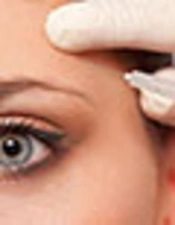
One of the side effects of Botox injection is eyebrow ptosis, which is a common complication of injecting the frontalis muscle to remove horizontal forehead lines with botulinum toxin. Additionally, ptosis of the upper eyelid is observed when injecting toxin in and around the glabella due to the migration of the injected substance through the orbital septum, resulting in the weakening of the levator palpebrae superioris (2, 9).
This complication typically occurs when a large amount of botulinum toxin is injected near the upper border of the bone in the midline of the pupil. Injection of high doses of botulinum toxin in the lateral canthus can lead to side effects such as ectropion, diplopia, dry mouth, and lagophthalmos. Lagophthalmos is one of the rare complications caused by the loss of the natural sphincter function of the eye and improper closing of the eyelids. Injecting toxin under the upper edge of the zygomatic arch or very low along the lateral walls of the nose can result in ptosis and asymmetry of the lips, as well as issues with speaking, eating, and drooling. The treatment of horizontal rhytids and vertical bands is generally very safe, but complications may arise due to improper technique, including dry mouth, dysphagia, dysarthria, and neck weakness. Additionally, a small number of patients may experience difficulty lifting the head and maintaining a steady head position (5, 9).