Image Credit:J Cell Mol Anesth
Outline
Trans-Nasal Sphenopalatine Ganglion Block Versus Intravenous Aminophylline Injection for Treating Postdural Puncture Headache After Cesarean Section Under Spinal Anesthesia
Authors
Abstract
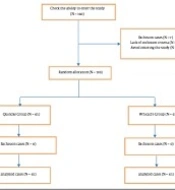
Background: Postdural puncture headache (PDPH) is a severe and debilitating complication in the obstetric population after regional anesthesia. It affects the parturient and delays home discharge. The epidural blood patch (EBP) is the gold standard treatment; however, it is an invasive and risky procedure. The trans-nasal sphenopalatine ganglion block (SPGB) and intravenous aminophylline are promising modalities for PDPH treatment. Materials and Methods: In a prospective, double-blinded, and controlled trial, Seventy-five obstetric participants (ASA I and II, aged 18 to 40 years) complaining of PDPH within five days after spinal anesthesia for cesarean section using 22G Quincke needle) were randomized into three groups. Group C received conservative therapy, Group A received intravenous aminophylline plus conservative therapy, and Group S received trans-nasal SPGB plus conservative therapy. Headache severity (VAS score), patient global impression of change (PGIC) scale and the incidence of adverse events were recorded. Results: Showed that SPGB and intravenous aminophylline significantly reduced the median values of VAS (at 30 minutes,1, 6, 12, and 24 hours) with P?0.001 and improved 24-hour PGIC with P?0.001 compared to control. Moreover, SPGB significantly reduced VAS at 30 minutes compared to aminophylline with P=0.004; No significant differences in adverse events. Conclusion: It is reasonable to offer trans-nasal SPGB, intravenous aminophylline, and conservative therapy as simple, safe, and non-invasive modalities for treating PDPH before EBP.
Highlights
References
- 1.References are in the PDF file of the article.
Copyright
© 2023, Author(s). This open-access article is available under the Creative Commons Attribution 4.0 (CC BY 4.0) International License (https://creativecommons.org/licenses/by/4.0/), which allows for unrestricted use, distribution, and reproduction in any medium, provided that the original work is properly cited.
Similar Articles
Avoiding Invasive Measures: Sphenopalatine Ganglion Block as a Substitute for Epidural Blood Patch in Post-dural Puncture Headache: A Case Report
Babaiyan S, Shakhs Emampour F. Avoiding Invasive Measures: Sphenopalatine Ganglion Block as a Substitute for Epidural Blood Patch in Post-dural Puncture Headache: A Case Report. Anesth Pain Med. 2024;14(4):e148291. doi: https://doi.org/10.5812/aapm-148291
The effect of intravenous propofol on the incidence of post-dural puncture headache following spinal anesthesia in cesarean section
Golfam P, Yari M, Rezaei M, Farhadi K, Mahdavi Jafari R, et al. The effect of intravenous propofol on the incidence of post-dural puncture headache following spinal anesthesia in cesarean section. J Kermanshah Univ Med Sci. 2016;20(2):e69698. doi: https://doi.org/10.22110/jkums.v20i2.3262

Effect of Position During Spinal Anesthesia on Postdural Puncture Headache After Cesarean Section: A Prospective, Single-Blind Randomized Clinical Trial
Davoudi M, Tarbiat M, Ebadian MR, Hajian P. Effect of Position During Spinal Anesthesia on Postdural Puncture Headache After Cesarean Section: A Prospective, Single-Blind Randomized Clinical Trial. Anesth Pain Med. 2016;6(4):e35486. doi: https://doi.org/10.5812/aapm.35486
Effect of prophylactic gabapentin on post-dural puncture headache in patients after cesarean section surgery
Nikooseresht M, Hajian P, Afiati-vesal T, Moradi A. Effect of prophylactic gabapentin on post-dural puncture headache in patients after cesarean section surgery. koomesh. 2022;24(3):e152741. doi:
Assessment of Postdural Puncture Headache in Women Under Elective Cesarean Section: A Randomized Trial Study
Jadidi F, Jadidi F, Khorramnia S, Bazmandegan G. Assessment of Postdural Puncture Headache in Women Under Elective Cesarean Section: A Randomized Trial Study. J Adv Immunopharmacol. 2021;1(4):e120876. doi: https://doi.org/10.5812/tms.120876
- Scopus by DOI: 1
Last Update: 2 weeks ago
- Scopus by Title: 1
Last Update: 2 weeks ago
- Scopus by Title (Ref): 1
Last Update: 2 weeks ago
- CrossRef: 0
Last Update: 6 days ago
- OpenAlex: 0
Last Update: 1 day ago
- OpenCitations: 0
Last Update: 4 days ago

