Image Credit:J Cell Mol Anesth
Outline
COVID-19 Treatment in Medan, Indonesia: A Case Report
Authors
Abstract
In the past decades, two known zoonotic coronaviruses, SARS-CoV and MERS-CoV, have been reported to damage the respiratory tract and cause severe outbreaks. Severe acute respiratory syndrome coronavirus 2 (SARS-CoV-2) is a newly discovered coronavirus, which was first discovered in Wuhan, China in December 20191. Coronaviruses are enveloped, positive single-strandedlarge RNA viruses that infect humans, but also a widerange of animals. Coronaviruses were first described in 1966 by Tyrell and Bynoe, who cultivated the viruses from patients with common colds2 SARS-CoV-2, which belongs to a unique clade of the Sarbecovirus subgenus of the Orthocoronavirinae subfamily, was identified as the pathogen of Coronavirus disease 2019 (COVID-19) in January 2020 3. A majority (67-85%) of critically ill patients admitted in intensive care units with confirmed infection of severe acute respiratory syndrome coronavirus 2 (SARS-CoV-2) developed the acute respiratory distress syndrome (ARDS)4 The maximum incubation period is assumed to be up to 14 days, whereas the median time from onset of symptoms to intensive care unit (ICU) admission is around 10 days. Recently, WHO reported that the time between symptom onset and death ranged from about 2 weeks to 8 weeks5. The severity of patient?s symptoms was categorized as mild, severe, or critical. Mild included non-pneumonia and mild pneumonia cases. Severe was characterized by dyspnea, respiratory frequency ?30/minute, blood oxygen saturation ?93%, PaO2/FiO2ratio <300, and/or lung infiltrates >50% within 24?48hours. Critical cases were those that exhibited respiratory failure, septic shock, and/or multiple organ dysfunction/failure6,7
References
- 1.References are in the PDF file of the article.
Copyright
© 2021, Author(s). This open-access article is available under the Creative Commons Attribution 4.0 (CC BY 4.0) International License (https://creativecommons.org/licenses/by/4.0/), which allows for unrestricted use, distribution, and reproduction in any medium, provided that the original work is properly cited.
Similar Articles
The Current Clinically Relevant Findings on COVID-19 Pandemic
Pergolizzi Jr. JV, Magnusson P, LeQuang JA, Breve F, Paladini A, et al. The Current Clinically Relevant Findings on COVID-19 Pandemic. Anesth Pain Med. 2020;10(2):e103819. doi: https://doi.org/10.5812/aapm.103819
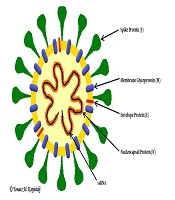
SARS-CoV, MERS-CoV, SARS-CoV-2 Comparison of Three Emerging Coronaviruses
Zeidler A, Karpinski TM. SARS-CoV, MERS-CoV, SARS-CoV-2 Comparison of Three Emerging Coronaviruses. Jundishapur J Microbiol. 2020;13(6):e103744. doi: https://doi.org/10.5812/jjm.103744
Approaches for the Treatment of SARS-CoV-2 Infection: A Pharmacologic View and Literature Review
Mohammadi Barzelighi H, Daraei B, Dastan F. Approaches for the Treatment of SARS-CoV-2 Infection: A Pharmacologic View and Literature Review. Iran J Pharm Res. 2020;19(3):e124629. doi: https://doi.org/10.22037/ijpr.2020.113821.14506
COVID-19: Features, clinical course and concerns
Darabi P, Bagherpour kalo M, Ali K, Safari S, Yousefifard M, et al. COVID-19: Features, clinical course and concerns. J Cell Mol Anesth. 2020;5(2):e149613. doi: https://doi.org/10.22037/jcma.v5i2.29885
Insights into the SARS-CoV2 Outbreak; the Great Global Challenge: A Mini Review
Pourhossain DB, Dabbagh A, Fazeli M. Insights into the SARS-CoV2 Outbreak; the Great Global Challenge: A Mini Review. J Cell Mol Anesth. 2020;5(1):e149605. doi: https://doi.org/10.22037/jcma.v5i1.29718
- Scopus by DOI: 1
Last Update: 1 month ago
- Scopus by Title: 1
Last Update: 1 month ago
- Scopus by Title (Ref): 1
Last Update: 1 month ago
- CrossRef: 0
Last Update: 6 days ago
- OpenAlex: 0
Last Update: 1 day ago
- OpenCitations: 0
Last Update: 4 days ago
