Cover image of the article: Biosensors Are a Vital Tool in the Optimization of Anesthesia

Image Credit:J Cell Mol Anesth

Biosensors Are a Vital Tool in the Optimization of Anesthesia

Authors

Maryam VosoughianMaryam Vosoughian ORCID1, Mastaneh DahiMastaneh Dahi ORCID1,*
1Department of Anesthesiology & Critical Care, Anesthesiology Research Center, Taleghani Hospital, Shahid Beheshti University of Medical Sciences, Tehran, Iran
*Corresponding Author: Department of Anesthesiology & Critical Care, Anesthesiology Research Center, Taleghani Hospital, Shahid Beheshti University of Medical Sciences, Tehran, Iran. Email: mastanehdahi2020@gmail.com

Journal of Cellular & Molecular Anesthesia:Vol. 9, issue 4; e154384
Published online:Oct 28, 2024
Article type:Letter
Received:Sep 10, 2024
Accepted:Sep 29, 2024
How to Cite:Vosoughian M, Dahi M. Biosensors Are a Vital Tool in the Optimization of Anesthesia. J Cell Mol Anesth. 2024;9(4):e154384. doi: https://doi.org/10.5812/jcma-154384

Dear Editor,
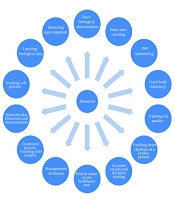
Biosensors are biological analyzers used to detect molecules and identify electrical and biological pathways. Initially, they should provide rapid, continuous, and reagent-free responses, followed by effective action. Biosensors are highly versatile interdisciplinary tools, not confined to a single field of application. The concept of biosensors has been defined and developed in various ways by different researchers. Some consider biosensors as independent sensing systems capable of providing specific biological responses to particular types or concentrations of chemicals. In this concept, the initial signal from physical or chemical agents is detected by the first layer and transferred to subsequent layers. The second signal is typically an electrical signal and can be converted into various types of electrochemical, thermal, optical, or mass-related responses. Biosensors have extensive applications across numerous medical procedures (Figure 1) (1).
Use of biosensors in medicine
Figure 1.
Use of biosensors in medicine
The design of biosensors typically involves a data storage platform developed with software and a controller module connected to a computer. In recent years, biosensors have been applied in infusion anesthesia systems that utilize the pharmacodynamics and pharmacokinetics of drugs to maintain optimal anesthetic concentrations in plasma (2). Additionally, algorithms developed with biosensor technology enable the selection of the optimal drug concentration based on the drug's half-life and bioactive properties, significantly contributing to achieving the desired depth of anesthesia while monitoring blood and plasma concentrations (3).
Historically, anesthesiologists faced challenges in determining the exact level of propofol in the body, necessitating a standardized system for monitoring drug levels. Recently, a measuring catheter system has been designed with advanced hardware and software architecture that facilitates accurate, real-time measurement of propofol concentrations in the blood by integrating laboratory data analysis and electrochemical quantification of propofol. These intelligent systems offer the ability to package and deliver medicinal compounds independently, ensuring optimal propofol levels.
One of the most compelling areas of research in smart electrochemical systems is the study of drug and DNA interactions (4). Recent advancements in intelligent systems allow for in-depth examination of the mechanisms, interactions, and pathways of medicinal molecules through electrochemical studies. DNA biosensors, also known as gene sensors, detect target DNA by forming target sequences through hybrid probe formation (5). These gene sensors consist of single-stranded DNA (ssDNA). Another application of DNA hybrid biosensors includes detecting infectious agents in various environments (6). Recently, carbon paste electrodes (CPEs), made from a mix of conductive graphite powder and pasting liquid, have been used to create genosensors. Carbon paste electrodes are selected due to their ease of preparation, low cost, and non-toxic properties (7). Studies using carbon paste electrodes as information conversion systems have been successful in identifying the electrostatic interactions between ketamine and DNA, as well as determining the relationship between ketamine/dsDNA and groove binding interaction (4).
Thus, it is evident that the development of biosensors can reveal the status of anesthetic drugs during and after procedures, assisting anesthesiologists in determining dosages and methods of drug administration. This capability is essential for predicting potential risks and implementing preventive measures. It is recommended that researchers and anesthesiologists focus on the design and application of biosensors across various functional areas in anesthesia. Developing or inventing methods based on biological index detectors that deliver rapid, real-time results presents an exciting opportunity in the field.

Footnotes

  • Authors' Contribution: M. D.: Writing; M. V.: Review.

  • Conflict of Interests Statement: The authors declare that they have no known competing financial interests or personal relationships that could have appeared to influence the work reported in this paper.

  • Funding/Support: The authors declare there is no funding support was included in the study.

References

  • 1.
    Coulet PR. What Is a Biosensor? In: Coulet PR, Blum LJ, editors. Biosensor Principles and Applications. Boca Raton: CRC Press; 2019. p. 1-6. https://doi.org/10.1201/9780367810849-1.
  • 2.
    Martinez-Vazquez P, Abad-Torrent A. Multi-drug interaction target-controlled infusion from simultaneous optimization of pharmacometric models. bioRxiv. 2024;Preprint. https://doi.org/10.1101/2024.03.24.586464.
  • 3.
    Chaum E, Lindner E. A "Smart" Biosensor-Enabled Intravascular Catheter and Platform for Dynamic Delivery of Propofol to "Close the Loop" for Total Intravenous Anesthesia. Mil Med. 2021;186(Suppl 1):370-7. [PubMed ID: 33499544]. https://doi.org/10.1093/milmed/usaa470.
  • 4.
    Asghary M, Raoof JB, Ojani R, Hamidi-Asl E. A genosensor based on CPE for study the interaction between ketamine as an anesthesia drug with DNA. Int J Biol Macromol. 2015;80:512-9. https://doi.org/10.1016/j.ijbiomac.2015.07.019.
  • 5.
    Asghary M, Raoof JB, Hamidi-Asl E, Ojani R. A Novel Electrochemical Genosensor Based on Banana and Nano-Gold Modified Electrode Using Tyrosinase Enzyme as Indicator. J Nanosci Nanotechnol. 2015;15(5):3394-404. [PubMed ID: 26504957]. https://doi.org/10.1166/jnn.2015.10211.
  • 6.
    Bagheri Hashkavayi A, Bakhsh Raoof J, Ojani R, Hamidi Asl E. Label‐Free Electrochemical Aptasensor for Determination of Chloramphenicol Based on Gold Nanocubes‐Modified Screen‐Printed Gold Electrode. Electroanalysis. 2015;27(6):1449-56. https://doi.org/10.1002/elan.201400718.
  • 7.
    Bettazzi F, Hamid-Asl E, Esposito CL, Quintavalle C, Formisano N, Laschi S, et al. Electrochemical detection of miRNA-222 by use of a magnetic bead-based bioassay. Anal Bioanal Chem. 2013;405(2-3):1025-34. [PubMed ID: 23099529]. https://doi.org/10.1007/s00216-012-6476-7.

Copyright

Copyright © 2024, Vosoughian and Dahi. This open-access article is available under the Creative Commons Attribution 4.0 (CC BY 4.0) International License (https://creativecommons.org/licenses/by/4.0/), which allows for unrestricted use, distribution, and reproduction in any medium, provided that the original work is properly cited.

Similar Articles

6
Oct
2024
Unlocking the Future of Anesthesia: The Critical Role of Exosomes

Unlocking the Future of Anesthesia: The Critical Role of Exosomes

Mastaneh Dahi

Dahi M. Unlocking the Future of Anesthesia: The Critical Role of Exosomes. J Cell Mol Anesth. 2024;9(4):e154383. doi: https://doi.org/10.5812/jcma-154383

5
Jul
2020
General Anesthetics on Immune System Cytokines: A Narrative Review Article

General Anesthetics on Immune System Cytokines: A Narrative Review Article

Abdollah Jafarzadeh,
Maryam Hadavi,
Gholamhossein Hassanshahi,
Mohsen Rezaeian,
Reza Vazirinejad

Jafarzadeh A, Hadavi M, Hassanshahi G, Rezaeian M, Vazirinejad R. General Anesthetics on Immune System Cytokines: A Narrative Review Article. Anesth Pain Med. 2020;10(4):e103033. doi: https://doi.org/10.5812/aapm.103033

5
Mar
2016
Different Aspects of General Anesthesia in Pediatric Dentistry: A Review

Different Aspects of General Anesthesia in Pediatric Dentistry: A Review

Nahid Ramazani

Ramazani N. Different Aspects of General Anesthesia in Pediatric Dentistry: A Review. Inn J Pediatr. 2016;26(2):e2613. doi: https://doi.org/10.5812/ijp.2613

21
Dec
2015
Cellular and Molecular Anesthesia: from Bench to Bedside

Cellular and Molecular Anesthesia: from Bench to Bedside

Ali Dabbagh,
Hedayatollah Elyasi

Dabbagh A, Elyasi H. Cellular and Molecular Anesthesia: from Bench to Bedside. J Cell Mol Anesth. 2016;1(1):e147826. doi: https://doi.org/10.22037/jcma.v1i1.10853

2
Mar
2021
Avoiding Unnecessary Exposure to General Anesthesia for Dental Treatments in the First Years of Life

Avoiding Unnecessary Exposure to General Anesthesia for Dental Treatments in the First Years of Life

Nahid Ramazani

Ramazani N. Avoiding Unnecessary Exposure to General Anesthesia for Dental Treatments in the First Years of Life. Inn J Pediatr. 2021;31(2):e108683. doi: https://doi.org/10.5812/ijp.108683

More by these authors

Maryam VosoughianPubMedScholar
Mastaneh DahiPubMedScholar
Share
Cited by
Metrics
Indexed in