
1. Context
COVID-19 first appeared in Wuhan, China, in December 2019. This virus, which was similar to influenza, affected many people around the world (1). Despite all the efforts conducted to restrain the virus within the city, it rapidly spread within China, Asia, and then the entire world (2). After the sudden emergence and spread of the COVID-19 pandemic and its announcement as a global health emergency by the World Health Organization in January 2020, billions of people around the world were forced to shelter in safe places and their own homes, which changed the face of social relationships (3, 4). According to results conducted in various countries, COVID-19 made health infrastructure vulnerable and weakened the provision of healthcare (5).
On the other hand, sexual and reproductive health is defined as complete physical, mental, and social welfare related to the reproductive system and not just the lack of any disease or inability (6). COVID-19 has threatened sexual and reproductive health by risking the ability to fulfill related health needs (7); in a way that a wide range of necessary sexual and reproductive health services were changed due to the pandemic (8, 9). Research suggests that the reduction of economic opportunities may affect women's sexual health and their access to sexual health care (10). The United Nations Population Fund (UNFPA) and the inter-agency working group (IAWG), in response to the COVID-19 pandemic, emphasized immediate and sustainable investment in and maintenance of the provision of comprehensive sexual and reproductive health services as an important general health matter (11, 12). Since sexual and reproductive health is one of the important aspects of health (13) and has indirectly been included in the third and fifth goals of the millennium development goals after 2015, access to sexual and reproductive health services, including education, family planning, and integrating fertility health within national strategies and programs, must be assured until 2030 (14). The main components of healthcare within the sexual and fertility field are the improvement of prenatal programs, post-partum care, provision of high-quality family planning services, infertility services, elimination of unsafe abortions, prevention and treatment of sexually transmitted diseases, including HIV (human immunodeficiency virus) and cervical cancer, improvement of healthy sexual relationships, and elimination of violence against women and sexually-biased violence (15, 16).
Various studies have evaluated the condition of sexual health in women regarding sexual disorders, satisfaction, and function (17, 18). The study by Feyissa et al. in 2020, conducted in Ethiopia to determine the effect of COVID-19 on sexual and reproductive health, revealed decreased use of sexual and reproductive health services, which consequently led to increased unwanted pregnancies, severe pregnancy complications, higher pregnancy-related mortality rates, unsafe abortions, and increased fetal mortality and severe complications (19). Similarly, the study by Govender et al., which evaluated the effect of COVID-19 on the condition of sexual and reproductive health in South Africa, showed that the spread of this virus decreased the provision of fetal and pregnancy-related care, prevention of AIDS and other sexually transmitted diseases, and the diagnosis and treatment of diseases such as cervical cancer. It also increased violence against women (20) and accelerated disruption in social and general health conditions (21). Since the COVID-19 pandemic has affected different aspects of life and health, and considering that sexual and reproductive health is one of the important aspects of health, and the family is the main core of society, with the family’s health assuring the future health of society and the nation, the present review study was conducted to determine the relation between the COVID-19 pandemic and sexual and reproductive health in men and women. By reviewing studies from various countries, all the aspects of sexual and reproductive health will be evaluated to provide the best and most generalizable solutions for critical conditions in future pandemics.
2. Evidence Acquisition
In the present narrative review study, all studies about the relation between the COVID-19 pandemic and the sexual and reproductive health of men and women were included. To perform the study, databases including Medline, Science Direct, PubMed, Scopus, SID, MagIran, Embase, and Web of Science, as well as the scientific search engine Google Scholar, were searched using the keywords sexual, fertility, COVID-19, reproductive health, and health, from November 2022 to January 2023.
The search process was performed by two researchers, and articles were extracted. After reviewing the articles, titles, and abstracts, repeated and irrelevant articles were excluded. Eventually, after the primary selection of 42 English articles, the full text and abstracts of the articles were completely read. Articles were published from 2019 to 2022. Inclusion of the articles was not limited by the type of their design. The inclusion criterion was being about the relation between COVID-19 and reproductive and sexual health in men and women, and the exclusion criterion was the lack of access to the article’s full text.
3. Results
Results of the 42 extracted articles from various countries (Iran, Africa, Europe, China, America, etc.) showed that the COVID-19 pandemic has increased vulnerability in women and girls and had various effects on indices of reproductive and sexual health, including childbearing, domestic violence, sexual relationships, and other components. These changes generally involved shifts in the intention for childbearing and decreased access to sexual and reproductive health services such as prenatal and postpartum care, safe abortions, contraceptive methods, and treatment of sexually transmitted diseases. The pandemic also led to increased unwanted pregnancies, higher rates of domestic violence and its related consequences due to prolonged stays at home, and pregnancy-related complications that could result in illness, exhaustion, and even maternal and fetal death.
Additionally, the COVID-19 pandemic influenced all aspects of sexual health, which are explained separately in the following sections.
3.1. Access to Family Planning, Prenatal and Postpartum Care, Safe Abortion, Unwanted Pregnancies, and Sexually Transmitted Diseases Services
Results of a review study in 2022, which analyzed 83 studies from different countries, along with findings from a study conducted in China in 2020 with 967 participants and healthcare-providing organizations, demonstrated the negative effects of the COVID-19 pandemic on the global provision, access, and individual use of sexual and reproductive health services. These impacts included decreased access to contraceptives, pregnancy-related care, prenatal and postpartum services, safe abortion services, control and treatment of sexually transmitted infections, and in-person services for the diagnosis and treatment of sexually transmitted illnesses (22-25).
Similarly, results of a review study in Africa, conducted from December 2019 to January 2022 and based on 18 studies examining the effect of SARS-CoV-2 (severe acute respiratory syndrome coronavirus 2) on reproductive and sexual health services, showed a significant decrease in individuals' use of health services. These changes were attributed to resource and facility shortages during the COVID-19 pandemic, which resulted from countries’ efforts to combat the illness, enforce home quarantines, and restrict commuting to prevent further spread of the virus (26).
According to the results of studies conducted in different countries, some of the reasons for decreased access to reproductive and sexual health services, as well as the significant decline in visits to healthcare centers during the COVID-19 pandemic, included fear of getting infected with the virus, lack of access to appropriate means of transportation, and high costs. Consequently, the rates of unwanted pregnancies, infections with sexually transmitted diseases, and unsafe abortions increased (27-36). Eventually, based on the results of a review study conducted in different countries from December 2019 to October 2020, it is concluded that global interventions must be prioritized to ensure immediate access to reproductive and sexual health services, including family planning and maternal and fetal-related services (37). Additionally, it is essential that when a virus impacts society, pandemic control and management measures are implemented as quickly as possible (38).
3.2. Domestic Violence
In critical conditions such as pandemics, girls and women might be exposed to domestic violence (35). Based on the results of a review study in Iran in 2021, the COVID-19 pandemic increased the rate of domestic violence due to prolonged time spent at home during home quarantines, which threatened the mental health of women and girls (39). Additionally, in an international study conducted in the United States using an online poll from 30 different countries, as well as another study in Georgia, United States, also using an online poll, some participants reported experiencing physical and mental violence during the pandemic (29, 30).
3.3. Sexual and Reproductive Glands in Humans
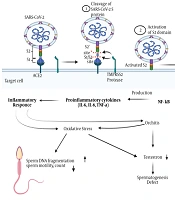
Results have shown that this virus can infect various organs and tissues, including the reproductive system, but the long-term outcomes of SARS-CoV-2 on fertility have not yet been determined (40).
COVID-19 may cause decreased fertility in the short term by damaging testicular tissue or impairing sperm production in men (41). Results of a study conducted in the United States revealed that sperm morphology was significantly decreased in COVID-19 patients (42).
Moderate to severe COVID-19 infection could lead to a decreased number of germinal cells and Leydig cells, as well as reduced spermatogenesis and male hypogonadism. Male reproductive organs are particularly vulnerable in moderate to severe cases, which could result in erectile dysfunction and orchitis (43). Results of a study conducted in Italy showed that endothelial dysfunction, clinical hypogonadism, psychosis, exacerbation of cardiovascular conditions, and disturbance in pulmonary hemodynamics could all play a role in the potential onset of erectile dysfunction (44).
In COVID-19 patients, prior to treatment, decreased levels of serum testosterone, FSH (follicle-stimulating hormone), and LH (luteinizing hormone) were observed, consistent with acute stress caused by COVID-19 (42). Furthermore, lower LH-to-testosterone and LH-to-FSH ratios were reported in male COVID-19 patients compared to healthy men of the same age (41).
Some cases reported decreased quality of eggs and ovarian function after being infected with the virus (41). Results of a review study showed that in most studies, ovarian reserve was not significantly affected after recovery from moderate and severe infection with the virus. However, one study reported significantly lower levels of AMH (Anti-Mullerian Hormone) and increased levels of FSH. Additionally, all patients who recovered from COVID-19 had positive levels of SARS-CoV-2 IgG in follicular fluid.
The number of matured and retrieved eggs and the fertilization rate showed no change in three studies, except for one, where the number of matured retrieved eggs was decreased in patients with higher levels of SARS-CoV-2 antibodies. Moreover, the number of blastocysts, quality embryos, and euploid embryos was affected in most studies (45).
Despite the increased number of studies about the effect of COVID-19 infections on human sexual and reproductive glands, and a series of reports about the long-term effects of COVID-19 on fertility—including premature ovarian failure, oligomenorrhea in women, and erectile dysfunction in men—long-term prospective studies are required to evaluate the long-term consequences, understand the possible outcomes of this disease on human reproduction, and utilize the findings to develop new potential therapeutic approaches. Existing data has revealed that, except for some rare cases, most of the changes in fertility caused by COVID-19 infections are temporary (41).
According to the results, since patients recovering from COVID-19 infection might suffer from sexual and reproductive problems, endocrinology evaluations and appropriate treatments should be considered. Furthermore, to evaluate testicular function in COVID-19 patients, more accurate investigations are needed to address testosterone deficiency and its possible effects on fertility health (44).
Existing data have shown no effect of SARS-CoV-2 vaccination on fertility. In a study conducted in 2022, some women reported changes in their menstrual cycles during the COVID-19 pandemic, which might have been caused by mental stress (41). In a review study about the menstrual cycle, a wide range of changes was observed; however, most of these changes were reversible within the following months (45).
3.4. Sexual Function and Quality of Sexual Life
The COVID-19 pandemic caused one of the greatest economic crises in the world and significantly affected individual welfare. Stressors such as home isolation, lack of communication and social relationships, job loss, and fear of infection and death became global characteristics of living during the pandemic. These factors, which varied greatly depending on geographic region, socio-economic status, and personal circumstances, impacted sexual desires (46).
Results of a study conducted in Spain in 2020 showed that during the COVID-19 pandemic, the rate of masturbation increased, with 34.9% of participants experiencing decreased sexual desire, 35.9% experiencing increased sexual desire, and 29.1% reporting no changes (47).
In a study conducted in Poland to evaluate the effect of COVID-19 on sexual health, findings revealed decreases in sexual desire, arousal, orgasm, and sexual satisfaction. The pandemic had also affected the sexual lifestyle and frequency of sexual intercourse among Polish women (48).
Additionally, results from a study on American college students showed that most participants reported changes in their sexual activity. While some reported an increased quality of sexual life due to having more time to spend with their partner, others reported a decreased amount of time spent with their partner because of the pandemic and noted increased masturbation (31).
Reviewing the summarized results of a review article in Europe in 2021 on women's sexual health, which re-evaluated 34 studies from 18 countries, along with a study on the youth population in China in 2020, revealed worsened sexual function in women across all countries, with a particular emphasis on decreased sexual desire. Most studies showed that during the COVID-19 pandemic, the number of sexual intercourses decreased, while solitary sexual behavior (masturbation) increased. Additionally, most women experienced decreased sexual and relationship satisfaction (23, 49). Results of a study conducted in Egypt in 2020 also revealed decreased sexual satisfaction in both genders during the COVID-19 pandemic. However, women were more affected, suffering more from anxiety and depression, which placed them at a higher risk of sexual dysfunction and dissatisfaction (50). Another study reported that most participants (75.6%) had been satisfied or very satisfied with their sexual life before the pandemic. However, during the pandemic, this satisfaction rate decreased significantly to 59.4% in the same population (30). Furthermore, a review study in Europe in 2021, which analyzed 107 studies from different countries, showed the widespread influence of the pandemic on all aspects of sexual health (51), including decreased quality of sexual relationships (39) and sexual behaviors (32). These findings highlight the urgent need for more studies and research to mitigate the risks of COVID-19 on sexual health (52).
3.5. Intention for Fertility and Childbearing
Reviewing articles from various countries revealed differing results regarding the intention for childbearing. A review study conducted in 2021 in the United States showed a decreased intention for childbearing (32). Similarly, a study conducted at Kernel and Columbia University (United States) in 2020 found that many couples delayed their efforts to conceive at the beginning of the pandemic due to concerns about the coronavirus and the possibility of virus transmission through sexual intercourse (53). In Iran, a review study indicated reluctance toward having children due to concerns about virus transmission and the potential outcomes of pregnancy and delivery during the pandemic (39). A study conducted in China in 2020 showed that couples had altered their intentions for childbearing. When the situation in China improved, 26.1% of participants expressed an intention to have children. Among them, 62.8% began preparing for pregnancy, 16% were waiting for conditions to further improve in China, 5.4% were waiting for global conditions to improve, and 15.9% planned to wait until the pandemic was over (54). In another study conducted in the United States in 2020, nearly one in three participants reported changing their childbearing intentions due to the COVID-19 pandemic. Of these, 61.6% delayed their efforts to conceive, while 23.9% advanced their efforts. Additionally, the pandemic may have affected fertility intentions differently among racial and ethnic minorities, sexual minorities, and individuals with mental and psychological challenges (55).
But in Finland, an increased birth rate was recorded during the first couple of months following the first two waves of the pandemic (56).
In another study conducted in Moldova (Eastern Europe), 34.5% of the interviewed participants during the COVID-19 pandemic reported putting less effort into getting pregnant. However, midterm intentions for fertility remained unchanged (27).
Similarly, a study conducted in Kenya in 2019 and 2020 on 3,095 women found that nearly 85% of the participants reported stable intentions for childbearing regarding the number and timing of pregnancies. The COVID-19 pandemic did not cause major changes in childbearing intentions in this study (57).
3.6. Maternal Outcomes
Existing data on other coronaviruses, such as SARS-CoV (severe acute respiratory syndrome coronavirus) and MERS-CoV (Middle East Respiratory Syndrome Coronavirus), have identified pregnant women as a vulnerable group with increased risks of adverse pregnancy outcomes, including coagulation and respiratory system disorders. Similarly, COVID-19 infection during pregnancy has been shown to impact both the mother and the fetus. Infected pregnant women required intensive care more often than non-pregnant infected women and were more prone to premature delivery (40). According to a review study, mortality in pregnant women infected with COVID-19 was reported due to severe pneumonia and multiple organ dysfunction (58). Additionally, results of another review study conducted in Canada revealed that both mild and severe cases of COVID-19 were associated with an increased risk of preeclampsia and premature delivery (59).
3.7. Fetal Outcomes
Regarding the fetal outcomes of COVID-19, the increased likelihood of premature delivery made infants more prone to hospitalization in intensive care units (40). In a study conducted in China in 2020 on 33 infants born to mothers infected with COVID-19, three infants were identified as potentially infected through vertical transmission from mother to infant (60). Results of another review study showed that mild COVID-19 cases were associated with an increased risk of stillbirth, while severe COVID-19 cases were linked to low birth weight (59).
4. Discussion
The present narrative review study was conducted to determine the relationship between the COVID-19 pandemic and sexual and reproductive health in men and women. The general findings of this study revealed that COVID-19 had a negative impact on sexual and reproductive health.
The results showed that during the COVID-19 pandemic, access to reproductive and sexual health services—including family planning programs, screening tests, diagnosis and treatment of sexually transmitted infections, pregnancy and postpartum care, and safe abortion—was significantly reduced. This decrease in access consequently led to an increased rate of sexually transmitted infections and unwanted pregnancies (22, 23, 28, 32, 34). It is recommended that educational programs about fertility health, such as family planning, be provided in health centers and through virtual platforms to raise individuals’ awareness. Special attention should also be given to women who are more vulnerable to unwanted pregnancies, such as those with underlying conditions, HIV-positive women, women with addictions, or those with low income. Long-term contraceptive methods could be offered to these groups, and phone counseling with appropriate professionals could help prevent unwanted pregnancies. Recommendations for improving access to sexual and reproductive health services during pandemics include utilizing delivery systems based on community engagement and technology to enhance access, as well as promoting knowledge and behavior changes. Additionally, recommendations for improving the health of teenagers and youths during pandemics, using the Donabedian model, could lead to higher-quality care and increased access. This model involves components such as rapid data collection during emergencies, peer delivery within communities, standard methods for evaluating accessibility to care, routine collection of social, demographic, and geographic data, consistent documentation, telemedicine, web-based health services, and technological solutions (34).
Due to the negative effects of sexually transmitted diseases on the sexual and reproductive health of women—including increased risks of ectopic pregnancy, infertility, hepatitis and AIDS transmission, abortion, premature delivery, and low birth weight—timely diagnosis and treatment with easy access to healthcare in this field should be ensured (61). During the COVID-19 pandemic, it is crucial to provide remote health counseling and online education about the methods of transmission, prevention, and treatment of sexually transmitted diseases. The use of condoms during sexual intercourse should be emphasized as an effective measure to reduce the risk of sexually transmitted infections.
Additionally, timely diagnosis and treatment should be made available at health centers and physicians’ and midwives’ offices. Screening of high-risk groups should also be conducted through necessary diagnostic tests or clinical examinations to ensure early detection and effective management.
Regarding pre-pregnancy, pregnancy, and postpartum care, it is essential to inform and sensitize women of reproductive age about the importance of visiting health centers and receiving care services. Necessary planning to enhance the accessibility of these services for all eligible women is critical (62). Providing special care for pregnant women through self-care education can be achieved using various methods, including media, books, CDs, and educational pamphlets, as well as virtual education through messaging and video tutorials. These measures can significantly improve the awareness of men and women about pre-pregnancy and pregnancy care. Preventive solutions to reduce maternal and fetal mortality rates and related health issues include distributing clean delivery kits, ensuring deliveries are performed by midwives at health centers using safe delivery kits, and implementing essential measures to establish an effective referral system (63).
Results of the present study showed that the COVID-19 pandemic increased the rate of domestic violence due to factors such as fear of disease transmission, reduced social communication and personal support, job loss, and financial problems. These factors consequently heightened risks to mental health and domestic violence (29, 30, 39, 46). It is recommended that virtual education programs be provided for healthcare providers on recognizing and addressing domestic violence during pandemics, and that appropriate screening tests for mental health and domestic violence be conducted. Family counseling centers should offer support for affected individuals, with special attention to vulnerable women, such as women without a guardian and pregnant women.
To mitigate depression and stress, individuals should be encouraged to engage in enjoyable activities, such as reading favorite books, watching TV, participating in sports activities at home or in open spaces, making voice or video calls to friends or acquaintances, cooking favorite foods, and maintaining a healthy diet.
Efforts and coordination to reduce the risk of domestic violence should include: (1) Establishing safe tents in secure locations; (2) placing public toilets and water resources in accessible and safe areas; (3) ensuring adequate lighting at night; (4) including female staff on food distribution teams; (5) maintaining a list of and providing essential services to individuals subjected to domestic violence, such as emergency contraceptive methods, preventive treatments for sexually transmitted diseases, post-exposure prophylaxis for HIV, hepatitis B and tetanus vaccination, and mental health support (63).
According to the results of most studies, COVID-19 infection impacted sexual glands and hormones (41-45). A study conducted in the United States reported decreased sperm morphology in COVID-19 patients, which may be associated with acute fever caused by the disease (42).
The present study found that, according to most studies, sexual function and quality of sexual life decreased during the pandemic. Factors contributing to this decline included job loss, fear of infection transmission through sexual activities, and the negative effects of COVID-19 on sexual glands and hormones (23, 30, 46-51). However, some studies noted an increase in sexual activity and relationships due to more time spent at home during home quarantines (31).
Therefore, it is essential to raise awareness among healthcare providers regarding COVID-19-related sexual health outcomes (64). Additionally, healthcare providers should deliver essential education to individuals, and during pandemics, sexual and mental health services should be accessible for both men and women. Special attention should also be given to addressing the unique needs of sexual minorities (65).
The results of the present study showed that women delayed pregnancy due to various factors, including fear of transmitting the coronavirus to the fetus, difficulty accessing medical services, financial burdens caused by COVID-19, concerns about the risk of infection during pregnancy, and worries about the potential effects of COVID-19 on fetal growth and other negative outcomes for both the mother and the fetus (39, 53, 54). This trend could negatively impact fertility rates in the future. In contrast, some studies, such as one conducted in Finland, observed an increased birth rate during the pandemic. The findings indicated a relatively higher fertility rate among women aged 30 and older during 2020 and 2021. One explanation for this increase was a recovery from historically low fertility rates in the country. Additionally, the conditions created by COVID-19 may have served as a potential amplifying factor for the birth rate (56). Given these dynamics, it is essential to implement media campaigns and remote educational and health programs to support families, strengthen the foundation of family life, and prioritize childbearing. On the other hand, premature delivery, a stressful event, can negatively impact both the infant and the family, potentially affecting the mother’s ability to adapt to the role of motherhood (66). Moreover, given the vulnerability of pregnant women to COVID-19 infection, it is crucial to conduct screening tests and implement infection control measures, including quarantining infected mothers and closely monitoring infants at risk for COVID-19 infection (60).
A review study in Africa evaluated research conducted on the impacts of both the Ebola and COVID-19 pandemics (34). However, South Africa faces a significant burden of infectious diseases, including AIDS and tuberculosis, as well as non-infectious diseases such as maternal, fetal, and pediatric health issues and other health threats (67). During crises and disasters, the collapse of social and health infrastructures—particularly the damage to families—can severely impact reproductive health. Crises, whether caused by natural events such as earthquakes, hurricanes, or floods, or by human activities such as war or nuclear incidents, cause harm to groups or societies and require immediate and emergency responses.
Planning to provide comprehensive reproductive health services at the earliest opportunity involves: (1) Collecting baseline information on maternal and infant mortality, sexually transmitted infections, HIV prevalence, and contraceptive use rates; (2) identifying suitable locations for delivering comprehensive reproductive health services in the future; (3) designing programs for educating or retraining healthcare staff; (4) procuring and organizing the necessary equipment and facilities (63).
The lack of care and treatment guidelines for providing sexual and reproductive health services across all necessary areas was a significant challenge during the COVID-19 pandemic. Therefore, it is crucial to develop health policies to ensure the continuous provision of sexual and reproductive health services during pandemics (68). Governments and stakeholders involved in sexual and reproductive health should prioritize implementing measures and policies that protect women from the impacts of the COVID-19 pandemic (26). To safeguard global access to essential sexual and reproductive health services during current and future emergencies, health systems need to be strengthened and made more flexible (22).
The strength of the present study lies in its comprehensive inclusion of studies from various countries, covering all aspects of sexual and reproductive health, and its provision of solutions in this field during the COVID-19 pandemic.
However, the study has several limitations. Due to the nature of a narrative review, specific protocols for systematic review studies were not applied. Narrative reviews, unlike systematic reviews, do not require as much focus on precise methodological aspects. Another limitation was the inability to include studies from all international databases. Additionally, some of the included studies had small sample sizes (60). In some cases, such as studies conducted in China (23, 54) and Uganda (28), sampling was performed using online questionnaires, which may limit the representativeness of the results. Given the limited number of studies on reproductive and sexual health services during the COVID-19 pandemic, it is recommended that further research be conducted. These studies could adopt qualitative, quantitative, or systematic review approaches and consider cultural and contextual differences to provide more comprehensive insights.
4.1. Conclusions
The results of the present study showed that COVID-19 affected all aspects of sexual and reproductive health, including family planning, sexual relationships, treatment of sexually transmitted infections, intentions for childbearing, pregnancy and postpartum care, violence, unwanted pregnancies, and sexual health. Considering the outbreak and pandemic of COVID-19 since 2019 and its impact on various aspects of individuals’ lives, now is the time to focus on the influence of this disease on the sexual and reproductive health of men and women. Incentive and support policies should be implemented to address these effects and work toward increasing fertility rates.
During critical conditions like the COVID-19 pandemic, access to services such as sexual and reproductive health becomes more challenging, which can adversely affect the health of girls and women. The indirect effects of such challenges might be long-term. Insufficient attention to this issue could lead to higher rates and risks of unwanted pregnancies, unsafe abortions, sexually transmitted infections, adverse pregnancy outcomes, stress and depression, partner violence, and maternal and fetal mortality. Therefore, the World Health Organization, other relevant organizations, and healthcare providers should prioritize addressing this issue as a crucial component of public health. Supporting access to and utilization of reproductive and sexual health services must be maintained or even improved. This study can serve as a foundation for future research on the impact of the COVID-19 pandemic on one of the most important aspects of health for men and women.