Fulltext
The full text of this article is available on PDF.
Journal of Clinical Research in Paramedical Sciences
The Official Journal of Paramedical School, KUMS
Image Credit:J Clin Res Paramed Sci
Authors
Background: Paclitaxel is a new chemotherapy medicine that is used for treating breast, ovarian, and lung cancers as well as AIDS-related Kaposi's sarcoma. Due to the side effects of using this drug, the paclitaxel-loaded chitosan nanoparticles was synthesized and its cytotoxicity effects on breast cancer cell lines was examined.
Methods: The paclitaxel-loaded chitosan nanoparticles were synthesized by the gelation method, purified and isolated in a proper size by centrifugation. The nanoparticles’ size, percentage of loading and releasing time of the drug up to 24 hours and its cytotoxicity effects, compared with Paclitaxel; on breast cancer cell lines were investigated.
Results: Particle sizes revealed to be 248-312 nm using the zetasizer system, the drug loading percentage showed 55±4 %, and the rate of drug releasing time for 24 h measured 5.5 %. On the average in concentration of 0.8 μg/mL the cytotoxicity of the paclitaxol-loaded chitosan nanoparticles was estimated 43% less than that of the taxol.
Conclusion: The results showed that the paclitaxol-loaded chitosan nanoparticles may be considered as a good alternative to taxol since it decreases the related side effects. However, it deserves further investigations in future.
© 2016, Journal of Clinical Research in Paramedical Sciences. This open-access article is available under the Creative Commons Attribution-NonCommercial 4.0 (CC BY-NC 4.0) International License (https://creativecommons.org/licenses/by-nc/4.0/), which allows for the copying and redistribution of the material only for noncommercial purposes, provided that the original work is properly cited.
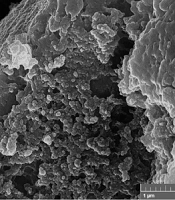
Dhahir Latif A, Jawad A, Hashim Al-Isawi MH, Kareem Abbood H, Al-Karagoly H, et al. Preparation and Characterization of a Chitosan-Based Nanoformulation Containing Prangos acaulis Extract and Evaluation of Its Effect on the Viability of HT-29 and MCF-7 Cancer Cells. Jundishapur J Nat Pharm Prod. 2025;20(3):e161899. doi: https://doi.org/10.5812/jjnpp-161899
Kouchak M, Azarpanah A. Preparation and In Vitro Evaluation of Chitosan Nanoparticles Containing Diclofenac Using the Ion-Gelation Method. Jundishapur J Nat Pharm Prod. 2015;10(2):e23082. doi: https://doi.org/10.17795/jjnpp-23082
Khosropanah MH, Dinarvand A, Nezhadhosseini A, Haghighi A, Hashemi S, et al. Analysis of the Antiproliferative Effects of Curcumin and Nanocurcumin in MDA-MB231 as a Breast Cancer Cell Line. Iran J Pharm Res. 2016;15(1):e125086. doi: https://doi.org/10.22037/ijpr.2016.1826
Heydarnezhad Asl M, Haghi M, Barzegar A, Hoseinpour Feizi MA. Investigating the Effects of Bovine Serum Albumin Magnetic Nanoparticles Loaded with Curcumin and Paclitaxel on the Ls174T Cell Line. J Rep Pharm Sci. 2026;14(1):e171612. doi: https://doi.org/10.5812/jrps-171612
hosseini MS. Anticancer Activity of Nanoparticles Based on PLGA and its Co-polymer: In-vitro Evaluation. Iran J Pharm Res. 2013;12(4):e125759. doi: https://doi.org/10.22037/ijpr.2013.1362
Last Update: 6 days ago
Last Update: 6 days ago
Last Update: 6 days ago
Last Update: 1 hour ago
Last Update: 5 hours ago
Last Update: 4 days ago