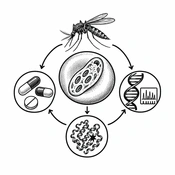
Cover image of the article: Drug Resistance in Plasmodium falciparum: Molecular Mechanisms, Adaptive Tolerance, and Implications for Malaria Control (AI-generated illustration)

Image Credit:AI-generated illustration

Drug Resistance in Plasmodium falciparum: Molecular Mechanisms, Adaptive Tolerance, and Implications for Malaria Control

Authors

Odochi Chukwu Ogbu1,*, Chikere Anusiem2
1Department of Pharmacology and Therapeutics, Faculty of Basic Clinical Medicine, David Umahi Federal University of Health Sciences, Ebonyi, Nigeria
2Department of Pharmacology and Therapeutics, Faculty of Basic Clinical Medicine, University of Nigeria, Enugu, Nigeria
*Corresponding Author: Department of Pharmacology and Therapeutics, Faculty of Basic Clinical Medicine, University of Nigeria, Enugu Campus, Nigeria. Email: chukwuoo46@gmail.com

Journal of Health Reports and Technology:Vol. 12, issue 3; e172514
Published online:Oct 06, 2026
Article type:Review Article
Received:Jun 03, 2026
Accepted:Oct 05, 2026
How to Cite:Chukwu Ogbu O, Anusiem C. Drug Resistance in Plasmodium falciparum: Molecular Mechanisms, Adaptive Tolerance, and Implications for Malaria Control. J Health Rep Technol. 2026;12(3):e172514. doi: https://doi.org/10.5812/jhrt-172514

Abstract

Context:

Artemisinin-based combination therapies (ACTs) are increasingly threatened by the emergence of Plasmodium falciparum strains that exhibit both genetic resistance and adaptive drug tolerance, thereby undermining global malaria control efforts.

Evidence Acquisition:

This structured narrative review synthesized studies published between January 2013 and January 2025, identified through PubMed/MEDLINE, Scopus, Web of Science, Embase, and World Health Organization repositories. The final database search was conducted on January 15, 2025. Search strings combined controlled vocabulary (MeSH/Emtree) and free-text terms related to P. falciparum, antimalarial resistance, artemisinin and partner-drug resistance, and key resistance loci. A total of 847 records were identified; after the removal of 203 duplicates, 644 records underwent title and abstract screening, and 126 articles met the eligibility criteria and were included in the synthesis. The manuscript presents 23 representative citations. Historical background and post-search contextual sources were distinguished from the included search corpus. The lead author screened all titles and abstracts, and a secondary reviewer independently assessed a randomly selected 20% subset (κ = 0.89). Eligible studies reported molecular mechanisms, cellular adaptations, clinical resistance markers, or genomic analyses of resistant P. falciparum. Data were synthesized thematically by drug class and mechanistic pathway, with critical appraisal focused on methodological transparency and biological plausibility.

Results:

Contemporary resistance encompasses mutations in drug transporters (pfcrt, pfmdr1), target-site modifications (dhfr, dhps), and kelch13 propeller variants associated with ring-stage survival. The independent emergence of partial artemisinin resistance in Africa has now been documented, driven by local kelch13 mutations and reinforced by stress-response pathways, including proteostatic buffering and redox adaptation. Susceptibility to the partner drugs lumefantrine, piperaquine, and amodiaquine is concurrently declining, often against a background of entrenched antifolate resistance. Resistance architectures are polygenic and context dependent and are shaped by transmission intensity, host immunity, and unregulated drug use.

Conclusions:

Single-marker surveillance no longer captures clinically relevant resistance. Integrating genomic monitoring with functional tolerance assays is essential for early detection. Drug development should prioritize compounds that disrupt stress-response and quiescence pathways. Treatment policies would benefit from incorporating molecular early-warning indicators to preserve the efficacy of first-line regimens.

1. Context

The global efficacy of artemisinin-based combination therapies (ACTs) continues to decline as Plasmodium falciparum evolves complex genetic, cellular, and phenotypic mechanisms of drug resistance. This evolution threatens recent gains in malaria control and necessitates an urgent reappraisal of surveillance and therapeutic strategies.

2. Evidence Acquisition

This review was developed as a structured narrative synthesis integrating molecular, cellular, and evolutionary evidence on P. falciparum drug resistance. Comprehensive literature searches were conducted in PubMed/MEDLINE, Scopus, Web of Science, and Embase, supplemented with World Health Organization technical reports and institutional malaria surveillance databases. The final search was conducted on January 15, 2025. Search strategies combined controlled vocabulary (MeSH/Emtree) and free-text terms for P. falciparum, antimalarial resistance, artemisinin and partner-drug resistance, and key resistance loci. Representative search strings included: (“Plasmodium falciparum”[MeSH] OR “P. falciparum”) AND (“drug resistance”[MeSH] OR “antimalarial resistance” OR “artemisinin resistance”) AND (“kelch13” OR “pfmdr” OR “pfcrt” OR “dhfr” OR “dhps”). The search covered January 2013 to January 2025, with preferential weighting toward studies published between 2023 and 2025. Reference lists of eligible articles and relevant reviews were screened to identify additional sources. Preprints were considered when directly relevant to emerging resistance patterns and were interpreted cautiously.

2.1. Selection and Screening

A total of 847 records were identified across all databases. After removal of 203 duplicates, 644 records underwent title and abstract screening. Of these, 126 full-text articles met the eligibility criteria and were included in the synthesis. The manuscript presents 23 representative citations rather than the complete bibliography of the included corpus. The lead author screened all titles and abstracts, and a secondary reviewer independently assessed a randomly selected 20% subset (n = 129) to verify selection consistency (interrater agreement, κ = 0.89). Discrepancies were resolved through discussion.

2.2. Eligibility Criteria

Studies were eligible if they addressed at least one of the following: molecular mechanisms of antimalarial resistance (mutations, copy number variation, or structural changes); cellular or physiological adaptations contributing to drug tolerance; clinical or field evidence linking molecular markers to resistance; or genomic and evolutionary analyses of resistant parasite populations. Non-falciparum studies were excluded unless they provided comparable information; entomological investigations lacking parasite-level resistance data and conference abstracts without accessible full texts were also excluded. Non-English publications were included when reliable translations were available.

2.3. Quality Appraisal and Data Synthesis

Given the diversity of mechanistic and genomic study designs, quality appraisal emphasized methodological transparency, biological plausibility, reproducibility, and concordance with independent datasets rather than formal risk-of-bias tools designed for interventional trials. Data extraction targeted genetic mutations, structural genomic alterations, transcriptional and epigenetic profiles, stress-response pathways, and phenotypic survival adaptations. Clinical and epidemiological data were captured to contextualize laboratory findings. A thematic synthesis approach organized the evidence by drug class and mechanistic pathway, identifying convergent and divergent resistance mechanisms across geographic and transmission settings. Interpretation followed a critical analytical framework examining sources of heterogeneity, including transmission intensity, drug-use history, host immunity, and parasite genetic background. Particular attention was paid to translating mechanistic insights into implications for surveillance, treatment policy, and drug development.

3. Results

3.1. Classical Resistance Mechanisms: Transporters and Target-Site Modification

Mutations in the chloroquine resistance transporter gene (pfcrt), most notably the K76T haplotype, remain the archetypal model of transporter-mediated resistance. These variants reduce intravacuolar accumulation of chloroquine and structurally related aminoquinolines by disrupting digestive-vacuole pH and ionic gradients. Although chloroquine is no longer a frontline therapy, pfcrt variants continue to influence susceptibility to amodiaquine and to shape the evolutionary landscape on which contemporary partner-drug pressures act (1, 2). Recent functional studies demonstrate that pfcrt mutations have pleiotropic effects on hemoglobin catabolism and vacuolar physiology, complicating the predictive value of classical genotypes (2).
Polymorphisms in pfmdr1, notably N86Y and Y184F, as well as copy number amplification, modulate susceptibility to mefloquine, lumefantrine, and artemisinin derivatives through altered intracellular drug partitioning and vesicular trafficking. The phenotypic impact of pfmdr1 variants is increasingly variable across African and Southeast Asian settings, reflecting epistatic interactions with broader genomic backgrounds and compensatory pathways (1, 3).
Resistance to sulfadoxine-pyrimethamine arises through stepwise mutations in dhfr (N51I, C59R, S108N) and dhps, which combine into characteristic haplotypes to confer high-level antifolate resistance. Despite declining frontline use, these alleles persist at high frequency, sustained by selection from seasonal malaria chemoprevention and intermittent preventive treatment in pregnancy (4, 5). Their persistence raises concern that entrenched antifolate resistance may indirectly influence the efficacy of ACTs by constraining the genetic backgrounds available to evolving parasite populations.

3.2. Artemisinin Resistance: Kelch13 Mutations and Adaptive Tolerance

Partial resistance to artemisinin derivatives is strongly associated with nonsynonymous mutations in the pfkelch13 propeller domain. These variants cause delayed parasite clearance rather than outright treatment failure; however, this delay increases the selective window for partner-drug resistance. Validated and candidate kelch13 mutations, including R561H, C469Y/C469F, and P441 L, have now been reported across East Africa, confirming that artemisinin resistance is no longer confined to Southeast Asia (6-11). Earlier assumptions that high transmission intensity and robust host immunity would suppress resistant lineages have not been borne out; clinical and genomic data now demonstrate clonal expansion and sustained transmission of partially resistant parasites in multiple African settings (7, 8, 12).
Beyond stable mutations, artemisinin-resistant parasites exhibit reversible adaptive phenotypes that promote survival during drug exposure. These include activation of the unfolded protein response, reduced hemoglobin digestion, and enhanced redox buffering, which together facilitate a quiescent ring-stage state capable of withstanding peak drug concentrations (13, 14). The relative contributions of genetically encoded and epigenetically regulated tolerance pathways remain uncertain. Evidence that stress-response mechanisms can arise independently of kelch13 mutations suggests that molecular surveillance may systematically underestimate the burden of functional artemisinin tolerance (14). Although supported by laboratory functional studies, these stress-response pathways require further clinical validation to establish their causal contribution to treatment outcomes.

3.3. Resistance to Partner Drugs in Artemisinin-Based Combination Therapies

Piperaquine resistance is driven primarily by novel pfcrt mutations combined with amplification of plasmepsin II and III. Plasmepsin amplification alters hemoglobin proteolysis and drug bioactivation, reducing the formation of cytotoxic intermediates. This mechanism, first characterized in Southeast Asia, is now documented in parts of South America and Africa (15, 16). Compensatory mutations that restore transmission fitness while retaining resistance have been identified, raising the possibility of stable multidrug-resistant lineages (16).
Reduced susceptibility to lumefantrine and mefloquine is linked to specific pfmdr1 haplotypes and increased gene copy number, but the genotype-phenotype relationship is nonlinear. Reversion to wild-type pfcrt alleles has paradoxically been associated with increased lumefantrine tolerance, complicating predictive algorithms and real-time surveillance (3, 17). These complexities highlight the limitations of single-marker surveillance and reinforce the need for integrated genomic-phenotypic platforms.

3.4. Emerging Genomic and Epidemiological Patterns

Structural variation, including segmental duplications and copy number amplifications, has emerged as a major driver of rapid adaptation. Amplification of plasmepsin and pfmdr1 loci illustrates how gene-dosage adjustments respond to shifting drug pressure (1, 18). Complex structural rearrangements remain difficult to detect routinely in field isolates, limiting attribution of unexplained treatment failures to underlying genomic architecture.
Genome-wide evidence demonstrates that African artemisinin-resistance mutations have arisen independently rather than through importation from Southeast Asia. Clinical studies from Uganda, Tanzania, Kenya, and the Democratic Republic of the Congo confirm detectable partial resistance in pediatric and severe malaria cases, indicating that resistance is not confined to low-transmission or asymptomatic reservoirs (7-9, 11, 12). Each of these geographic attributions is directly supported by the cited references. This independent emergence challenges containment strategies developed around a Southeast Asian epicenter and underscores the need for approaches tailored to African evolutionary dynamics.
The evolution of resistance reflects the combined influence of biological and programmatic pressures. High transmission intensity fosters within-host competition and recombination, promoting complex resistance haplotypes. Subtherapeutic dosing, poor adherence, and the circulation of substandard or counterfeit drugs impose strong selection for tolerant parasites (19-21). Widespread historical and ongoing use of monotherapies and informal drug markets continues to create ecological niches in which resistant clones outcompete sensitive lineages. Because these pressures vary regionally, resistance architectures are highly heterogeneous, complicating the design of universal surveillance and treatment strategies (22, 23).

3.5. Synthesis: A Multilayered Adaptive System

Contemporary P. falciparum resistance has shifted from a predominantly target-site model to a layered phenotype combining stable genetic alterations with reversible stress-adaptive states. Classical mutations in transporter and target genes remain fundamental (1, 2); however, well-established resistance mechanisms supported by clinical and genomic evidence must be distinguished from proposed evolutionary or biological interpretations that require further validation. Tolerance mechanisms, altered cell-cycle dynamics, proteostatic buffering, and ring-stage developmental plasticity are supported primarily by laboratory functional studies (13, 14), and their role in determining clinical outcomes under pressure from ACTs requires additional investigation. These findings recast resistance as a continuum of adaptive fitness shaped by genomic background and drug exposure. The relationship between kelch13 genotype and clinical phenotype is particularly heterogeneous: variants such as R561H, C469Y/F, and P441L consistently associate with delayed clearance, but their fitness costs vary substantially between settings, likely reflecting epistatic interactions and local transmission ecology (6, 7, 11). Declining partner-drug susceptibility combined with entrenched antifolate resistance further complicates the resistance landscape, producing parasites with both partial artemisinin tolerance and reduced partner-drug sensitivity (17, 22). The interplay between reversible tolerance and stable genetic resistance creates a biological substrate in which quiescence provides a temporal window for the selection of resistance mutations, accelerating evolutionary trajectories in ways that current models only partially capture (14, 18).

4. Conclusions

The independent emergence and expansion of lineages with partial artemisinin resistance across Africa signify a decisive shift from regionally restricted resistance to a globally distributed, polycentric evolutionary landscape (6-8, 11). Contemporary P. falciparum resistance represents a multilayered adaptive system integrating transporter mutations, target-site alterations, gene amplifications, and reversible stress-response phenotypes (1, 2, 18). Single-marker molecular monitoring is no longer adequate; surveillance should integrate genotyping of pfcrt, pfmdr1, kelch13, and plasmepsin II/III with functional assays that quantify parasite tolerance (22). Clearance half-life, a clinical phenotype measured in patients, must be distinguished from ring-stage survival assays, which are laboratory functional assays; these measure related but distinct aspects of parasite tolerance. Genomic surveillance capacity across sub-Saharan Africa should be strengthened through regional sequencing infrastructure, standardized data pipelines, and a trained bioinformatics workforce. This would support a transition from static prevalence reporting to dynamic, spatiotemporal modeling capable of detecting early clonal expansions (22, 23).
On the basis of the evidence reviewed, drug development should prioritize compounds that disrupt proteostasis, redox buffering, and quiescence pathways, thereby collapsing the parasite's capacity for phenotypic tolerance (13, 14). Therapeutic strategies that combine fast-acting parasiticidal agents with inhibitors of adaptive stress networks may outperform traditional combinations built solely around classical target engagement, although further preclinical and clinical evaluation is needed. Treatment policy frameworks could integrate molecular and functional early-warning indicators to enable proactive rotation or modification of ACTs before widespread clinical failure occurs (22). Incremental adjustments to existing therapies are unlikely to outpace the parasite's adaptive capacity; however, the mechanistic insights reviewed here provide a scientific foundation for next-generation interventions designed to alter the evolutionary trajectory of malaria and preserve the efficacy of life-saving antimalarial drugs.

4.1. Limitations

Several limitations should be considered when interpreting the findings of this review. First, as a structured narrative review rather than a systematic meta-analysis, the selection and weighting of evidence involve inherent subjectivity, despite efforts to maintain transparency through documented search strategies and independent screening. Second, the included studies exhibit considerable heterogeneity in design, sample size, geographic scope, and laboratory methodologies, which complicates direct comparisons and synthesis. Third, the evidence base is geographically imbalanced, with disproportionately more data from East Africa and Southeast Asia than from West and Central Africa, limiting the generalizability of certain conclusions. Fourth, translation of molecular markers into clinical outcomes, particularly the relationship between kelch13 genotypes and treatment failure, remains uncertain and context-dependent, influenced by host immunity, transmission intensity, and partner-drug susceptibility. Fifth, the rapid evolution of resistance means that some findings may require updating as new data emerge. These limitations underscore the need for cautious interpretation and ongoing surveillance.
Acknowledgments

Footnotes

  • AI Use Disclosure:The authors declare that no generative AI tools were used in the creation of this article.

  • Authors' Contribution:Study Concept and Design: O. O. C. and C. A.; Data Acquisition and Study Selection: O. O. C., with independent verification by C. A.; Data Analysis and Thematic Synthesis: O. O. C. and C. A.; Molecular and Cellular Interpretation: O. O. C.; Epidemiological and Evolutionary Contextualization: C. A.; Manuscript Drafting: O. O. C., with contributions from C. A. to the Introduction and Implications for Surveillance and Drug Development; Critical Revision for Important Intellectual Content: C. A.; Statistical Analysis: Not applicable; Administrative, Technical, and Material Support: Both authors, through their respective institutions; Study Supervision and Guarantorship: C. A.; Both authors approved the final manuscript.

  • Conflict of Interests Statement:The authors do not declare any conflicts of interests for this study.

  • Data Availability:The dataset presented in the study is available on request from the corresponding author during submission or after publication.

  • Funding/Support:This study did not receive any specific grant or financial support from funding agencies in the public, commercial, or not-for-profit sectors. The authors’ institutions provided only non-financial support in the form of access to library resources and scholarly databases, as acknowledged in the manuscript.

References

  • 1.
    Cowell AN, Winzeler EA. The genomic architecture of antimalarial drug resistance. Briefings in Functional Genomics. 2019;18(5):314-328. [PubMed ID: 31119263]. [PubMed Central ID: PMC6859814]. https://doi.org/10.1093/bfgp/elz008.
  • 2.
    Amambua-Ngwa A, Button-Simons KA, Li X, Kumar S, Brenneman KV, Ferrari M, et al. Chloroquine resistance evolution in Plasmodium falciparum is mediated by the putative amino acid transporter AAT1. Nature Microbiology. 2023;8(7):1213-1226. [PubMed ID: 37169919]. [PubMed Central ID: PMC10322710]. https://doi.org/10.1038/s41564-023-01377-z.
  • 3.
    van Loon W, Bergmann C, Habarugira F, Tacoli C, Savelsberg D, Oliveira R, et al. Changing Pattern of Plasmodium falciparum pfmdr1 Gene Polymorphisms in Southern Rwanda. Antimicrobial Agents and Chemotherapy. 2021;65(9). e00901 - 21. [PubMed ID: 34228534]. [PubMed Central ID: PMC8370211]. https://doi.org/10.1128/AAC.00901-21.
  • 4.
    Pearce RJ, Pota H, Evehe MSB, Bâ EH, Mombo-Ngoma G, Malisa AL, et al. Multiple Origins and Regional Dispersal of Resistant dhps in African Plasmodium falciparum Malaria. PLoS Medicine. 2009;6(4):e1000055. [PubMed ID: 19365539]. [PubMed Central ID: PMC2661256]. https://doi.org/10.1371/journal.pmed.1000055.
  • 5.
    Juliano JJ, Giesbrecht DJ, Simkin A, Fola AA, Lyimo BM, Pereus D, et al. Prevalence of mutations associated with artemisinin partial resistance and sulfadoxine–pyrimethamine resistance in 13 regions in Tanzania in 2021: a cross-sectional survey. The Lancet Microbe. 2024;5(10). 100920. [PubMed ID: 39159629]. [PubMed Central ID: PMC11464622]. https://doi.org/10.1016/S2666-5247(24)00160-5.
  • 6.
    Fola AA, Feleke SM, Mohammed H, Brhane BG, Hennelly CM, Assefa A, et al. Plasmodium falciparum resistant to artemisinin and diagnostics have emerged in Ethiopia. Nature Microbiology. 2023;8(10):1911-1919. [PubMed ID: 37640962]. [PubMed Central ID: PMC10522486]. https://doi.org/10.1038/s41564-023-01461-4.
  • 7.
    Schreidah C, Giesbrecht D, Gashema P, Young NW, Munyaneza T, Muvunyi CM, et al. Expansion of artemisinin partial resistance mutations and lack of histidine rich protein-2 and -3 deletions in Plasmodium falciparum infections from Rukara, Rwanda. Malaria Journal. 2024;23(1). 150. [PubMed ID: 38755607]. [PubMed Central ID: PMC11100144]. https://doi.org/10.1186/s12936-024-04981-4.
  • 8.
    Wernsman Young N, Gashema P, Giesbrecht D, Munyaneza T, Maisha F, Mwebembezi F, et al. High Frequency of Artemisinin Partial Resistance Mutations in the Great Lakes Region Revealed Through Rapid Pooled Deep Sequencing. Journal of Infectious Diseases. 2024;231(1):269-280. [PubMed ID: 39367758]. [PubMed Central ID: PMC11793061]. https://doi.org/10.1093/infdis/jiae475.
  • 9.
    Mesia Kahunu G, Wellmann Thomsen S, Wellmann Thomsen L, Muhindo Mavoko H, Mitashi Mulopo P, Filtenborg Hocke E, et al. Identification of the PfK13 mutations R561H and P441 L in the Democratic Republic of Congo. International Journal of Infectious Diseases. 2024;139:41-49. [PubMed ID: 38016502]. https://doi.org/10.1016/j.ijid.2023.11.026.
  • 10.
    Mihreteab S, Platon L, Berhane A, Stokes BH, Warsame M, Campagne P, et al. Increasing Prevalence of Artemisinin-Resistant HRP2-Negative Malaria in Eritrea. New England Journal of Medicine. 2023;389(13):1191-1202. [PubMed ID: 37754284]. [PubMed Central ID: PMC10539021]. https://doi.org/10.1056/NEJMoa2210956.
  • 11.
    Ishengoma DS, Mandara CI, Bakari C, Fola AA, Madebe RA, Seth MD, et al. Evidence of artemisinin partial resistance in northwestern Tanzania: clinical and molecular markers of resistance. Lancet Infectious Diseases. 2024;24(11):1225-1233. [PubMed ID: 39159633]. [PubMed Central ID: PMC11511676]. https://doi.org/10.1016/S1473-3099(24)00362-1.
  • 12.
    Conrad MD, Asua V, Garg S, Giesbrecht D, Niaré K, Smith S, et al. Evolution of Partial Resistance to Artemisinins in Malaria Parasites in Uganda. New England Journal of Medicine. 2023;389(8):722-732. [PubMed ID: 37611122]. [PubMed Central ID: PMC10513755]. https://doi.org/10.1056/NEJMoa2211803.
  • 13.
    Azmi WA, Rizki AFM, Djuardi Y, Artika IM, Siregar JE. Molecular insights into artemisinin resistance in Plasmodium falciparum: An updated review. Infection, Genetics and Evolution. 2023;112. 105460. [PubMed ID: 37269964]. https://doi.org/10.1016/j.meegid.2023.105460.
  • 14.
    Kucharski M, Nayak S, Gendrot M, Dondorp AM, Bozdech Z. Peeling the onion: how complex is the artemisinin resistance genetic trait of malaria parasites? Trends in Parasitology. 2024;40(11):970-986. [PubMed ID: 39358163]. https://doi.org/10.1016/j.pt.2024.09.002.
  • 15.
    Kagoro FM, Barnes KI, Marsh K, Ekapirat N, Mercado CEG, Sinha I, et al. Mapping genetic markers of artemisinin resistance in Plasmodium falciparum malaria in Asia: a systematic review and spatiotemporal analysis. Lancet Microbe. 2022;3(3):e184-e192. [PubMed ID: 35265869]. [PubMed Central ID: PMC8891024]. https://doi.org/10.1016/S2666-5247(21)00249-4.
  • 16.
    Florimond C, de Laval F, Early AM, Sauthier S, Lazrek Y, Pelleau S, et al. Impact of piperaquine resistance in Plasmodium falciparum on malaria treatment effectiveness in The Guianas: a descriptive epidemiological study. The Lancet Infectious Diseases. 2024;24(2):161-171. [PubMed ID: 37858325]. [PubMed Central ID: PMC10808503]. https://doi.org/10.1016/S1473-3099(23)00502-9.
  • 17.
    Tumwebaze PK, Conrad MD, Okitwi M, Orena S, Byaruhanga O, Katairo T, et al. Decreased susceptibility of Plasmodium falciparum to both dihydroartemisinin and lumefantrine in northern Uganda. Nature Communications. 2022;13(1). 6353. [PubMed ID: 36289202]. [PubMed Central ID: PMC9605985]. https://doi.org/10.1038/s41467-022-33873-x.
  • 18.
    Mok S, Yeo T, Hong D, Shears MJ, Ross LS, Ward KE, et al. Mapping the genomic landscape of multidrug resistance in Plasmodium falciparum and its impact on parasite fitness. Sci Adv. 2023;9(45). eadi2364. [PubMed ID: 37939186]. [PubMed Central ID: PMC10631731]. https://doi.org/10.1126/sciadv.adi2364.
  • 19.
    Masserey T, Lee T, Golumbeanu M, Shattock AJ, Kelly SL, Hastings IM, et al. The influence of biological, epidemiological, and treatment factors on the establishment and spread of drug-resistant Plasmodium falciparum. eLife. 2022;11. e77634. [PubMed ID: 35796430]. [PubMed Central ID: PMC9262398]. https://doi.org/10.7554/eLife.77634.
  • 20.
    Bamikole OJ, Olajide TH, Adedeji BA, Ademola SA, Fayehun AF, Bukoye NO, et al. Drug Use Practices and Self-Treatment for Suspected Malaria in Ibadan, Nigeria. American Journal of Tropical Medicine and Hygiene. 2023;108(6):1122-1126. [PubMed ID: 37068754]. [PubMed Central ID: PMC10540092]. https://doi.org/10.4269/ajtmh.22-0489.
  • 21.
    World Health Organization. . Geneva: World Health Organization; 2024.
  • 22.
    Rosenthal PJ, Asua V, Bailey JA, Conrad MD, Ishengoma DS, Kamya MR, et al. The emergence of artemisinin partial resistance in Africa: how do we respond? The Lancet Infectious Diseases. 2024;24(9):e591-e600. [PubMed ID: 38552654]. [PubMed Central ID: PMC12954456]. https://doi.org/10.1016/S1473-3099(24)00141-5.
  • 23.
    Igwe MC, Ogbuabor OA, Obeagu EI. Evolutionary biology of antimalarial drug resistance: understanding of the evolutionary dynamics. Medicine (Baltimore). 2025;104(11). e41878. [PubMed ID: 40101051]. [PubMed Central ID: PMC11922465]. https://doi.org/10.1097/MD.0000000000041878.

Copyright

Copyright © 2026, Journal of Health Reports and Technology. This open-access article is available under the Creative Commons Attribution 4.0 (CC BY 4.0) International License (https://creativecommons.org/licenses/by/4.0/), which allows for the copying and redistribution of the material only for noncommercial purposes, provided that the original work is properly cited.

Similar Articles

18
May
2021
Antimalarial Drug Resistance of Plasmodium falciparum in Africa: The Need for Novel Drug Treatments

Antimalarial Drug Resistance of Plasmodium falciparum in Africa: The Need for Novel Drug Treatments

Emmanuel Ebuka Elebesunu,
John Sunday Uhuo,
Precious Ihechiluru Sylvanus

Ebuka Elebesunu E, Uhuo JS, Sylvanus PI. Antimalarial Drug Resistance of Plasmodium falciparum in Africa: The Need for Novel Drug Treatments. Int J Infect. 2021;8(3):e113088. doi: https://doi.org/10.5812/iji.113088

1
Jan
2014
Severe Falciparum Malaria in Iran: A Very Rare Case From an Endemic Region

Severe Falciparum Malaria in Iran: A Very Rare Case From an Endemic Region

Masood Ziaee,
Farshid Abedi

Ziaee M, Abedi F. Severe Falciparum Malaria in Iran: A Very Rare Case From an Endemic Region. Jundishapur J Microbiol. 2014;7(1):e8752. doi: https://doi.org/10.5812/jjm.8752

24
Jan
2014
Mixed Infection of Plasmodium malariae and Plasmodium falciparum: A Case Report

Mixed Infection of Plasmodium malariae and Plasmodium falciparum: A Case Report

Mohammad Yasin,
Davood Yadegarynia,
Amirhossein Moghhtader Mojdehi,
Mahmood Nabavi

Yasin M, Yadegarynia D, Moghhtader Mojdehi A, Nabavi M. Mixed Infection of Plasmodium malariae and Plasmodium falciparum: A Case Report. Arch Clin Infect Dis. 2014;9(1):19297. doi: https://doi.org/10.5812/archcid.19297

13
May
2025
Epidemiological Trends and Demographic Determinants of Malaria in Chabahar and Suburbs, Southeastern Iran: Insights from a Six-Year Study (2019 - 2024)

Epidemiological Trends and Demographic Determinants of Malaria in Chabahar and Suburbs, Southeastern Iran: Insights from a Six-Year Study (2019 - 2024)

Erfan Ebrahimi Eskandar Kolaie,
Mahdi Rezaei Kahkha-Zhaleh,
Bahman Fouladi,
Shaghayegh Dabirzadeh,
Mansour Dabirzadeh

Ebrahimi Eskandar Kolaie E, Rezaei Kahkha-Zhaleh M, Fouladi B, Dabirzadeh S, Dabirzadeh M. Epidemiological Trends and Demographic Determinants of Malaria in Chabahar and Suburbs, Southeastern Iran: Insights from a Six-Year Study (2019 - 2024). Jundishapur J Microbiol. 2025;18(5):e161892. doi: https://doi.org/10.5812/jjm-161892

31
Aug
2016
Comparing Hydroxychloroquine and Pyrimethamine With Sulfadoxine-Pyrimethamine to Treat Plasmodium berghei Infection in Mice

Comparing Hydroxychloroquine and Pyrimethamine With Sulfadoxine-Pyrimethamine to Treat Plasmodium berghei Infection in Mice

Mohammad Reza Vafaei,
Somayeh Jahani,
Hamed Kalani,
Nader Pestehchian

Vafaei MR, Jahani S, Kalani H, Pestehchian N. Comparing Hydroxychloroquine and Pyrimethamine With Sulfadoxine-Pyrimethamine to Treat Plasmodium berghei Infection in Mice. Int J Infect. 2017;4(2):e41117. doi: https://doi.org/10.5812/iji.41117

More by these authors

Odochi Chukwu OgbuPubMedScholar
Chikere AnusiemPubMedScholar
Share
Cited by
Metrics