Fulltext
The full text of this article is available on PDF.
Journal of Health Reports and Technology
The Official Journal of Kermanshah University of Medical Sciences
Image Credit:J Health Rep Technol
Authors
Constant consumption of high-glycemic-index (GI) meals increases the risk of diabetes and cardiovascular diseases. Measurement of this index is possible for each kind of food. Half of the population of the world, including Iranian people, consumes rice as the staple food. This study selected one of the most popular Iranian rice (brand name of Tarom) to measure GI and glycemic load (GL) value with two different cooking methods (boiled and steamed). This interventional study was conducted in 10 healthy male volunteers with similar activity levels. After 10-h fasting, with three days apart (the first day 50 g glucose powder, the second day boiled cooked Tarom rice, and the third day steamed cooked Tarom rice), 100 ml of distilled water was given to them. Blood glucose levels were measured at −5, 0, 30, 60, 90, and 120 min by glucometer. The data was analyzed by the statistical software SPSS using repeated-measures analysis of variance (ANOVA) test and Tukey’s test. The GI of boiled Tarom rice was 76.8 (high GI) and that of steamed Tarom rice was 83.9 (high GI). The GL of boiled Tarom rice was 41.95 (high GL) and that of steamed Tarom rice was 43.97 (high GL). Conclusively, Tarom rice has a high GI load whenever cooked by boiled or steamed method and is recommended to be eaten in limited quantities for patients with cardiovascular diseases, diabetes, and people at risk of kidney and thyroid cancers.
© 2016, Journal of Health Reports and Technology. This open-access article is available under the Creative Commons Attribution-NonCommercial 4.0 (CC BY-NC 4.0) International License (https://creativecommons.org/licenses/by-nc/4.0/), which allows for the copying and redistribution of the material only for noncommercial purposes, provided that the original work is properly cited.
Nematy M, Tavakolian A, Norouzy A, Safarian M, Akhlaghi S. The Effect of Cooking Method on the Glycemic Index of Kalat Rice. J Health Rep Technol. 2019;5(2):e92591. doi: https://doi.org/10.5812/ijhls.92591
Kazemi F, Danaei G, Farzadfar F, Malik V, Parsaeian M, et al. Glycemic Index (GI) Values for Major Sources of Dietary Carbohydrates in Iran. Int J Endocrinol Metab. 2020;18(3):e99793. doi: https://doi.org/10.5812/ijem.99793
Zarrati M, Pirali M, Mirmiran P, Noori N, Nakhoda K, et al. Glycemic Index of Various Brands of Rice in Healthy Individuals. Int J Endocrinol Metab. 2008;6(4):. doi:
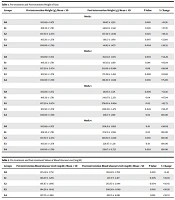
Azhar N, Jabeen S, Aslam M, Ur Rehman H. Comparative Effect of Amylose Concentration in Brown and White Rice on Hepatocellular Insufficiency Using Rat Bioassay. Health Scope. 2023;12(4):e134717. doi: https://doi.org/10.5812/healthscope-134717
Nazari Khorasgani Z, Goudarzi M, Behfar A, Kalantari H, Ebrahim R, et al. Occurrence of Aflatoxins in Imported Rice at Supermarkets of Ahvaz City, Khuzestan Province, Iran. Jundishapur J Nat Pharm Prod. 2015;10(2):e24164. doi: https://doi.org/10.17795/jjnpp-24164
More by these authors
Last Update: 1 week ago
Last Update: 1 week ago
Last Update: 1 week ago
Last Update: 5 days ago
Last Update: 2 hours ago
Last Update: 3 days ago