
Full Text
Full text is available in PDF
International Journal of Endocrinology and Metabolism
Research Institute for Endocrine Sciences
Authors
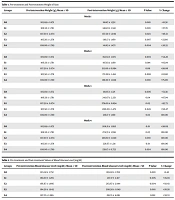
Since the varying different contents of amylose in rice grains have different effects on blood sugar, we examined the effect of consumption of three varieties of rice on glucose response in healthy subjects, to compare the glycemic effects of 50 g carbohydrate in the Basmati, Kazemi and Sorna pearl varieties of rice in normal subjects. Material and Methods: Thirty healthy subjects (13 males and 17 females), were evaluated 4 times at 1 week intervals. On the first day, all subjects consumed 50 g glucose, and were then divided into 3 groups. Each group consumed one of the 3 types of rice with 50 g carbohydrate con-tent each week. Blood samples were collected before and at 15, 30, 60 nd 120 minutes after tak-ing of glucose and rice consumption. The Gly-cemic index (GI) was calculated for each rice as the ratio of the incremental area under the 3-hour glycemic response curve to rice to the in-cremental area under the 3-hour glycemic re-sponse curve to 50 g glucose. Results: The GIs of Sorna pearl, Kazemi and Basmati were 52.2±5.1, 67.6±13 and 61.2±6.1 re-spectively, with that of Sorna pearl being lower than the others (p<0.05). Maximum changes in blood sugar for Sorna pearl, Kazemi and Basmati were 21.8±12, 27.4±6 and 31.7±5.9 mg/dL, respec-tively. Conclusion: Glycemic index and glycemic load for Sorna pearl rice were lower than for the other two rice types, difference statistically sig-nificant. The effect of Sorna pearl rice consumption in diabetes mellitus patients however needs more study.
© 2008, Author(s). This open-access article is available under the Creative Commons Attribution 4.0 (CC BY 4.0) International License (https://creativecommons.org/licenses/by/4.0/), which allows for unrestricted use, distribution, and reproduction in any medium, provided that the original work is properly cited.
Nematy M, Haghani M, Akhavan Rezayat A, Babazadeh S, Safarian M, et al. Determination of the Glycemic Index of the most popular Iranian rice - Tarom - in two cooking methods: Boiled and Steamed. J Health Rep Technol. 2016;1(2):e69885. doi:
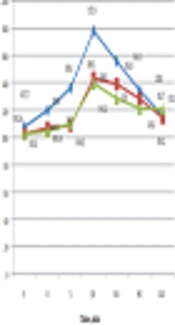
Nematy M, Tavakolian A, Norouzy A, Safarian M, Akhlaghi S. The Effect of Cooking Method on the Glycemic Index of Kalat Rice. J Health Rep Technol. 2019;5(2):e92591. doi: https://doi.org/10.5812/ijhls.92591
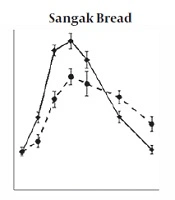
Kazemi F, Danaei G, Farzadfar F, Malik V, Parsaeian M, et al. Glycemic Index (GI) Values for Major Sources of Dietary Carbohydrates in Iran. Int J Endocrinol Metab. 2020;18(3):e99793. doi: https://doi.org/10.5812/ijem.99793
Azhar N, Jabeen S, Aslam M, Ur Rehman H. Comparative Effect of Amylose Concentration in Brown and White Rice on Hepatocellular Insufficiency Using Rat Bioassay. Health Scope. 2023;12(4):e134717. doi: https://doi.org/10.5812/healthscope-134717
Khamse ME, Aghili R, Malek M, Shafie G, Zarghami SY, et al. Effects of Ramadan fasting on metabolic outcomes in fasting diabetic subjects. koomesh. 2013;14(2):e152560. doi:
Last Update: 3 weeks ago
Last Update: 3 weeks ago
Last Update: 3 weeks ago
Last Update: 10 hours ago
Last Update: 1 day ago
Last Update: 4 days ago
