Journal of Inflammatory Diseases
The Official Journal of Qazvin University of Medical Sciences
Indications and outcome of penetrating keratoplasy in Yazd
Authors
Abstract
Background: Penetrating keratoplasty (PK) is the most common tissue transplant. The indications for penetrating keratoplasty (PK) vary in different regions of the world. Objective: To determine the indications for PK and visual outcome in a primary referral center for a period of 8 years. Methods: This was a retrospective chart review of all patients who underwent penetrating keratoplasty at Shaheed Sadoughi University Eye Hospital from March 20, 1997 to April 20, 2005. From 286 procedures performed in this period, 255 records were available for evaluation. The data were analyzed regarding sex, age indication, visual outcome and rejection. Findings: The study group included 255 patients from which 141 (55.3%) were males and 114 (44.7%) females. The mean age of the patients was 59.2+19 (with a range of 5-82) years. The frequencies of leading indications for penetrating keratoplasty were as follows: keratoconus (32.9%), pseudophakic and aphakic bullous keratopathy (21.7%), corneal scar (14.1%), corneal dystrophy (11%), regrafts (10.2%) and corneal ulcer/perforation (4.7%). Other indications represented only 5.4% of the cases. Gender difference (M/F) ratio was significant for keratoconus. The average age of keratoconus group was significantly low (23.5+1.7) compared with other diagnostic group (P=0.00). Grafts carried out for keratoconus group were indicative of better visual outcome than grafts performed for other corneal pathologies. A large number of keratoconus patients (71.4%) achieved BCVA of 20/40 or higher at final follow up. Conclusions: Keratoconus remains the leading indication for corneal transplantation in our institution followed by PBK/ ABK
Highlights
Copyright
© 2024, Journal of Inflammatory Diseases. This open-access article is available under the Creative Commons Attribution-NonCommercial 4.0 (CC BY-NC 4.0) International License (https://creativecommons.org/licenses/by-nc/4.0/), which allows for the copying and redistribution of the material only for noncommercial purposes, provided that the original work is properly cited.
Similar Articles
Visual Outcome, Refractive Error and Specular Microscopy Parameters Following Successful DSAEK
Ghanbari M, Nejabat M, Maalhagh M, Zaheryani SMS. Visual Outcome, Refractive Error and Specular Microscopy Parameters Following Successful DSAEK. Shiraz E-Med J. 2018;20(1):e69214. doi: https://doi.org/10.5812/semj.69214
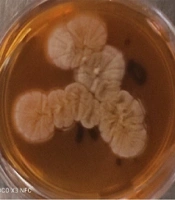
Prevalence of Fungal Keratitis in Suspected Keratomycosis Cases Over Five Years in Southeastern Iran
Salimi Khorashad A, Kashani M, Parandin F, Etemadi S. Prevalence of Fungal Keratitis in Suspected Keratomycosis Cases Over Five Years in Southeastern Iran. Arch Clin Infect Dis. 2025;20(6):e161256. doi: https://doi.org/10.5812/archcid-161256
New Presentation of Corneal Epithelial Graft Rejection
Panahi Bazaz M, Sharifipour F, Malekahmadi M, Hajizadeh M. New Presentation of Corneal Epithelial Graft Rejection. Jentashapir J Cell Mol Biol. 2014;5(5):e23217. doi: https://doi.org/10.17795/jjhr-23217

The causes of Keratoplasty in Qazvin
Mehrtash A. The causes of Keratoplasty in Qazvin. J Inflamm Dis. 1999;2(4):e154641. doi:
Secondary Intraocular Lens Implantation in Yazd - Iran
Rastegar A, Besharati M, Shoja M. Secondary Intraocular Lens Implantation in Yazd - Iran. J Kermanshah Univ Med Sci. 2007;10(4):e81829. doi:
- Scopus by DOI: 0
Last Update: 3 weeks ago
- Scopus by Title: 0
Last Update: 3 weeks ago
- Scopus by Title (Ref): 0
Last Update: 3 weeks ago
- CrossRef: 0
Last Update: 4 hours ago
- OpenAlex: 0
Last Update: 7 hours ago
- OpenCitations: 0
Last Update: 4 days ago