Journal of Inflammatory Diseases
The Official Journal of Qazvin University of Medical Sciences
Evaluating the Antiviral Activities of Human Cathelicidin LL-37 Peptide Against Rotavirus in Vitro
Authors
Abstract
Background Rotavirus is the most prevalent cause of severe gastroenteritis, hospitalizations, and deaths among infants and young children, globally. No specific antiviral drug is available against rotavirus infection. Objective The current study aimed to assess the antiviral effect of human cathelicidin antimicrobial peptide LL-37 on rotavirus infection in vitro. Methods This study was conducted in the laboratory conditions of Iran University of Medical Sciences, in Tehran City, Iran. The neutral red assay was performed to assess the cytotoxicity of different concentrations of the peptide on the MA-104 cell line, and its antiviral activity was determined by TCID50 (50% tissue culture infective dose) assay. Findings According to the cytotoxicity results, viability maintained more than 90% up to the concentration of 50 μg/mL of LL-37 peptide. The antiviral assays results revealed that the concentration of 50 μg/mL LL-37 peptide could significantly reduce (3.36 log10 TCID50) the production of rotavirus progeny when administered before virus exposure (P= 0.0001). However, no inhibitory effect was detected after cell exposure to virus. Conclusion The obtained data suggested that LL-37 can be considered as a new antiviral agent for protecting infants and young children against gastroenteritis caused by rotaviruses. However, further in vivo investigations are required to confirm this finding.
Highlights
Copyright
© 2024, Journal of Inflammatory Diseases. This open-access article is available under the Creative Commons Attribution-NonCommercial 4.0 (CC BY-NC 4.0) International License (https://creativecommons.org/licenses/by-nc/4.0/), which allows for the copying and redistribution of the material only for noncommercial purposes, provided that the original work is properly cited.
Similar Articles
Antimicrobial and Antibiofilm Activity of Human Cationic Antibacterial Peptide (LL-37) and Its Analogs Against Pan-Drug-Resistant Acinetobacter baumannii
Guo Y, Wang L, Lei J, Xu J, Han L. Antimicrobial and Antibiofilm Activity of Human Cationic Antibacterial Peptide (LL-37) and Its Analogs Against Pan-Drug-Resistant Acinetobacter baumannii. Jundishapur J Microbiol. 2017;10(3):e35857. doi: https://doi.org/10.5812/jjm.35857
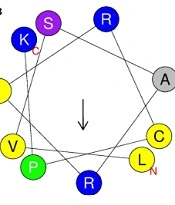
Design and Evaluation of a Novel Anti-microbial Peptide from Cathelicidin-2: Selectively Active Against Acinetobacter baumannii
Fathi F, Ghobeh M, H Shirazi F, Tabarzad M. Design and Evaluation of a Novel Anti-microbial Peptide from Cathelicidin-2: Selectively Active Against Acinetobacter baumannii. Iran J Pharm Res. 2023;22(1):e141920. doi: https://doi.org/10.5812/ijpr-141920

Construction, Expression, and Purification of p28 as a Cell-Penetrating Peptide with Anticancer Effects on Burkitt’s Lymphoma Cell Line
Abuei H, Behzad Behbahani A, Rafiei Dehbidi G, Pirouzfar M, Zare F, et al. Construction, Expression, and Purification of p28 as a Cell-Penetrating Peptide with Anticancer Effects on Burkitt’s Lymphoma Cell Line. Shiraz E-Med J. 2019;20(7):e85190. doi: https://doi.org/10.5812/semj.85190
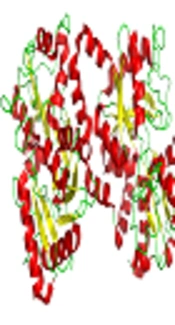
In Silico and in Vitro Studies of Cytotoxic Activity of Different Peptides Derived from Human Lactoferrin Protein
Fatemi M, Ghandehari F, Bahrami S, Tajedin N. In Silico and in Vitro Studies of Cytotoxic Activity of Different Peptides Derived from Human Lactoferrin Protein. J Kermanshah Univ Med Sci. 2018;22(1):e69544. doi: https://doi.org/10.5812/jkums.69544
In Silico Design and In Vitro Evaluation of Some Novel AMPs Derived From Human LL-37 as Potential Antimicrobial Agents for Keratitis
Pashapour A, Sardari S, Ehsani P. In Silico Design and In Vitro Evaluation of Some Novel AMPs Derived From Human LL-37 as Potential Antimicrobial Agents for Keratitis. Iran J Pharm Res. 2022;21(1):e124017. doi: https://doi.org/10.5812/ijpr-124017
More by these authors
- Scopus by DOI: 0
Last Update: 1 month ago
- Scopus by Title: 0
Last Update: 1 month ago
- Scopus by Title (Ref): 0
Last Update: 1 month ago
- CrossRef: 0
Last Update: 4 hours ago
- OpenAlex: 0
Last Update: 8 hours ago
- OpenCitations: 0
Last Update: 4 days ago