
1. Background
Congestive heart failure (CHF) is a disease that has been on the rise in recent years throughout the world, and it presents health-care systems with serious challenges (1). It is the most common indication for hospitalization among adults over 65 years of age (2). In the United States of America, there are about five million patients with heart failure, and more than 5.1 million new cases are diagnosed each year (3). A survey done in Iran found that 25% of patients hospitalized in heart wards are suffering from heart failure (4). Elderly patients with heart failure are also at increased risk for early hospitalization, with rates of readmission ranging from 29 to 47% within three to six months of the initial discharge (2-5).
The cost of hospitalizing heart failure (HF) patients is very expensive. Their admission fees are 50 - 79% higher than those of other patients (6). The costs of this disease in the United States of America are estimated to be over USD 35 billion per year (7). Patient admissions fees for HF in Iran are estimated to be 4 billion Rials a year, which is a testament to the need to identify preventive strategies that can bring about greater care efficiency and lower costs (4). HF is a chronic and costly condition that affects approximately 5.8 million people in the United States, with an additional 670000 diagnosed yearly. With high 30-day hospital readmission rates, it is imperative to determine effective means of preventing readmissions. Despite published guidelines emphasizing the importance of education in preventing readmissions, the most effective means of educating hospitalized patients with HF about their self-care remains unknown (7-9).
There are important differences among patients, caregivers, and clinicians in terms of how they perceive the challenges of HF management and the reasons for readmission. Understanding these differences may be critical to developing strategies to reduce readmissions (2-4). In Iran, the results of some studies show that 12 to 75% of readmissions can be prevented through training patterns, preparation before discharge, and home care (10). Therefore, the best training should be given to patients regarding their treatment and care programs (4, 8, 11). Different studies have been performed on the readmission of patients, among which a study by Heidari et al. 2012 (12) showed that the main factors associated with readmission in cardiac patients are non-adherence to recommendations about activity, medication, and diet. In addition, a study by White et al. in 2013 (13) showed that training using the teach-back method in patients with HF has not been associated with lower hospital readmission; however, the absence of a control group was a serious limitation of this study.
Thus, according to the results from different studies, because patients with HF lack adequate literacy levels to understand the instructions (14). An appropriate method should be selected to compensate for the problem of low literacy levels in patients because the studies have shown that the most frequent cause of dissatisfaction among patients is associated with the provision of information and patient education. In Iran, more than 65% of people over age 60 have low literacy or are illiterate. Therefore, we must select an effective method, such as teach-back, that is more useful for people with lower education levels (15). The teach-back method allows the nurse to assess and correct the patient’s understanding of information, which can help improve patient adherence to self-care behaviors (16).
2. Objectives
Due to the fact that most patients with HF have a low literacy rate, the high readmission rates for patients and related costs, and considering the lack of research in Iran about the effects of the teach-back method on the readmission of patients with HF, this study was performed to determine the effects of group training using the teach-back method on readmission of patients with HF. The results of this study can be used to draw conclusions about patient education for elderly and low literacy patients and develop strategies to reduce readmissions in HF cases.
3. Materials and Methods
This randomized controlled trial study was conducted at three academic hospitals in Ahvaz to compare the usual education strategy with education based on the teach-back method for older patients who were discharged home after inpatient treatment for decompensated HF.
The inclusion criteria were as follows: age over 40 years, diagnosis of HF recorded in patient’s medical records by a rendering physician, at least six months had passed since the diagnosis, the patient was alert and familiar with the Persian language, and the patient was able to communicate and respond to the questions. Exclusion criteria for this study were as follows: history of psychiatric diagnoses such as schizophrenia, drug addiction, acute physical diseases such as dialysis, or any illness that impairs learning, lack of patient consent to continue the study, any physical problem other than those associated with HF, or the presence of mental health problems that developed during the study period and impaired learning. The sample size in this study was calculated by considering the readmission rates presented in a paper by Wang, which reported readmission rates of 79% and 28% in the control group and the intervention group, respectively (1). Sample size was calculated by using a statistical formula. Each group included 43 patients. We selected 100 patients, with the possibility of a loss of 10% of the patients. After obtaining informed consent, the patients were divided via random allocation into a control group and an intervention group. Groups were matched for gender and cigarette smoking and other factors.
The main instrument in this study was a registration form indicating the disease status, readmission characteristics, demographic data, and heart failure codes of all patients taken from electronic records and compiled by the researcher. To determine the content validity, ten nursing-midwifery faculty members and professors at the Jundishapur University of Medical Sciences were consulted on content validity, and the reality was found to be 0.87.
The control group received only the conventional training performed at the hospital, but the intervention group received training through the teach-back method. The questionnaire was completed before and after intervention by the researcher.
3.1. Educational Intervention
First, the education needs of patients and patient families in the intervention group were identified through interviews because most of them were either of low literacy or illiterate. The educational content was then planned. We explained the instructional content in simple language without medical terminology. The duration of each class was 30 - 45 minutes. Patients were divided into groups of 7 - 8 persons based on the training needs of each group. We constructed the questions according to core measure concepts for HF, so the concepts of medication, diet, weight, and identifying and managing signs and symptoms were key concepts that were constantly being taught to patients in the intervention group. The teach-back questions were not used only within the hospital; they were also reviewed during a home care visit within 24 - 48 hours after discharge. They were used once again during a seven-day follow-up call by a nurse. The use of these questions continually reinforced the key points.
The patient or family caregiver might give correct answers to 75% of questions related to educational content, which were asked in an open-ended manner. Then, the patients were given the opportunity to ask their questions and receive the proper answers. Next, the patients were asked to paraphrase the training items in their own words, and the learning process continued until the patient or his or her family could paraphrase the taught materials in their own words in a correct and complete manner. Then, the readmission rates in both groups of patients were re-evaluated one month after the training. The control group received routine training in the hospital. In order to respect ethical principles, a training manual was put at the disposal of the case group after the intervention. After the training, the developed training manual was given to the control group. A significance level of five percent (P ≤ 0.05) and a confidence interval of 95% are considered in the analysis. Data analysis was performed by using SPSS. 22.
The Man-Whitney and chi square tests were used because the population was not normal based on the Kolmogorov-Smirnov test.
4. Results
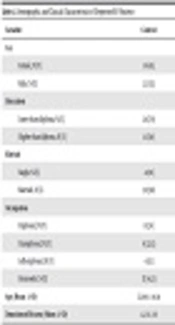
In this study, most of the subjects (60.5%) were between 66 and 85 years old. Most subjects (62.6%) were female. Most patients (79.1%) were married, and 93.41% were illiterate or had low levels of literacy. In terms of employment, the majority of the patients (63.8%) were housewives, and Persian-speaking people constituted 59.5% of the study subjects. In addition, 86.82% had health insurance coverage, and 96.7% did not smoke cigarettes. According to the chi square test, there was no statistically significant difference between the control and intervention groups in terms of age, gender, marital status, occupation, education, ethnicity, access to insurance, smoking, or history of associated diseases (Table 1). In terms of mean body mass index and duration of the disease, there were no statistically significant differences between the control and intervention groups (P = 0. 72) (Table 2). The most common problems reported by the patients were high blood pressure (56.05%) and diabetes (48.35%). Three out of four patients in the intervention group answered to of self-care teach-back questions than the control group (P < 0.001). Table 3 indicates the status of the subjects based on the history of other diseases and complications. There were no statistically significant differences between the two groups. In addition, Table 4 shows the readmission rates of both groups. The results indicate that there was a statistically significant difference in the number of hospitalizations between the two groups. The readmission rates were higher in the control group after a month. The number of readmissions for heart failure was reduced by 56.2% in the intervention group (44 vs. 21, P = 0.04).
Table 1.
Frequency and Percentage of Demographic Characteristicsa
| Demographic Characteristics | Control Group | Intervention Group | All the Individuals | P Value |
|---|---|---|---|---|
| Age, y | 0.12 | |||
| 40 - 65 | 13 (31) | 23 (46.9) | 36 (5.39) | |
| 66 - 85 | 29 (69) | 26 (1.53) | 55 (5.60) | |
| Gender | 0.76 | |||
| Male | 5 (7.35) | 19 (8.38) | 24 (4.26) | |
| Female | 27 (3.64) | 30 (2.61) | 57 (6.62) | |
| Marital status | 0.73 | |||
| Married | 31 (1.81) | 41 (7.83) | 72 (1.79) | |
| Deceased wife | 8 (19) | 8 (3.16) | 16 (9.20) | |
| Education | 0.68 | |||
| Illiterate | 32 (19.76) | 38 (55.77) | 70 (92.76) | |
| Under diploma | 7 (66.16) | 8 (32.16) | 15 (49.16) | |
| Diploma | 3 (15.7) | 3 (13.6) | 6 (59.6) | |
| Occupation | 0.22 | |||
| Retired | 18 (9.42) | 15 (6.30) | 33 (2.36) | |
| Housekeeper | 24 (1.57) | 34 (4.69) | 58 (8.63) | |
| Ethnicity | 0.21 | |||
| Arab | 20 (6.47) | 17 (7.34) | 37 (5.40) | |
| Persian | 22 (4.52) | 32 (3.65) | 54 (5.59) | |
| Insurance protection | 0.33 | |||
| Yes | 4 (5.9) | 8 (3.16) | 12 (18.13) | |
| No | 38 (5.90) | 41 (7.83) | 79 (82.86) | |
| Smoking | 0.33 | |||
| No | 42 (100) | 46 (9.93) | 88 (7.96) | |
| Yes | 0 | 3 (1.6) | 3 (3.3) | |
| Total | 42 (100) | 49 (100) | 91 (100) |
aValues are presented as frequency (%).
Table 2.
Comparison of Average Body Mass and Duration of Diseasea
| Demographic Characteristics | Control Group | Intervention Group | P Value |
|---|---|---|---|
| Body mass | 26.54 ± 7.04 | 26.23 ± 4.36 | 0.72 |
| Duration of disease | 5.92 ± 5.34 | 4.55 ± 3.60 | 0.47 |
aValues are presented as mean ± SD.
Table 3.
Subject Histories of Diseases Associated with Heart Failurea
| Diseases Associated With Heart Failure | Control Group | Intervention Group | Total Individuals | P Value |
|---|---|---|---|---|
| Diabetes | 0.25 | |||
| Yes | 23 (54.8) | 21 (42.9) | 44 (48.35) | |
| No | 19 (45.2) | 28 (57.1) | 47 (51.65) | |
| Blood pressure | 0.28 | |||
| Yes | 21 (50) | 30 (61.2) | 51 (56.05) | |
| No | 21 (50) | 19 (38.8) | 40 (43.95) | |
| Blood lipid | 0.21 | |||
| Yes | 19 (45.2) | 16 (32.7) | 35 (38.47) | |
| No | 23 (54.8) | 33 (67.3) | 56 (61.53) | |
| Respiratory | 0.12 | |||
| Yes | 2 (4.8) | 7 (14.3) | 9 (9.9) | |
| No | 40 (95.2) | 42 (85.7) | 82 (90.1) | |
| Heart attack | 0.15 | |||
| Yes | 17 (40.5) | 13 (26.5) | 30 (32.96) | |
| No | 25 (59.5) | 36 (73.5) | 61 (67.04) | |
| Coronary artery | 0.55 | |||
| Yes | 5 (11.9) | 4 (8.2) | 9 (9.9) | |
| No | 37 (88.1) | 45 (91.8) | 82 (90.1) | |
| Total | 42 (100) | 49 (100) | 91 (100) |
aValues are presented as frequency (%).
Table 4.
Comparison of Differences in Mean Readmission Rates in the Control and Intervention Groupsa
| Readmission rate | Before the Intervention | After the Intervention | Mean Difference |
|---|---|---|---|
| Control group | 0.71 ± 0.45 | 0.38 ± 0.49 | 0.33 ± 0.61 |
| Intervention group | 0.75 ± 0.43 | 0.06 ± 0.24 | 0.6 ± 0.50 |
| P value | 0.66 | 0.001 | 0.003 |
aValues are presented as mean ± SD.
5. Discussion
Teach-back protocols in educational programs for heart failure patients have been helpful in reducing readmissions. When this technique is used to assess skills in key areas pertaining to the management of HF, gaps in understanding can be addressed swiftly (16). In this study, the teach-back method was found to be effective in reducing readmissions of patients with HF.
The intervention group was found to have a significantly lower mean readmission rate than the control group after intervention, which was proved by the Mann-Whitney test (P < 0.05). Our findings show that the teach-back method effectively reduced readmission rates in patients with heart failure. In contrast to our results, a study by White et al. in 2013 (13) entitled “does training Using the teach-back method deal with knowledge retention in patients and hospital readmission?” showed that the teach-back method was not associated with lower rates of hospital readmission. However, because the absence of a control group was one limitation of White’s study, the author himself suggested that the teach-back method be re-evaluated in a study with experimental and control groups. On the other hand, in White’s study, the teach-back method was found to be very effective in the evaluation of patients, which is in line with the results of our study.
Another study by Shojaee et al. in 2011 (17) showed that the provision of an educational booklet and one hour of face-to-face teaching caused no significant decrease in hospital readmission rates for the experimental group (P < 0.05). These results were not consistent with those of our study, in which the teach-back method has been found to offer patients a full understanding of educational materials and to be very effective in reducing readmissions.
Another study by Dracup et al. examined patients with heart failure. In this study, the intervention group was prescribed exercise and walking at home at a 12 month follow-up after readmission to the hospital. The intervention group showed a significant decrease in readmission rates relative to the control group (18). Exercise can help people with HF experience improved mood and reduce symptoms (19), which may also reduce the readmission of patients. This study is in line with our study in terms of the positive impact of nursing interventions on reducing the readmission of patients. In our study, the patients were instructed using the teach-back method to perform light activity and walking at appropriate time intervals.
In addition, in a study by Wang et al. in 2013, reduced readmission rates were observed in patients who were given weight-management educational interventions (1). These results are consistent with ours; in our study, daily weight measurement was emphasized using the teach-back method. As in Wang’s study, the encouragement of weight management could play an important role, along with other training items taught using the teach-back method, in reducing the readmission of patients.
In another study, Holland et al. demonstrated the effectiveness of the teach-back method in reducing hospital admissions of patients with HF and in reducing mortality rates (20); these results are also consistent with ours. Studies by Howie-Esquivel et al. (21) and Mahramus et al. (22) also demonstrated the positive results of the teach-back method in reducing readmissions.
Overall, the teach-back method seems to be effective in reducing readmissions. Therefore, these interventions in patients with heart failure should be considered as an important part of comprehensive care in order to help patients change their behavior and develop skills related to self-care, subsequently reducing their readmission rates. The results of this study are limited to the readmission of patients with HR and cannot be generalized to other types of diseases. In addition, the cultural situations of the participants may have affected how patients understood the proposed training, a limitation that was beyond the control of the researchers.
We recommended that the patient education packet used in our study be used for patients and families of patients recovering from HF. It is designed to be used at all levels of health care, whether inpatient or out-patient. Included is a step-by-step instruction packet for teaching nurses and physicians using the teach-back method.