Full Text
Full text is available in PDF
Jundishapur Journal of Chronic Disease Care
The Official Journal of Ahvaz Jundishapur University of Medical Sciences
Authors
Diabetes is one of the chronic diseases. It is not curable but it can be controlled. The study aimed to determine the effect of family centered empowerment model on the treatment regime of school age children.
A clinical trial study was carried out on the school age diabetes children and their families. Considering ethical matter a total of 50 diabetics patients along with the parents who referred to the Golestan Hospital Diabetes Clinic have been contributed to the present study. They were divided randomly into two groups. Data were collected applying questionnaires, included demographics, physical activity, knowledge, adherence to dietary and medication before the intervention in the both groups and immediately after the intervention and 2 months after the intervention. The case group was completed and the data evaluated with SPSS software applying descriptive and analytical statistical tests.
The study was completed and the extracted results for the case group, before and after intervention were obtained compiling; knowledge, (7.5, 16.4) with the (P = 0.0001), medication adherence (31.48, 41.2) with the (P = 0.0001), the dietary regimen (31, 45) with the (P = 0.0001), sporting activities (13, 22) with the (P = 0.0001) and parents knowledge (8.32, 14.32) with the (P = 0.0001). The statistical calculation indicated a significant difference in the control group however, there was no difference in control group (P = 0.2).
Teaching children with diabetes and their families regarding compliance with the treatment regimen through family-centered empowerment model can increase adherence of treatment regimens and better control diabetes through it and helped make possible delayed complications of diabetes.
© 2014, Author(s). This open-access article is available under the Creative Commons Attribution 4.0 (CC BY 4.0) International License (https://creativecommons.org/licenses/by/4.0/), which allows for unrestricted use, distribution, and reproduction in any medium, provided that the original work is properly cited.
Ghaljaei F, Motamedi M, Saberi N, ArbabiSarjou A. The Effect of the Family-Centered Empowerment Model on Family Functioning in Type 1 Diabetic Children: A Quasi-experimental Study. Med Surg Nurs J. 2022;11(2):e134004. doi: https://doi.org/10.5812/msnj-134004
Boshagh F, Hakim A, Alghasi A, Haghighizadeh MH. Effect of Family-Centered Empowerment Model on Knowledge and Caring Performance of Mothers of Children with Leukemia: A Randomized Clinical Trial. Jundishapur J Chronic Dis Care. 2022;11(3):e116854. doi: https://doi.org/10.5812/jjcdc-116854
Mahmoudi Rad GH, Khaje, Mahmoud F, Nemati A. Evaluation of the effects of the family-centered empowerment model on the nutrition style and physical activity of patients with asthma. Med Surg Nurs J. 2016;5(2):e68010. doi:
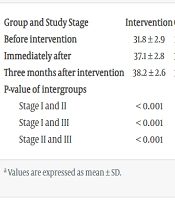
Moazeni M, Aliakbari F, Kheiri S, Salehi Tali S. The Effect of Family-Centered Empowerment Program on Husbands' Understanding of Illness, Perceived Stress and Self-care Behaviors of Type 2 Diabetes Patients. Jundishapur J Chronic Dis Care. 2024;13(4):e143656. doi: https://doi.org/10.5812/jjcdc-143656
Minooei MS, Ghazavi Z, Abdeyazdan Z, Gheissari A, Hemati Z. The Effect of the Family Empowerment Model on Quality of Life in Children with Chronic Renal Failure: Children’s and Parents’ Views. Nephro-Urol Mon. 2016;8(4):e58813. doi: https://doi.org/10.5812/numonthly.36854
Last Update: 1 week ago
Last Update: 1 week ago
Last Update: 1 week ago
Last Update: 3 hours ago
Last Update: 5 hours ago
Last Update: 5 days ago