Cover image of the article: Modified and Improved DNA Extraction Method for Molecular Detection of Candida Species from Positive Blood Culture Bottles

Image Credit:Jundishapur J Microbiol

Modified and Improved DNA Extraction Method for Molecular Detection of Candida Species from Positive Blood Culture Bottles

Authors

Hassan Yahaya1, Leslie Thian Lung Than2, 3,*
1Department of Medical Laboratory Science, Faculty of Allied Health Sciences, Bayero University Kano, Nigeria
2Department of Medical Microbiology, Faculty of Medicine and Health Sciences, Universiti Putra Malaysia, 43400, UPM Serdang, Selangor, Malaysia
3Institute of Bioscience, Universiti Putra Malaysia, 43400 UPM Serdang, Selangor, Malaysia
*Corresponding Author: Department of Medical Microbiology, Faculty of Medicine and Health Sciences, Universiti Putra Malaysia, 43400, UPM Serdang, Selangor, Malaysia. Email: leslie@upm.edu.my

Jundishapur Journal of Microbiology:Vol. 14, issue 4; e106146
Published online:Jul 19, 2021
Article type:Letter
Received:Jun 07, 2020
Accepted:Jun 22, 2021
How to Cite:Yahaya H, Than LTL. Modified and Improved DNA Extraction Method for Molecular Detection of Candida Species from Positive Blood Culture Bottles. Jundishapur J Microbiol. 2021;14(4):e106146. doi: https://doi.org/10.5812/jjm.106146

Dear editor,
Direct fungal DNA extraction using commercial kits from whole blood or its components, such as serum and plasma, is challenging with poor sensitivity, mainly due to the abundance of red blood cells and the low number of fungal cells present. Fungal DNA extraction from positive fungal blood culture bottles offers a higher chance of DNA recovery for detection as the number of fungal cells increases. However, this extraction is often challenging due to many inhibitory factors, i.e., abundant interfering human DNA, blood preservatives, and rich blood cell components (1). Thus, we proposed a modified extraction method that successfully detected and identified various Candida species to avoid problems mentioned above. This method helps shorten the relative turn-around-time, TAT (pure culture is usually used for DNA extraction in normal circumstances), and avoid using toxic chemicals, i.e. phenol-chloroform, lysis buffer, proteinase K, or expensive lyticase enzymes. It overcomes the limitation of existing commercial kits usually designed either for blood or fungal DNA extraction (2, 3).
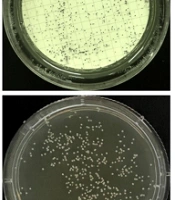
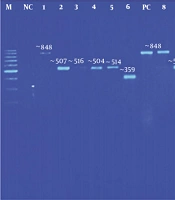
We developed the in-house method that involved incubating 1 ml of positive blood culture bottle sample in a heating block at 95°C for 30 min with vortexing for 15 s every 10 min. It was followed by centrifugation at 18,000 g for 10 min. Next, the supernatant was transferred to a sterile microcentrifuge tube with an equal volume of absolute ethanol. A 1/10th volume of 3M sodium acetate, pH 5.2, was gently added and mixed by inversion to precipitate the DNA and incubated on ice for 20 min. Following incubation, the tube was centrifuged for 15 min at 11,000 x g to obtain the pellet. The pellet containing the extracted DNA with minute blood traces (haem) was purified using the ExpinTM Combo GP kit (GeneAll Biotechnology, South Korea). The DNA eluates were kept at -20°C until use, as indicated in the schematic illustration (Figure 1A). Standard PCR assay with initial denaturation: 95°C, 4 min; denaturation: 95°C, 20 s; annealing: 62°C, 15 s; and extension: 72°C, 30 s, with one cycle for initial denaturation and 30 cycles repeated for denaturation, annealing, and extension using universal pan-fungal internal transcribed spacer (ITS) primers successfully amplified the ITS region of the extracted DNA samples (Figure 1B).
A, modified DNA extraction protocol for <i>Candida</i> isolates; B, duplicate PCR results. Legend: Lane M, DNA molecular weight marker 100 bp (ThermoFisher); Lanes NC, no template control; Lanes 1 &amp; 8, <i>C. glabrata</i>; Lanes 2 &amp; 9: <i>C. tropicalis</i>; Lanes 3 &amp; 10: <i>C. albicans</i>; Lanes 4 &amp; 11, <i>C. tropicalis</i>; Lanes 5 &amp; 12, <i>C. albicans</i>; Lanes 6 &amp; 13, <i>C. auris</i>; Lane PC, positive control (<i>C. glabrata</i> ATCC 2001) (~ 848 bp).
Figure 1.
A, modified DNA extraction protocol for Candida isolates; B, duplicate PCR results. Legend: Lane M, DNA molecular weight marker 100 bp (ThermoFisher); Lanes NC, no template control; Lanes 1 & 8, C. glabrata; Lanes 2 & 9: C. tropicalis; Lanes 3 & 10: C. albicans; Lanes 4 & 11, C. tropicalis; Lanes 5 & 12, C. albicans; Lanes 6 & 13, C. auris; Lane PC, positive control (C. glabrata ATCC 2001) (~ 848 bp).
The identification of the isolates was confirmed by direct sequencing of the purified PCR products. The interpreted sequencing results identified six clinical Candida species of different amplicon sizes between 350 - 850 bp. The identified species included C. glabrata (~ 848 bp), C. tropicalis (~ 507 bp), C. albicans (~ 516 bp), C. tropicalis (~ 504 bp), C. albicans (~ 516 bp), and C. auris (~ 359 bp) (Figure 1B). The extracted DNA showed good integrity and shortened the TAT. The yield is adequate as a template for PCR and simple cloning. The method is simple, rapid, affordable, and environmentally friendly. It helps rapid detection of bloodstream yeast Candida species from positive blood culture bottles. Hence, it can help initiate timely and appropriate antifungal therapy
Footnotes

  • Authors' Contribution: H. Y. wrote the manuscript; H. Y. and L. T. analyzed and interpreted the data; and L. T. critically revised the manuscript for important intellectual content.

  • Conflict of Interests: The authors declare that they have no financial or personal relationship (s) that may have inappropriately influenced them in writing this article.

  • Ethical Approval: MREC ID NO: 2020121-8206.

  • Funding/Support: This study was supported in part by grant UPM/700-2/1/GP-IPS/2018/9612400 from Universiti Putra Malaysia.

References

  • 1.
    Silva S, Negri M, Henriques M, Oliveira R, Williams DW, Azeredo J. Candida glabrata, Candida parapsilosis and Candida tropicalis: Biology, epidemiology, pathogenicity and antifungal resistance. FEMS Microbiol Rev. 2012;36(2):288-305. [PubMed ID: 21569057]. https://doi.org/10.1111/j.1574-6976.2011.00278.x.
  • 2.
    Arvanitis M, Anagnostou T, Fuchs BB, Caliendo AM, Mylonakis E. Molecular and nonmolecular diagnostic methods for invasive fungal infections. Clin Microbiol Rev. 2014;27(3):490-526. [PubMed ID: 24982319]. [PubMed Central ID: PMC4135902]. https://doi.org/10.1128/CMR.00091-13.
  • 3.
    Griffiths L, Chacon-Cortes D. Methods for extracting genomic DNA from whole blood samples: Current perspectives. J Biorepository Sci Appl Med. 2014;2:1-9. https://doi.org/10.2147/bsam.s46573.

Copyright

Copyright © 2021, Author(s). This is an open-access article distributed under the terms of the Creative Commons Attribution-NonCommercial 4.0 International License (http://creativecommons.org/licenses/by-nc/4.0/) which permits copy and redistribute the material just in noncommercial usages, provided the original work is properly cited.

Similar Articles

27
Aug
2025
An In-house PCR Workflow for Rapid Detection of Candida spp. from Blood Cultures of Septicemia Suspected Patients

An In-house PCR Workflow for Rapid Detection of Candida spp. from Blood Cultures of Septicemia Suspected Patients

Omid Pouresmaeil,
Masoud Keikha,
Mojtaba Sankian,
Ehsan Aryan,
Zahra Meshkat,
Masoud Youssefi
,et al.

Pouresmaeil O, Keikha M, Sankian M, Aryan E, Meshkat Z, et al. An In-house PCR Workflow for Rapid Detection of Candida spp. from Blood Cultures of Septicemia Suspected Patients. Middle East J Rehabil Health Stud. 2025;12(4):e164998. doi: https://doi.org/10.5812/mejrh-164998

29
Aug
2015
Comparison Between Phenotypic Characterization and Semi-Nested PCR for the Identification of Candida Species in Clinical Isolates

Comparison Between Phenotypic Characterization and Semi-Nested PCR for the Identification of Candida Species in Clinical Isolates

Batool Sadeghi-Nejad,
Alireza Samarbaf-Zadeh,
Zahra Salehi

Sadeghi-Nejad B, Samarbaf-Zadeh A, Salehi Z. Comparison Between Phenotypic Characterization and Semi-Nested PCR for the Identification of Candida Species in Clinical Isolates. Jundishapur J Nat Pharm Prod. 2015;10(3):e17391. doi: https://doi.org/10.17795/jjnpp-17391

2
Mar
2013
Comparison of Phenotypic Tests and PCR to Detect Candida Albicans From Vaginal Specimens (Tabriz, 2009-2010)

Comparison of Phenotypic Tests and PCR to Detect Candida Albicans From Vaginal Specimens (Tabriz, 2009-2010)

Abdolhassan Kazemi,
Mehraban Falahati,
Ashraf Hajipoor,
Abbasali Jafari,
Mohammad Asghar zadeh

Kazemi A, Falahati M, Hajipoor A, Jafari A, Asghar zadeh M. Comparison of Phenotypic Tests and PCR to Detect Candida Albicans From Vaginal Specimens (Tabriz, 2009-2010). Jundishapur J Microbiol. 2013;6(2):e4734. doi: https://doi.org/10.5812/jjm.4734

10
Dec
2014
Detection of Medically Important Candida Species by Absolute Quantitation Real-Time Polymerase Chain Reaction

Detection of Medically Important Candida Species by Absolute Quantitation Real-Time Polymerase Chain Reaction

Than Leslie Thian Lung,
Chong Pei Pei,
Ng Kee Peng,
Seow Heng Fong

Thian Lung TL, Pei Pei C, Kee Peng N, Heng Fong S. Detection of Medically Important Candida Species by Absolute Quantitation Real-Time Polymerase Chain Reaction. Jundishapur J Microbiol. 2015;8(1):e14940. doi: https://doi.org/10.5812/jjm.14940

12
Aug
2023
Development of Short-term Membrane-based Cultivation Combined with Dual-target Melting Analysis for Rapid Differentiation of Common Candida Species

Development of Short-term Membrane-based Cultivation Combined with Dual-target Melting Analysis for Rapid Differentiation of Common Candida Species

Wei Shen,
Jingjing Sheng,
Meng Wang,
Xiujiao Xia,
Keyu Ling,
Miaomiao Qian
,et al.

Shen W, Sheng J, Wang M, Xia X, Ling K, et al. Development of Short-term Membrane-based Cultivation Combined with Dual-target Melting Analysis for Rapid Differentiation of Common Candida Species. Jundishapur J Microbiol. 2023;16(6):e136710. doi: https://doi.org/10.5812/jjm-136710

More by these authors

Hassan YahayaPubMedScholar
Leslie Thian Lung ThanPubMedScholar
Share
Cited by
Metrics