
Fulltext
Enterococci spp. are Gram-positive and catalase negative cocci, able to grow in the temperature range of 10ºC to 45°C and media containing 6.5% NaCl (1). Enterococci are the second or third most prevalent organism responsible for nosocomial infections (2). Among the 50 identified species, Enterococcus faecium and E. faecalis are the most medically significant ones. Enterococcus faecalis is the most predominant species in hospital settings and accounts for 80% to 90% of nosocomial infections, compared to E. faecium, which causes 1% to 5% of such infections (3, 4). Enterococcal infections commonly occur in patients hospitalised for long periods and patients with severe chronic diseases such as renal failure, neutropenia, transplantation, and catheterisation. Important infections caused by enterococci are urinary tract infections (UTIs), bacteraemia, endocarditis, intra-abdominal and pelvic disease, and wound infections (2).
Enterococci are equipped with many genes encoding virulence factors that enable them to survive in harsh environments and sustain infection in vulnerable hosts. Some virulence factors such as cytolysin (cylA, cylB and cylM), gelatinase (gel-E), and aggregation substances (asa1) might increase the severity of the infections (5). Cytolysin is the main virulence factor of E. faecalis. The toxin is associated with increased pathogenicity of enterococcal infections in bacteraemia, endocarditis, and intraperitoneal infections (6). Cytolysin, as a lantibiotic, can target and lyse bacterial and mammalian cells (7-10). Nucleotide sequence determination for the cytolysin operon revealed a complex determinant encoding 5 genetic markers, of which cylA, cylB, and cylM are the most important ones (11, 12).
Observation of enterococcal biofilms on endodontic surfaces, biliary duct stents, urinary catheters, heart valves, and tissue surfaces suggested a correlation between the lifestyle and virulence (13). Biofilm formation is reportedly less common in E. faecium compared to E. faecalis, although the clinical outcome of infections caused by E. faecium may be worsening as a result of biofilm formation (14, 15). Biofilm production has profound effects on the development of endocarditis, periodontitis, and various device-related infections, and also causes resistance to antibiotics (16, 17).
Enterococcal surface protein (Esp) may induce persistent UTIs and increase the ability of microorganisms to colonise in hospitalised patients (18, 19). The corresponding gene, esp, is more frequent in clinical E. faecalis and E. faecium isolates, compared to environmental or food product ones (20, 21). The esp expression is related to the primary bacterial adherence and biofilm formation (22, 23). Gelatinase encoded by gelE gene is an extracellular zinc metalloprotease that hydrolyses gelatine, collagen, casein, haemoglobin, and antimicrobial peptides of the innate immune system (24, 25). The asa1 is encoded by pheromone-responsive plasmids, which often harbour antibiotic resistance genes (26, 27). The protein causes clumping of E. faecalis cells and survival inside polymorphonuclear leucocytes, internalisation by intestinal cells, and increases in bacterial binding to cultured renal epithelial cells (28, 29).
Considering the importance of bacterial virulence factors in the outcome of infections and lack of any comprehensive information about the prevalence of such factors in clinical isolates of enterococci in Iran, the current study aimed at investigating a possible relationship between the biofilm formation ability and virulence factors of enterococci isolated from clinical samples of an educational hospital in Kermanshah province, West of Iran, and also the role of virulence genes in biofilm development, and their prevalence especially as high-biofilm-producing isolates.
Array
Array
Array
Array
Array
Array
Array
Array
Array
Array
Array
Array
Enterococcus is among the 4 most common causes of nosocomial infections worldwide. Due to its intrinsic resistance to antimicrobial agents and harsh environments, it can survive and spread in hostile niches, such as hospitals. In enterococcal infections, biofilm plays an essential role by providing a context to enhance microbial survival in the host (32-34). Several studies were conducted to identify the virulence factors of enterococci and their possible association with biofilm formation, but this issue is not yet well understood. To reduce the rate of nosocomial infections and implement the correct treatment strategies, it is vital to obtain reliable knowledge on bacterial capacities and their virulence factors (17, 32, 33, 35-39).
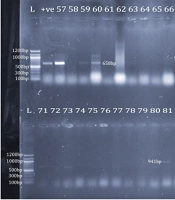
The current study aimed at evaluating the frequency of several virulence factors in clinical enterococcal isolates and their relationship with biofilm production. Therefore, a multiplex PCR was designed to simultaneously detect tuf (Enterococcus genus), ddl (E. faecalis species), ddl (E. faecium species), gelE (gelatinase), esp, cylA, cylB, cylM (cytolysin), and asa1. All 126 isolates were analysed for the presence of virulence genes by the researcher-designed primers. The results are presented in Table 3, which revealed a relatively high incidence of virulence factors among isolates. The frequencies of all 6 virulence factors were significantly high in E. faecalis than E. faecium (Table 3). Previous observations revealed a higher rate of clinical isolates harbouring esp compared to the isolates from other resources (19, 21).
In the present study, the prevalence of esp was consistent with those of other studies in Iran and other parts of the world, although some studies failed to find esp+E. faecium (18, 36, 40, 41). The Esp has a role in colonisation and persistence of E. faecalis in the urinary tract (18). Since most isolates in the current study were isolated from UTIs, a high incidence of esp was not surprising. The Esp protein has a high sequence similarity with Bap (biofilm-associated protein of Staphylococcus aureus); thus, this protein may be important for biofilm formation (42). Di Rosa suggested that the synergy between esp and biofilm formation helps to establish a successful infection (43). The current study also detected the ability of enterococcal isolates to form biofilms and their possible relationship with esp.
According to the literature, all enterococcal strains isolated from urinary and blood stream sources can produce biofilm, with a rate typically higher than that of the current study (30, 42, 44). Despite the lack of a significant association between Esp and biofilm formation in the current study, other researches reported conflicting results about the role of E. faecalis Esp in biofilm formation (23, 42, 43, 45-48). Although biofilm formation in esp-deficient mutants of E. faecalis was not reported in all studies, many others report no correlation between the presence of esp and biofilm formation, which is a multifactorial process (49, 50).
Gelatinase, another virulence factor of E. faecalis, was also detected in the current study. The frequency of gelE was the same as those of previous studies (5, 44, 51), which also could not detect this gene in E. faecium isolates, although many E. faecalis isolates harboured it (52). Furthermore, phenotypical expression of gelE, which leads to the secretion of gelatinase, was assessed and many gelE+E. faecalis isolates failed to secrete gelatinase. A reason for the phenomenon could be that the presence of a specific gene does not automatically mean phenotypic expression of that gene. This could explain the presence of the gelE+ isolates, which were unable to liquefy gelatine (53-56).
Despite demonstrations about the necessity of gelatinase enzymatic activity to establish biofilm (45), the current study found no difference in the in vitro biofilm production between gelE+ and gelE- isolates; which indicated that, similar to esp, neither gelE, nor gelatinase was required for biofilm formation. In summary, although biofilm production was higher in esp+/gelE+ compared to esp-/gelE- isolates, no significant difference was observed in biofilm production ability between gelE+ and gelE- isolates. The asa1 was not found in any of the E. faecium strains investigated in the current study. In other studies, asa1 was detected only in E. faecalis strains (28, 44, 51, 54, 57). Udo reported a relatively similar frequency of asa1; Moniri and Seno reported a higher frequency (41, 58, 59).
Cytolysin can induce tissue damage through the lysis of erythrocytes and polymorphonuclears (PMNs) (60). Cytolysin production could also significantly deteriorate the severity of endocarditis (7). Investigation of cytolysin genes revealed the presence of cylA, cylB, and cylM in a high proportion of E. faecalis and a low proportion of E. faecium isolates, but in the studies by Udo, Moniri, and Cosentino, the prevalence of cylA, cylB, and cylM were lower than those of the current study (41, 59, 61). However, Abriouel reported a higher frequency of cyl operon in E. faecalis, although with lower haemolytic activity (62).
Enterococcus faecalis isolates harboured 1 to 6 virulence markers, similar to a report by a Brazilian study in which E. faecalis isolates harboured 1 to 8 virulence-associated genes (63). The current study observed the dominance of some genes or gene combinations. The most common combinations of virulence genes were cylA and cylB (76%) for E. faecalis, and cylM and cylA 1 (12%) for E. faecium isolates. Among all E. faecalis isolates, 9 isolates had 6 virulence markers, all of which were strong biofilm producers.
All E. faecalis isolates harboured more than 1 virulence-associated gene, suggesting that E. faecalis infection depended upon the transaction of several genes bound to the secretion and regulation of the expression of the virulence factors. The small number of E. faecium isolates was the limitation of the current study. However, the current study reinforced the well-known characteristics of E. faecalis species in terms of its virulence, and confirmed that biofilm formation was a multifactorial process requiring different genes and their products.
Array