1. Background
Resistance to antibiotics has become important in clinical control of many diseases and deserves scientific intervention to bring about some control measures. Therefore, the issue of vancomycin-methicillin co-resistance in commensal Staphylococcus species in any locality can be summarily tackled by determining the pathogenic nature of aetiologic agents involved and seeking effective antimicrobial agents against such resistant strains. Most staphylococcal infections are caused by Staphylococcus aureus (1, 2). This bacterium is the cause of a wide range of pathogenic infections, though also a commensal of human skin and nares. S. aureus most commonly causes skin infections such as folliculitis, boils, impetigo and cellulitis, which are limited to a small area on the individual’s skin (2, 3).
According to Mahajan (4), role of S. aureus in pathology in any organ of the body, including the eyes, is not disputed. Furthermore, the acceptance of S. epidermidis as a pathogen in different sites of the human body is gradually growing (5). S. epidermidis has been reported as the second-most common pathogen in bacteriologically proven cases of urinary tract infection, and novobiocin-resistant micrococci have been claimed to have a special predilection for the urinary tract of human beings (6, 7). Such cocci have also been recovered from lesions of the eye, which regressed when appropriate antimicrobial agents were administered (1, 8).
2. Objectives
In this paper, we reported vancomycin and oxacillin co-resistance in methicillin-resistant commensal staphylococci in Nkonkobe municipality, South Africa as part of our larger study on the surveillance of reservoirs of antibiotic resistance in South Africa.
3. Materials and Methods
3.1. Isolates Source
The Staphylococcus species were obtained from the culture collections of the Applied and Environmental Microbiology Research Group (AEMREG), University of Fort Hare, Alice, South Africa and isolated from ear and nasal swabs of some domestic animals including pigs, cattle, cows and goats in different areas of Nkonkobe municipality in the Eastern Cape Province, South Africa. Thirty isolates from each of pigs, cattle, cows and goats, making a total of 120 Staphylococcus isolates, were used for the study. Ear: nasal ratio of 1:1from each of these animal sources was used throughout the study.
3.2. Standardization of Inoculums and Inoculation of Plates
The stock cultures were reactivated by subculturing into tubes containing nutrient broth and incubated for 24 hours at 37˚C with shaking and thereafter subcultured onto nutrient agar plates and again incubated for 24 hours at 37˚C. Three to five colonies from each plate were then suspended in tubes containing 5 mL of sterile distilled water and vortexed thoroughly to achieve a uniform suspension. Turbidity of the suspension was compared with that of 0.5 McFarland standards and adjusted as required. The standardized inoculums were used in antibiotic susceptibility tests within 15 minutes. Freshly-prepared Mueller-Hinton agar plates were inoculated with the bacterial suspension using a sterile swab, by which even lawns of the bacteria were produced. Antibiotic discs were then placed on the surface of the agar using sterile forceps and the plates were incubated at 35˚C for 18-24 hours. The zones of inhibition were then measured using a ruler and interpreted using available interpretive charts as shown in Figure 5 (11, 12).
3.3. DNA Extraction
Extraction of the bacterial DNA was performed using the boiling method. A fresh colony of the Staphylococcus culture was suspended in 500 µL of diethylpyrocarbonate (DEPC)-treated water (DNase-RNase free) and boiled for 10 minutes using a heating block. Thereafter, the suspension was centrifuged at 10000 rpm for 5 minutes. The supernatant, containing the bacterial DNA, was used as a template for subsequent PCR reactions.
3.4. Polymerase Chain Reaction Conditions
The initial denaturation step was performed at 94˚C for 5 minutes, followed by 10 cycles of amplification, denaturation at 94˚C for 30 seconds, and extension at 72˚C for 45 seconds. Another set of 25 cycles of amplification, including denaturation at 94˚C for 30 seconds, annealing at 50˚C for 45 seconds and extension at 72˚C for 2 minutes, ending with final extension step at 72˚C for 10 minutes was performed.
3.5. Assessment of Putative mecA Gene and van Genes
Previously reported primer sets(13, 14, 15) were used in the polymerase chain reaction (PCR) to detect the presence of mecA gene as well as vanA and vanB genes in the resistant Staphylococcus species, shown in Table 1.
Table 1.
Primers Used for the PCR Detection of mecA and van Genes in the Staphylococcus species
| Target Genes | Primer Sequence | Amplicon Size, bp | Annealing Temperature | References |
|---|---|---|---|---|
| mecA | 310 | 50˚C for 45 sec | Geha DJ et al. (13) | |
| Forward: 5ʹ-GGTCCCATTAACTCTGAAG-3ʹ | ||||
| Reverse: 5ʹ-CCAATTCCACATTGTTTCGGTCTAA-3ʹ | ||||
| VanA | Negative | 51.6˚C for 1 min, 72˚C for 1 min | Dutka-Malen S et al. (15) | |
| Forward: 5ʹ-GGGAAAACGACAATTGC-3ʹ | ||||
| Reverse: 5ʹ-GTACAATGCGGCCGTTA-3ʹ | ||||
| VanB | Negative | 51.6˚C for 1 min, 72˚C for 1 min | Ramos-Trujillo E et al. (14) | |
| Forward:5ʹ-GTGCTGCGAGATACCACAGA-3ʹ | ||||
| Reverse: 5ʹ-CGAACACCATGCAACATTTC-3ʹ |
4. Results
This study showed the susceptibility patterns of vancomycin-methicillin co-resistance in commensal Staphylococcus species in Nkonkobe municipality, Eastern Cape, South Africa. It also helps in the determination of domestic animals as reservoirs after antibiotic resistant strains and their public health implications. As evident from Table 2, about 32 (26.67%) tested isolates were susceptible to both methicillin and vancomycin, while 12 (10%) of the isolates from these sources had co-resistance to the antibiotics, which is still on the high side, both clinically and epidemiologically. Other classes of antibiotics were used for further clarification of this resistance pattern.
Table 3 shows β-lactam antibiotic profile of the Staphylococcus isolates. Of the bacterial isolates, 115 were susceptible to meropenem (MEM), while about 90.83% were susceptible to sulbactam-ampicillin (SAM). On the other hand, 93 (77.5%) of the isolates were moderately susceptible to ceftriaxone (CRO), while only 7 (5.83%) were fully susceptible to it and 12 (10%) were resistant. In addition, 10 (8.33%) of the isolates were susceptible to ceftazidime (CAZ), while 22 (18.33%) were susceptible to aztreonam (ATM) and 94 (78.33%) were resistant.
Table 2.
Profile of Vancomycin-Methicillin Co-Resistance in Commensal Staphylococcus Species Isolated From the Nkonkobe Municipality Environment
| Methicillin | Vancomycin | ||||
|---|---|---|---|---|---|
| Susceptible | Moderately Susceptible | Intermediate | Resistant | Resistant Strains, %a | |
| Susceptible | 32 | 2 | 6 | 7 | 5.83 |
| Intermediate | 12 | - | 1 | 6 | 5 |
| Resistant | 10 | 14 | 1 | 12 | 10 |
aResistant strains (%),percentage of the isolates that were positive for the resistant genes out of the 120 isolates.
Table 3.
| β-lactam Antibiotics | Susceptible Strains | Moderately Susceptible Strains | Intermediate Response | Resistant Strains | Moderately Resistant Strains | Resistant Strains, % c |
|---|---|---|---|---|---|---|
| CRO, 30 µg | 7 (5.58) | 93 (77.5) | - | 12 (15.83) | 7 (5.58) | 15.83 |
| AUG, 30 µg | 75 (62.5) | - | - | 4 (3.33) | - | 3.33 |
| CAZ, 30 µg | 10 (8.33) | 19 (15.83) | 36 (30) | 37 (30.83) | - | 30.83 |
| CTX, 30 µg | 37 (30.83) | 52 (43.33) | 6 (5) | 19 (15.83) | - | 15.83 |
| SAM, 10 µg | 109 (90.83) | - | 2 (1.67) | 13 (10.83) | - | 10.83 |
| PEN-G, 10 Units | 53 (44.17) | - | - | 53 (44.17) | - | 44.17 |
| MEM, 10 µg | 115 (95.83) | - | 1 (15.83) | 4 (3.33) | - | 3.33 |
| ATM, 30 µg | 22 (18.33) | 1 (0.83) | - | 94 (78.33) | - | 78.33 |
aAbbreviations: ATM- Aztreonam; AUG, augmentin; CAZ, ceftazidime; CRO, ceftriaxone CTX, cefotaxime; MEM, meropenem; PEN-G, penicillin G; SAM, sulbactam ampicillin.
bData are presented in No. (%).
cResistant strains (%), percentage of isolates that were positive for the resistant genes out of the 120 isolates.
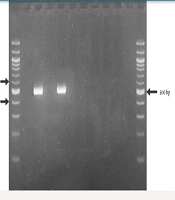
In addition to the assessment, 107 (89.17%) of the isolates were susceptible to the aminoglycoside (gentamicin), while 10 (8.33%) were resistant. In comparison, 72 (60%) of the isolates were susceptible to the macrolide (erythromycin) while 5 (4.17%) and 74 (61.67%) showed intermediate and resistant responses, respectively. Similarly, 51 (42.5%) of the isolates were susceptible to the anti-tuberculosis agent (rifampicin), while 1 (0.83%) and 17 (14.17%) showed intermediate and resistant responses, respectively. Molecular detection of the mecA gene revealed the expected amplicon size of 310 base pairs (bp) in the positive isolates. Molecular detection of mecA and van genes revealed that 10% of the isolates were positive for mecA gene, among the isolates with co-resistance to both vancomycin and oxacillin (Table 2). Van gene was not detected in any of the isolates.
5. Discussion
This study showed the range of vancomycin-methicillin co-resistance in commensal Staphylococcus species among other classes of antibiotics tested in Nkonkobe municipality and its public health implications. Recent times saw a burgeoning literature on some characteristics that used to be the exclusive preserves of clinical staphylococcal isolates, but are now in the commensal subgroups. Typical examples include the formation of thick, multilayered biofilms on inert surfaces, such as polymers or metals, known to be attributes of nosocomial pathogens (16) and pronounced resistance against many of today’s commonly-used antibiotics including methicillin.
According to Bignardi et al. (17) and Wielders et al. (18), most clinical isolates of methicillin-resistant S. aureus harbor mecA gene, which encodes the production of PBP2a, a modified penicillin-binding protein with low affinity for β-lactam antibiotics (19). However, the emergence of resistance in vitro, as a result of mutations, during subculture on media with increasing methicillin concentrations, has also been documented (20, 21). The present study in Nkonkobe municipality showed the prevalence of resistant strains of Staphylococcus species, which also corroborates with previous investigations by Moodley et al. (22) who gave an account of clinical methicillin-resistant S. aureus (MRSA) isolates from various infection sites collected throughout South Africa. Similarly, Science News by United Press International (UPI) (23), also demonstrated the effort of a US pharmaceutical company to find treatment solutions for the worst staphylococcal infections in the soil of South Africa.
The study of Domaracki et al. (24) showed that vancomycin was the drug of choice for most methicillin-resistant Staphylococcus infections, and therefore, the recent emergence of decreased vancomycin susceptibility in methicillin-resistant staphylococci presents a significant clinical problem. Furthermore, reduced susceptibility to vancomycin in Staphylococcus species appears to occur on exposure to vancomycin and under selective pressure, rather than by gene transfer as in enterococci (24, 25). In vitro experiments have demonstrated that selective pressure can produce vancomycin resistance, but have also revealed that increases in vancomycin resistance can induce concurrent decreases in resistance to β-lactams in both methicillin-resistant coagulase-negative staphylococci (MRCNS) and methicillin-resistant S. aureus (MRSA).
The study of Domaracki et al. (24) further showed that clinical isolates of vancomycin-susceptible MRCNS and MRSA became increasingly susceptible to oxacillin when grown in the presence of a sub-MIC of vancomycin. However, the present study specifically demonstrated the potency of the β-lactam antibiotics, meropenem (MEM), sulbactam-ampicillin (SAM) and gentamicin (an aminoglycoside) to be very effective for the control of multiple resistant commensal staphylococci in Nkonkobe municipality, South Africa. Findings of this study could be a good guide in infectious diseases control, especially with respect to Staphylococcus infections in the community.