RETRACTED ARTICLE: Antibiotic Resistance Properties of Pseudomonas aeruginosa Isolated From Cases of Superficial Infections at the Emergency Unit
Authors
Koorosh Ahmadi1, Amir Masoud Hashemian2, Seyyed Mohsen Pouryaghobi3, Reza Akhavan2, Sara Rozmina2, Ehsan Bolvardi2,*
1Department of Emergency Medicine, Alborz University of Medical Sciences, Karaj, IR Iran
2Department of Emergency Medicine, Mashhad University of Medical Sciences, Mashhad, IR Iran
3Department of Anesthesiology, Alborz University of Medical Sciences, Karaj, IR Iran
*Corresponding Author: Corresponding author: Ehsan Bolvardi, Department of Emergency Medicine, Mashhad University of Medical Sciences, Mashhad, IR Iran. Tel: +98-9122101673, E-mail:, E-mail: Email: Bolvardie@mums.ac.ir
How to Cite:Ahmadi K, Hashemian AM, Pouryaghobi SM, Akhavan R, Rozmina S, et al. RETRACTED ARTICLE: Antibiotic Resistance Properties of Pseudomonas aeruginosa Isolated From Cases of Superficial Infections at the Emergency Unit. Jundishapur J Microbiol. 2016;9(1):e27646. doi: https://doi.org/10.5812/jjm.27646
Abstract
Background:
Pseudomonas aeruginosa, a ubiquitous opportunistic pathogen, is one of the main causative agents of human superficial infections. Infections due to these bacteria are difficult to heal and cause serious economic issues.
Objectives:
The present study was carried out to investigate the antibiotic resistance pattern of P. aeruginosa isolated from cases of superficial infections referred to the emergency health care units of Iranian Hospitals.
Materials and Methods:
Three hundred swab samples were collected from patients with superficial infections. Samples were cultured and those that were P. aeruginosa positive were analyzed by the disk diffusion method.
Results:
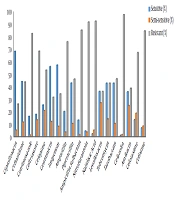
One hundred and seventy-two out of 300 swab samples (57.3%) were positive for P. aeruginosa. The results of the culture technique were also confirmed using the polymerase chain reaction (PCR). Females had a higher prevalence of P. aeruginosa than males, patients older than 70 years were the most infected age group and finally burn infections had the highest prevalence of bacteria. P. aeruginosa strains had the highest levels of resistance against ampicillin (93%), gentamycin (89.5%), ciprofloxacin (82.5%) and amikacin (77.3%). The most effective drugs were meropenem (2.3%, imipenem (2.9%), polymyxin B (21.5%) and cotrimoxazole (31.9%).
Conclusions:
It is logical to primarily prescribe meropenem, imipenem, polymyxin B and cotrimoxazole in the cases of superficial infections caused by P. aeruginosa. Medical practitioners should be aware of the presence of such levels of antibiotic resistance in cases of superficial infections in Iran.
Kalantar E, Torabi V, Salimizand H, Soheili F, Ramezanzadeh R. WITHDRAWN: Incidence and Susceptibility Pattern of Metallo-Beta-Lactamase Producers Among Pseudomonas aeruginosa Isolated From Burn Patients at Kurdistan Province. Jundishapur J Microbiol. 2012;5(3):e72494. doi: https://doi.org/10.5812/jjm.3664
Miladi R, Zamanian MH, Janbakhsh A, Mansouri F, Sayad B, et al. Antibiotic Resistance of Pseudomonas aeruginosa Strains in the Patients Admitted to Imam Reza Hospital in Kermanshah, Iran (2016-2018). J Kermanshah Univ Med Sci. 2020;24(4):e108939. doi: https://doi.org/10.5812/jkums.108939
Mohajeri P. Antibiotic susceptibility and resistance patterns of pseudomonas aeruginosa strains isolated from different clinical specimens in patients referred to the teaching hospitals in Kermanshah(2001-2). J Kermanshah Univ Med Sci. 2004;7(4):e81274. doi:
Mostafavi Esfahani SN, Rostami S, Amini Z. Antibiotic Susceptibility Pattern of Nosocomial and Community-Acquired Pseudomonas aeruginosa in Isfahan: A Prospective Multicenter Study. J Kermanshah Univ Med Sci. 2024;28(1):e140315. doi: https://doi.org/10.5812/jkums-140315
Vaez H, Faghri J, Nasr Esfahani B, Moghim S, Fazeli H, et al. Antibiotic Resistance Patterns and Genetic Diversity in Clinical Isolates of Pseudomonas aeruginosa Isolated From Patients of a Referral Hospital, Isfahan, Iran. Jundishapur J Microbiol. 2015;8(8):e20130. doi: https://doi.org/10.5812/jjm.20130v2