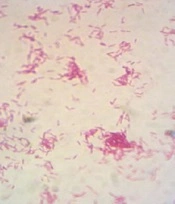
Cover image of the article: Identification of bacteria which possible transmitted by Polyphaga aegyptica (Blattodea: Blattidae) in the region of Ahvaz, SW Iran

Image Credit:Jundishapur J Microbiol

Identification of bacteria which possible transmitted by Polyphaga aegyptica (Blattodea: Blattidae) in the region of Ahvaz, SW Iran

Authors

Babak Vazirianzadeh1,*, Manijeh Mehdinejad2, Rohullah Dehghani3
1Department of Medical Mycoparasitology,, School of Medicine and Infectious Diseases and Tropical Research Centre, Ahvaz Jundishapur University of Medical Sciences, Ahvaz, Iran
2Department of Medical Microbiology, School of Medicine, Ahvaz Jundishapur University of Medical Sciences, Ahvaz, Iran
3Department of Environmental Health, School of Health, Kashan University of Medical Sciences, Kashan, Iran
*Corresponding Author: Corresponding author: Babak Vazirianzadeh, Department of Medical Mycoparasitology,, School of Medicine and Infectious Diseases and Tropical Research Centre, Ahvaz Jundishapur University of Medical Sciences, Ahvaz, Iran Email: babckvazir@yahoo.com

Jundishapur Journal of Microbiology:Vol. 2, issue 1; e62236
Published online:Mar 31, 2009
Article type:Research Article
Received:Sep 26, 2017
Accepted:Mar 01, 2009
How to Cite:Vazirianzadeh B, Mehdinejad M, Dehghani R. Identification of bacteria which possible transmitted by Polyphaga aegyptica (Blattodea: Blattidae) in the region of Ahvaz, SW Iran. Jundishapur J Microbiol. 2009;2(1):e62236. doi:

Abstract

Cockroaches, Blattodea order insects, act as an important mechanical vector for lots of pathogenic microorganism agents, including bacteria, protozoa, worms, fungi, and viruses amongst humans and animals. Polyphaga aegyptica is a rare species of cockroaches than the common cockroaches. The aim of this study was to isolate andidentify bacteria that are picked up by P. aegyptica over the human and animal  premises. In this study totally five P. aegyptica were collected to isolate their bacteria, from the house in Ahvaz SW Iran using common bacteriology methods. The isolated bacteria in this study were Escherichia coli, Klebsiella pneumoniae, Neisseria species, Bacillus cereus, B. subtilis and Staphylococci aureus based on sampling of external body and feces pellets of Egyptian cockroaches. The medical importance of P. aegyptica can be referred to transmitting medical importance reported bacteria in the present study.

Highlights

Fulltext

The Full Text is Downloadable as PDF.

References

    Copyright

    © 2009, Author(s). This open-access article is available under the Creative Commons Attribution 4.0 (CC BY 4.0) International License (https://creativecommons.org/licenses/by/4.0/), which allows for unrestricted use, distribution, and reproduction in any medium, provided that the original work is properly cited.
    Similar Articles

    25
    Sep
    2014
    Detection and Prevalence Rate of American Cockroaches (Periplaneta americana) Bacterial Infections in Human Dwellings

    Detection and Prevalence Rate of American Cockroaches (Periplaneta americana) Bacterial Infections in Human Dwellings

    Hamid Kassiri,
    Ali Kasiri,
    Anvar Quaderi

    Kassiri H, Kasiri A, Quaderi A. Detection and Prevalence Rate of American Cockroaches (Periplaneta americana) Bacterial Infections in Human Dwellings. Arch Clin Infect Dis. 2014;9(4):e18737. doi: https://doi.org/10.5812/archcid.18737
    9
    Apr
    2016
    Investigating the Antibacterial Effects of Plant Extracts on Pseudomonas aeruginosa and Escherichia coli

    Investigating the Antibacterial Effects of Plant Extracts on Pseudomonas aeruginosa and Escherichia coli

    Somayeh Jahani,
    Saeide Saeidi,
    Fereshteh Javadian,
    Zahra Akbarizadeh,
    Ali Sobhanizade

    Jahani S, Saeidi S, Javadian F, Akbarizadeh Z, Sobhanizade A. Investigating the Antibacterial Effects of Plant Extracts on Pseudomonas aeruginosa and Escherichia coli. Int J Infect. 2016;3(2):e34081. doi: https://doi.org/10.17795/iji-34081
    31
    Jul
    2011
    Evaluation of antimicrobial substance produced by a bacterium isolated from Parmacella iberica

    Evaluation of antimicrobial substance produced by a bacterium isolated from Parmacella iberica

    Gholamhossein Ebrahimipour,
    Azam Moradi,
    Morteza Mehrdad,
    Abdorazagh Marzban,
    Howry Alaee

    Ebrahimipour G, Moradi A, Mehrdad M, Marzban A, Alaee H. Evaluation of antimicrobial substance produced by a bacterium isolated from Parmacella iberica. Jundishapur J Microbiol. 2011;4(3):. doi:
    6
    Aug
    2023
    Chemical Composition Analysis of Atropa belladonna Grown in Iran and Evaluation of Antibacterial Properties of Extract-loaded Nanofibers

    Chemical Composition Analysis of Atropa belladonna Grown in Iran and Evaluation of Antibacterial Properties of Extract-loaded Nanofibers

    Elmira Danaie,
    Shiva Masoudi,
    Nasrin Masnabadi

    Danaie E, Masoudi S, Masnabadi N. Chemical Composition Analysis of Atropa belladonna Grown in Iran and Evaluation of Antibacterial Properties of Extract-loaded Nanofibers. Iran J Pharm Res. 2023;22(1):e137839. doi: https://doi.org/10.5812/ijpr-137839
    4
    Sep
    2016
    Antimicrobial Activity of Isolated Bacterial Endophytes from Cichorium intybus L, Pelargonium hortorum, and Portulaca oleracea Against Human Nosocomial Bacterial Pathogens

    Antimicrobial Activity of Isolated Bacterial Endophytes from Cichorium intybus L, Pelargonium hortorum, and Portulaca oleracea Against Human Nosocomial Bacterial Pathogens

    Sharareh Lotfalian,
    Azizollah Ebrahimi,
    Mohamad Reza Mahzoonieh

    Lotfalian S, Ebrahimi A, Mahzoonieh MR. Antimicrobial Activity of Isolated Bacterial Endophytes from Cichorium intybus L, Pelargonium hortorum, and Portulaca oleracea Against Human Nosocomial Bacterial Pathogens. Jundishapur J Nat Pharm Prod. 2017;12(1):e32852. doi: https://doi.org/10.5812/jjnpp.32852

    More by these authors

    Babak VazirianzadehPubMedScholar
    Manijeh MehdinejadPubMedScholar
    Rohullah DehghaniPubMedScholar
    Share
    Cited by
    Metrics